Peter MacLeod spoke with Tatsuya Akashi, President of Itoh Denki Europe, to hear how his company meets the high demand placed on conveyors and rollers by the modern warehouse.
The intralogistics sector has faced its share of challenges in recent years, 2025 being no exception. Tatsuya Akashi, President of Itoh Denki Europe, described it as “a quite tough year for the industry. We had very sluggish market investment because of France had a problem with the government, and Germany was not doing so well due to energy issues. Overall, it was a tough year.”
Even the UK, he noted, had seen economic efficiency fall, with major Japanese companies relocating their European headquarters to the continent rather than remaining in England. Yet amidst the difficulties, Eastern Europe, particularly Poland, Czechia, and Hungary, had experienced a manufacturing boom. “Poland and some of the Eastern Europe has boomed a lot, kind of becoming the centre of manufacturing of Europe,” he told me. Akashi highlighted that, despite these challenges, Itoh Denki Europe had experienced growth.
“Luckily, we gained back quite a lot of large projects, and we did above 10%… all the other surrounding companies said ‘You’re so lucky that you have 10% growth!’ Industry was pretty bad.”
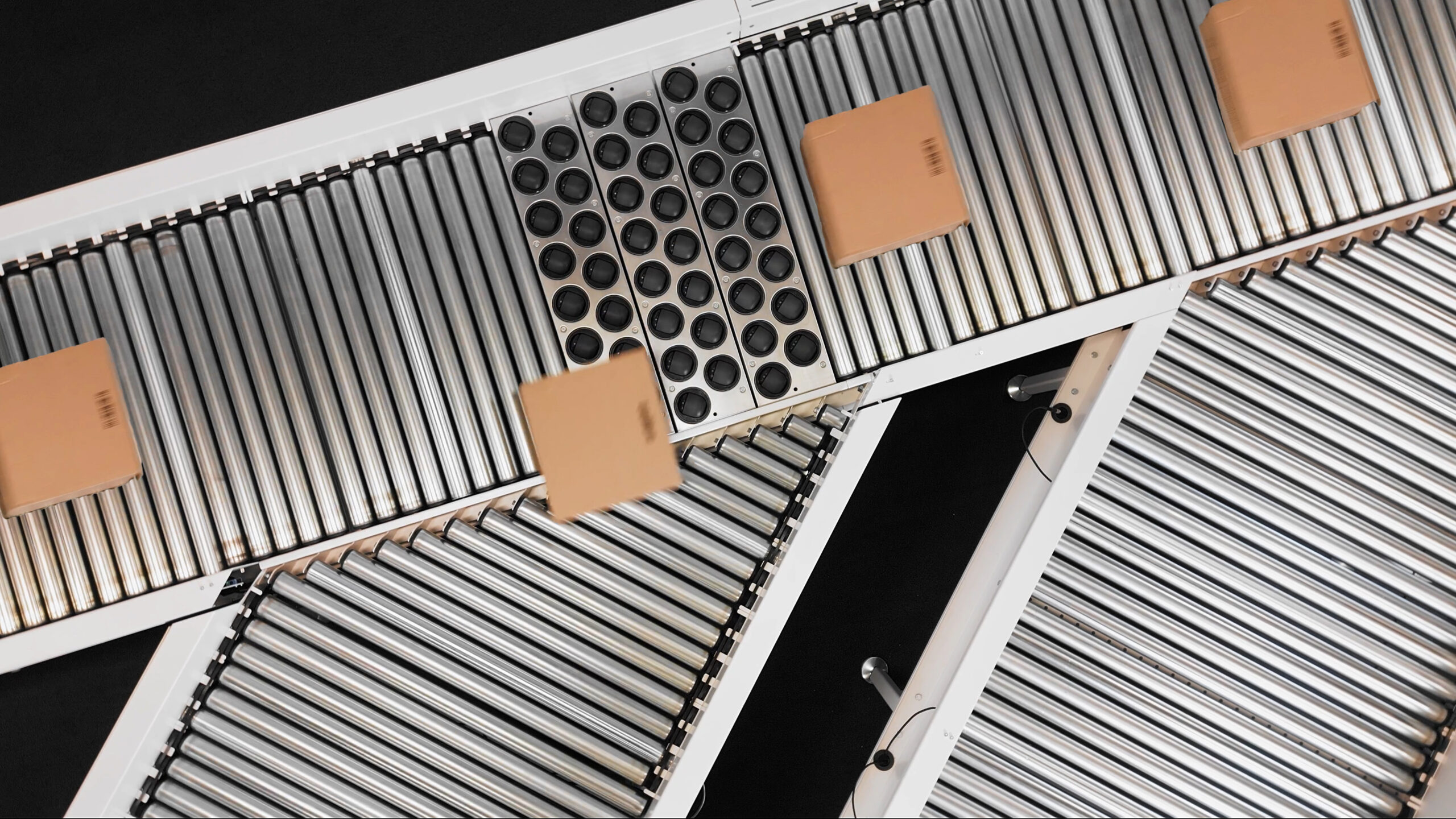
A major focus for the company is helping customers increase their profitability. Akashi explained: “First of all, increase the value for money for our products. There are a lot of very cheap Chinese brands of motor rollers coming in. But when we look at durability, and also how we are increasing our speed or torque or other specifications, we are selling a much higher quality product at the same price.” He added that the company’s modules, such as the Multi Angle Ball Sorter, had become a driving force in Europe. “Instead of spending huge money on a cross-belt sorter or slidechute sorter, they can make a very simple sorter based on our MABS module… the cost is around half or one-third of having a huge cross-belt sorter,” he said. Maintenance is simple and quick, often just five minutes of downtime, which delivers clear benefits to both integrators and end users.
Competing with Cheap Imports
Local presence and service are equally important in competing with cheaper imports. “In the case of MDR or a slave roller, the cost itself is just around €10 euro. If you buy from China, maybe it’s €7, but then if you have a shortage and have to bring it by air shipment, it costs €50. So with something very cheap and heavy, you shouldn’t do it in China. You should do it somewhere close to Europe,” Akashi explained. Quick delivery, he said, ensures that downtime is eliminated and operations remain smooth. One example he gave was a leading global e-tailer (yes, THAT one!) where a cheaper solution would have caused nearly two days of conveyor stoppage, equating to potential losses of around €2 million. “If they were using ours, they could come back on in 10 minutes,” he said.

Artificial intelligence is also being integrated into Itoh Denki’s operations. “When we design some control software nowadays, we partly use AI… when we want to do preventive maintenance or control the box moving style… we could use AI to better control our programme and make the programme faster,” Akashi said. While AI is currently an enhancer of automation, he sees substantial future potential as more end users shift from manual work to automated solutions.
Carbon Reduction
Sustainability is another priority. Akashi stressed the company’s strength in enabling carbon reduction, not only through more energy-efficient products but by optimising operations. “If they use our motorised roller, because we do the run-on-demand, it means… only three blocks are moving out of 100. Thanks to this run-on-demand technology, you can save up to 60% electricity… using Itoh Denki product, which is the enabler of the final carbon footprint. Here we are very strong pride in our company,” he said.
Akashi (pictured, below) also discussed the heritage of Japanese engineering. “One thing I can say is in the B2B area, especially if it is… common motor, there’s a lot of okay-level cheap Chinese motors. But we are making a dedicated motor for this industry, which is high torque but low speed… Japan is absolutely number one,” he said.

Looking ahead, the company continues to focus on innovation and customer engagement. Its Amsterdam technology centre allows northern European clients to test products with their own totes. Customisation is fast, with minor adjustments taking just two weeks. Akashi also highlighted new developments to be showcased at LogiMAT, including the flexible noise-arrest roller, which can carry smaller products and reduce maintenance demands.
Reflecting on success, Akashi summarised the company’s philosophy:
“We become smiling when our good technology is adopted and contribute to society. It means a big satisfaction of the end user, our OEM partners, but also we can make our business grow and certain level of high profitability can be kept.”
