Sierraline Cargo Services
  • HOME
  • Services
    • Trade With Us
  • About Us
  • Contact Us
  • private jet
    • BOOK YOUR JOURNEY
  • Track Packages
  • Insurance
  • safekeeping
Services

Material Handling Upgrade for Heathrow Air Cargo Operator

by
written by


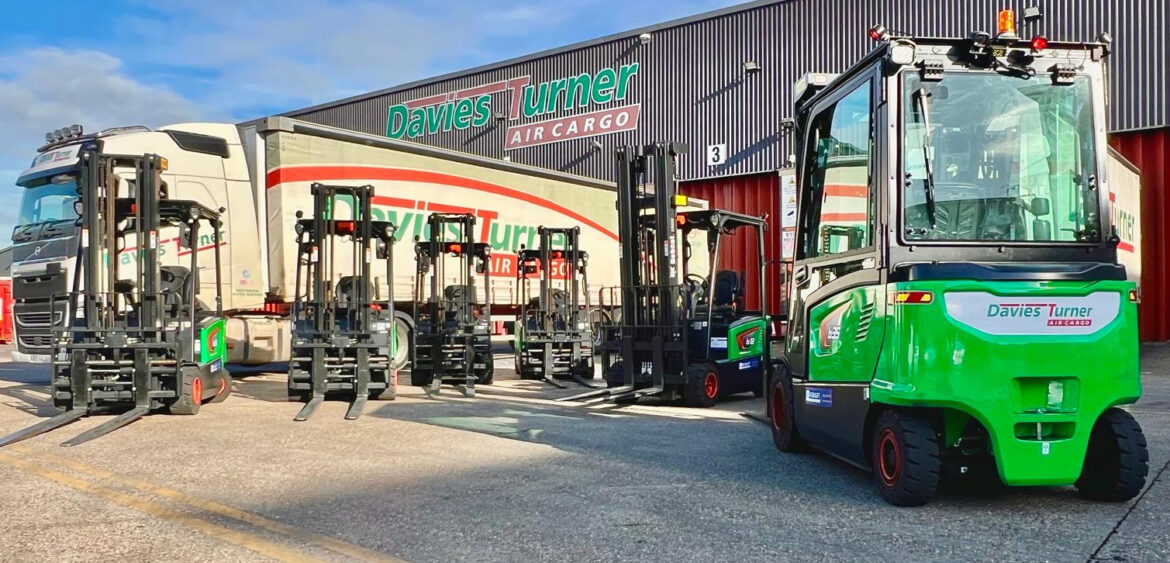
Davies Turner Air Cargo has made a significant investment in material handling equipment (MHE) at its Heathrow logistics hub.

This strategic upgrade by one of the UK’s largest independent air freight and logistics businesses is aimed at enhancing both operational efficiency and safety, solidifying the company’s commitment to maintaining industry-leading standards.

The existing fleet of materials handling equipment has been replaced with seven electric forklift trucks, three reach trucks and one battery changing truck. All are fitted with high tech batteries and chargers.

From the Bobcat MHE range, the 11 vehicles have been procured on a lease contract from Rushlift, a national full-service suppliers of multi-brand materials handling and ground support equipment, with which Davies Turner Air Cargo has partnered for nearly 30 years.

The new MHE fleet will ensure that Davies Turner Air Cargo’s Heathrow hub continues to operate at peak performance, even as demand and operational complexities grow.

Safety remains a top priority for Davies Turner Air Cargo, and the new fleet includes advanced safety technologies designed to reduce accidents and improve operational safety, underlining the company’s commitment to HSE matters.

Among the key innovations are perimeter proximity lights, which surround the equipment, enhancing visibility and safety in crowded or low-light conditions, which are complemented by the addition of flat LED chevron strip lights fitted on the counterweight.

Progressive directional arrow safety lights that appear on both the front and back of the equipment, depending on the direction of travel, have replaced the traditional blue spot reverse light, offering clearer directional guidance, when shone on the floor, in the directional path of the vehicle.

Fork cameras provide operators with better visibility when the forks are raised, or through the mast, reducing the risk of accidents during operation; whilst pedestrian detection cameras identify people within a set proximity, automatically slowing down the truck to prevent collisions.

Each truck is fitted with an RFID beacon to detect other trucks on a potential collision course. These beacons interact with red flashing beacons on door frames and blind spots to alert other operators, further reducing the risk of accidents.

“As part of one of the UK’s leading freight and logistics businesses, Davies Turner Air Cargo is always striving to improve our operational capabilities and the safety of our workforce,” said Oliver Simmons, general manager – Heathrow Services at Davies Turner Air Cargo.

“This investment in cutting-edge MHE technology at our Heathrow facility is a testament to our commitment to innovation and excellence in the logistics industry. We are confident that these upgrades will enhance our service delivery, ensuring that we continue to meet and exceed the expectations of our clients.”

Andrew Gazzard, key account manager at Rushlift added: “Working with Davies Turner over many years has enabled a true working relationship to develop, affording a greater understanding of ever-changing needs.

“Its commitment to ensuring it has the most up-to-date reliable and safe equipment, along with around the clock support has meant that with our flexible and consultative approach to business, our long partnership continues to thrive.

“We are pleased to introduce the new Bobcat range of forklift trucks along with recently launched safety innovations from our partners FTC, and where suitable, to supply equipment outside of the Bobcat portfolio with confidence.”

This significant investment reaffirms Davies Turner Air Cargo’s position as a leader in the logistics industry, with a focus on combining advanced technology with operational excellence.

Similar news
Swissport Launches New Cargo Facility at Heathrow Airport


Source link

0 comments
0 FacebookTwitterPinterestEmail
Services

Decarbonising European Supply Chains with Intermodal Solutions

by
written by


Railways have long been a reliable mode of transporting goods. However, in recent years, road transport has taken the lead, offering faster and more flexible delivery options. Now, with decarbonisation goals in focus, rail is making a comeback as a powerful solution for reducing emissions.

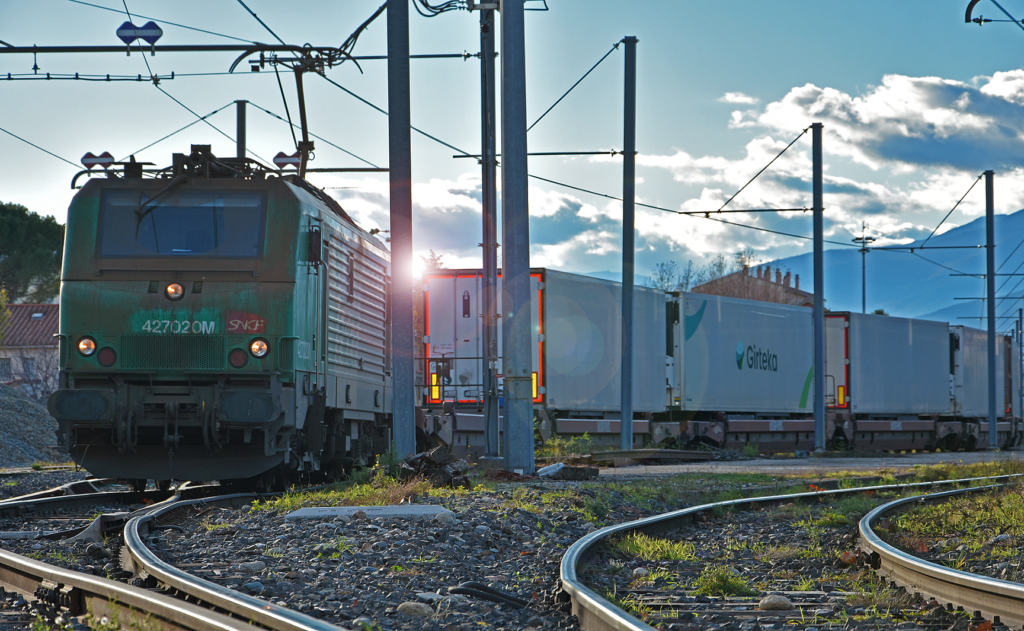
Intermodal solutions, especially rail transport, have proven effective in reducing emissions. When powered by green energy sources, rail can significantly cut emissions by up to 65%1. Thanks to the long distances covered by a single train, equivalent to 20–30 fully loaded trailers, the railway network offers a safe, sustainable, and efficient way to transport goods for long distances across Europe.

High-value goods on trains

With supply chains accounting for a large portion of companies’ overall emissions, up to 90% in some cases 2, shifting a significant portion of transport to rail can greatly impact carbon footprints. One example is a leading cosmetics company that decided to move up to 80% of its high-value goods transport to the railway network. By transporting up to 1500 fully loaded trailers, only in 2022, the company achieved a significant 80% reduction3 in emissions compared to traditional road transport.

“We knew the company wanted to make significant strides in reducing emissions, so we explored possible solutions together, analyzing all available alternatives. Thanks to our extensive network and minimal changes to operations, we utilized rail transport effectively. Paired with our broad trucking network, from and to terminals, we have delivered a large volume of goods most conveniently and sustainably,” says Larisa Senkevičienė, Intermodal Business Development Manager from Girteka, the company securing the deliveries.

This case, as the majority of the loads were transported via railway, required precise coordination with the customer to plan both loading and unloading. Time slots were established to align with production and delivery schedules, knowing the need for smooth transitions between rail and road. Internally, planning teams collaborated with the customer to manage every step, adjusting resources to fit the rail transport requirements. This co-creation approach optimized logistics, allowing for on-time deliveries with minimal delays.

Combination of sustainable solutions

Though the railway network has its limitations, when combined with alternative fuels like HVO100 or battery-electric vehicles (BEVs), emission reductions can reach up to 100%, while using clean green energy. Another example from the food and beverages sector involved optimizing both the start and end of the transport process to reduce emissions. Due to network limitations, the company opted for a combined transport method, using both the railway network and HVO-fueled trucks for delivery to and from train terminals. The results were impressive.

“We had to approach this differently, as the entire supply chain couldn’t be covered solely by intermodal transport. However, with our trucks being compatible with alternative fuels like HVO, we used this option to handle the transport to and from the railway terminal. The outcome? A 90% reduction4 in emissions, which can be easily reported,” explains Senkevičienė.

Measuring Impact through Data

Reporting and data collection are crucial for evaluating the efficiency and real impact of sustainable solutions. The goal is simple: reduce emissions as much as possible without compromising the timing or stability of supply chains.

“Monitoring and data are essential for us, therefore we provide the option to oversee the full cargo journey, and our calculations of reduced emissions from chosen sustainable transport solution, customer can receive a comprehensive report on the exact number of kg of CO2 reduction. In a time of data approach and ESG reporting soon in place, this value information is additional benefit customer receive,” – emphasizes Senkevičienė.

Read Similar…

Sustainability through Circularity and Real-Time Solutions


Source link

0 comments
0 FacebookTwitterPinterestEmail
Services

UK Parcel Delivery to Lead Europe This Festive Season

by
written by


A new study released today by FedEx, forecasts that parcel carriers will collectively distribute 1.29 bn shipments across the UK between October and December 2024, 10.9% more than in the same period in 2023.

The independent study was conducted by Effigy Consulting, which analysed its courier, express and parcels (CEP) database with 500,000 data points on more than 300 carriers in 41 countries.

The data shows a significant increase on the UK figures for 2023, up from 1.17bn parcels to 1.29bn in 2024. The UK will be the busiest market for parcels this Peak season, representing 21% of the total deliveries made, equating to 12 parcels per person across the UK and Europe.

Germany and France will be the second and third busiest markets, with Germany accounting for 17% (1.1 bn) and France making up 8.4% (524 mil) of the total parcels delivered across Europe. This growth is being driven by a rise in e-commerce which accounts for nearly 70% of shipments going directly to consumers across the European market.

Alun Cornish, Vice President Network Operations at FedEx commented: “Peak season is a critical period for UK businesses, with many relying on transportation and logistics to meet increased demand and deliver for their customers. Online shopping, ecommerce, and a shift towards deferred services will continue through this year’s peak, reflecting changing consumer behaviour and ongoing cost-consciousness in the market.”

FedEx’s networks will scale and adapt to meet the UK’s increased demand, with options for air and road transportation, as well as more predictive technologies to manage potential disruptions and make the ‘golden quarter’ a success.”

Across the whole of Europe, 6.2bn shipments will be made between October and December 2024, 9.0% more than in the same period in 2023. The UK is one of the fastest growing major European countries with a growth of 10.9% on last year, outpaced only by Portugal and Poland and countries such as Turkey, Croatia and Bulgaria.

To illustrate the scale of the Peak, the total European volume (4.878 bn cubic feet) would equate to filling the entire structure of Wembley Stadium thirty-four times over. The total weight of goods transported across Europe at this Peak will be almost 7.5m tonnes, which equates to around 15 kg for every person living in the EU and the UK.

The countries with the highest volume of shipments during this Peak season are the UK (1.3bn) and Germany (1.1bn), followed by France with just over half a billion (524m), with twelve parcels sent for every person in the UK and EU during the three-month period.

Read Similar…

Navigating Black Friday Logistics


Source link

0 comments
0 FacebookTwitterPinterestEmail
Services

The Transformative Impact of AI Tech Adoption in Logistics

by
written by


In the ever-growing and highly competitive logistics sector, automation has become indispensable, with the latest innovations in the form of Artificial Intelligence (AI) transforming business dynamics more radically than ever before. The potential of this technology to enhance productivity is almost unfathomable, positively affecting both the profitability and efficiency of companies, as well as their ability to foster economic growth.

According to 2023 statistics from the US International Trade Administration, the UK AI market was worth more than £16.8 billion and is expected to grow to £801.6 billion by 2035, while government research suggests that around one in six UK businesses has embraced at least one form of the technology.

This growth in AI adoption opens up a range of possibilities for companies in the logistics sector. Taking the data that can be gleaned from connected devices, AI can transform it into useful insights to be managed by Robotic Process Automation (RPA) solutions. In this way, simple and repetitive tasks, usually performed manually by employees, are automated, which generates opportunities to embrace more strategic value-added tasks.

“With the help of Artificial Intelligence, we can accurately predict the demand for goods and services and generate possible scenarios from current market conditions. This will allow logistics companies to allocate resources efficiently, plan transportation routes and optimise inventory levels, which results in a significant reduction in the operating costs that presente a management challenge: fuel, labour and vehicle maintenance,” says Erick Martins (pictured), Solutions Consultant at Descartes Systems Group.

“For players in the sector, having a tool that offers predictability, while allowing them to reduce costs and overcomes possible hurdles in processes, is strategic and makes it an indispensable resource for the coming years.” Adding operational efficiency and improving customer experience. “The application of AI to logistics operations is a trend that should expand the frontiers of the sector in the coming years,” he adds.

The implementation of automation solutions in the areas of logistics and supply chain opens up a new world of potential for companies as they allow them to work with large volumes of data, analysing it in real time, spotting trends and anomalies – and making decisions that result in tangible business benefit.

Here, therefore, are four reasons to incorporate AI and machine learning-based connectivity tools:

1. High return on investment by reducing mileage, fuel consumption and driver time, thus increasing productivity. Thanks to machine learning techniques, more deliveries can be made with fewer vehicles, resulting in significant savings. These improvements not only affect the operational aspect, but also have an impact on the administrative processes of logistics, including customer service, customer retention, availability and visibility for all departments involved.

2. High availability combined with security. The Software-as-a-Service (SaaS) model is a trend that is increasingly being adopted by businesses. This approach eliminates the need to acquire, install and maintain software, as it only requires the payment of a monthly fee that allows access to various functionalities that are always updated and in compliance with current regulations.

3. Integration into a single system. Integrating all platforms with a single provider offers several advantages, such as the ability to prioritise tasks according to their importance, including route planning, last-mile execution, and delivery confirmation. The route planning tool combines information on customer restrictions, vehicles, service windows, and routes, as well as the definition of rest stops and other details that allow you to create an optimal route.

4. Global visibility of traffic (both customer and order). Today’s technology offers real-time visibility into trucks, routes, orders, and customers for all functions of every organisation. This makes it possible to compare what is planned with what is actually being executed, identify driver locations and evaluate their performance. In addition, analytical tools can be used to generate reports and dashboards, facilitating route management and adjustments.

“Given the speed at which the segment is growing and the increasingly demanding needs of consumers, AI will soon be part of a strategic approach within companies with the aim of optimising efficiency, improving service quality and maintaining competitiveness in a market as dynamic and agile as logistics,” concludes Martins.

Conclusion

The implementation of AI in logistics operations represents the next crucial step in the modernisation and optimisation of processes in this sector. With its immense potential, AI will be an indispensable tool defining the future of transportation and logistics. However, integrating these tools into existing systems and adapting processes to maximise their benefit is key.

It is essential to be willing to adapt, acquire new knowledge and skills to be prepared for the changes that AI will bring. Its strategic adoption will allow businesses to stay competitive and meet the demands of an ever-changing and evolving market.

similar news

Greater insight drives IoT adoption


Source link

0 comments
0 FacebookTwitterPinterestEmail
Services

ICS Summit kicks off Hong Kong Maritime Week

by
written by


The International Chamber of Shipping (ICS), in collaboration with the Transport and Logistics Bureau of the Government of Hong Kong, the Hong Kong Shipowners Association and the Hong Kong Maritime and Port Board, convened nearly 300 delegates from 28 countries, including ministers and senior policymakers from 12 nations, the European Commission and international organisations, with CEOs of companies from the maritime value chain, today at the Hong Kong Global Trade Summit.

With global focus on trade the Summit addressed the challenges facing maritime trade including growing political tensions, the proliferation of protectionism and the increasingly unpredictable and disruptive global landscape.

Opening the Summit, International Chamber of Shipping Chairman Emanuele Grimaldi set the scene:
“As the world recovers from the COVID pandemic this system [the global maritime transportation system] of free trade faces significant challenges due to an increasingly volatile geopolitical environment, including threats to long-standing free-trade principles and the global maritime regulatory framework. The growing pressure of geopolitical tensions, changing political dynamics and threats to traditional norms are all creating a climate of uncertainty. The urgent need to address climate change is putting food security, energy supplies and the risk to the global economy firmly on the radar.

“We also recognise that the success of our industry is intertwined with the success of nations. At a time of increasing disruption and volatility we must seek to bring greater understanding to reduce risk and support global trade. No one wins if we all lose, so we need to find ways to ensure that we can all prosper….we already have the structures and institutions to find solutions…in our rush to address problems please remember what we already have and use them, empower them to deliver for us.”

Secretary General of the International Maritime Organization (IMO), Arsenio Dominguez, provided a keynote address and reiterated the importance of collaboration and global regulations: “It is only by working and engaging with each other that we can find solutions to the risks and disruptions that arise…I emphasise here the need for cohesive global regulations. Shipping is inherently international and unilateral and regional rules can undermine the regulatory framework agreed upon at IMO…Shipping underpins world trade. Everyone depends on shipping for the things people need and want.”

Speaking on the IMO 2023 GHG strategy and the clear ambition for international shipping to reach net zero emissions by or around 2050 Dominguez added, “Member states remain strongly committed to achieving this goal. Currently mid term measures are being developed, including a GHG fuel standard and an economic pricing mechanism, which will be finalised by the end of 2050.”

Many participants at the Summit took the opportunity to highlight the plight of the Galaxy Leader crew on the almost one-year anniversary since being taken captive on the 19 November by Yemeni insurgents. It is abhorrent that seafarers were seized by such forces and that they have been kept from their families and loved ones for this long. Industry calls on States with influence to assist in this matter.

The high-profile Summit, titled ‘Risk and resilience in an age of disruption’ took place at the Hong Kong Convention and Exhibition Centre just before the official opening of Hong Kong Maritime Week. The event was expertly moderated by Former BBC Science Editor and Visiting Professor in Practice, London School of Economics, David Shukman.

Closing the Summit was a conversation between Johanna Hill, Deputy Director General of the World Trade Organization (WTO), and Shukman. The final session brought out some interesting insights and reflections. Hill said, “The shipping industry has deep pride for the work that it is doing. It’s international nature, the critical role it plays in international trade, and the well-being of its seafarers and the well-being of society as a whole…In the trade world we see shipping as an integral part of the business that we are doing, and that is why we are here today….I welcome very much the support to a free and open trading system.”

similar news

15 Years in Hong Kong for cargo-partner


Source link

0 comments
0 FacebookTwitterPinterestEmail
Services

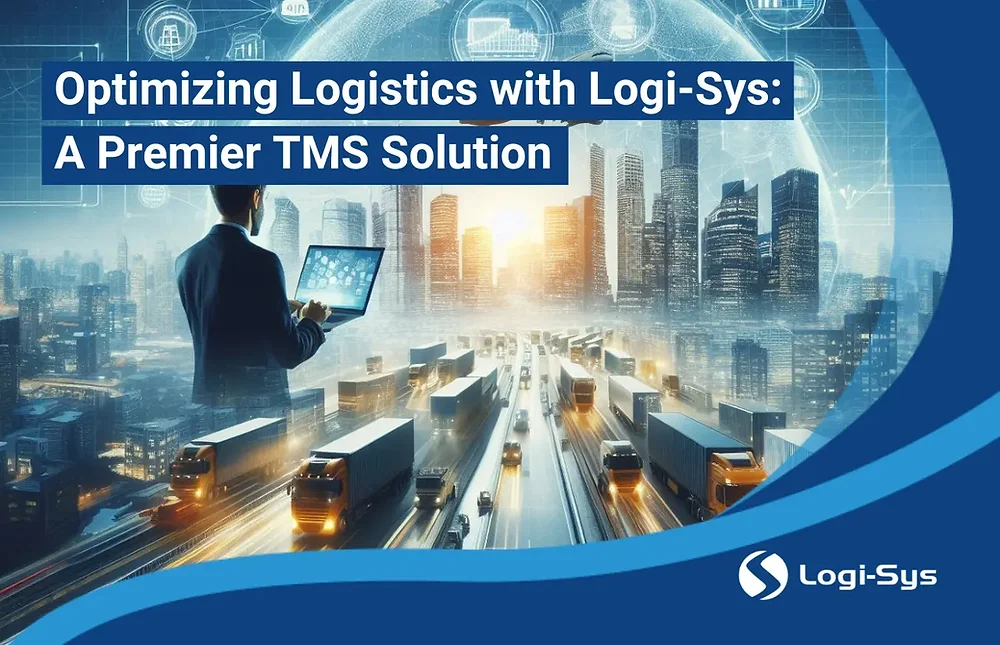
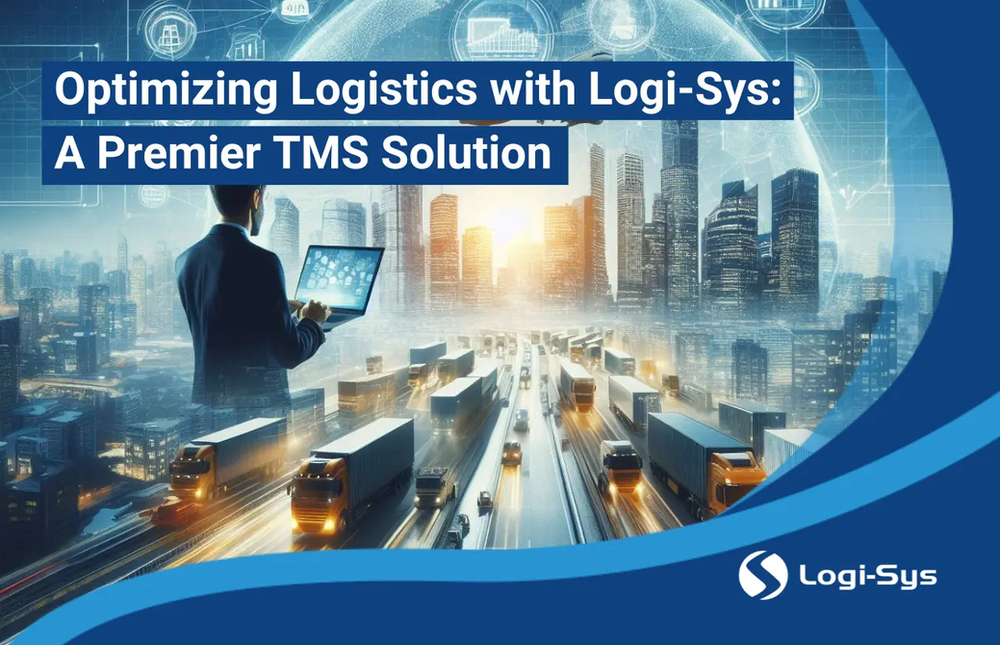
Optimizing Logistics with Logi-Sys: A Premier TMS Solution

by
written by


The logistics industry, a vital component of the global economy, is undergoing a transformative shift, fueled by advancements in technology and changes in consumer behavior. In this landscape, Transport Management Software (TMS) stands out as a critical tool, empowering companies to orchestrate more efficient, reliable, and cost-effective transportation networks. Whether it’s improving delivery speeds or cutting operational costs, TMS is the cornerstone of modern logistical success, particularly in regions such as Europe, the UK, and the USA.

Transport Management Software: A Necessity for Today’s Markets

Transport Management Software orchestrates various facets of the transportation process, from route planning and freight billing to real-time tracking and delivery confirmation. This software helps firms navigate the complexities of logistics with greater agility, ensuring that goods are moved in the most efficient manner possible.

The current market for TMS is robust and expanding. Businesses across Europe are rapidly adopting these systems to keep up with the demands of an interconnected global market. Similarly, in the UK and the USA, where logistics operations are immense, the need for efficient transport management systems is more pronounced than ever.

Introducing Logi-Sys: A Comprehensive TMS for Europe and Beyond

Logi-Sys is a comprehensive, integrated Transport Management Software that enhances operational efficiencies across all levels of the supply chain. Designed specifically with the needs of European, UK, and American markets in mind, Logi-Sys provides a robust suite of features that cater to the diverse demands of these regions.

Key Features of Logi-Sys

  • Complete Operational Integration:
    Logi-Sys integrates critical logistics functions such as inventory management, customer relationship management (CRM), and customs handling into one seamless platform. This comprehensive integration reduces the need for multiple software systems, streamlining processes, and reducing costs.

  • Scalable Solutions:
    Whether for a small business or a global corporation, Logi-Sys is scalable to any size, providing tailored solutions that grow with your business.

  • Cloud-Based Technology:
    With its cloud-based deployment, Logi-Sys offers unmatched flexibility and accessibility, allowing logistics managers to oversee their operations from anywhere in the world.

  • Advanced Analytics:
    Logi-Sys comes equipped with advanced analytics capabilities, providing real-time insights into logistics operations. These insights help businesses optimize routes, predict potential disruptions, and make informed decisions.

  • 24 x 7 Customer Support:
    Softlink Global, the company behind Logi-Sys, backed its clients by providing them 24 x 7 worldwide omnichannel customers via a team of in-house domain experts.

Innovative Add-Ons: LogiBRAIN and LogiTRACK

Enhancing the core capabilities of Logi-Sys are its two innovative add-ons: LogiBRAIN and LogiTRACK. These tools utilize cutting-edge technology to provide advanced logistics solutions:

  • LogiBRAIN:
    This AI-enhanced module optimizes logistics operations by automating decision-making processes. Utilizing machine learning algorithms, LogiBRAIN helps reduce costs and improve efficiency by anticipating and resolving potential issues before they impact operations.

  • LogiTRACK:
    This tracking add-on provides real-time visibility of shipments, enhancing transparency and security throughout the transportation process. LogiTRACK enables businesses to monitor their logistics assets with precise, up-to-the-minute location information.

The Strategic Impact of Adopting Logi-Sys

Implementing Logi-Sys can have a profound impact on a business’s operational dynamics. Companies that have adopted Logi-Sys report significant improvements in efficiency, cost management, and customer satisfaction. This is because Logi-Sys not only automates and optimizes transportation processes but also provides strategic insights that lead to better business decisions.

Conclusion: Why Choose Logi-Sys as Your TMS Partner

Choosing the right Transport Management Software is crucial for any business aiming to succeed in the competitive fields of logistics and transportation. Logi-Sys stands out as a top choice for businesses in Europe, the UK, and the USA, offering comprehensive features, innovative technology, and a scalable platform that supports logistics excellence. As we look toward the future of logistics, Logi-Sys is poised to be a key player, driving companies towards greater success and efficiency in their transport operations.


Source link

0 comments
0 FacebookTwitterPinterestEmail
Services

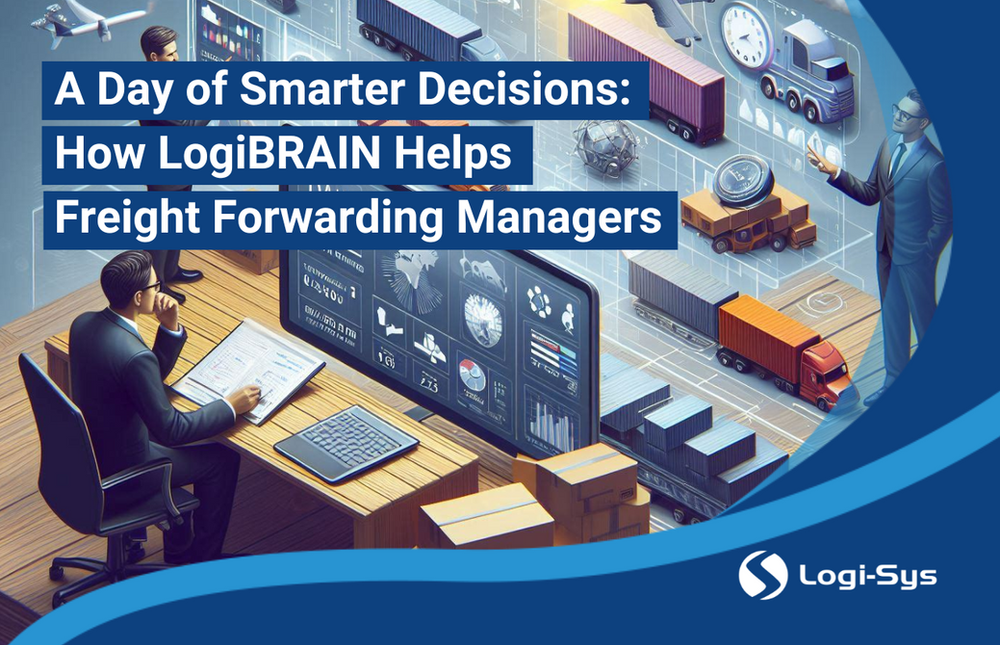
How LogiBRAIN Helps Freight Forwarding Managers

by
written by


The daily tasks of a freight forwarding manager involve a complex juggling act of managing shipments, coordinating with carriers, and ensuring customer satisfaction. Enter LogiBRAIN, a dynamic data analytics tool tailored for the logistics industry. This blog delves into how LogiBRAIN can significantly enhance and streamline the everyday responsibilities of freight forwarding managers, making their roles more efficient and proactive.

The Impact of LogiBRAIN on Daily Operations

1. Streamlined Shipment Tracking

Freight forwarding managers often spend a considerable portion of their day tracking shipments across various stages. LogiBRAIN integrates real-time data from multiple sources, providing a consolidated view of all shipments. This capability enables managers to quickly check statuses, predict delays, and update customers or stakeholders with accurate information, significantly reducing time spent on individual tracking efforts.

2. Enhanced Decision-Making with Predictive Analytics

One of the standout features of LogiBRAIN is its predictive analytics, which can forecast potential delays or disruptions based on historical data and current trends. This allows managers to proactively rearrange routes or notify customers ahead of time, thereby managing expectations and minimizing disruption.

3. Optimized Operational Efficiency

By analyzing historical data and current performance metrics, LogiBRAIN identifies bottlenecks and inefficiencies in the freight forwarding process. Managers can use these insights to optimize operations, such as improving warehouse layouts, scheduling for peak efficiency, and selecting the best carriers based on performance and cost analysis

4. Customized Reporting for Strategic Planning

LogiBRAIN’s customizable reporting tools allow managers to generate reports tailored to specific needs and audiences. Whether it’s presenting to senior management, sharing insights with the team, or conducting strategic planning sessions, LogiBRAIN provides the necessary data insights in an understandable format, enhancing communication and strategic initiatives

5. Improved Customer Service and Satisfaction

With enhanced visibility into the logistics chain, managers can provide better service to their clients. LogiBRAIN’s detailed analytics help pinpoint areas of improvement in customer service—be it faster response times, more accurate delivery estimates, or personalized service offerings, all of which lead to higher customer satisfaction and loyalty

LogiBRAIN reshapes a freight forwarding manager’s day by automating mundane tasks, providing powerful insights, and enabling more informed decision-making. This not only frees up time for strategic thinking and customer engagement but also propels the entire freight forwarding operation towards greater efficiency and effectiveness.

For freight forwarding managers looking to elevate their daily operations and strategic impact, LogiBRAIN offers a comprehensive solution that turns data into actionable insights and operational excellence.


Source link

0 comments
0 FacebookTwitterPinterestEmail
Services

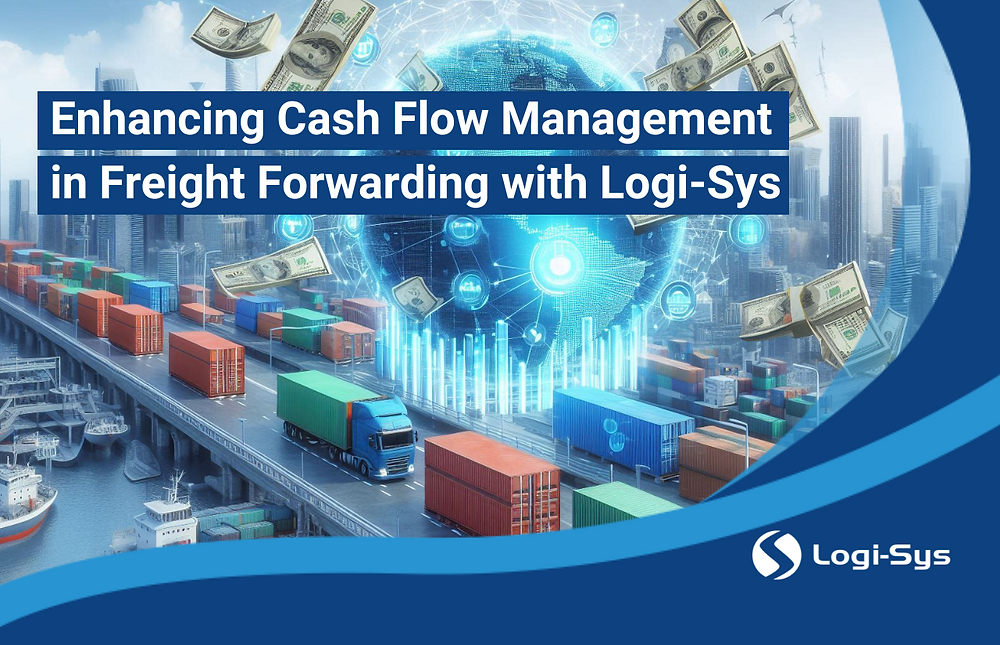
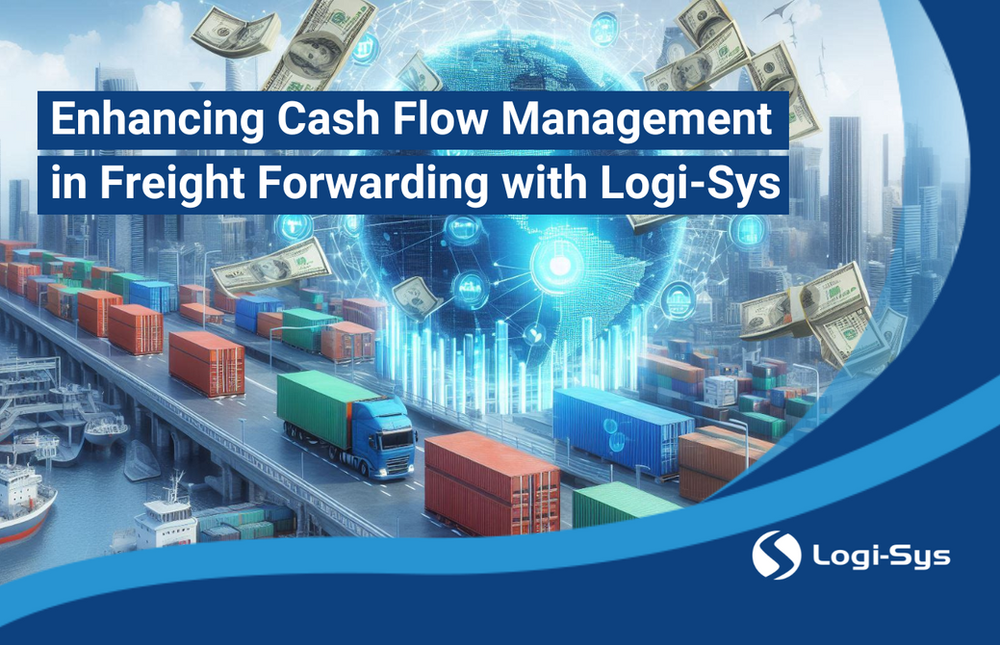
Enhancing Cash Flow Management in Freight Forwarding with Logi-Sys

by
written by


In the competitive landscape of freight forwarding, effective cash flow management is not merely beneficial—it is essential. This whitepaper delves into how integrating comprehensive freight management software like Logi-Sys can transform the financial operations of freight forwarding companies, ensuring robust cash flow management and supporting sustainable business growth.

Understanding Cash Flow in Freight Forwarding

The history of freight forwarding reveals a gradual evolution from manual, paper-based processes to digital solutions. Originally, financial operations in freight forwarding were prone to errors and inefficiencies due to the reliance on physical documentation and slow communication methods. Over time, the introduction of basic digital tools provided some relief, but it wasn’t until the advent of specialized freight management software that significant improvements in cash flow management were realized.

Freight forwarding faces unique financial challenges

  1. Delayed Payments: Slow invoicing and extended payment terms from clients disrupt cash flow. Effective freight management software provides automated solutions to minimize these delays.

  2. High Operational Costs: The complexity of managing multiple logistics services and international transactions leads to significant overheads. Comprehensive freight software allows for better resource allocation and cost management.

  3. Fluctuating Expenses: Unpredictable costs such as fuel and duties can destabilize budgets. Advanced freight management software offers tools for better forecasting and expense tracking.

The global freight forwarding market is influenced by diverse factors such as geopolitical tensions, economic cycles, and trade policies. These elements can unpredictably impact cash flow, making robust freight software critical for adapting to and navigating these complexities.

The Role of Technology in Cash Flow Management

Technological advancements have revolutionized how freight forwarding companies manage their operations. Early systems improved basic data entry and storage. Today, comprehensive solutions like Logi-Sys streamline complex processes across entire operations, integrating financial management with logistical tasks to enhance overall efficiency.

Logi-Sys is a leading all-in-one freight management software designed specifically for the logistics industry. It integrates various aspects of freight forwarding operations into a single platform, enabling better control over financial processes and improving cash flow management.

Logi-Sys: A Comprehensive Financial Tool

The billing and invoicing capabilities of Logi-Sys are deeply integrated with its service logs, ensuring that every chargeable action is promptly and accurately billed. This automation significantly shortens the billing cycle, which directly improves cash flow.

Logi-Sys provides real-time visibility into financial metrics, allowing companies to make informed decisions quickly. This immediate insight is vital for managing cash flow in the fast-paced world of global trade.

Logi-Sys supports various electronic payment methods, facilitating quicker client payments. This integration not only accelerates cash inflows but also enhances the customer payment experience, which is crucial for client retention.

Expense management in Logi-Sys allows for detailed tracking of all expenditures. This capability ensures that companies can monitor their spending in real-time, forecast future expenses more accurately, and maintain tighter control over their cash flows.

Specific Example – Report Scheduler

An example of a very specific feature in Logi-Sys that helps businesses recover payments easily without disturbing relationships with the customer is the Report Scheduler. The Report Scheduler allows Logi-Sys users to schedule any kind of report on a periodic basis. It can be used for internal purposes, as well as for communicating externally with one’s customers.

An example of external communication would be to set up automated emails to a customer reminding them of pending payments. Businesses can specify the time and date of the email to be auto-triggered, complete with attachments.

Report Schedulers help businesses strike the perfect balance between maintaining customer relations and ensuring that their own cash flows are strong.

Future Directions in Freight Forwarding Financial Management

As the freight forwarding industry continues to grow and evolve, the reliance on robust freight software like Logi-Sys will become more pronounced. Companies will increasingly seek solutions that offer seamless integration, comprehensive analytics, and enhanced user interfaces to manage their finances more effectively.

Conclusion

Effective cash flow management is critical for the success of freight forwarding businesses. Logi-Sys represents a significant advancement in freight management software, offering a suite of tools that dramatically enhance financial operations. By adopting Logi-Sys, freight forwarders can ensure financial stability and better adapt to the rapidly changing global marketplace.


Source link

0 comments
0 FacebookTwitterPinterestEmail
Services

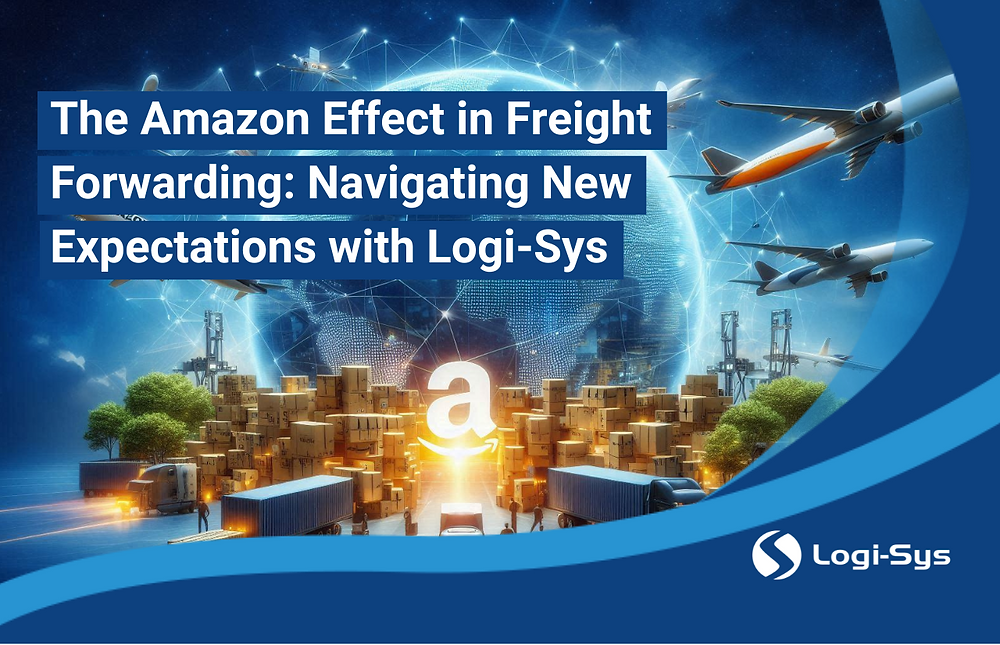
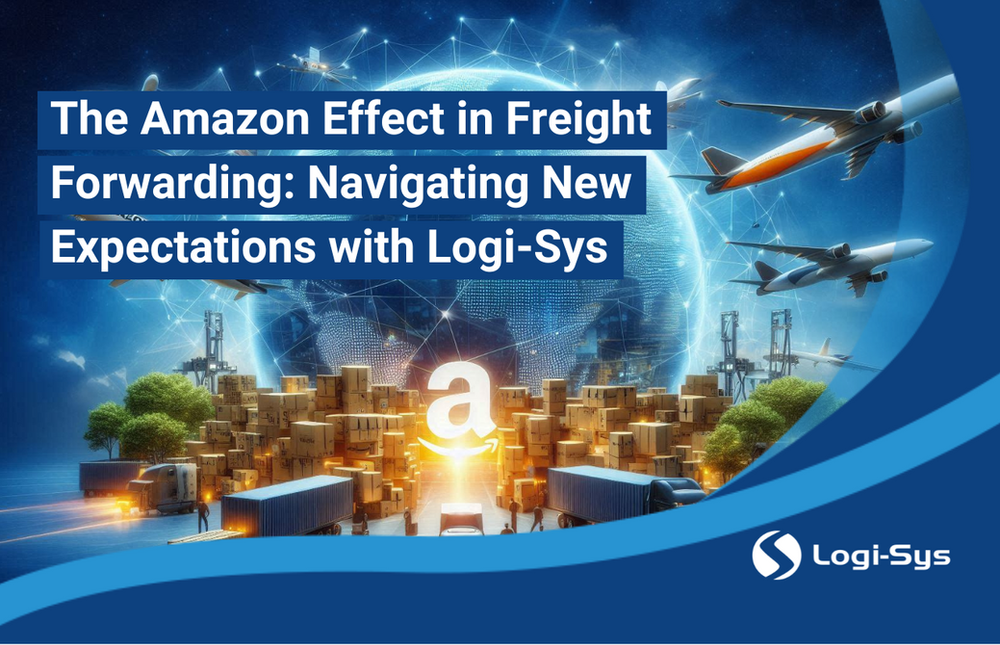
Navigating New Expectations with Logi-Sys

by
written by


In recent years, the logistics and freight forwarding industry has been significantly influenced by the rise of e-commerce giants like Amazon. This phenomenon, often referred to as the “Amazon Effect,” has transformed customer expectations, emphasizing rapid delivery, transparency, and exceptional customer service. This blog explores the impact of the Amazon Effect on freight forwarding, supported by an interesting DHL case study. We will also discuss how Logi-Sys, a comprehensive freight management software, can help freight forwarders meet these evolving demands.

Redefining Delivery Expectations: The Need for Speed

Amazon Prime’s introduction of two-day shipping has set a new benchmark for delivery speeds, compelling other e-commerce platforms and logistics providers to accelerate their delivery processes. Consumers now expect faster delivery times, even for standard shipping options.

Exceptional Customer Service: A Non-Negotiable Standard

Amazon has set a high bar for customer service, expecting logistics providers to offer prompt responses, easy returns, and hassle-free problem resolution. The integration of sophisticated tracking systems and automated customer service platforms has become a necessity to meet these expectations.

Transparency and Real-Time Tracking

One of Amazon’s key innovations has been the introduction of real-time tracking and transparent communication throughout the delivery process. Customers now demand to know the exact status of their shipments at all times, which requires freight forwarders to adopt advanced tracking technologies and provide regular updates.

Transforming Logistics: DHL Express Adapts

In response to the changing logistics landscape driven by the Amazon Effect, DHL Express, a global leader in logistics, recognized the need to adapt early on to meet new customer expectations.

DHL embarked on a comprehensive strategy to enhance its network and services:

DHL invested heavily in expanding its air and ground fleet, aiming to reduce transit times. This included a $360 million investment in the Americas, which expanded network capacity by nearly 30% and involved the development of new hubs, such as the large regional hub in Atlanta​

The introduction of guaranteed delivery options by specific times was another key move, ensuring faster and more reliable services for customers.

Results

DHL Express saw a 20% increase in customer satisfaction within the first year of implementing these changes​ 

The on-time delivery rate improved by 15%, bolstering DHL’s reputation for reliability​ 

Similarly, companies like FedEx and UPS have adapted to the demands of the Amazon Effect, setting new benchmarks for rapid delivery, transparency, and exceptional customer service. By leveraging technology and expanding their networks, these companies have not only enhanced operational efficiency but also significantly boosted customer satisfaction.

Logi-Sys: The Solution to Meet New Freight Forwarding Demands

Logi-Sys, a leading all-in-one cloud platform for logistics management, is designed to help freight forwarders navigate the challenges posed by the Amazon Effect. By leveraging advanced technology and comprehensive features, Logi-Sys enables companies to meet the expectations of rapid delivery, transparency, and exceptional customer service.

Accelerating Delivery with Logi-Sys

Logi-Sys uses AI-powered algorithms to determine the most efficient routes, minimizing transit times and reducing fuel costs. This feature is crucial for meeting the demand for rapid delivery.

The software provides real-time visibility into fleet operations, allowing for quick adjustments to avoid delays and optimize delivery schedules. This ensures that shipments are delivered swiftly and efficiently.

Enhancing Transparency with Logi-Sys

Logi-Sys excels in providing end-to-end visibility into the shipping process. The software’s advanced tracking capabilities and real-time updates ensure that customers are always informed about the status of their shipments.

Automated notifications about shipment status changes keep customers in the loop, reducing the number of inquiries and improving the overall customer experience.

Elevating Customer Service with Logi-Sys

Logi-Sys integrates customer relationship management tools, allowing companies to manage customer interactions efficiently and provide prompt assistance. This integration ensures that all customer information is readily available, facilitating quick and accurate responses.

The software supports communication across multiple channels, including email, phone, and live chat, ensuring customers can reach out through their preferred method. This multi-channel approach enhances customer satisfaction by providing flexibility and convenience.

Conclusion

The Amazon Effect has undeniably transformed the freight forwarding industry, setting new standards for rapid delivery, transparency, and customer service. To thrive in this new landscape, freight forwarders must embrace innovative solutions like Logi-Sys. By leveraging advanced technology and comprehensive features, Logi-Sys enables companies to meet and exceed customer expectations, ensuring their success in a rapidly evolving market.

As demonstrated by real-world case studies and statistics, the adoption of Logi-Sys can lead to significant improvements in delivery speed, transparency, and customer satisfaction. By staying ahead of the curve and adapting to the changing demands of the Amazon Effect, freight forwarders can secure their place as leaders in the industry.


Source link

0 comments
0 FacebookTwitterPinterestEmail
Services

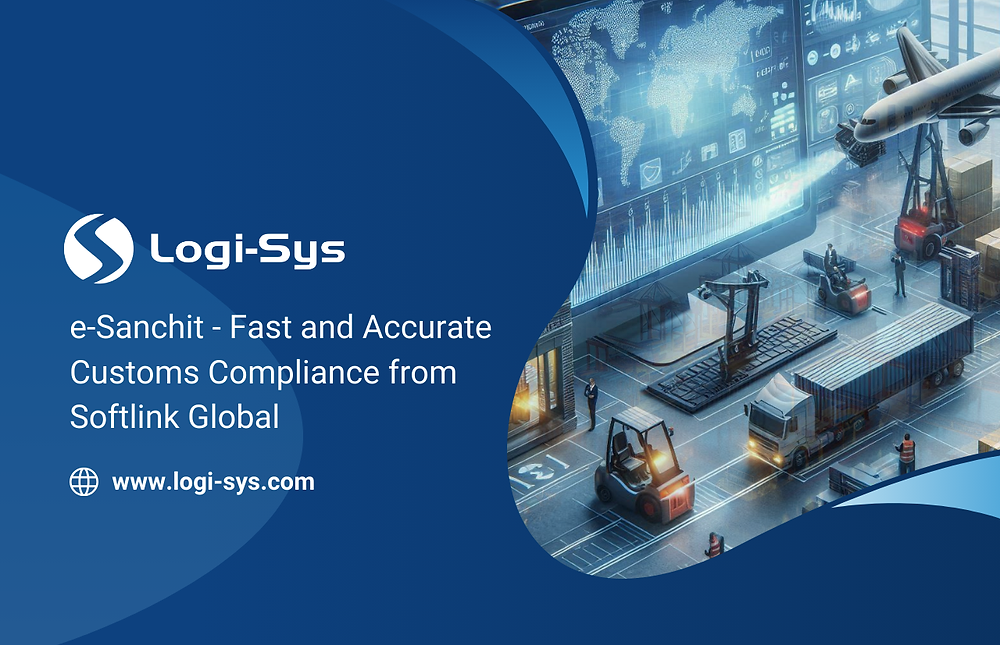
Streamlining Customs Compliance with e-Sanchit Automation from Logi-Sys

by
written by


At Softlink Global, we pride ourselves on leading the charge in logistics innovation, having served the industry with cutting-edge solutions like Logi-Sys and Live IMPEX for 3 decades now. As the market leaders in being a technology partner for customs compliance processes, we ensure that all Bill of Entries and Shipping Bills filed through our applications are compliant with the latest international guidelines—from AMS and AES to complex customs protocols across Asia, the Caribbean, and more.

Introducing Enhanced Efficiency with e-Sanchit Automation

In our continuous effort to empower Freight Forwarders and Customs House Agents, we have introduced e-Sanchit Automation. This Logi-Sys add-on streamlines your customs filing processes, ensuring compliance and maximizing operational efficiency.

Key Features of e-Sanchit Automation

Process multiple signed documents simultaneously, maintaining accuracy and consistency across filings

Automatically generate and attach the Invoice Reference Number (IRN) to the relevant customs job, enhancing efficiency and reducing errors

Adapt and resize files to meet specific compliance requirements with ease

Transforming Customs Clearance with e-Sanchit Automation

The adoption of e-Sanchit Automation marks a significant leap towards simplifying customs processes. Here’s how it transforms your operations:

Our step-by-step submission process eliminates the complexity of traditional customs filings

Retrieve and track documents in real-time, ensuring complete documentation integrity

Automate the labor-intensive parts of the filing process, freeing up your team to focus on strategic initiatives

With e-Sanchit Automation, dependencies on multiple applications are a thing of the past. Manage all filings under the robust umbrella of Logi-Sys

Stay Ahead with Continuous Innovations

Softlink Global’ commitment extends beyond just being a technology partner; we aim to completely refresh the logistics management practices of businesses the world over, and also uplift the logistics industry through various initiatives. The integration of advanced features like e-Sanchit Automation into Logi-Sys exemplifies our dedication to innovation and customer-centricity. Alongside other value-added features such as LogiBRAIN, LogiTRACK, Direct Integration with ICEGATE and more, we ensure that our clients are always ahead of industry trends.

Opt for Streamlined Compliance

Are you ready to redefine your customs clearance operations? e-Sanchit Automation is not just a tool; it’s your partner in achieving seamless compliance and operational excellence. Contact us today at business@softlinkglobal.com for an in-depth presentation and discover how e-Sanchit can streamline your logistics workflows.

Conclusion

Softlink Global remains steadfast in its mission to deliver superior, automated logistics solutions. Through Logi-Sys and e-Sanchit Automation, we continue to support our clients’ success, adapting to new challenges and technological advancements in the ever-evolving logistics landscape


Source link

0 comments
0 FacebookTwitterPinterestEmail
Newer Posts
Older Posts

Recent Posts

  • One eHGV Could Save 1000 Tonnes of Carbon
  • Libiao Robotics Demonstrates AirRob PRO
  • New Sleeve Wrapper for Transport Packaging
  • LogiMAT 2026: Practical automation & AI define first 2 days
  • Pallet Transport Service Added – Logistics News

Recent Comments

No comments to show.

Social Connect

Whatsapp

Recent Posts

  • One eHGV Could Save 1000 Tonnes of Carbon

  • Libiao Robotics Demonstrates AirRob PRO

  • New Sleeve Wrapper for Transport Packaging

  • LogiMAT 2026: Practical automation & AI define first 2 days

  • Pallet Transport Service Added – Logistics News

Newsletter

Categories

  • Services (1,096)
  • Uncategorized (41)

@2024 - All Right Reserved. Designed and Developed by Sierraline Cargo services

Manage Consent
To provide the best experiences, we use technologies like cookies to store and/or access device information. Consenting to these technologies will allow us to process data such as browsing behavior or unique IDs on this site. Not consenting or withdrawing consent, may adversely affect certain features and functions.
Functional Always active
The technical storage or access is strictly necessary for the legitimate purpose of enabling the use of a specific service explicitly requested by the subscriber or user, or for the sole purpose of carrying out the transmission of a communication over an electronic communications network.
Preferences
The technical storage or access is necessary for the legitimate purpose of storing preferences that are not requested by the subscriber or user.
Statistics
The technical storage or access that is used exclusively for statistical purposes. The technical storage or access that is used exclusively for anonymous statistical purposes. Without a subpoena, voluntary compliance on the part of your Internet Service Provider, or additional records from a third party, information stored or retrieved for this purpose alone cannot usually be used to identify you.
Marketing
The technical storage or access is required to create user profiles to send advertising, or to track the user on a website or across several websites for similar marketing purposes.
  • Manage options
  • Manage services
  • Manage {vendor_count} vendors
  • Read more about these purposes
View preferences
  • {title}
  • {title}
  • {title}
Sierraline Cargo Services
  • HOME
  • Services
    • Trade With Us
  • About Us
  • Contact Us
  • private jet
    • BOOK YOUR JOURNEY
  • Track Packages
  • Insurance
  • safekeeping

WhatsApp us