
Sierraline Cargo Services
  • HOME
  • Services
    • Trade With Us
  • About Us
  • Contact Us
  • private jet
    • BOOK YOUR JOURNEY
  • Track Packages
  • Insurance
  • safekeeping
Services

Supply Chain Predictions for 2025

by
written by


21st November 2024

Logistics BusinessSupply Chain Predictions for 2025Logistics BusinessSupply Chain Predictions for 2025

Looking ahead to 2025, Supplyframe shares its predictions on the electronics supply chain industry, including AI, resilience, and other industry thoughts, by its CMO, Richard Barnett.

1. Resilience will rise in 2025

Electronics supply chains will focus on resilience, AI integration, and sustainability in the coming year as companies seek to gain the visibility and capabilities to stay ahead of numerous challenges and forms of risk.

In terms of resilience, supply chains will continue to seek ways to identify components that pose lower levels of risk, cost, availability, or general ease of sourcing. Part of this effort will also be driven by the continued process of nearshoring as organizations seek to localize their supply base to reduce risk.

2. AI gets white hot in supply chain

The buzz surrounding AI continues as supply chains seek novel ways to integrate the technology. In 2025, organizations will focus on new applications for the technology that allows them to quickly parse supply chain intelligence or automate manual tasks in design, sourcing, and procurement.

3. A new focus on sustainability

Sustainability has continued to grow in terms of overall focus. In 2025, organizations will look for ways to address scope-3 emissions in their supply chains (supplier and logistics emissions), accounting for roughly 40% of a product’s carbon footprint. New forms of intelligence allow for a deeper understanding of an individual component’s CO2 emissions, providing teams with insights that allow them to consider sustainability earlier in the design process than ever.

4. Challenges will continue throughout the industry

Global chip shortages have improved overall, but demand continues to outpace supply in many categories as new capacity takes years to come online. Semiconductors, of course, also have notoriously long manufacturing lead times.

similar news
Supply Chain 2024 Predictions


Source link

0 comments
0 FacebookTwitterPinterestEmail
Services

Solution To Decarbonise Transport & Logistics

by
written by


Digital Catapult, a deep tech innovation organisation, has announced the results of a pilot programme it delivered to address the environmental impact of empty trucks on roads across the UK. The initiative trialled a new solution to decarbonise the transport-logistics sector, demonstrating a potential to cut CO2e emissions by 15-30%.

UK logistics play a critical role in driving economic growth, contributing £163 billion to the economy, and serving as a vital link between the UK and the global market. UK freight however accounts for 31% of all UK transport CO2 emissions, and statistics from the Department for Transport (DfT) show that 30% of trucks on UK roads are running with empty loads. The sector is under pressure to decarbonise without compromising on efficiency, and the pilot programme proved that deep tech can achieve this.

The pilot scheme was delivered by Digital Catapult in partnership with AF Blakemore & Son Ltd to explore how a shared digital infrastructure could establish more intelligent vehicle slot filling, routing, and tracking. Scaling of the solution would allow competing logistics providers to safely share information on available truck space across their collective fleets, without the need for a single party to have full control or visibility of the entire system.

The solution was trialled in a real-world industrial environment, and saw distributed ledger technology (DLT) and the internet of things (IoT) combined with an algorithm developed by project partner Fuuse, to optimise route planning and truck use. It achieved this by matching vehicle transport capacity with shipment needs across multiple UK organisations, and saw a 37% decrease in overall transport costs and a 9% improvement in vehicle fill rate for AF Blakemore & Son Ltd, one of the UK’s most successful family owned businesses.

The project, titled the Logistics Living Lab, is a UK Research and Innovation (UKRI) backed project, led by Digital Catapult and delivered as part of the Made Smarter Innovation | Digital Supply Chain Hub, which has so far helped over 40 startups and SMEs to secure more than £3 million in funding. This latest success is testament to the value of convening capabilities to strengthen supply chains in the UK, drawing on the expertise of partners and funders including Incept Consulting, Microsoft UK, Pairpoint, and Parity Technologies.

Tim Lawrence, Director of the Digital Supply Chain Hub at Digital Catapult said: – “When we launched the Made Smarter Innovation Digital Supply Chain Hub three years ago, we knew the potential of deep technologies for UK supply chains, but as we begin to see the results of the flagship projects like the Logistics Living Lab, we can start to realise potential into impact. The solutions built through this unique industry collaboration deliver a triple benefit to the UK logistics sector by empowering the organisations that make up our complex supply chains, to become more efficient, reduce costs to improve their bottom line and make a lasting environmental difference to positively contribute to the future of the planet.”

Phil Roe, President at Logistics UK said: – “Decarbonisation is the biggest challenge of the age and the pressure on the logistics sector to play our part is significant. We must deliver this in line with our efforts to overcome challenges in trade, insufficient infrastructure and a shortage of skills. What the Logistics Living Lab project has demonstrated is that digital technologies and close industry collaboration can play a crucial role in accelerating the journey to net zero, allowing UK logistics businesses to focus on optimising their operations to contribute to boosting growth for the UK economy.”

The project’s activities and outcomes are now detailed in a newly published report, accessible through the Digital Supply Chain Hub. Digital Catapult and its partners plan to scale this solution to further decarbonise the UK logistics sector. Companies interested in collaborating can contact Digital Catapult for more information.

similar news

Digital Catapult Platform to Solve Supply Chain Setbacks


Source link

0 comments
0 FacebookTwitterPinterestEmail
Services

CIRRO Partners with Loop to Enhance Returns Processes

by
written by


20th November 2024

Logistics BusinessCIRRO Partners with Loop to Enhance Returns ProcessesLogistics BusinessCIRRO Partners with Loop to Enhance Returns Processes

CIRRO Fulfillment, a leading global e-commerce fulfillment provider, announces the partnership with Loop, the leading returns and reverse logistics platform. This collaboration aims to significantly enhance the returns process for retailers and brands. With the integration of Loop’s automated portal, customers can effortlessly initiate returns, request exchanges, or secure refunds. This streamlined process reduces manual tasks, making returns management faster and more efficient, while enhancing the customer experience. The partnership also helps retailers and brands save time and reduce costs related to reverse logistics, allowing them to focus more on business growth.

Hong Li, Global Head of Sales at CIRRO Fulfillment, said, “We are glad to accomplish this integration between CIRRO Fulfillment and Loop as part of our shared commitment to delivering an exceptional customer experience. This enables CIRRO Fulfillment to seamlessly manage returns through Loop, while Loop users gain access to our extensive global facilities and returns services.”

“We’re beyond excited to be partnering with the team at CIRRO Fulfillment, as our mutual merchants will now be able to combine the power of Loop and CIRRO Fulfillment to ensure a smooth and efficient experience in both their forward and reverse logistics,” said John-David Klausner, SVP of Business Development and Partnerships at Loop.

Together, CIRRO Fulfillment and Loop offer a comprehensive solution that enhances both operational efficiency and customer satisfaction, transforming returns management from a burden into an opportunity for business improvement.

Read Similar…

English Channel Supply Chain Delays threaten Christmas


Source link

0 comments
0 FacebookTwitterPinterestEmail
Services

Condizioni Metereologiche Avverse – Private Jet Finder BLOG

by
written by


Travel by private jet is one of the safest and most comfortable to get around, but even these flights can be affected by adverse weather conditions. Bad weather, whether snow, wind, fog, or thunderstorms and cumulonimbuses, not only affects flight safety but can also result in delays, detour or cancellations. Unlike scheduled flights, private aviation offers more flexibility but also requires meticulous management of weather risks. Let’s look in detail at how weather conditions affect private jet flights, with a focus on the main challenges that can arise during the winter months or when extreme weather is present.

Ice, Frost and Snow: The Challenges of Extreme Cold.

Freezing temperatures and snowfall are mainly a problem on the ground. Although private jets are designed to withstand extreme temperatures and adverse weather conditions at altitude, the situation may be different during takeoff and landing. Before takeoff, it may be necessary to perform the de-icing

, a process that removes ice and snow from aircraft surfaces to ensure flight safety. This process, although essential, involves additional costs and may cause delays.

Click here to learn what de-icing or de-icing operations are.

In addition, the slope must be properly cleaned and free of snow accumulation to allow safe operations. A snowy or icy runway, in fact, could compromise grip during takeoff or landing. Even the Slope cleaning operations by snowplowing, chemical agents, and spreading of sand and granules, and the grip tests to assess the coefficient of friction can cause slight delays in the takeoff of private jets.

Thunderstorms and Lightning: The Risk of Cumulonembers.

Thunderstorms are among the most feared weather phenomena in aviation. Storm clouds, known as cumulonimbus (CB), can cause turbulence, wind shear and lightning.

  • Turbulence and wind shear: The updrafts and downdrafts within a thunderstorm generate turbulence that can make flight erratic. Wind shear, on the other hand, is caused by sudden changes in wind speed and direction, posing a risk especially during takeoff and landing.
  • Lightning: Although aircraft are designed to withstand lightning, pilots avoid flying directly through a thunderstorm to minimize risk.

Although airplanes are designed to withstand lightning, pilots always avoid passing through thunderstorm areas.

Private jets have an advantage over scheduled flights because they can get on or off more quickly to avoid the most turbulent areas. However, if a thunderstorm is present near the departure or arrival airport, the flight may be delayed or rescheduled to ensure safety. 

How to deal with turbulence aboard private jets: tips for a smooth flight

Fog and Poor Visibility: An Obstacle to Airport Operations.

Fog is one of the main causes of flight delays, as it reduces visibility during both takeoff and landing.

  • Low Visibility Procedures (LVP).: When visibility drops below 1,500 meters, airports activate specific procedures that limit the number of takeoffs and landings to ensure safety.
  • Flexibility of private aviation: A significant advantage of private jets is the ability to change flight plans at the last minute, choosing alternate airports with better weather conditions. This is not always possible for scheduled flights, which must follow predetermined routes.

Although many private jets are equipped with advanced systems for flying in low visibility conditions, air traffic can still be slowed down, especially at smaller airports, which are often less well equipped than major hubs.

Strong Winds: A Variable Not to Be Underestimated

Wind is one of the most common weather phenomena affecting flights, both in the air and on the ground. Its intensity and direction can have significant effects on travel time, aircraft stability, and takeoff and landing procedures.

  • Headwind and fair wind: When the airplane flies against the wind, the ground speed decreases, prolonging the travel time. Conversely, a favorable wind can reduce flight time by up to 20%. This phenomenon is particularly evident during transatlantic flights, where jet streams can speed up or slow down the flight by hours.
  • Side wind: One of the most difficult situations is crosswind, which hits the aircraft in a direction perpendicular to the runway. This requires high pilot skill, especially during landing, and can limit operations at airports with runways that are not perfectly aligned.

Private jets, because of their smaller size and lighter weight than commercial aircraft, are more prone to turbulence. However, advanced pilot training and onboard technology allow even extreme windy conditions to be handled safely.

Extreme Temperatures: Hot or Cold, No Problem for Private Jets

Temperature extremes, both cold and too hot, affect aircraft performance, but private jets are designed to cope with these conditions as well.

  • Cold weather: As mentioned earlier, de-icing and runway maintenance are crucial in freezing conditions, but once in the air, private jets operate perfectly even in extremely cold temperatures.
  • Warm climate: Hot air is less dense, which could reduce the efficiency of engines and increase the distance needed for takeoff. However, pilots are trained to compensate for these effects, ensuring safe operations even on the hottest days.

As we have seen, excessive high temperatures can also affect the performance of a private jet. Similarly, extremely low temperatures can result in longer ground preparations, such as de-icing. In any case, the temperature inside the cabin always remains adjusted according to passengers’ preferences, ensuring maximum comfort.

weather conditions private jetStrategies for Minimizing Inconvenience and Delays

Travelers who choose to charter private jets for their travel can count on a level of flexibility and assistance that far exceeds that of commercial flights, especially in severe weather situations. Below are some strategies adopted by PrivateJetFinder to ensure safe travel and minimize disruption.

Constant Weather Monitoring

Private jet companies work with expert meteorologists to analyze real-time weather conditions along planned routes. This continuous monitoring allows them to:

  • Identify optimal time windows for takeoff and landing.
  • Modify routes during disruptions, ensuring smoother travel.
  • Anticipate in advance possible delays due to snow, ice, high winds, thunderstorms and cumulonimbuses allowing customers to stay informed.

Flexible Planning

Flexibility is one of the greatest advantages of chartering a private jet. Customers can:

  • Postpone the flight until weather conditions improve.
  • Anticipate departure in case of a worsening forecast.
  • Reschedule without having to adhere to the strict schedules of commercial airlines.

A proactive approach makes private jets an ideal solution for those who do not want to compromise safety or comfort.

PrivateJetFinder: The Value of Choosing a High-Quality Service

Rely on a reliable private jet rental service like PrivateJetFinder guarantees not only comfort, speed and effective solutions, but also expert support at critical moments. Even in adverse weather conditions, a team of experts will know how to handle every situation by offering tailored solutions.

Global network. The ability to draw on a large network of airports and operators, for example, enables rapid response to changes while maintaining excellent service quality.

Choose your destination and rely on PrivateJetFinder to travel with the peace of mind that you always have a secure plan and an experienced team by your side, ready to handle any unforeseen circumstances.


Source link

0 comments
0 FacebookTwitterPinterestEmail
Services

Packfleet and Who Gives A Crap ship over 9m rolls

by
written by


All-electric courier Packfleet and Who Gives A Crap have ended crappy deliveries for Londoners, with over nine million toilet rolls delivered across the capital. 

It’s not just customers that are benefitting, it’s the planet too, with the brand saving approximately 54,500kg of carbon emissions thanks to Packfleet’s ultra-efficient, all-electric fleet.

These figures will only continue to increase, with Packfleet on course to ship over 10 million rolls by the end of 2024.

From working with Packfleet alone, Who Gives A Crap is set to reduce the total carbon emitted by its UK-EU region by 0.6%.

To mark the new partnership, the Who Gives A Crap team recently became Packfleet delivery drivers for the day – bringing ‘random acts of crappiness’ directly to customers’ doorsteps.

Londoners were treated to free cupcakes alongside their toilet roll, with furry friends being offered branded dog biscuits.

As a result of the partnership, Who Gives A Crap has seen a 25% drop in customer queries on the whereabouts of their orders, thanks to the introduction of Packfleet’s transparent, user-friendly recipient experience.

Packfleet’s delivery failure rate is 10x less than traditional couriers, resulting in over 98% of Who Gives A Crap customers receiving their bog roll on time – an over 4% improvement on the UK industry average – cutting down on resource-intensive redeliveries.

The two B Corp certified brands teamed up in October 2023, and have been disrupting their respective sectors together ever since.

Tristan Thomas, CEO of Packfleet, said: “We’ve achieved a lot in the short time Packfleet has been working with Who Gives A Crap, with both customers and the environment seeing the upshot. 

“Our close relationship with the Who Gives A Crap team has allowed us to do some amazing work, including letting them experience what it’s like to be a Packfleet driver first hand. 

“Whilst we can’t promise to deliver toilet rolls directly to the bathroom door, we are confident we can maintain the high standard we’ve achieved and continue to put a stop to crappy deliveries.” 

Phillipa Taylor, Head of European Supply Chain at Who Gives A Crap, added: “We chose to work with Packfleet due to their carbon neutral deliveries, tech platform and customer focus.

“Deliver and Delight is one of our core values at Who Gives A Crap. Packfleet have consistently lived up to this, with reliable and excellent service, week in, week out – driving down our customer tickets. 

“The Packfleet team continually comes to the table with proactive ideas and opportunities on how we can further improve our customer experience. 

“Surprising our customers on delivery day was a real highlight for us. We couldn’t have done this without Packfleet’s trust and cooperation. They have been great to work with and have enabled us to get closer to our customer experience. Thank you, Packfleet.”

Read Similar…

UK Parcel Delivery to Lead Europe This Festive Season


Source link

0 comments
0 FacebookTwitterPinterestEmail
Services

AMR Innovator Joins Open Source Robotics Alliance

by
written by


Seegrid Corporation, manufacturer of autonomous mobile robot (AMR) solutions for palletized material handling in the US, today announced its membership in the Open Source Robotics Alliance (OSRA), an initiative of the Open Source Robotics Foundation (OSRF). Through this partnership, Seegrid will contribute its industry-leading expertise through its active involvement in the open-source robotics community. The company joins a vibrant network of innovators, collectively driving open-source development for the betterment of the global robotics landscape.

As part of the OSRA, Seegrid will actively support initiatives that foster collaboration and shared knowledge across the robotics field. The company aims to participate in key OSRF activities, including the renowned ROSCon event, as well as on-line communities such as GitHub and ROS Discourse.

“Joining OSRA is an opportunity for us to more fully participate in the open-source robotics community, to share our insights and learn from a community that thrives on collaboration and innovation,” said Tom Panzarella, Chief Technology Officer of Seegrid. “By contributing to the open-source robotics ecosystem, we hope to help push the community forward, enhancing the capabilities of autonomous systems across industries. Together with other OSRA members, we believe we can further harden and improve the accessibility of advanced technology for all.”

This partnership reflects Seegrid’s commitment to promoting open development that benefits the entire community, not just individual organizations. With the company’s extensive experience in AMRs, Seegrid hopes to play an active role in advancing the collaborative development efforts that make open-source platforms like ROS 2 vital contributors to technological progress.

Vanessa Yamzon Orsi, CEO of the Open Source Robotics Foundation, commented, “We are excited to welcome Seegrid to the OSRA. Their expertise in AMRs brings significant value to our shared mission of advancing open-source robotics technology. Seegrid’s contributions will help enhance the collective development efforts that our members bring to the table, further advancing open innovation across the industry.”

By joining OSRA, Seegrid also aims to inspire a new generation of autonomous engineers, enabling knowledge-sharing across sectors and fueling the continued growth of open-source projects. This partnership will empower organizations of all sizes to benefit from collaborative progress in the field, contributing to a future where autonomous robotics technology is more accessible, sustainable, and adaptable.

similar news

Self-Driving Vehicle Innovator in Multi-Product Launch


Source link

0 comments
0 FacebookTwitterPinterestEmail
Services

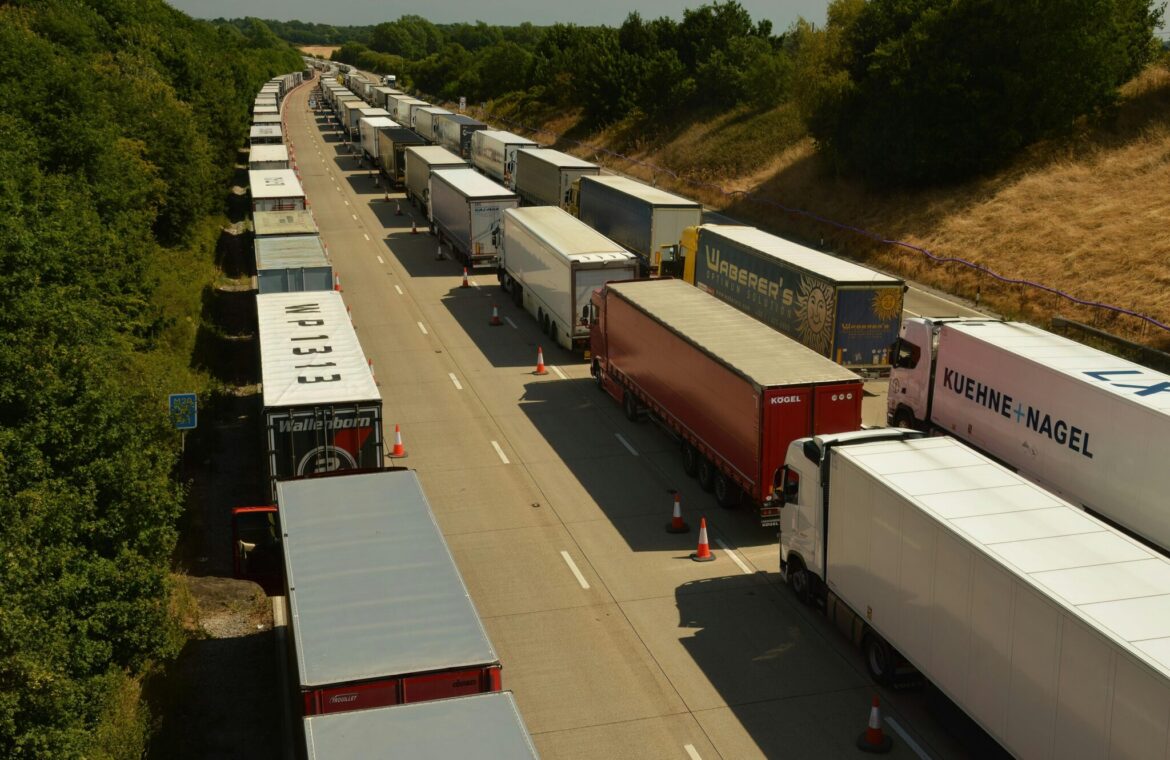
English Channel Supply Chain Delays threaten Christmas

by
written by


As businesses take steps to boost supply ahead of the busy Christmas shopping period, research from Vinturas, a global supply chain interoperable network solution, found that the English channel is the region where the most UK based businesses experienced those delays and lost shipments over the last year.

The research, conducted in partnership with Censuswide, surveyed 400 global business leaders with decision making responsibility for shipping and international logistics and found that over 13% had shipments which were ‘significantly delayed’ over the last year. When speaking to businesses based in the UK, over two fifths (43%) said that they experienced delays in the English Channel, followed by the Suez Canal (40%) and the Panama Canal (33%).

Concerningly, UK based businesses surveyed said that they had also lost an average of 11% of shipments the last year due to ongoing supply chain disruptions, with the English Channel also scoring top for lost shipments as 39% of businesses polled said that losses occurred in the region. This comes as 70% of UK businesses said they were concerned about regulatory problems or compliance violations in their supply chains.

As businesses enter peak shopping period, the research reveals that two fifths (40%) of UK companies said blind spots and inefficiencies in supply chain data have created difficulties predicting demand or inventory levels. What’s more, over one in three (35%) UK business leaders said the stress of managing external supply chain shocks is a key pain point their business faces when it comes to logistics.

Supply chain blindspots harming businesses

However, despite the unpredictability of global shock events causing delays to shipments, UK business leaders also point to internal problems that continue to hamper logistics performance. 98% of business leaders said that blind spots or inefficiencies have had some impact their business in the last year. When asked to evaluate the reasons for supply chain difficulties, 30% said that they had difficulty accessing real-time logistics data from which they could make decisions. A further one in three (33%) said they lacked integration (interoperability) between different parts of their supply chain.

However, despite many business leaders pointing to issues around access to accurate data or the ability to integrate supply chain systems, the research showed that 16% of UK companies still rely on paper-based processes (e.g. manual logs and forms) for their supply chain operations management. To help overcome some of these issues, UK business leaders state that they plan to increase investment in supply chain technology over the next year by an average of 8.2%.

Supply Chain Delays threaten Christmas

Ronald Kleijwegt, CEO, Vinturas commented: “The English Channel is naturally the major artery for UK trade overseas. It is therefore shocking to see it emerge as a hotspot for delays, especially given the scale of the recent problems in other regions like the Red Sea or Panama Canal. While there are several factors at play, it’s clear that regulatory compliance violations continue to be a major concern for businesses that rely on overseas trade. And with the busiest shopping season around the corner, these challenges are likely to be even more pronounced over the coming weeks.

Of course, regulatory problems due to Brexit and other factors have been a long-running saga and though the global supply chain issues we’ve seen over the past year could not be foreseen, businesses cannot operate without being prepared for this kind of volatility in 2025.

When it comes to managing supply chain ecosystems, organizations must set themselves up for success, getting the basics rights and creating resilience to mitigate losses. As we navigate an increasingly complex and volatile world, supply chain interoperability, actionable visibility, security and investment in resilience, are no longer optional but a fundamental part of business operations that cannot be ignored.”

similar news

P&O Ferries ‘takes back leadership’ on Dover-Calais route


Source link

0 comments
0 FacebookTwitterPinterestEmail
Services

Dematic Completes Installation for Italian 3PL

by
written by


Dematic recently finalised the installation of an automation project featuring an AutoStore system for the Italian 3PL Plurima. The third part logistics provider is one of the leaders in the Italian market for hospital logistics and medical data management and also provides storage services for public and private hospitals. The newly installed system increases operator performance for both decanting and picking while also boosting order accuracy.

“In view of the market challenges we were facing, we already knew that an AutoStore system might be the best fit for us to meet our goals, and when combined with Dematic’s expertise and vast experience in working with the system, we knew this was our ideal partner for the improvements we sought,” explains Fabio Grossi Gondi, the managing director at Plurima.

To better provide outsourced pharmaceuticals and administrative stock management, Plurima turned to Dematic to deliver automation to its distribution centre in Caltignaga, in Italy’s Piedmont region, which supplies hospitals and other medical facilities in the province of Novara.

“Thanks to the advanced functionalities of our software, along with the batch order Put2Light system utilising battery-powered carts and wireless technology, we further optimised the picking processes, making the overall solution even more responsive and sustainable in terms of an ROI perspective,” beams Rosario Filomena, a sales manager in Italy for Dematic.

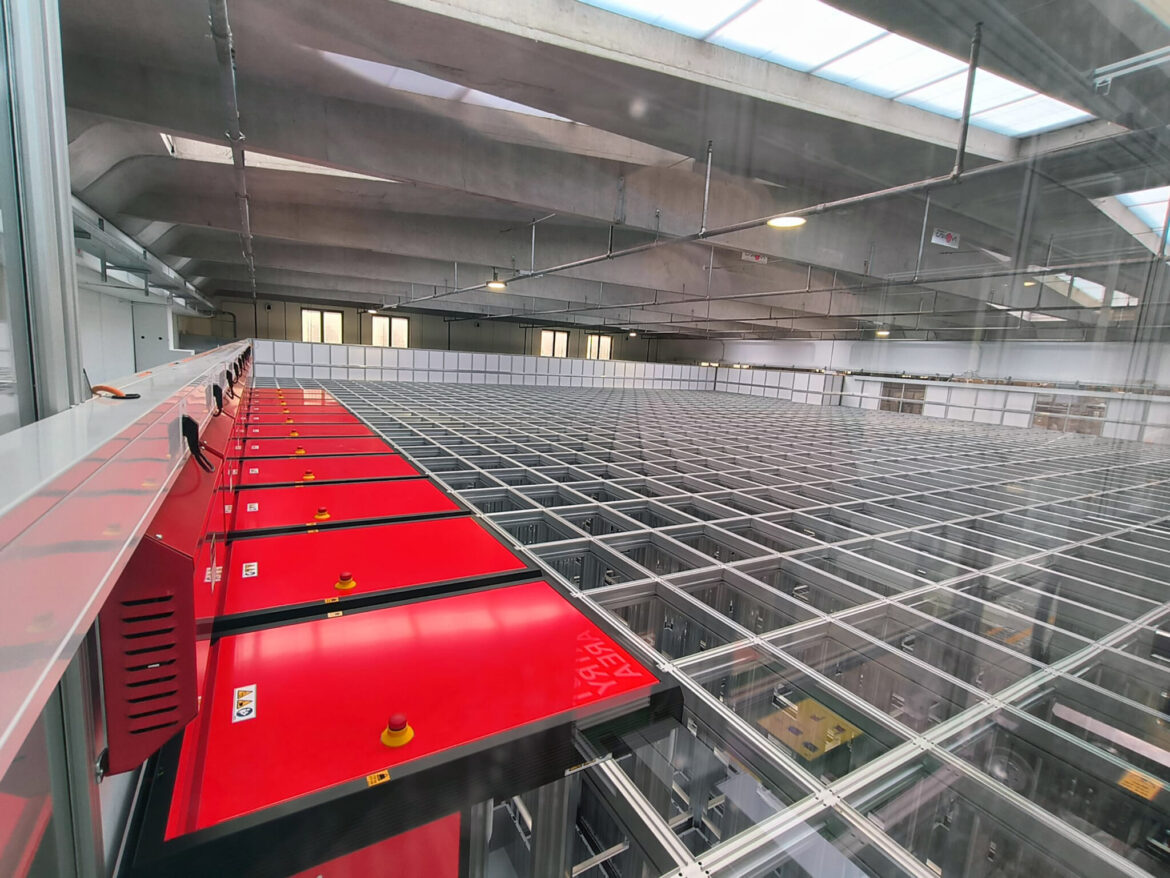
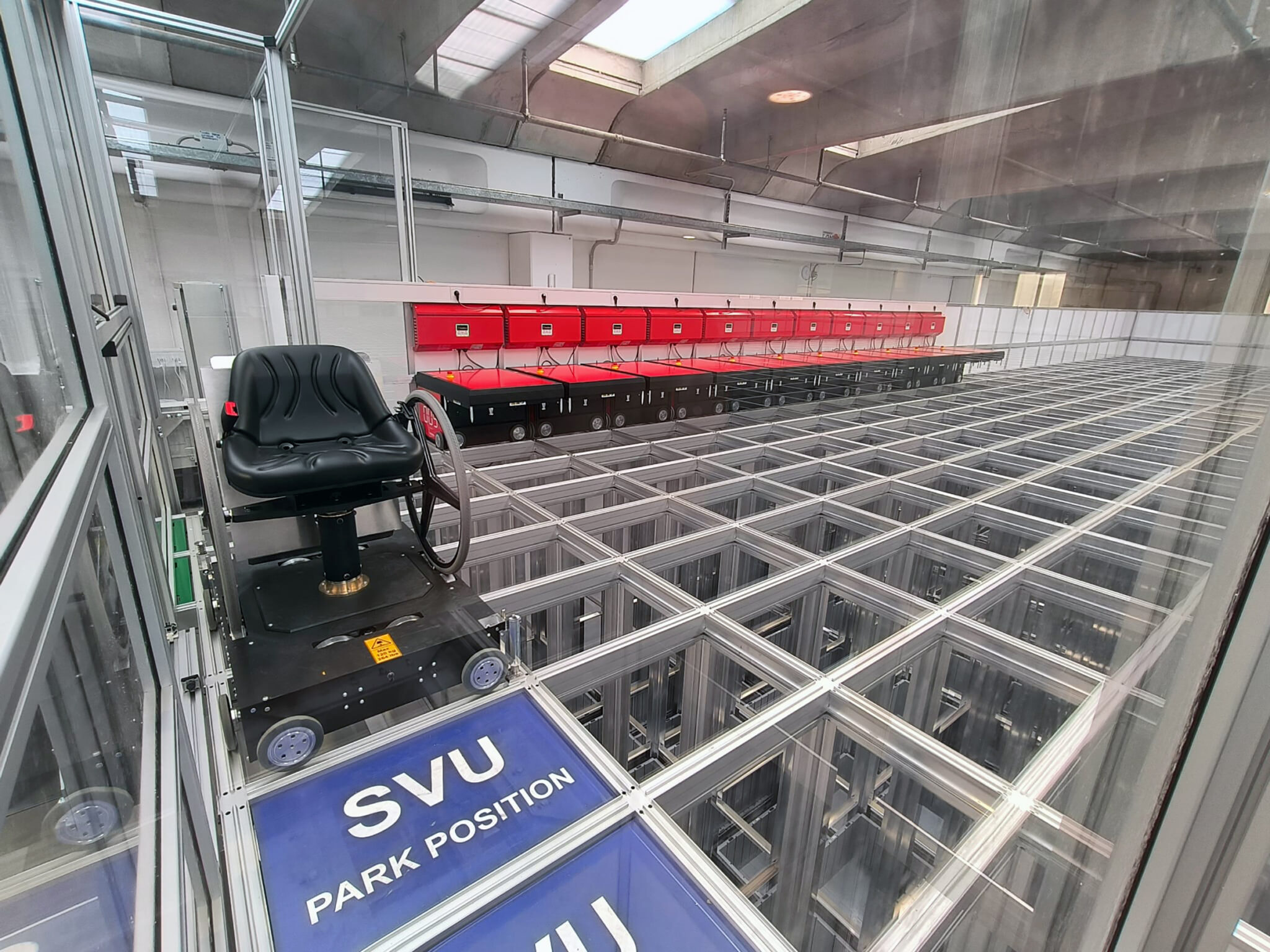
The modular, automated goods-to-person system was installed in an existing facility, which is approximately six metres high and has a floor space covering 400 square meters. The grid height is approximately 3,700 mm and has a storage capacity of 10,000 bins. The system has a storage volume of up to 758 cubic meters and a ratio of 1.9 m³/m². The 13 R5 robots and their respective battery chargers along with three carousel-type doors ensure the picking and decanting processes are carried out efficiently.

According to Grossi Gondi, Plurima is already reaping the benefits of their newly installed solution. The company has reduced its warehouse storage area by roughly 75 percent and has cut the number of employees needed for order fulfilment down to one-third of what it previously required. Additionally, employee safety has also climbed upward.

Filomena added, “we are convinced that this successful model can be replicated in other distribution centres with similar results in the future.”

similar news

Italian Job For UK Logistics Firm


Source link

0 comments
0 FacebookTwitterPinterestEmail
Services

Keep up and Running with Technical Training

by
written by


15th November 2024

Logistics BusinessPodcast: Keep Logistics up and Running with Technical TrainingLogistics BusinessPodcast: Keep Logistics up and Running with Technical Training

In this episode of Logistics Business Conversations, we discuss the increasing demand for technical skills in the logistics industry and the training necessary to meet this demand. Host, Peter is joined by Stefan Beke, an expert in technical training from TVH University.

Stefan emphasizes the growing importance of technical expertise as logistics operations become more technology-driven. Key equipment like forklifts are central to efficient logistics, and maintaining them requires specialized skills, especially with the shift toward electric models. This transition has made electrical and electronic skills more essential, areas where many technicians still face challenges.

The conversation also highlights the value of hybrid learning models in technical training. Combining online theoretical content with hands-on practice reduces travel time and costs while providing a comprehensive learning experience. This approach is becoming more popular as it balances flexibility with practical skill development, crucial for career advancement in the logistics field.


Source link

0 comments
0 FacebookTwitterPinterestEmail
Services

Businesses Accelerate Reshoring amid Uncertainties

by
written by


An acceleration in strategic reshoring moves by businesses worldwide to shift operations and supply chains closer to their home or main markets, is revealed by new Bain & Company research just released.

Amid intensified geopolitical uncertainties and rising costs, analysis from Bain’s biennial operations survey of CEOs and chief operating officers shows a further rise in companies planning, or already investing in and executing, reshoring and near-shoring – as well as the emerging trend of “split-shoring,” where businesses balance a mix of offshore production with other key manufacturing activity close to home.

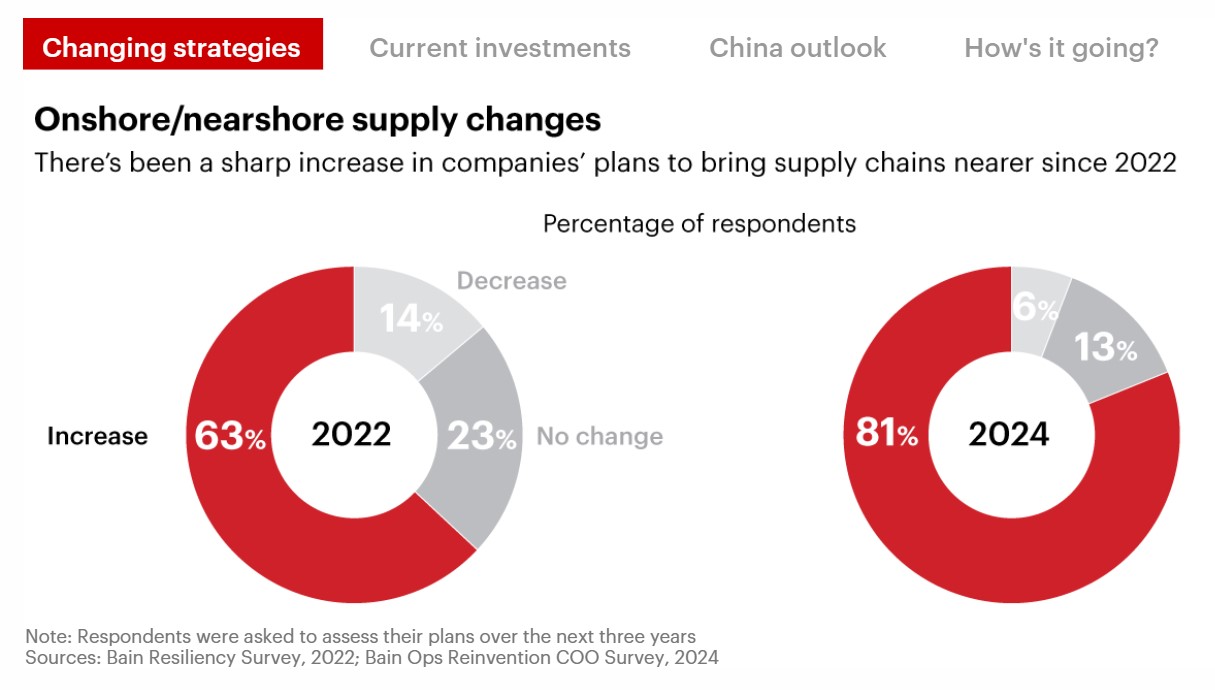
Bain’s findings show that the proportion of CEOs and COOs reporting their companies have plans to bring supply chains closer to market has risen to 81%, up by a sharp 18 percentage points from 63% in 2022. This comes alongside almost two-thirds (64%) of executives surveyed reporting investment in split-shoring (46%) or near-shoring (18%). Only 36% report further investment in offshoring, meanwhile. However, the findings also show reshoring efforts also have much further to run, with only 2% of companies reporting having fully completed their plans.

Bain’s operations survey gathered views from 166 CEOs and COOs, with 90% managing businesses with revenues in excess of $1 billion, more than half at companies with revenues above $5 billion, and two-fifths with $10 billion-plus revenues.

The acceleration of the reshoring trends underlines how heightened geopolitical turbulence and pressures for greater sustainability and reduced carbon footprints, alongside the post-pandemic goal to deliver greater resilience in supply chains, have disrupted the previous business rationale for low-cost offshore manufacturing hubs, tilting the balance towards operations closer to home markets.

Hernan Saenz, Bain & Company partner and global head of the firm’s Performance Improvement practice, commented: “We believe the current acceleration of reshoring across key markets worldwide is a crucial trend that demands CEOs’ attention. The multiple disruptions companies have grappled with since the pandemic mean the question for company leaders is no longer whether to reinvent supply chains but how to do that so their operations are made more cost-competitive, resilient, sustainable, and agile in responding to evolving markets and customer needs.”

China factors, US Inflation Reduction Act fuel trends

Bain’s analysis indicates that reshoring is also being reinforced by deglobalization trends, with apparent concerns over decoupling of economic blocs contributing to a rise of more than 25% in the proportion of companies seeking to reduce dependence on China. The proportion of companies reporting moves to shift operations out of China has risen to 69% in 2024, from 55% in 2022, the survey results show.

In the US, where 39% of respondent businesses are based, the findings also point to reshoring having been further stimulated by the 2022 Inflation Reduction Act (IRA). The IRA offers US companies subsidies and tax credits to incentivize reshoring and near-shoring to boost domestic manufacturing and job creation – particularly in sensitive markets, such as those for semiconductors, clean energy technologies such as solar panels and wind turbines, and electric vehicle supply chains.

Moves toward reshoring of semiconductor manufacturing have also been intensified by the US CHIPS Act, which put in place tax incentives and $52 billion in funding to stimulate US domestic production of chips – as well as surging AI-driven demand for graphics processing units (GPUs). Bain’s recent Global Technology Report forecasts that demand for key GPU components could increase by 30% or more by 2026, potentially triggering an AI-induced chip shortage.

Adam Borchert, Bain & Company partner in the firm’s Performance Improvement practice and global lead of its Supply Chain practice, said: “The powerful forces driving the patterns of re-shoring, near-shoring and split-shoring that our findings show will persist and confront company leaders with the challenge and opportunity of transforming their supply chains for reshaped global markets. We are helping clients to navigate these shifts and build supply chains that meet market needs, are resilient and future-proofed, while strengthening management capabilities to adapt to further change in an uncertain world of constant turbulence.”

similar news

Brexit Vote and Weak Pound Fuelling Reshoring Trend, Says Packaging Company


Source link

0 comments
0 FacebookTwitterPinterestEmail
Newer Posts
Older Posts

Recent Posts

  • Blend of Solutions in Contract Logistics
  • Middle East Conflict Drives Surge in Spot Freight
  • On Another Level – Logistics News
  • Interroll to Acquire Royal Apollo Group
  • Warehouse Property – Essential Partnership

Recent Comments

No comments to show.

Social Connect

Whatsapp

Recent Posts

  • Blend of Solutions in Contract Logistics

  • Middle East Conflict Drives Surge in Spot Freight

  • On Another Level – Logistics News

  • Interroll to Acquire Royal Apollo Group

  • Warehouse Property – Essential Partnership

Newsletter

Categories

  • Services (1,108)
  • Uncategorized (41)

@2024 - All Right Reserved. Designed and Developed by Sierraline Cargo services

Manage Consent
To provide the best experiences, we use technologies like cookies to store and/or access device information. Consenting to these technologies will allow us to process data such as browsing behavior or unique IDs on this site. Not consenting or withdrawing consent, may adversely affect certain features and functions.
Functional Always active
The technical storage or access is strictly necessary for the legitimate purpose of enabling the use of a specific service explicitly requested by the subscriber or user, or for the sole purpose of carrying out the transmission of a communication over an electronic communications network.
Preferences
The technical storage or access is necessary for the legitimate purpose of storing preferences that are not requested by the subscriber or user.
Statistics
The technical storage or access that is used exclusively for statistical purposes. The technical storage or access that is used exclusively for anonymous statistical purposes. Without a subpoena, voluntary compliance on the part of your Internet Service Provider, or additional records from a third party, information stored or retrieved for this purpose alone cannot usually be used to identify you.
Marketing
The technical storage or access is required to create user profiles to send advertising, or to track the user on a website or across several websites for similar marketing purposes.
  • Manage options
  • Manage services
  • Manage {vendor_count} vendors
  • Read more about these purposes
View preferences
  • {title}
  • {title}
  • {title}
Sierraline Cargo Services
  • HOME
  • Services
    • Trade With Us
  • About Us
  • Contact Us
  • private jet
    • BOOK YOUR JOURNEY
  • Track Packages
  • Insurance
  • safekeeping

WhatsApp us