Sierraline Cargo Services
  • HOME
  • Services
    • Trade With Us
  • About Us
  • Contact Us
  • private jet
    • BOOK YOUR JOURNEY
  • Track Packages
  • Insurance
  • safekeeping
Services

Holding Brakes for Electric Counterbalance Forklifts

by
written by


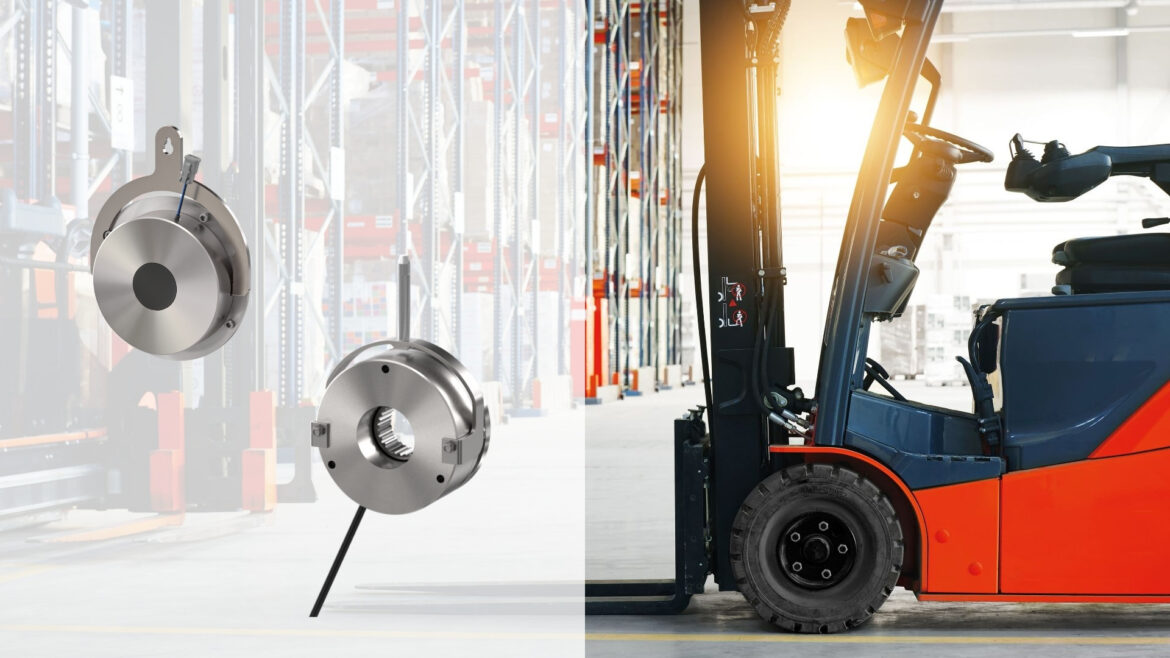
The industrial truck industry is characterized by high safety and performance requirements. With increasing electrification, electric drive systems and their safety components are becoming more important. Compact spring-applied brakes from Kendrion contribute significantly to the operational safety of industrial trucks and impress with their stable braking torque over their service life, robust design for industrial conditions, and high mechanical load capacity during emergency stops.

The holding brake is a key component for the operation of counterbalance forklifts: it secures the vehicle when stationary on ramps, is mechanically designed for a high number of load changes, and closes reliably in the event of a fault. The fail-safe principle has proven itself here – spring-operated, electrically released, and closed when de-energized.

Electrified powertrain

With the BFK552-12 and BFK457-14 spring-applied brakes, Kendrion provides its customers with precision solutions for electric counterbalance forklifts. The brake specialists have been developing components for the industrial truck market for decades and support manufacturers and system partners with application-oriented design and series-production-ready implementation. The portfolio ranges from standard brakes to application-specific variants – tailored to motor/gearbox integration, installation position, and protection type requirements.

Flat, robust, energy-optimized

The BFK552-12 is a flat spring-applied brake with a height of only 43.7 mm and a braking torque of 60 Nm – designed for counterbalance drives, including in back-to-back arrangements. With protection class IP66, the brake is ideal for use in climatically demanding environments. Overexcitation and holding current reduction reduce power loss and heat generation, which in turn has a positive effect on the efficiency and longevity of the forklifts. As a ready-to-install unit, the brake reduces installation and adjustment effort and minimizes typical installation errors. In addition, customers benefit from the global availability of brakes developed and produced in Germany.

Design-in platform for the most demanding requirements

The BFK457-14 is available as a design-in platform for new developments with higher performance requirements: With a braking torque of more than 90 Nm and designed for high emergency stopping energies, the brake has proven itself in practice even at high travel speeds. Compact versions with a particularly space-saving design facilitate integration into dense drive compartments and enable application-specific adaptations.

Application experience meets vertical integration

When developing brakes, Kendrion combines application experience with vertical integration, relying for decades on its German development site, well-coordinated project management, a high level of service, and its in-house rotor production.

Visit Kendrion at LogiMAT in Stuttgart from March 24 to 26, 2026, Hall 1, Booth GA35.


Source link

0 comments
0 FacebookTwitterPinterestEmail
Services

From Express to Integrated Logistics for DX

by
written by


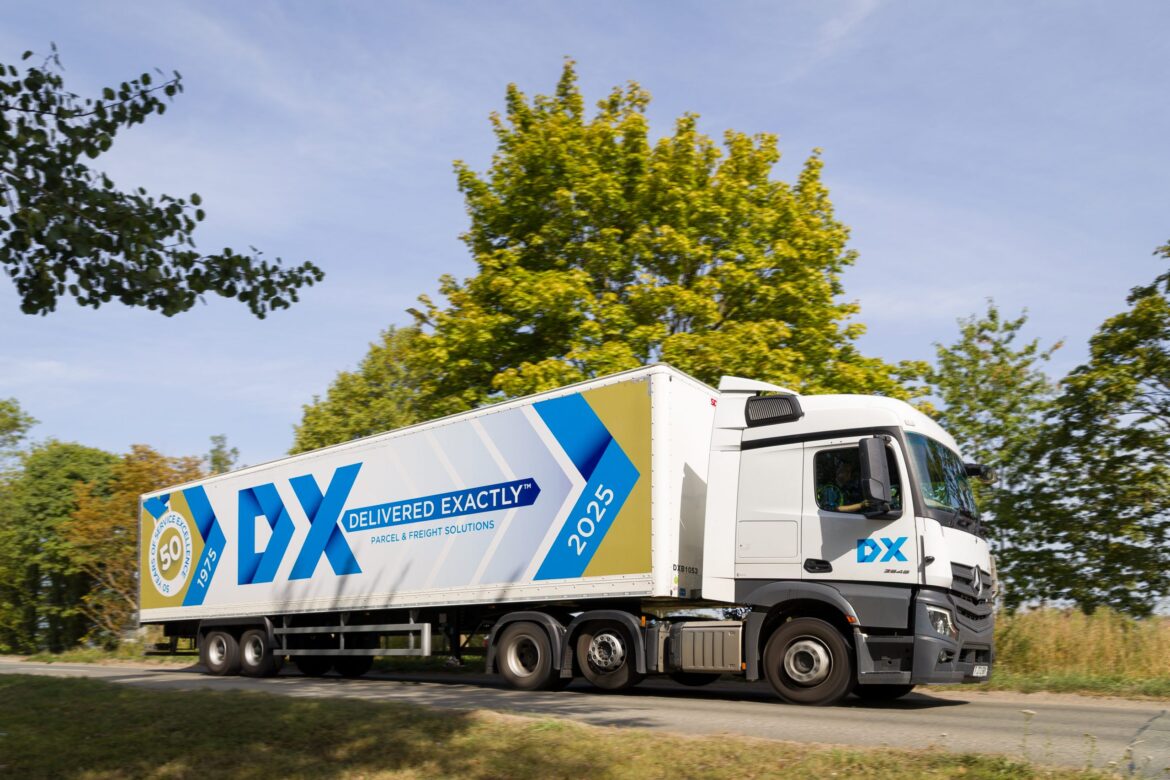
Having honed a reputation and built a physical presence over fifty years as a same day and next day package, parcel and bulky delivery specialist throughout the UK and Ireland, DX is morphing into an integrated pallet freight and third-party logistics operator. CEO Ian Truesdale sat down for an exclusive with Logistics Business’ David Priestman to explain the transformation.

Having been acquired by HIG Capital two years ago, DX Group (formerly listed on the London AIM market) has the resources and new leadership to drive change and growth as it now becomes DX Logistics. Truesdale, who joined last July, forecasts double-digit revenue growth this year to reach the £600m mark. “It’s a good company, with a strong customer base,” he tells me. “We’re profitable, but with the potential to grow – organically, via further acquisitions and by expanding into new vertical markets such as pharmaceuticals, healthcare, defence and temperature-controlled storage and distribution.”

DX has approximately 5300 staff, 2300 vehicles and 105 depots and hubs. Having acquired HDC Logistics in Biggleswade, Bedfordshire, the company has gained pallet freight capacity. Truesdale (pictured, below) expects there to be some consolidation in the British pallet freight networks as there is over-capacity in haulage. His substantial prior experience with Unipart, Kuehne + Nagel, CEVA, Exel and Accenture was what attracted him to HIG to lead this specific challenge.

Physical Presence

The company can now offer integrated logistics services and dedicated solutions. From multi-user DCs to a hybrid of B2C and B2B delivering, direct or via the DX network, a multi-channel approach is being developed. “Many 3PLs don’t have last mile capacity,” Truesdale says. “DX can integrate that into our general suite of services and be a one-stop-shop – end-to-end on the demand side.” This means transporting everything from passports and letters to pallets and bulky items. 93 million items were delivered by the company last year.

Partnerships are another means to broadening the business and its range of expertise. DX has just paired with Rhenus to undertake two-person home delivery of bulky items, white goods and furniture in the UK and Ireland. “There’ll be more of these deals,” Truesdale states. “It was an open conversation with Rhenus, which is a competitor, about what was best for their customers. Instead of withdrawing from this part of the market they chose us.”

Service is key

DX is focused on mid-market SME logistics contract wins, to add to its roster of the likes of B&Q, Viking, H Samuels, Toolstation, Screwfix and Euronics. “We can deliver to both their retail stores, wholesalers and consumers,” Truesdale emphasises.

I asked Truesdale about the company’s ecommerce and fulfilment capabilities. “We’re already 40-50% B2C, so we can call that ecommerce. Some young, independent fulfilment firms have had mixed success. We are identifying which of our customers are already doing ecommerce, or beginning to, or outsourcing it, and we’ll look to win some business there.”

Other challenges have got the CEO’s attention as well, ranging from automation and AI to service performance. I finished by asking Truesdale about the problematic issue of driver recruitment and retention. “Costs have risen,” he tells me. “We’re paying more to retain and to attract (for 7.5t and 18t lorry drivers). We need people in the business that enjoy physical work. We did a staff engagement survey when I arrived as a means of further improving the culture and working environment.” DX is also busy electrifying its commercial vehicle fleet, with HVO already widely used by line-haul trucks.

April will see the launch of an international parcel offering and in May for international freight, especially less-than-truck loads (LTL). These will be time-defined services using international partners – freight forwarders and shippers. Customers will be able to use the DX portal to book and get rates, with DX collecting items from them. Watch this space.


Source link

0 comments
0 FacebookTwitterPinterestEmail
Services

Devices’ Autonomous Bluetooth Tracking Network

by
written by


‘Blecon Agent’ is a new software solution aimed to transform Zebra Technologies’ frontline devices into an autonomous Bluetooth tracking network. By deploying the agent across Zebra’s existing device ecosystem, logistics providers can enable continuous asset visibility using the hardware already in the hands of their frontline workforce.

As logistics operations become increasingly digitised, the ability to track assets continuously, without deploying new infrastructure or relying on costly cellular connectivity, has become a commercial imperative.

The Blecon Agent delivers this capability by activating the built-in Bluetooth radios already present in Zebra devices, converting them into mobile hotspots that close long-standing visibility gaps across the supply chain.

By eliminating the need for manual scanning, cellular trackers, or new physical infrastructure, the Blecon Agent enables continuous, cost-effective asset visibility using hardware organizations already have in the field.

Digitising the Gaps in the Supply Chain

Supply chain leaders have historically struggled with gaps in their data where tracking is economically or operationally difficult. Blecon, a Zebra Registered ISV Partner, aims to close this gap by enabling the tracking of a wide spectrum of assets, from reusable roll cages utilising advanced Smart Beacons to one-time pallet shipments using low-cost, disposable Bluetooth Smart labels.

While cellular tracking is often too costly for high-volume assets and fixed readers leave blind spots, Blecon utilises the Bluetooth radio already present in frontline devices from companies like Zebra.
This effectively turns the connected frontline into a massive Bluetooth network that powers asset visibility, ensuring that data flows continuously between workers, assets and backend systems.

“The barrier to total visibility has always been the network,” said Simon Ford, CEO of Blecon. “Operators either pay for expensive cellular connectivity on every asset, or they accept that they can only track items where they have installed additional infrastructure. We offer another way. By activating the Bluetooth radio in the devices they already own, we turn the gaps in their supply chain into data.”

Empowering the Frontline

The solution is designed to support an augmented workforce, where technology handles the heavy lifting of data capture. By running efficiently in the background, the Blecon Agent automates the collection of asset data so workers can focus on high-value tasks.

This approach delivers on the promise of empowering the frontline by removing the friction of manual scanning:
• Autonomous Data Capture: Assets and inventory are detected automatically by the Blecon Agent as they move through the operation.
• Zero Friction: Frontline teams do not need to alter their workflow, creating a truly passive tracking system that enhances operational speed and safety.
• Immediate Scale: Organisations can deploy a global tracking network in days using their existing device estate.


Source link

0 comments
0 FacebookTwitterPinterestEmail
Services

Telematics to make Fleets Simpler, Safer & Smarter

by
written by


SIXT van & truck has announced the launch of Drive+, a new telematics solution designed to give businesses clear visibility, smarter insights and greater confidence in their fleet management.

Powered by telematics technology from Geotab, Drive+ Telematics is now available across SIXT van & truck’s long-term hire fleet, supporting customers to manage safety, efficiency and sustainability through a single, easy-to-use platform, while also helping to reduce operating costs.

Your Fleet. Simpler. Safer. Smarter.

Drive+ has been developed to remove the complexity from fleet data and put meaningful insight directly into the hands of fleet managers, operations teams and business owners. Through real-time visibility of vehicle location, usage and performance, Drive+ enables customers to make smarter decisions with confidence, whether they operate a small local fleet or a large national operation.

By providing accurate driving behaviour records and risk data, Drive+ can also support conversations with insurers, helping many businesses demonstrate lower risk profiles and unlock more competitive insurance costs.

Commenting on the launch, Yvonne Gabler, Managing Director at SIXT van & truck, said: “We wanted to bring our customers a telematics solution that delivers real value, not added complexity. By partnering with Geotab, the world-leading telematics provider, we’re combining best-in-class technology with the premium service and support our customers expect from SIXT van & truck. Drive+ gives businesses reliable, actionable insight they can trust. Not only to run safer and more efficient fleets, but also to help reduce costs by clearly demonstrating responsible driving behavior, lower risk profiles and greater compliance.”

One platform. Three tiers

Drive+ is structured across three clearly defined tiers: Drive+ Core, Drive+ Safe and Drive+ Smart. Allowing businesses to choose the level of insight that best suits their operation, with the flexibility to evolve as their needs change.

Drive+ Core provides the foundation for confident fleet management, delivering clear, simple, visibility of vehicles, journeys and utilisation.

Drive+ Safe helps businesses actively manage driver safety and risk, supporting duty-of-care responsibilities by identifying unsafe driving behaviour early and encouraging safer habits across the fleet. This data can also be used to evidence improved driving standards, reducing the likelihood of costly claims, leading to lower insurance premiums.

Drive+ Smart focuses on operational efficiency, uptime and sustainability, bringing together vehicle health, utilisation and energy insights to help fleet managers stay ahead of issues and get more value from every vehicle.

Designed to simplify fleet management

Gabler (above) added: “At SIXT van & truck, our focus is always on simplifying fleet management for our customers. Drive+ has been designed to simplify fleet management by giving businesses the tools they need to manage their fleet in a safer, smarter and more informed way. It’s about helping customers protect their people, optimise their operations and feel confident they’re in control.”

Drive+ is now available across SIXT van & truck’s long-term hire fleet.


Source link

0 comments
0 FacebookTwitterPinterestEmail
Services

Bitesize eLearning Expanded with new Modules

by
written by


The British International Freight Association (BIFA) has added five new modules to its Bitesize eLearning programme, further strengthening the training available to members of the trade association as part of their subscription benefits.

The new modules cover ATA Carnets, Representation, Rules of Origin, Sustainability, and Valuation, while the existing Classification module has been fully updated for 2026. Each course is designed to deliver practical, bite-sized learning focused on real-world customs, compliance and trade challenges.

The ATA Carnets module explains how carnets replace customs declarations, suspend duty and VAT, and help traders avoid delays and unnecessary costs. Representation explores the legal responsibilities and liabilities involved, while Rules of Origin focuses on correct duty application, origin declarations and avoiding border delays. The Sustainability module introduces freight emissions measurement and practical ways to embed greener logistics, and the Valuation module explains customs valuation methods to ensure accurate declarations and compliance.

All modules can be taken individually, alongside the mandatory CDS Compliance module, which centres on import home-use declarations and the consequences of compliance errors. Existing modules in this suite can each be undertaken separately and include: Standard Export Declaration; Export from Customs Warehouse; Outward Processing; Inward Processing; Temporary Admission; and Returned Goods Relief.

In addition to CDS Compliance, the existing BIFA Bitesize content also includes: Preparing to Trade; Incoterms 2020; Inward and Outward Processing; Customs Warehousing; Classification; Returned Goods Relief; Paying HMRC, and Customs Procedure Codes.

Since launching in February 2025, BIFA Bitesize has seen strong uptake, with more than 2,300 active users completing over 8,800 courses.

Carl Hobbis, member services director at BIFA, said: “BIFA Bitesize is a suite of eLearning that has been developed as part of BIFA’s ongoing commitment to provide a variety of training options, aimed at enhancing knowledge in areas critical to freight forwarding, customs compliance, and international trade. BIFA Bitesize gives full trading members unlimited access to eLearning as part of their membership fee. The response has been tremendous, and it’s proving to be a genuinely game-changing initiative for our sector.”

Steve Parker, director general of BIFA, added: “These new modules reinforce our commitment to delivering exceptional value and high-quality training. They support both new entrants and experienced professionals, ensuring members’ staff have access to relevant, up-to-date learning.”


Source link

0 comments
0 FacebookTwitterPinterestEmail
Services

Next-Gen Autonomous Robot & Software

by
written by


Dexory, provider of real-time warehouse data intelligence, today announced the launch of its next-generation autonomous robot and a new software feature, ‘Storage Health’. Both of these new capabilities enhance warehouse efficiency and visibility by delivering richer, more accurate operational data.

Next-generation warehouse robots: complete, real-time visibility

Since 2023, Dexory robots have been operating in live warehouse environments, helping operators capture accurate, real-time visibility across their facilities. Building on this proven foundation, the company is now introducing the next evolution of its autonomous robot design, which is faster, more efficient, and capable of capturing significantly more data across increasingly complex warehouse operations.

The new robot operates safely alongside people and machinery without disrupting daily workflows. It captures high-frequency warehouse data and continuously feeds a live view of operations into Dexory’s digital twin platform, DexoryView. With an extended scanning range of up to 60 feet (vs. 40 feet in the current generation), the robot can process more data, faster. This delivers consistent visibility across racks of all shapes and sizes, including double-deep configurations, block storage, and other non-racked environments, creating a reliable data layer across the entire warehouse at the click of a button.

“Warehouse performance depends on how closely operational systems reflect reality on the floor,” said Richard Williams, VP of Robotics, Dexory. “By continuously capturing accurate data across every storage type and operational area, our next-generation solution gives customers a trusted, real-time foundation for decision-making. This enables warehouse operators to make decisions based on what is actually there, not what they assume is true.”

The robot’s modular architecture also ensures future-proofing, allowing warehouses to seamlessly integrate additional capabilities like pick face analysis or temperature monitoring without costly overhauls. Customers using existing Dexory’s systems have already seen remarkable results, including 80% reduction in audit time and 20% throughput improvement. The new capability extends these performance gains, solving visibility issues across all complex configurations.

Storage Health: enhanced early risk detection and hygiene

Complementing the new hardware is Storage Health, a software feature powered by computer vision and AI. Running in the background during every scan and analyzing the high resolution images captured in real time, Storage Health acts as an additional layer of inspection, identifying critical issues that frequently go unnoticed during manual checks.

The feature identifies and flags potential hygiene and stock risks across all rack levels. This includes damaged racking, defective pallets, and unstable items that could collapse and endanger workers; hanging shrink wrap and empty pallets that create fire, contamination, and obstruction risks; and damaged or crushed goods that undermine stock control, driving loss and rework.

“The biggest risks often sit higher up or deeper in the racks where manual checks are infrequent and ineffective,” said Chris Coote, Director of Product at Dexory. “Storage Health changes this, enabling operations, health and safety, and inventory teams to act early and reduce risks before they escalate into costly incidents, injuries, or compliance issues.”

This dual launch reinforces Dexory’s commitment to providing complete, continuous intelligence, allowing warehouse operators to gain full visibility, think smarter, and move faster than ever before. The first public showcase of these solutions will be at Manifest 2026, booth #1055, from February 9-11, 2026.


Source link

0 comments
0 FacebookTwitterPinterestEmail
Services

The Best Ecommerce Fulfilment Services

by
written by


Choosing the best ecommerce fulfilment services in 2026 is less about ‘who ships’ and more about who can run your ecommerce fulfilment operation reliably across regions. The right partner should combine strategically located warehouses, strong inventory management, predictable delivery speed, and clear SLAs — while keeping shipping costs and fulfilment costs transparent. If you sell internationally, international shipping support and a solid global fulfilment network are also non-negotiable.

This short list covers the some of the best fulfilment services and describes a few companies that brands commonly consider when scaling order volume across multiple sales channels.

How to pick the right fulfilment partner

When comparing fulfilment companies, prioritize:
– Multiple fulfilment centres close to your customers (shorter delivery times, lower costs)
– Real-time visibility into stock and managing inventory
– Efficient order processing and reliable order fulfilment
– Returns workflows (reverse logistics / returns management)
– Transparent pricing and measurable performance (customer satisfaction, delivery speed)
– Smooth onboarding and seamless integration with your store and major ecommerce platforms

Fulfilment companies

WAPI: Europe, UK and Mexico coverage; flexible proprietary AI software for visibility; warehouse footprint of 16 facilities with a flexible tech layer; Cash-on-Delivery (COD) is supported; live inventory, order status, and delivery performance tracking.

Brands expanding into multiple European markets need predictable delivery and clear communication. Some merchants rely on COD to match local buyer preferences. Teams want a transparent, local-first fulfilment provider. WAPI is also an option for supplement and cosmetics fulfilment, where consistent handling, batch/expiry awareness, and reliable returns workflows matter — especially when scaling across several countries.

ShipBob: Scalable operations and broad platform support, a popular option for ecommerce brands that want automated fulfilment and straightforward workflows. It is often chosen as an outsourcing fulfilment partner due to predictable processes and wide integrations across sales channels.

Flexport: Strong for supply chain-led ecommerce operations, it can be a fit when fulfilment is tightly linked to freight and end-to-end logistics operations. It is frequently evaluated by larger ecommerce brands that need centralized visibility, especially for international shipping and multi-node distribution.

NextSmartShip: Good for fast-moving DTC and campaign spikes, often considered by online retailers with variable demand and rapid ecommerce growth. It can work well for brands that need flexible order fulfilment services across multiple sales channels.

Omnipack: Typically positioned as a reliable order fulfilment option for European coverage, it can suit companies that value operational stability, clear communication, and consistent customer experience over global expansion.

Fulfillment Box is commonly shortlisted by ecommerce businesses that want a straightforward third-party logistics approach, accessible onboarding, and coverage that supports business growth without enterprise-level complexity.

Final take

There is no single ‘best’ solution for everyone — the best fulfilment company depends on your geography, sales channels, and service requirements.


Source link

0 comments
0 FacebookTwitterPinterestEmail
Services

eBook: Transforming Global Warehousing with Automation

by
written by


Warehouse automation is no longer a future concept. Across retail, e-commerce, postal and cold-chain logistics, operators are already redesigning their facilities around higher density, faster throughput and reduced dependence on manual labour.

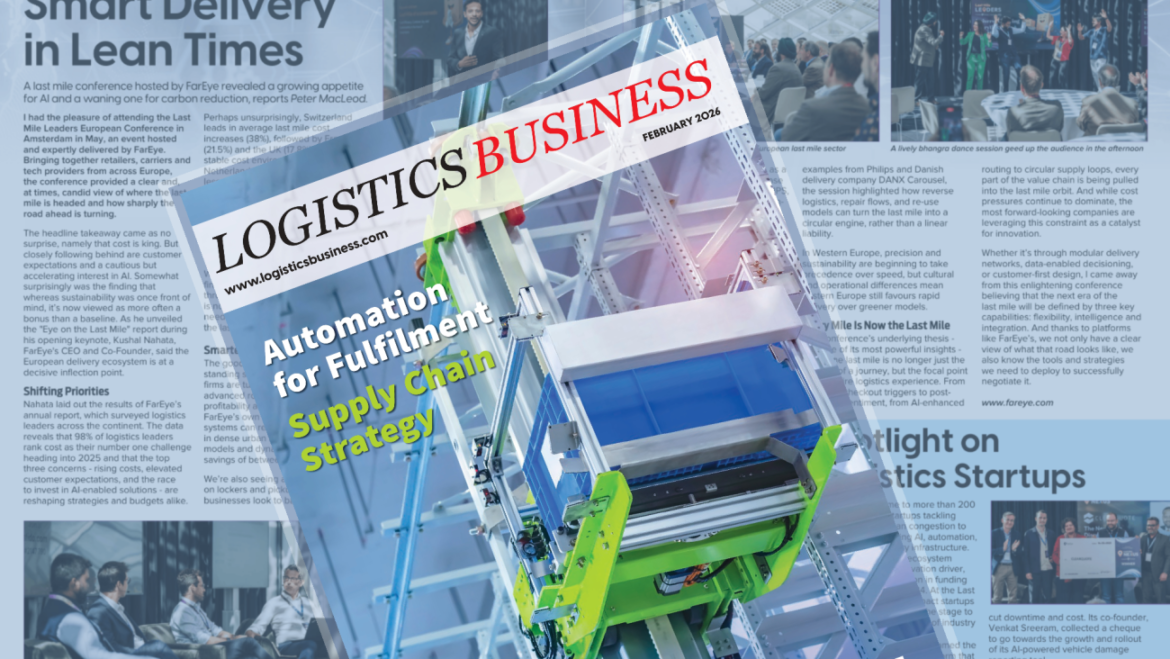
A new Logistics Business eBook, produced in collaboration with Libiao Robotics, explores how this shift is playing out in real operations around the world.

Rather than focusing on theory, the publication brings together global case studies from Asia and Europe, showing how automation is being applied under very real constraints: limited space, labour shortages, structural restrictions and the need to scale quickly without major disruption.

Inside the eBook, readers will find:

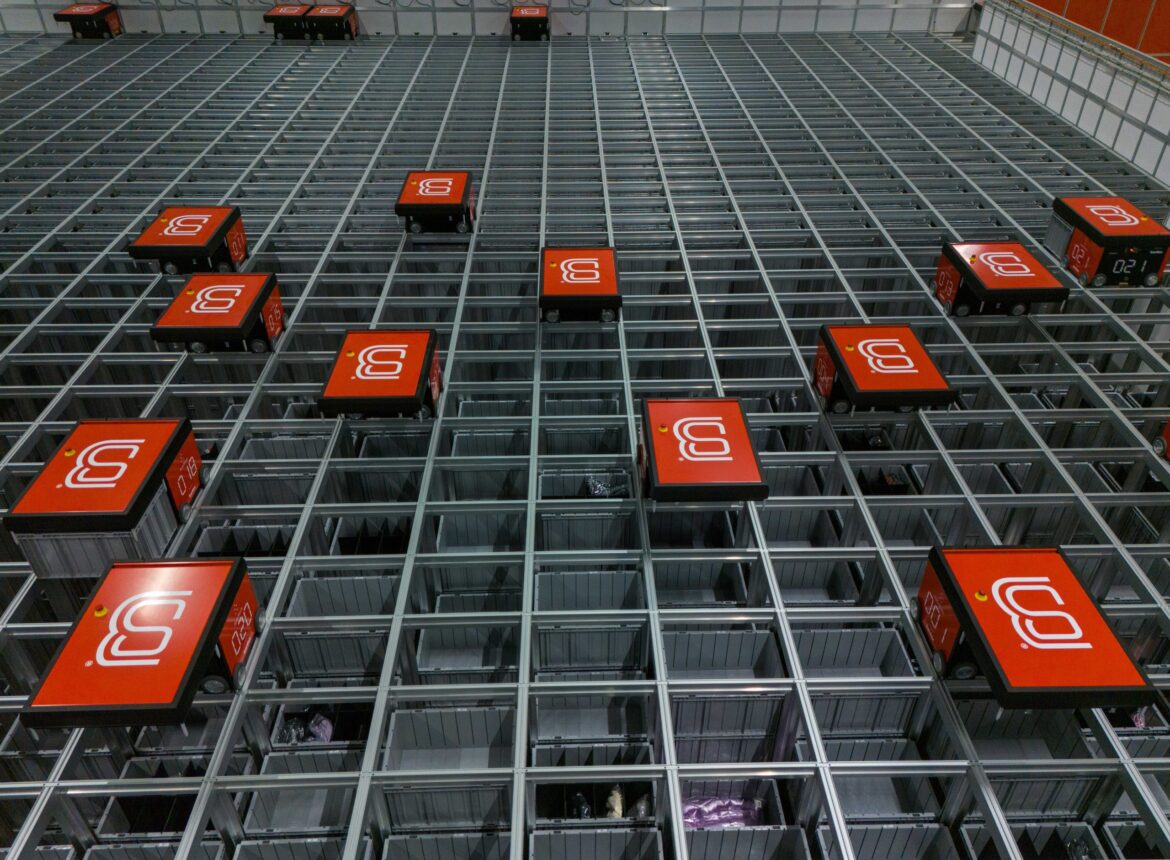
  • How bin-to-person robotics are enabling ultra-narrow aisles and significantly higher storage density
  • Why mobile, modular sorting systems are replacing fixed conveyors in high-volume environments
  • How logistics operators are using vertical space to increase throughput without expanding footprints
  • Practical examples of automation deployed in live facilities, from retail DCs and 3PLs to postal hubs and cold storage

The publication covers Libiao Robotics’ AirRob, T-Sort and 3D Sorting systems in context, explaining not just what the technology does, but why it is being adopted — and what problems it is actually solving on the warehouse floor.

For logistics directors, automation specialists and operations managers, the value lies in seeing how different approaches perform in different environments, and how flexibility and scalability are becoming just as important as speed.

As pressures on space, labour and service levels continue to grow, this eBook offers a useful snapshot of how leading operators are responding — and what modern, high-performance warehouses are starting to look like.

👉 Read the full Logistics Business Libiao Robotics eBook here:
https://flickread.com/edition/html/6985d2e614cdf#1


Source link

0 comments
0 FacebookTwitterPinterestEmail
Services

Changing Trade Reality’s Customs Demands

by
written by


Across global trade, the role of customs is evolving rapidly. What was once treated as a transactional necessity is now influencing supply chain resilience, cost control, risk management, and commercial performance.

Customs experts Gaston Schul is seeing more businesses reassess how customs fits into their wider operating and trade models. Growing regulatory complexity, geopolitical uncertainty, and rising data expectations are pushing customs out of the background and into a more strategic role.

For organisations operating across borders, customs increasingly sits at the intersection of compliance, data, risk management, and commercial decision making.

Beyond clearance

Traditionally, customs was viewed as a transactional requirement. Get the paperwork right, avoid delays, and move on. More customers are moving away from this mindset. Today, customs is increasingly shaping:
• Supply chain predictability and service reliability
• Cost control through duties, tariffs, and origin management
• Risk exposure linked to sanctions, licensing, and regulatory change
• Decision making through access to accurate, structured trade data

As global trade becomes more fragmented and regulation more dynamic, the way customs is managed has a direct impact on business outcomes.

Growing importance of data and visibility

One of the strongest themes emerging across customer conversations and the wider industry is the growing importance of data. Customs authorities expect earlier, richer, and more accurate data. At the same time, businesses need visibility to manage cost, risk, and performance across multiple markets.
Without structured data and a consistent operating model, customs quickly becomes reactive. Delays are discovered too late. Costs surface after the fact. Risk accumulates quietly. Where the right data foundations are in place, customs becomes something else entirely. A source of control, insight, and confidence.

From compliance obligation to strategic capability

The most resilient organisations are rethinking how customs fits into their wider trade strategy.
Gaston Schul is seeing more customers move away from fragmented broker models and localised decision making, towards:
• Centralised oversight across countries and flows
• Standardised processes and quality frameworks
• Proactive regulatory monitoring and impact assessment
• Stronger collaboration between customs, finance, legal, compliance, and supply chain teams

This shift turns customs into a strategic capability rather than a necessary administrative burden. Customs is not static. It continues to evolve alongside geopolitics, technology, and global commerce. For businesses, the question is no longer whether customs is important. It is whether their current setup provides the visibility, control, and assurance needed to operate with confidence. Those who treat customs as a strategic partner function are better positioned to adapt, protect their reputation, and make informed decisions in an increasingly complex trade environment.


Source link

0 comments
0 FacebookTwitterPinterestEmail
Services

Warehouse Energy Savings – Logistics News

by
written by


How can smart investment deliver real energy savings and enhanced safety, particularly in the loading bay area of a warehouse?

Energy efficiency and operational resilience have long been key priorities within the logistics sector, with organisations intensifying their focus on warehouse optimisation. Rising energy costs, sustainability targets and increasing regulatory demands are placing increased pressure on warehouse and loading bay operations, which in turn, can expose inefficiencies that were previously overlooked. By adopting innovative and adaptable solutions early, as well as targeting areas of waste, organisations can remain resilient for the unexpected.

The growing importance of Environmental, Social and Governance (ESG) performance is a major driver behind this shift. Many organisations are obliged to record the environmental impact of their operations in order to understand, measure and manage their total carbon footprint. Some firms, such as Rite-Hite, have invested in third-party consultants and enhanced tracking capabilities to formalise the process in the name of improving transparency and visibility.

At the same time, the global energy landscape has become increasingly unpredictable. Energy prices have fluctuated significantly in recent years, often in reflection to ongoing and arising geopolitical issues. Post-COVID recovery increasing demand, followed closely by Russia’s invasion of Ukraine in 2022 and the resulting sanctions and supply chain uncertainty have only fuelled its volatility.

One of the most underestimated areas for energy loss in the warehouse is at the loading bay. Despite being a constant point of activity, it remains a significant source of energy loss. Inefficient doors, trailer door hinge ‘gaps’ and dock leveller ‘gaps’ can lead to a needless escape of heat but also introduce safety risks and unplanned downtime. While these gaps can seem small in isolation, a build-up, like holes in a ship, they accumulate into a significant waste of energy.

Seal the gaps

As energy costs continue to rise, addressing these inefficiencies does not necessarily require large-scale refurbishment. In many cases, relatively simple changes can deliver meaningful returns. Sealing gaps around an exposed leveller pit can generate annual energy saving of up to several thousand Euros per dock position. Effective exterior doors with improved seals and cycle time speeds reduce heat loss with every use, while dock shelters help prevent unwanted airflow from entering further into the warehouse, keeping conditioned air inside.

Beyond energy efficiency, these measures also play a key role in enhancing safety and operational continuity. Dock shelters, for example, help protect people, materials and goods by preventing wind, rain, snow, dust and pests from entering the warehouse. At the loading bay itself, unintended trailer departures can pose a significant risk to both personnel and product. Solutions such as Rite-Hite’s Manual Ergonomic Wheel-Lok provide a robust, user-friendly vehicle restraint that allows drivers to secure trailers independently. Integrated signal lighting provides clear status updates ensuring safer, more coordinated access between drivers and warehouse teams.

Solutions can also further enhance overall efficiency at the warehouse. Traditionally, replacing an ageing or defective dock leveller would be a complex and expensive process, often involving extended operational downtime and costly construction work. During this period, organisations continue to incur costs from energy loss and labour. To address this challenge, however, new solutions are available.

Designed for rapid installation, Rite-Hite’s G96000 Replacement Dock leveller can be welded directly onto an existing frame, provided the underlying concrete and steel profiles are stable. This eliminates the need for disruptive concrete work or custom adaptations. In most cases, installation can be completed in a single day, saving time and costs with minimal operational downtime while addressing a critical source of energy loss with an integrated gap sealing protection as standard.

When adopted in unison, these targeted solutions protect both the operational and environmental integrity of the warehouse. Helping to save on costly energy losses and safety hazards, businesses are empowered to meet regulatory requirements and advance on sustainability goals whilst supporting the wellbeing of the workforce. Simple, yet effective solutions, from dock leveller sealing, maintaining proper restraints and optimising airflow have the potential to save thousands of Euros. Investing in these solutions is no longer a luxury, but a business imperative.


Source link

0 comments
0 FacebookTwitterPinterestEmail
Newer Posts
Older Posts

Recent Posts

  • Blend of Solutions in Contract Logistics
  • Middle East Conflict Drives Surge in Spot Freight
  • On Another Level – Logistics News
  • Interroll to Acquire Royal Apollo Group
  • Warehouse Property – Essential Partnership

Recent Comments

No comments to show.

Social Connect

Whatsapp

Recent Posts

  • Blend of Solutions in Contract Logistics

  • Middle East Conflict Drives Surge in Spot Freight

  • On Another Level – Logistics News

  • Interroll to Acquire Royal Apollo Group

  • Warehouse Property – Essential Partnership

Newsletter

Categories

  • Services (1,108)
  • Uncategorized (41)

@2024 - All Right Reserved. Designed and Developed by Sierraline Cargo services

Manage Consent
To provide the best experiences, we use technologies like cookies to store and/or access device information. Consenting to these technologies will allow us to process data such as browsing behavior or unique IDs on this site. Not consenting or withdrawing consent, may adversely affect certain features and functions.
Functional Always active
The technical storage or access is strictly necessary for the legitimate purpose of enabling the use of a specific service explicitly requested by the subscriber or user, or for the sole purpose of carrying out the transmission of a communication over an electronic communications network.
Preferences
The technical storage or access is necessary for the legitimate purpose of storing preferences that are not requested by the subscriber or user.
Statistics
The technical storage or access that is used exclusively for statistical purposes. The technical storage or access that is used exclusively for anonymous statistical purposes. Without a subpoena, voluntary compliance on the part of your Internet Service Provider, or additional records from a third party, information stored or retrieved for this purpose alone cannot usually be used to identify you.
Marketing
The technical storage or access is required to create user profiles to send advertising, or to track the user on a website or across several websites for similar marketing purposes.
  • Manage options
  • Manage services
  • Manage {vendor_count} vendors
  • Read more about these purposes
View preferences
  • {title}
  • {title}
  • {title}
Sierraline Cargo Services
  • HOME
  • Services
    • Trade With Us
  • About Us
  • Contact Us
  • private jet
    • BOOK YOUR JOURNEY
  • Track Packages
  • Insurance
  • safekeeping

WhatsApp us