Sierraline Cargo Services
  • HOME
  • Services
    • Trade With Us
  • About Us
  • Contact Us
  • private jet
    • BOOK YOUR JOURNEY
  • Track Packages
  • Insurance
  • safekeeping
Services

Fixed Price Supply Chains

by
written by


Supply chain volatility is nothing that a fixed-price contract can’t fix, write Sarah Rutnah, Thomas Winstanley and Sonia Vilar of Dentons Law Firm.

In times of economic and political volatility, fixed-price contracts offer welcome protection for businesses seeking certainty in and control of their supply chain costs. Such contracts are typically used in circumstances where the buyer feels there is a significant risk of price volatility, such as in the supply of certain raw materials like minerals and metals, and some soft commodities like grain, coffee, cocoa or fruit.

They may also be useful for organisations that cannot afford to run out of particular products, or for consumer-facing businesses like retailers where price certainty and availability are essential to competitive positioning and customer trust. Having been widely adopted during the Covid-19 pandemic, when supply chains were severely disrupted leading to sudden and major price spikes, the popularity of fixed-price supply chain contracts ebbed as Covid-related restrictions eased and global prices came back down.

But while many have sought ways out of fixed-price agreements, volatility has not gone away. The persistence of conflicts that have affected shipping routes, extreme weather events that have impacted harvests, and the introduction and escalation of tariffs in some international trading relationships, are among factors that have refocused attention on how contracts can be used to mitigate against unpredictability in global trade.

By their nature, fixed price contracts tend to be inflexible. They do not usually contain the price adjustment mechanisms or price escalation clauses used in standard contracts that allow for price increases by the supplier in response to rising costs of third-party elements in the supply chain.

Which party in a trading relationship is responsible for what tasks, risks and costs are generally dictated by standard International Commercial Terms – or ‘incoterms’ – agreed by parties as part of the contract. Unless the contract expressly addresses tariffs – for example in a tariff-specific adjustment mechanism – as a general principle, the legal obligation to pay import tariffs rests with the importer (buyer).

Sarah Rutnah, counsel in the dispute resolution team

Ten of the 11 recognised incoterms place responsibility for tariffs (and other customs duties) onto the buyer, the exception being Delivered Duty Paid (DDP), which obliges the seller to cover these costs. Where contracts are silent on incoterms, the default assumption is that the buyer will bear the import costs.

Even in fixed price contracts where tariffs are explicitly covered, it is unlikely that the supplier would agree to cover the full extent of any tariff increases subsequent to the agreement of the contract – such as those on the scale seen in the US in 2025. It is more likely that the supplier will only agree to pay a fixed amount in respect of tariffs – for example covering the tariff rate in place at the time the contract is agreed – meaning the buyer would need to pay the rest if rates increase.

Sonia Vilar, senior associate in the dispute resolution team at Dentons

In contracts that do allow for flexibility in respect of who covers changes in import duties and tariffs, what is agreed will likely depend on which party has more negotiating power in a particular commercial situation. If contracts make explicit reference to the actions of governments or administrations, then importers can potentially look to invoke “change in law” provisions to argue that tariff increases qualify as governmental action entitling them to price adjustments or cost-sharing.

Parties may agree to split the cost of tariff rises if, for instance, the only alternative to sharing the impact of tariffs would be to cancel the contract altogether. From a contractual perspective, variations in tariffs and other import costs are generally treated separately from other supply chain issues – such as increases in the cost of the product or the cost of transporting it.

Such situations may arise where the source of a product is located in a country where war breaks out or is hit by a natural disaster – for example – meaning the supplier has to source from another location which may be more costly (or invoke force majeure if it is impossible to fulfil the contract). In these cases, it is usually up to the supplier to resolve their own supply chain and there is no obligation to involve the buyer unless they are changing the specifications of the product supplied.

Thomas Winstanley, senior associate in the technology, media and telecoms team

While stretching the concept of fixed-price supply chain contracts to cover tariff instability is unlikely to be accepted by most suppliers, the broader picture of volatility means there are still advantages to fixing the costs of supply. Although locking in a guaranteed purchase price usually means paying a premium above the market rate, businesses that know the price they will be paying for a product for a specified duration can plan ahead.

Nevertheless, it is sensible to include routes to exit fixed-price contracts in case changes to the commercial context render such agreements uncompetitive. Escalation mechanisms, such as alternative dispute resolution mechanisms, can also be useful ways of getting parties to revisit terms.

similar news
US Trade Tariffs Set to Wreak Havoc on Global Supply Chains


Source link

0 comments
0 FacebookTwitterPinterestEmail
Services

First Freight Train via UK East-West Rail

by
written by


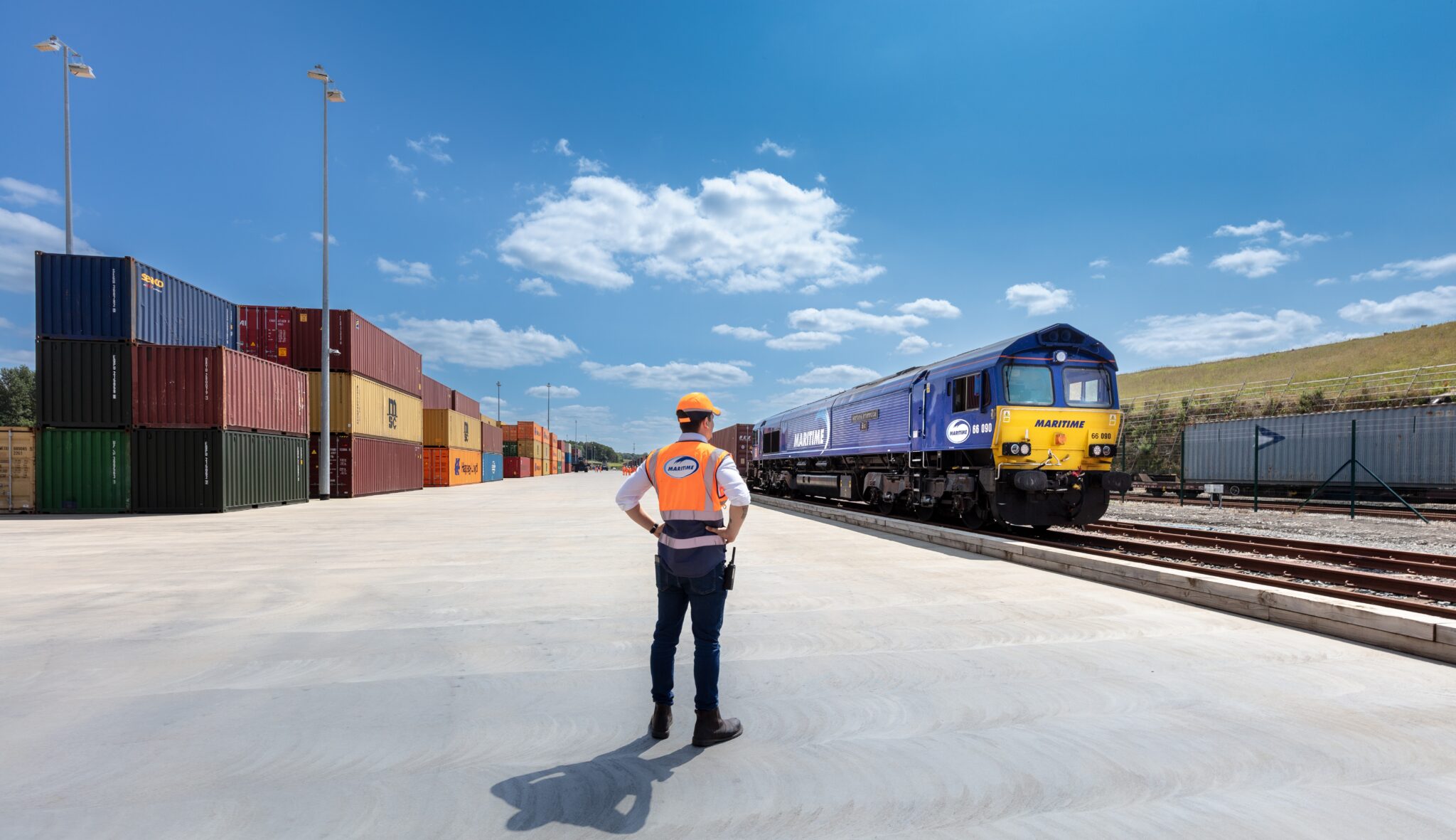
Maritime Transport, one of the UK’s leading providers of integrated road and rail freight logistics, has launched a new rail freight service connecting DP World Southampton with its Strategic Rail Freight Interchange (SRFI) at SEGRO Logistics Park Northampton (SLPN).

Maritime Intermodal Six arrived in Northampton on 16th June – the first freight train to enter service at Maritime’s 35-acre SRFI, and the first to operate the full length of the newly reinstated section of East West Rail (EWR) between Oxford and Bletchley.

Part of a government-backed programme to re-establish a strategic rail corridor between Oxford and Cambridge, the reinstated Oxford-Bletchley route restores vital east-west connectivity across central England and offers a practical alternative to traditionally congested north-south routes. The introduction of Maritime’s latest service on the newly reopened stretch is a milestone for the UK rail freight sector, unlocking new cross-country options for domestic and containerised cargo, and bringing nationally significant infrastructure into operational use to support regional economic growth.

Operated by DB Cargo UK, the service runs five days a week, with a capacity of up to 68 TEU per train, and provides a new, direct inland link to one of the UK’s busiest deep-sea ports. The service has been supported by Network Rail’s Track Access Discount Scheme, an important initiative to promote modal shift and encourage new rail freight business, whereby relevant access charges are waived for six months whilst new traffic is being established.

The launch follows two additional paths introduced by Maritime in recent weeks, linking DP World London Gateway with its rail terminals at Hams Hall and Doncaster (iPort). Two further services are scheduled to follow, connecting London Gateway and the Port of Felixstowe with Northampton as part of a three-phase expansion programme to increase low-carbon rail capacity across the company’s national network.

Maritime’s SRFI at Northampton forms part of a wider £200 million infrastructure investment by SEGRO and connects directly to the West Coast Main Line via the Northampton Loop. Network Rail’s modern design of the railway junction allows trains to move between the main line and interchange at speeds of up to 40mph instead of a standard 5mph – getting freight trains on their way faster and reducing impact on other trains on the network. Formally integrated into the national rail network earlier this year, the SRFI sits at the heart of a major logistics hub adjacent to Junction 15 of the M1.

John Bailey, Managing Director – Intermodal, Maritime Transport, said: “The arrival of our first service via EWR is an important step in expanding UK rail freight capacity, providing businesses with a direct, low-carbon route from Southampton to the heart of the UK’s golden logistics triangle. This development demonstrates how infrastructure and private-sector investment can deliver a more efficient and sustainable supply chain, while easing pressure on a congested road network.”

Roger Neary, Chief Sales Officer, DB Cargo UK, added: “Having recently operated the first locomotive into SEGRO Northampton Gateway to ‘prove’ the infrastructure, DB Cargo UK is proud to once again be partnering with its long-standing and strategic customer on this significant inaugural flow into Northampton Gateway. Not only does this new flow facilitate additional capacity into this important region of the country, it will do so in a sustainable manner utilising new Network Rail infrastructure and – crucially – funding, delivering benefits to Maritime Transport and their own customers alike.”

Brian Paynter, Capital Delivery track director, Network Rail, said: “Seeing both this new rail connection to Maritime’s SRFI and the East West Rail route in commercial freight use for the first time are huge moments in both projects. Opening up this economically important rail route will give much more flexibility for our freight operators greatly improving connectivity across the country, while benefiting the environment through taking HGVs off roads – providing a lasting legacy for communities and business.”

Kate Bedson, Senior Director, National Markets, SEGRO, commented: “We’re excited to see real momentum building at SEGRO Logistics Park Northampton, marked by the completion of the rail freight terminal infrastructure, the arrival of the first train and the completion of Yusen Logistics’ new facility – the first warehouse to be constructed on the park. Each freight train can remove up to 76 HGVs from the road with a consequential reduction in carbon emissions, making this a crucial step towards more sustainable logistics. With rail freight contributing £1.7 billion to the economy, this milestone is not only a shot in the arm for growth, it also supports a greener, more efficient supply chain.”

similar news

New Intermodal Hub Launched in UK’s East Midlands


Source link

0 comments
0 FacebookTwitterPinterestEmail
Services

Container Wheels System Simplifies Handling

by
written by


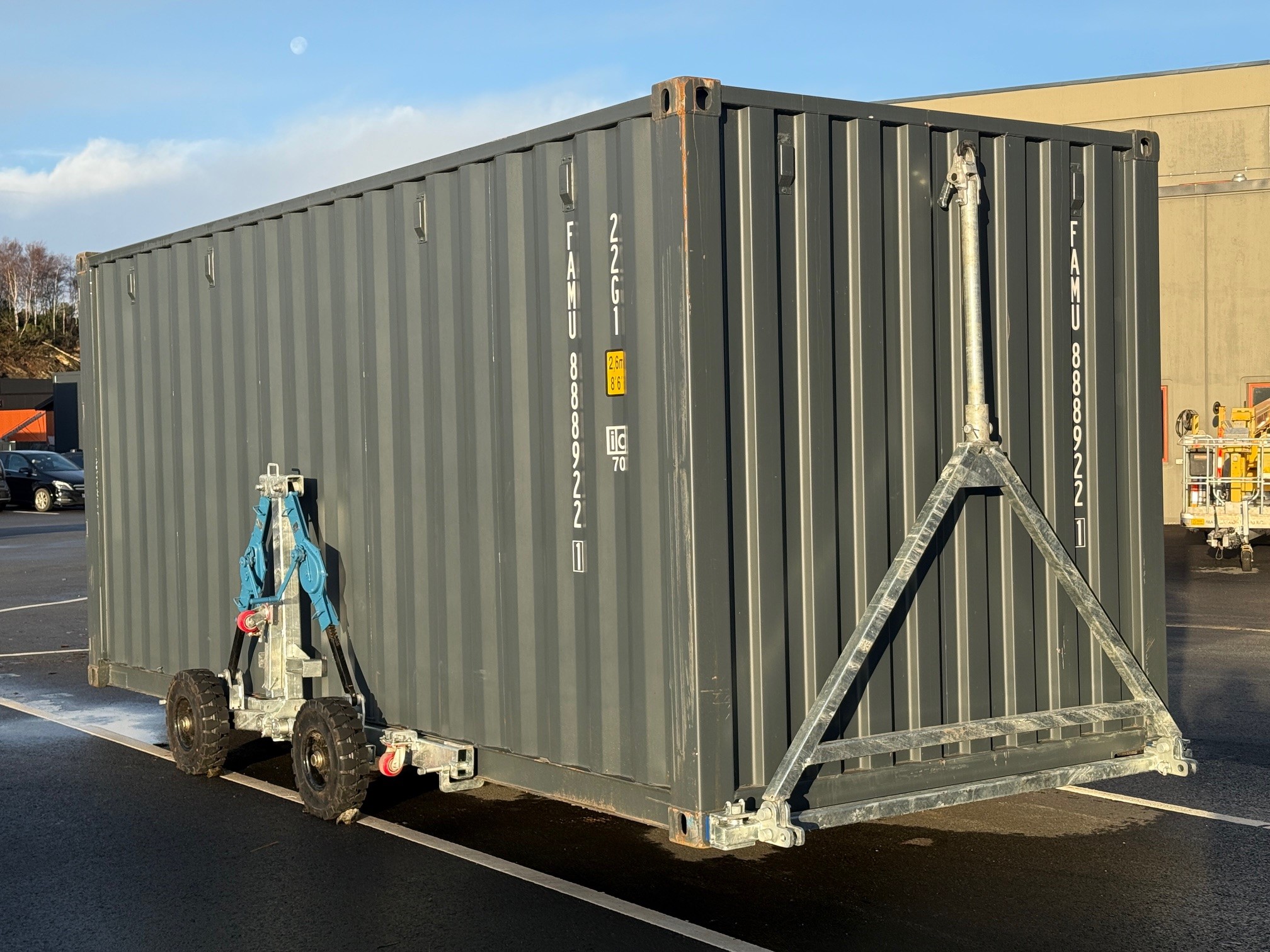
The handling of loaded containers in tight spaces has always been a logistical challenge. Now, the Norwegian equipment supplier Wee.no is launching ContainerWheels 2-in-1: A patented system designed to make container transport quicker, safer, and more flexible.

Rune Wee, Head of Product Development at one of Norway’s largest online equipment suppliers, Wee.no, is launching a new transport system for loaded containers. The system, named ContainerWheels 2-in-1, offers a simple yet powerful solution for lifting and towing containers without the need for heavy machinery or permanent infrastructure. Following two years of product development and testing, the system from Wee.no has now been granted patent protection in 45 countries.

Robust and practical

ContainerWheels 2-in-1 consists of two galvanized modules and a front drawbar. Each module features dual solid wheels and a manual crank-lift mechanism. The units slide into the container’s forklift pockets, allowing users to lift the container approximately 15 cm off the ground. Once elevated, the container can be towed with a forklift, car, wheel loader, or tractor.

The system will initially be available in two models, capable of handling loads of 10 and 20 tonnes, respectively.

Inventor and product developer at Wee.no, Rune Wee, explains: “ContainerWheels 2-in-1 is designed to meet the requirements of companies that frequently move or reposition containers in ports, warehouses, construction sites, storage facilities, or recycling stations. The system is both robust and practical to utilize, and is constructed to handle uneven terrain during transport.

“What began as a practical idea is now a fully realized product with global potential. We’re excited to introduce this solution to international users, and believe that the new system will transform logistics for many companies globally,” concludes Wee, Head of Product Development at Wee.no. Watch this clip to see the syswtem in use.

similar news

New Wheeled Dollies Tailored to the Supply Chain


Source link

0 comments
0 FacebookTwitterPinterestEmail
Services

Forwarders, Your Customers Expect More. LogiTRACK Helps You Deliver

by
written by


In a market where speed, visibility, and responsiveness define success, freight forwarders are expected to deliver more than just the movement of goods. Shippers, consignees, and agents now demand transparency, digital access, and proactive communication as standard—not as a value-added extra.

This shift has moved on from being just a trend to becoming the new standard. And for forwarders looking to meet rising expectations without increasing operational burden, LogiTRACK, the customer experience layer within Logi-Sys, offers a powerful answer.

The Shift: From Transactional Freight to Connected Experiences

For years, freight forwarding operated on a transaction-first model—rate, route, and delivery. But the industry has undergone a significant transformation, driven by:

  1. The Amazon Effect: End customers are used to real-time updates and expect the same in B2B logistics

  1. Digital Competition: Digitally native freight platforms are raising the bar for service and visibility

  1. Global Uncertainty: Disruptions like port congestion, strikes, and rate volatility have made visibility a business-critical need

These forces have placed forwarders in a new position: not just as service providers, but as information enablers and digital partners.

The Challenge: Service Expectations vs Operational Bandwidth

Forwarders want to give better service—but often face internal constraints:

  • Operations teams overwhelmed by update calls and status emails

  • Delays in document sharing and approvals slowing down shipments

  • Repetitive tasks reducing capacity for high-value client servicing

  • Lack of a unified, branded digital experience to match customer expectations

At the same time, building custom tools or portals is expensive, time-consuming, and hard to maintain. That’s where LogiTRACK bridges the gap.

The Solution: LogiTRACK—Your Digital Interface to the Customer

With LogiTRACK, forwarders give customers access to a branded portal (web + mobile) where they can:

  • Track shipments in real time

  • Book cargo directly

  • Approve documents faster

  • Access invoices instantly

  • Stay updated via secure, no-login tracking links

Everything is connected to the forwarder’s operations—meaning zero duplication, no data syncing, and complete control.

Built for Forwarders. Designed for Your Customers.

LogiTRACK is not a one-size-fits-all customer portal. It’s a white-labeled, forwarder-controlled interface that adapts to your operations and presents a clean, modern experience to your clients.

For Shippers and Agents:

  1. Real-Time Shipment Tracking: Stay informed at every milestone—without calling ops.

  2. Direct Shipment Booking: Skip the back-and-forth and submit bookings instantly.

  3. Centralized Document Hub: AWBs, BLs, packing lists, checklists—all in one place.

  4. Instant Invoice Access: View, download, and manage invoices anytime.

  5. Mobile & Web App: Full control from any device, anywhere in the world.

For You, the Forwarder:

  1. Reduce Operational Load: Fewer status update calls, fewer email threads, faster document turnarounds.

  2. Increase Customer Satisfaction: Meet modern service expectations with ease.

  3. Strengthen Your Brand: Your portal, your identity—fully white-labeled.

  4. Improve Visibility: See exactly what your customers see; manage permissions and access centrally.

Where LogiTRACK Fits in the Freight Forwarding Lifecycle

LogiTRACK aligns with every major touchpoint in your freight cycle:

Workflow Stage

Customer Touchpoint via LogiTRACK

Direct cargo booking with complete shipment details

Real-time milestone tracking with secure updates

Fast approvals on key docs (AWBs, BLs, invoices, checklists)

Access and manage all invoices in a single portal

Share no-login secure tracking links with stakeholders

LogiTRACK thus becomes a strategic extension of your operations, helping you manage customer relationships at scale.

What Makes LogiTRACK Different?

  1. It’s Part of Logi-Sys: No third-party integrations, no data gaps. Everything flows from your ERP in real time.

  2. You’re in Control: You manage access, content, branding, and customer experience.

  3. It’s Scalable: Serve 10 customers or 10,000—LogiTRACK grows with you.

  4. It’s Secure: Only the right people see the right data, with fully secure access links and logins.

The Business Case: More Than Just Convenience

Implementing LogiTRACK is more than convenience – it’s about competitive advantage:

  • Differentiate in a crowded market with a digital-first experience

  • Retain high-value customers who expect modern interfaces

  • Lower operational costs by reducing manual follow-ups

  • Enable faster decision-making with instant visibility and data access

In short, you serve better and operate smarter.

Getting Started with LogiTRACK Is Easy

There’s no new system to deploy. As part of Logi-Sys, LogiTRACK activates seamlessly within your existing setup:

  • Enable LogiTRACK within your Logi-Sys environment

  • Configure branding and access for your customers

  • Invite them to log in or share secure links based on preference

  • Start delivering a next-generation experience—on your terms

Make Your Service as Smart as Your Operations

You’ve already invested in improving your internal processes with Logi-Sys. Now, extend that digital transformation to your customers.

In a market where forwarders are judged not only on what they move but how they communicate, LogiTRACK gives you the edge to serve better, faster, and more professionally—without adding complexity.

Explore LogiTRACK with our ? Get in touch at business@softlinkglobal.com and offer your customers the visibility, access, and control they expect.


Source link

0 comments
0 FacebookTwitterPinterestEmail
Services

Strategies to Mitigate Freight Market Volatility

by
written by


Peak season in logistics used to be predictable. Today, it’s anything but.

From shifting consumer trends to erratic global supply chains, the freight market is now defined by uncertainty. For freight forwarders, this volatility often means early capacity crunches, unpredictable costs, and last-minute firefighting. But the truth is—this volatility is not going away. Forwarders must now evolve with smarter strategies and modern freight forwarding software solutions to stay competitive.

The Early Onset of Peak Season: A New Normal

Traditionally, peak seasons centered around year-end holidays, factory restarts, or festival-driven demand. But recent years have thrown those timelines off balance.

  • Pre-emptive stocking: Retailers are stocking earlier to avoid shortages.

  • Artificial early peaks: Space bookings spike well in advance, creating artificial demand waves.

  • Capacity recalibration: Air and ocean carriers now adjust space dynamically, often with little warning.

  • Demand unpredictability: E-commerce surges and flash sales compress planning windows.

This shift requires forwarders to rethink not just how they operate—but when they act.

Why Traditional Tactics Fall Short

Manual processes, disconnected systems, and spreadsheet-based tracking are no longer enough. Freight operations today are multi-modal, multi-location, and real-time. Success during peak season requires integration, automation, and visibility—at scale.

Proven Strategies to Navigate Peak Season Volatility

1. Move from Reactive to Proactive with Forecast-Driven Planning

Modern freight forwarding software solutions enable data-driven planning by analyzing historical trends, seasonal patterns, and trade-lane-specific volumes. Teams can pre-book space, adjust staffing, and align pricing well before market congestion begins.

2. Diversify and Strengthen Carrier Relationships

Don’t put all your bookings in one basket. Use centralized systems to manage contracts, rate agreements, and performance KPIs across multiple carriers—ensuring fallback options are always available.

3. Automate High-Volume Operational Tasks

Quote approvals, job creation, document generation, and invoicing can be fully automated. This ensures consistency, reduces error rates, and frees teams to focus on high-impact exceptions.

4. Real-Time Visibility Across Operations

During peak congestion, knowing the location, ETA, and status of every shipment is critical. Dashboards integrated with airline, port, and customs systems allow faster decision-making and more confident customer communication.

5. Holistic Logistics Volatility Management

Beyond tracking, volatility management involves real-time alerts, disruption simulations, live financial impact assessment, and built-in collaboration tools for quick realignment.

Why Logi-Sys Is Built for Peak Season—and Beyond

Here’s a deep look at how Logi-Sys covers every angle of peak season preparedness and execution:

  1. Freight Operations – Unified Across Modes

Handle air, sea, and road freight (export and import) from a single system:

  • Auto-routing & rate management for each mode

  • Master job creation for multi-leg or consolidated shipments

  • Carrier booking integrations for eAWB, VGM, AMS/ISF, and more

  • Multi-modal shipment tracking linked to live schedules

  • Consolidation/Deconsolidation capabilities for LCL and groupage

You get full shipment lifecycle management—from inquiry to delivery—without switching platforms.

  1. Integrated Customs Compliance

Delays at customs cost more during peak season. Logi-Sys eliminates this risk:

  • Automated document generation: Bills of entry, shipping bills, declarations

  • Digital filing integrations with local customs platforms (e.g., ICEGATE, INSW)

  • Real-time submission status and error flagging

  • Rule-based document validation

Support for bonded warehouse movements and transshipments

It ensures your shipments remain compliant and moving, even at high volumes.

  1. Sales, CRM & Customer Experience

Peak season also means higher quote requests, tighter SLAs, and anxious customers.

  • CRM module to manage leads, prospects, and customer interactions

  • Automated quote generation with rate templates

  • Sales pipeline tracking and conversion analytics

  • Instant job creation from accepted quotes

  • Customer portal access for status checks, invoice downloads, and document sharing

You deliver faster responses and transparent service, keeping clients confident during chaos.

  1. Real-Time Visibility, Dashboards & Analytics

Logi-Sys provides live insights across operations, finance, and teams:

  • Shipment movement dashboards with real-time ETA & delay alerts

  • Capacity usage analytics by carrier, mode, and branch

  • Finance dashboards showing receivables, DSO, profit per shipment

  • SLA adherence reporting and exception logs

  • Drill-down reports by user, branch, customer, or vendor

All data is centralized—no spreadsheet consolidation needed.

  1. Billing, Accounting, and Taxation – All-In-One

  • Auto-invoice from jobs based on milestones or delivery

  • Multi-currency, multi-tax compliant invoicing (GST, VAT, etc.)

  • Expense allocation across shipment legs

  • Credit control, outstanding tracking, and follow-ups

  • Profitability visibility at job and customer level

  • Integrated TDS, e-invoicing, and audit trail

No need to sync with third-party accounting software. It’s all in one place.

  1. Intelligent Automation & Workflow Control

Configure automated actions across the platform:

  • Auto-trigger documents at key milestones

  • Task assignment rules based on job types or customer profiles

  • Escalation alerts if critical steps are delayed

  • Email and notification automation

  • SLA breach alerts with assigned responsibility

This removes peak season bottlenecks caused by human delays or oversight.

  1. Multi-Branch, Multi-Country Scalability

Whether you operate in one region or ten, Logi-Sys supports:

  • Centralized control with branch-level autonomy

  • Cross-border shipment workflows

  • Multi-currency rate cards and financial consolidation

  • Role-based access and multilingual UI

It’s built for freight companies scaling across continents.

  1. Mobile App & Digital Collaboration

Keep your team connected:

  • Mobile access to jobs, quotes, invoices, and shipment tracking

  • Real-time notifications on status changes or delays

  • Customer approvals, POD uploads, and document scans on-the-go

  • Internal chat and comment logs per shipment/job

Perfect for field staff, managers, and partners working in real time.

  1. Data Security & Performance

Peak season shouldn’t mean peak stress for your systems:

  • Hosted on secure cloud infrastructure with 99.9% uptime

  • Daily automated backups and encrypted transmission

  • User-level access control and audit trails

  • Scalable architecture to handle thousands of transactions daily

You operate at full speed—without system slowdowns or crashes.

To Conclude

Peak season isn’t a short-term event—it’s a test of long-term resilience. As the logistics landscape grows more volatile, freight forwarders need tools that don’t just support operations but drive business agility.

Logi-Sys is the difference between reacting to the market—and leading it.

It’s not just a freight forwarding software solution. It’s your intelligent partner for logistics volatility management, peak season control, and future-proof scaling.


Source link

0 comments
0 FacebookTwitterPinterestEmail
Services

Smallest Safety Laser Scanner on the Market

by
written by


The new ultra-compact RSL 200 safety laser scanner from Leuze can be integrated effortlessly and used flexibly to safeguard danger zones and access points on narrow production lines, automated guided vehicles and robots.

Minimum size, maximum safety

In industrial automation, efficiency and safety must go hand in hand: People, machines and processes must be reliably protected without impairing production processes. However, space is limited in narrow production lines, on automated guided vehicles and robots. This is where the new ultra-compact RSL 200 safety laser scanner from Leuze scores points: claimed to be the smallest safety laser scanner on the market, it can be integrated effortlessly and used flexibly to safeguard danger zones and access points.

Safety laser scanners are increasingly in the limelight in almost every industry. This is because the versatile devices are indispensable in many cases to ensure the highest safety standards for the protection of people. Thanks to configurable protective and warning fields, they can be used very flexibly for danger zone and access guarding – for both stationary and mobile applications. A typical area of application is protecting a machine’s dangerous working ranges against access and the presence of persons. Laser safety scanners are also ideal for safeguarding autonomous mobile robots (AMRs) and driverless transport systems, also known as automated guided vehicles (AGVs).

Maximum safety in the smallest space: The future of laser scanners

Modern safety laser scanners have to meet a wide range of requirements at once: Besides their main task of safely shutting down machines or systems, they must not impair machine availability or lead to unnecessary downtimes. In addition, laser scanners are expected to have an impressive operating range and scanning angle, while the system operator takes safety classifications in accordance with Type 3, SIL 2 and PLd as given. The system operator must also be able to rely on convenient configuration and diagnostics, which can be carried out effortlessly and intuitively via various interfaces such as Bluetooth, USB or Ethernet TCP/IP. Last but not least, modern safety laser scanners are selected based on their device size. That’s because increasing automation is making spatial efficiency ever more important in many production environments. Systems are becoming more complex, while the space available for safety technology is shrinking. There is often little room for this, especially in mobile use on AGVs.

Innovative solutions are needed to meet these challenges. The ‘Sensor People’ from Leuze are setting new form factor standards with their advanced safety laser technology that keeps the user as the number one priority. The ultra-compact RSL 200 safety laser scanner is currently the smallest device on the market. It combines state-of-the-art LiDar technology in a minimal space of just 80 x 80 x 86 millimeters. This makes it easy to integrate even in extremely confined spaces, whether in stationary or mobile applications.

Simple installation

The compact safety scanner from Leuze gives the user more options for simple and more flexible installation, especially in confined environments, thanks to its space-saving mounting bracket or connection technology. The right mounting accessories are key to quick integration: That’s why Leuze has developed its own innovative mounting bracket for the RSL 200 to provide effortless fastening and allow the safety laser scanner’s scan level to be aligned horizontally and vertically. Simple servicing is also ensured: The RSL 200 can be replaced quickly and easily with just four screws, and the sensor parameters can be transferred from the old to the new sensor via a memory card without any sensor knowledge required.

Connections and cables must not cause any obstacles either. Rotatable M12 connections on the RSL 200 laser scanner allow extremely flexible cable routing for I/Os, power supply and data transmission. These are essential criteria, particularly for use on small AGVs. The Sensor People also offer a new mobile diagnostics app that allows status information to be conveniently retrieved even if the laser scanner is installed in locations that are difficult or impossible to access.

Aligned to every requirement

For a safety laser scanner to work optimally, its ‘inner’ values are also important. For example, the scanning angle must be large enough to reliably fulfill the application-specific safety task, e.g., to completely cover blind spots or hard-to-see zones behind machines or conveyor belts. It must also be able to safeguard small omnidirectional AGVs/AMRs in every direction – for example, the RSL 200 from Leuze offers a 275-degree scanning angle at an operating range of three meters. The large scanning angle allows the user to ensure all-round protection with just two diagonally positioned devices, even taking mounting tolerances into account.

32 switchable sets of protective and warning fields enable the AGV/AMR user to continuously adjust the speed and direction of travel. The monitored areas can thus be optimally adapted to curved paths, different speeds and various load conditions.

The next generation of safety laser scanners begins with the RSL200. Thanks to its ultra-compact dimensions, it can be easily integrated even in extremely confined spaces, whether stationary or mobile. Advantages such as the innovative, space-saving mounting bracket and rotatable M12 connections also help here. Plus the mobile diagnostics app from Leuze lets system operators retrieve all status information via Bluetooth conveniently and at any time, even if the laser scanner is installed in an inaccessible or difficult-to-access location.

similar news

Leuze Electronic Highlights Expertise in Safe Conveying and Storage


Source link

0 comments
0 FacebookTwitterPinterestEmail
Services

Jacky Perrenot Acquires ArrowXL Home Delivery

by
written by


ArrowXL, one of the UK’s largest and longest established two-person home delivery specialists, has been acquired by the Jacky Perrenot Group, a Pan-European logistics and transportation business with a turn-over of €1.2bn. Under the terms of the deal the existing ArrowXL Senior Executive Management Team will remain, operating the business as usual with all 2025 operational investment plans continuing.

The acquisition is the Jacky Perrenot Group’s first move into the UK and will enable retail customers to access other geographies utilising its expertise in 2-person delivery and its network of existing operations in over 170 sites in France, Spain, Portugal and Benelux. The Group has over 80 years of experience, a fleet of more than 10,000 vehicles and 10,000 employees. With a strong focus on ESG, it has pioneered the use of new technologies in its fleet of environmentally friendly vehicles utilising CNG, 100% electric and hydrogen and is committed to sustainable development.
This acquisition will enable ArrowXL to leverage the Jacky Perrenot Group’s rapidly expanding B2C expertise through JP HOME, its dedicated B2C brand.

JP HOME consolidates the capabilities of four companies acquired since 2018 under a unified offering. ArrowXL will capitalize on this proven expertise and established network to further enhance its value proposition.

Charlie Shiels, CEO at ArrowXL said: “I am delighted with this news and couldn’t have hoped for a better new owner that will bring future security for our people and our business. It is clear to us that the Jacky Perrenot Group shares similar values with ArrowXL with a strong commitment to sustainable development and to delivering the best service in the marketplace. They are a significant European company with huge ambitions and all parties are genuinely excited for the future. ”

Mathew Deering, Chairman at ArrowXL, said: “ArrowXL attracted a lot of interest from both UK and international buyers due to the strength of its team, infrastructure and client base alongside its reputation for high levels of service. It has been a pleasure working with a very committed and capable Management team, our owners and funders towards this transaction over the last 12 months.
There is no doubt that in Jacky Perrenot Group, we have found the right home for the business, with the resources and strategic focus to keep Arrow at the forefront of its industry for years to come.”

Philippe Cuoc, CEO of the Jacky Perrenot Group, said: “We welcome everyone at ArrowXL into our family and assure them of our intention to support the business with continued investment to further strengthen their industry leading status. We are excited to now own an established operation in the UK which is the largest and most vibrant ecommerce market in Europe which we believe will be of great benefit to our customers. We announced our ambitions two years ago to create an International Bulky B2C European solutions, and today, with ArrowXL, part of the JP group, we have a powerful combination that brings us closer to this target”.

Philippe Givone, Chairman of the Jacky Perrenot Group, said : I am proud of this acquisition — a partnership built on shared values: our relentless focus on customer proximity and satisfaction, and deep trust in our teams. It will strengthen both organizations, marking a key milestone in our international growth strategy.”

similar news

Fleet Investment for UK Two-Person Home Delivery Firm


Source link

0 comments
0 FacebookTwitterPinterestEmail
Services

Hidden Dangers of Cargo Fires

by
written by


The industry bodies of the Cargo Integrity Group expand on their concerns relating to cargoes that can catch fire and cause significant damage and casualties under certain conditions. Circumstances created by an alignment of mistakes, oversights, or failed controls can turn a minor incident into a major event.

Following its identification of ‘cargoes of concern’, the Cargo Integrity Group (the Group) now focuses on the issues that may commonly compromise safety by initiating or proliferating fire under certain conditions.

It is recognized that many of the cargoes in this category, labelled ‘reactive hazards’ already fall within the scope of Dangerous Goods regulations. These regulations start from the premise that the transport of Dangerous Goods is prohibited – except in accordance with the details of the regulations.

However, incidents still occur too frequently; as the judge in one casualty litigation explained, disasters are only infrequent due to a “lack of a similar perfect storm of events, and simple good fortune”. All that is required is an alignment of mistakes, oversights, or failed controls. The Group is at pains to explain the dangers associated with these cargoes and emphasize strongly that only reliance on robust diligence or precise emergency response prevents many minor incidents becoming major casualties.

Furthermore, the Group is generating greater awareness overall and urges attention to the need for stringent compliance with mandatory regulations, such as the IMDG Code, and adoption of industry good practices, such as found in the CTU Code.

Such cargoes with reactive hazards include:

Calcium Hypochlorite, a powerful oxidiser, prone to rapid decomposition. In low concentrations, the chlorine content is used as a water cleanser and disinfectant, such as household bleach and swimming pool maintenance. Decomposition – taking place constantly at a very slow rate – is accelerated by higher temperatures and by contamination. The latter can be unpredictable since it necessitates rigorous controls over the raw materials used and the entire manufacturing process.

Charcoal concerns include among others charcoal that is intended for burning on barbecues, shisha pipes etc – sometimes having been treated with accelerants to assist ignition. There has been lengthy debate at IMO to fashion a revised safety framework for transport by sea, that will become mandatory from January 2026. This will remove an unreliable test regime and require that charcoal is always declared as a DG.

Cotton and Wool, Fishmeal and Krill and Seed cake are perhaps less in the public eye, but also prone to self-heating and fire, where integrity and care are required both to ensure compliance and maintain safety during transport.

Lithium ion battery hazards are becoming known, but many are emergent, not least as science advances global energy transition. Many incidents to date have involved new batteries; the hazards will only multiply with age and deteriorating condition. While this will challenge the recycling industry, the reality is that all these products, whether new, used, in use, damaged or end of life, will impact the transport and storage industries for decades to come.

The Group calls for continued and thorough research into all the hazards presented by lithium ion batteries and dependent devices. Apart from fire, incidents have revealed risks from toxic gases and vapour cloud explosions that can be critical in transport and storage.

similar news

How to avoid common warehouse hazards


Source link

0 comments
0 FacebookTwitterPinterestEmail
Services

Noleggiare Medium Jet Privato Creta- Private Jet Finder BLOG

by
written by


Which private jet to charter to get to Crete, Mykonos, Santorini and Rhodes? Medium jet or light jet? When choosing the ideal private jet to reach Greek islandssuch as Crete, Mykonos, Santorini, and Rhodes, the decision between a medium jet and a light jet depends on several factors: flight distance, number of passengers, desired comfort, and budget.

Light jets: perfect for short flights and small groups

Light jets, such as the Phenom 300 or Citation CJ3, are ideal for flights of about 2-3 hours and up to 6-7 passengers. They offer lower fuel consumption and lower rental costs, perfect for small groups or shorter trips from nearby European cities such as Athens, Rome or Milan. However, onboard space and range are more limited than medium jets.

Medium jets: more space and range for nonstop direct flights

For those who want more comfort, space for up to 8-9 passengers, and the ability to fly to the Greek islands directly from more distant capitals (such as London, Paris, or Munich) nonstop, the medium jet is the best choice.

What are Crete’s airports like for landing private jets?

Crete has two main airports used for private flights:

  • Heraklion (HER): This is the largest and busiest airport on the island, with excellent FBO services for private jets. It offers VIP lounges, fast customs handling, and dedicated staff to ensure comfort and privacy for passengers. It is perfect as an arrival point for those visiting eastern and central Crete.
  • Chania (CHQ): Located in western Crete, this is a good alternative for those who want to explore the western part of the island. FBO services here are also of a high standard, with a personalized welcome and quick check-ins.

Both airports have adequate runways for landing medium jets and light jets, making Crete easily accessible by private jet with any of these categories of aircraft.

medium private jet crete

The best private jets to reach Crete and the Greek islands: the comfort of the Gulfstream G150 and beyond

Among the most popular options, the Gulfstream G150 stands out for its unique combination of comfort, range and performance. This medium jet is ideal for direct flights from Central and Western Europe, thanks to a spacious cabin with ergonomic seats, an advanced pressurization system that maintains internal pressure at the 6,000-foot level-much more comfortable than many other jets-and a range that allows comfortable nonstop travel to Crete and other islands.

In addition to the Gulfstream G150, other medium jets such as the Bombardier Challenger 300 and the Embraer Legacy 450 (Read our review) are great alternatives for those who want to travel with a larger group (up to 8-9 passengers) and a higher level of luxury. These private jets offer quiet cabins, space to work or relax, and are perfect for business travel or exclusive vacations.

Sample routes to Crete, Mykonos, Santorini and Rhodes and recommended private jets

  • London – Crete (Heraklion)
    Flight duration: about 3h 45min
    Recommended jet: Gulfstream G150 or Challenger 300
    Perfect for a direct flight with maximum comfort, especially if you are traveling with 6-8 people, with bulky luggage or equipment (golf, diving, etc.).
  • Paris – Mykonos
    Flight time: about 3h 15min
    Recommended jet: Legacy 450 for space and range, or Citation XLS+ for excellent value for money.
  • Milan Linate – Santorini Thira
    Flight time: about 2h 30min
    Recommended jet: Phenom 300 if you are 4-5, or Gulfstream G150 for more comfort and in-flight service.
  • Zurich – Rhodes
    Flight time: about 3h 40min
    Recommended jet: Gulfstream G150 or Hawker 900XP for business travel with space to work on board.

Private jet hire tailored to every need

For couples or small groups who want to optimize costs without sacrificing elegance, light jets such as the Citation CJ3+ or Phenom 300 offer a streamlined and fast service, perfect for reaching the islands from Rome, Naples, Athens, or Bari in less than two hours

If you are departing from European capitals or want a superior flying experience medium jets such as the Gulfstream G150, Challenger 300 or Legacy 450 offer unbeatable comfort, range and privacy.

Contact us now to receive a personalized quote and find out which jet is best suited for your next trip to Crete or the Greek islands. We’ll be able to advise you on the ideal model based on your route, number of passengers, and the type of experience you want: With PrivateJetFinder, every detail of your flight will be taken care of to provide you with maximum comfort, privacy, and flexibility.

medium private jet crete


Source link

0 comments
0 FacebookTwitterPinterestEmail
Services

Mosca Malaysia Celebrates Grand Opening of New Facility

by
written by


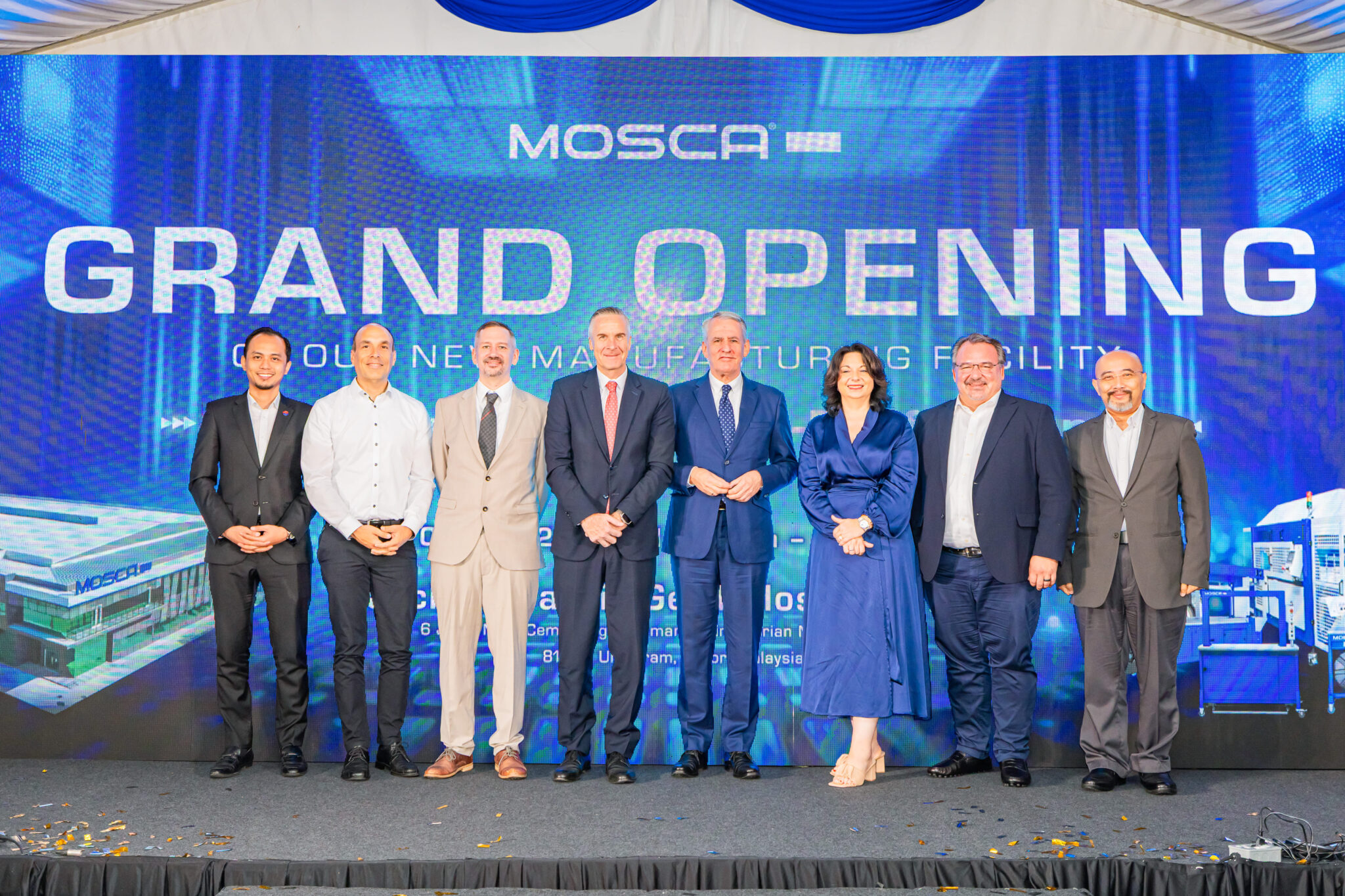
Maschinenfabrik Gerd Mosca (MGM) proudly marks a major milestone with the official grand opening of its new manufacturing facility in Malaysia, located at No. 6, Jalan Maju Cemerlang 2, Taman Perindustrian Maju Cemerlang, Ulu Tiram. The Ambassador of the Federal Republic of Germany to Malaysia, Dr. Peter Blomeyer, officiated the opening ceremony, highlighting the strengthening economic ties between Germany and Malaysia and the importance of the commitment of German companies to investment, employment and vocational training in Malaysia.

As a subsidiary of Mosca GmbH, a global supplier of strapping and end-of-line packaging systems, MGM continues to expand its footprint across Asia, one strap at a time, while remaining true to the values of its family-owned German heritage.

“Malaysia has been a strategic milestone in our family company’s journey toward internationalization. With today’s inauguration of our new production facility, we are building on that legacy – and sending a strong signal for sustainable growth, collaborative partnerships, and entrepreneurial foresight across borders” said Timo Mosca, Corporate CEO of Mosca Group.

A Journey from Small Shop Lot

MGM’s journey in Malaysia began in a small lot in 2009, expanded to a medium-sized facility in 2013, and has now culminated in the launch of its most advanced manufacturing site in 2025 —marking a new chapter in the company’s history.

“From day one, we have focused on empowering local talent and growing alongside our community,” said Witold Nowak, Director of MGM. “Today, we are proud to be recognized not only as a technology leader in the end-of-line packaging industry, but also as a reputable employer that values and nurtures its people.”

Technology That Leads Sustainably

As part of Mosca’s global engineering roadmap, the new facility introduces the region’s most advanced strapping machines — engineered for durability, speed, and energy efficiency. Mosca has led the transition from conventional heat-sealing units to its high-performance ultrasonic SoniXs sealing technology. This innovation enables a highly sophisticated and energy-efficient sealing process, significantly reducing environmental impact while maintaining precision and reliability.

Local Talent, Global Standard

One of MGM’s proudest achievements is its consistent investment in Malaysian talent across all levels — from shop floor technicians to senior management. The new facility brings tangible economic benefits to the region, including job creation, supply chain development, and technology transfer. With this milestone, MGM not only strengthens its position in the Asia-Pacific market but also reaffirms its long-term commitment to Malaysia and its people.

similar news

Mechanical Unloaders in Malaysia Industrial Port


Source link

0 comments
0 FacebookTwitterPinterestEmail
Newer Posts
Older Posts

Recent Posts

  • Automation is Transforming Logistics in India
  • Swarm AGVs for Multiple Flows & Pallet Types
  • Contracts Manage Warehouse Construction Risk
  • Why Fragmented Freight Management Systems Are Killing Operational Efficiency
  • Wheels for Steel – Logistics News

Recent Comments

No comments to show.

Social Connect

Whatsapp

Recent Posts

  • Automation is Transforming Logistics in India

  • Swarm AGVs for Multiple Flows & Pallet Types

  • Contracts Manage Warehouse Construction Risk

  • Why Fragmented Freight Management Systems Are Killing Operational Efficiency

  • Wheels for Steel – Logistics News

Newsletter

Categories

  • Services (1,091)
  • Uncategorized (41)

@2024 - All Right Reserved. Designed and Developed by Sierraline Cargo services

Manage Consent
To provide the best experiences, we use technologies like cookies to store and/or access device information. Consenting to these technologies will allow us to process data such as browsing behavior or unique IDs on this site. Not consenting or withdrawing consent, may adversely affect certain features and functions.
Functional Always active
The technical storage or access is strictly necessary for the legitimate purpose of enabling the use of a specific service explicitly requested by the subscriber or user, or for the sole purpose of carrying out the transmission of a communication over an electronic communications network.
Preferences
The technical storage or access is necessary for the legitimate purpose of storing preferences that are not requested by the subscriber or user.
Statistics
The technical storage or access that is used exclusively for statistical purposes. The technical storage or access that is used exclusively for anonymous statistical purposes. Without a subpoena, voluntary compliance on the part of your Internet Service Provider, or additional records from a third party, information stored or retrieved for this purpose alone cannot usually be used to identify you.
Marketing
The technical storage or access is required to create user profiles to send advertising, or to track the user on a website or across several websites for similar marketing purposes.
  • Manage options
  • Manage services
  • Manage {vendor_count} vendors
  • Read more about these purposes
View preferences
  • {title}
  • {title}
  • {title}
Sierraline Cargo Services
  • HOME
  • Services
    • Trade With Us
  • About Us
  • Contact Us
  • private jet
    • BOOK YOUR JOURNEY
  • Track Packages
  • Insurance
  • safekeeping

WhatsApp us