Sierraline Cargo Services
  • HOME
  • Services
    • Trade With Us
  • About Us
  • Contact Us
  • private jet
    • BOOK YOUR JOURNEY
  • Track Packages
  • Insurance
  • safekeeping
Services

New Rail Services Launched From London Gateway

by
written by


22nd May 2025

Logistics BusinessNew Rail Services Launched From London Gateway

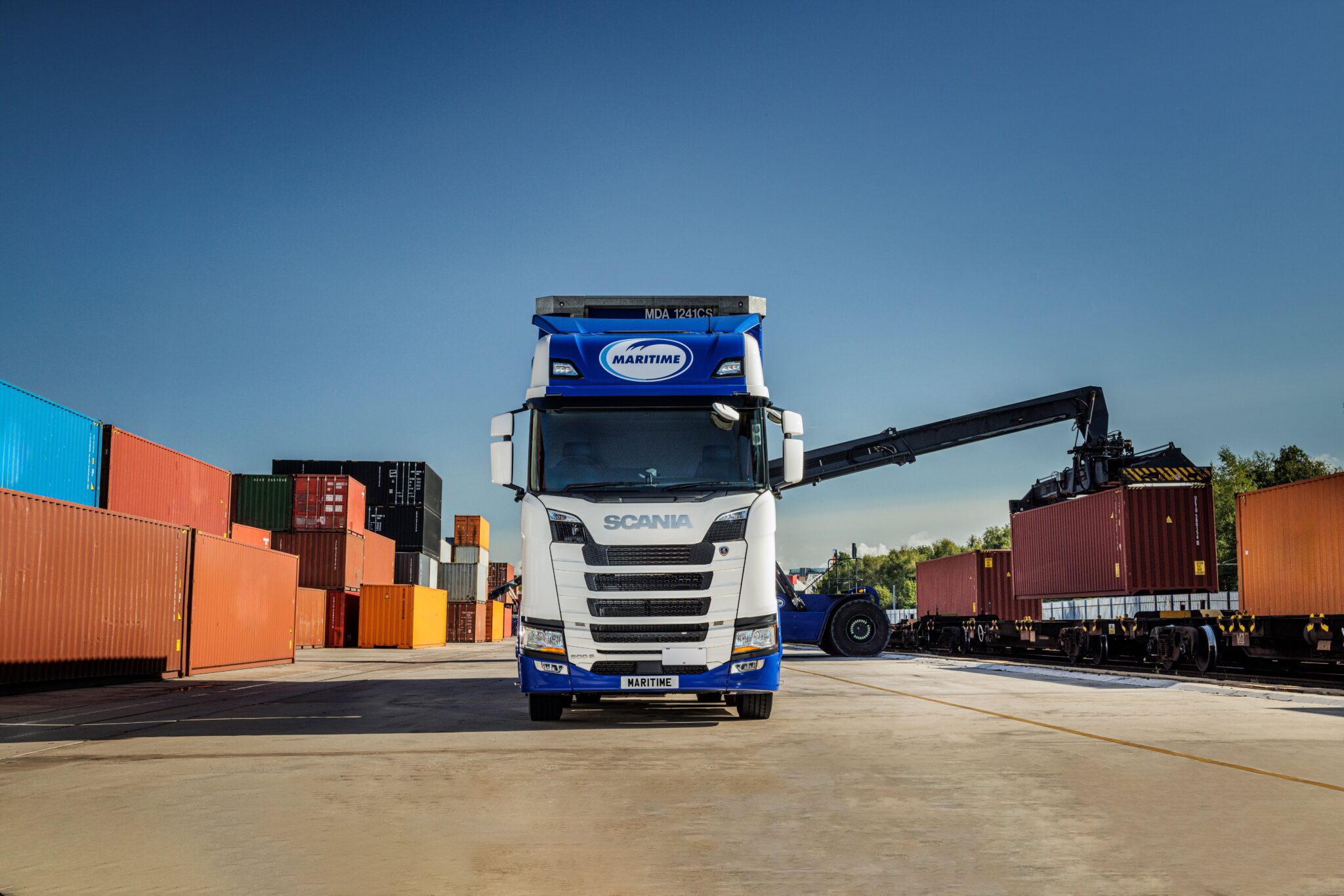
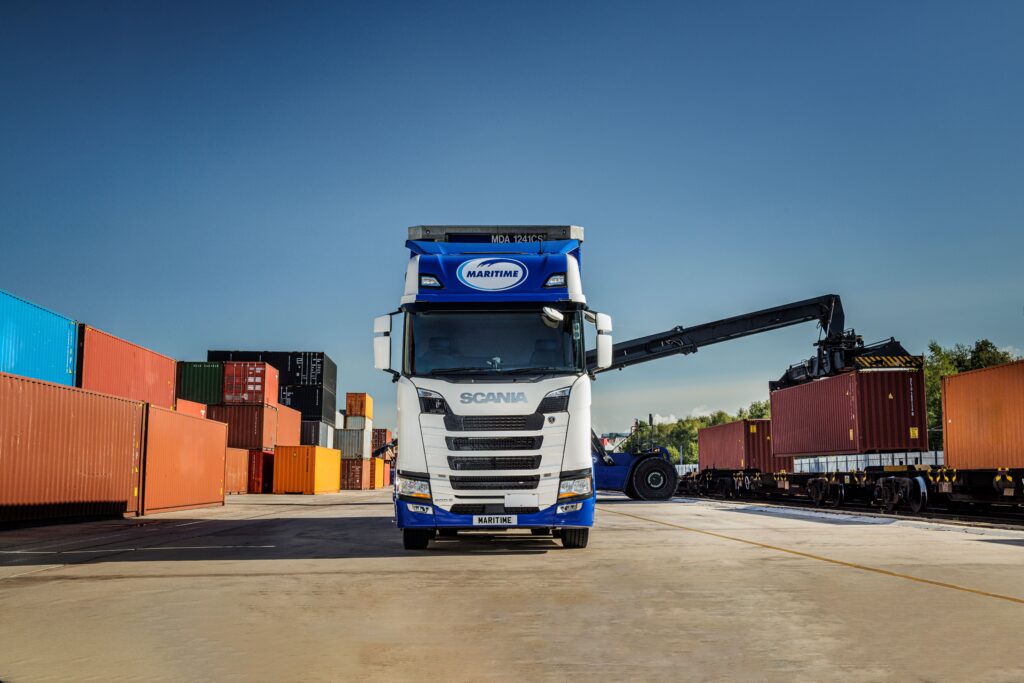
Maritime Transport has launched two new intermodal rail services connecting DP World London Gateway with its inland terminals at Hams Hall and iPort Doncaster.

Running Monday to Saturday, the new services commenced last week and are operated in partnership with GB Railfreight. Both services have been introduced in response to growing volumes at DP World London Gateway – where a £1bn expansion is set to begin this month to increase capacity at the Port – and reflect Maritime’s continued investment in expanding its rail network and infrastructure, improving inland connectivity, and driving modal shift across key UK routes.

John Bailey, Managing Director – Intermodal, Maritime Transport:

‘London Gateway is seeing strong growth in container volumes, supported by its role in the Gemini Cooperation’s Asia–Europe network and a major expansion project that will further strengthen its position as one of the UK’s leading deep-sea ports. As throughput increases, so too does the need for reliable inland connections. These new rail services provide the additional capacity needed to support that growth, enhance our national network, and enable a more meaningful shift from road to rail as part of a lower-carbon, more efficient UK supply chain.’
London Gateway Maritime TransportLondon Gateway Maritime Transport

Maritime plans to introduce additional services in the coming weeks, expanding connectivity between major UK ports and its network of nine strategic rail freight terminals. New routes currently in development include Felixstowe to Manchester, DP World London Gateway to the East Midlands, and Southampton to Maritime’s SRFI at SEGRO Logistics Park Northampton – the latest addition to the company’s growing rail terminal portfolio which is now fully integrated into the national rail network.

Julie Garn, Intermodal Director, GB Railfreight:

‘Rail plays a hugely important role in our national supply chains. In addition to driving our economy, moving goods by rail reduces emissions and supports the UK’s transition to more sustainable transport. Using rail freight reduces carbon emissions by c.76% compared to road. These new services are a great example of what long-term collaboration can achieve, delivering practical, lower-carbon alternatives to road that benefit the wider supply chain.’

Read Similar…
eBook: Logistics Cost Allocation Tool


Source link

0 comments
0 FacebookTwitterPinterestEmail
Services

Forklifts Still Matter

by
written by


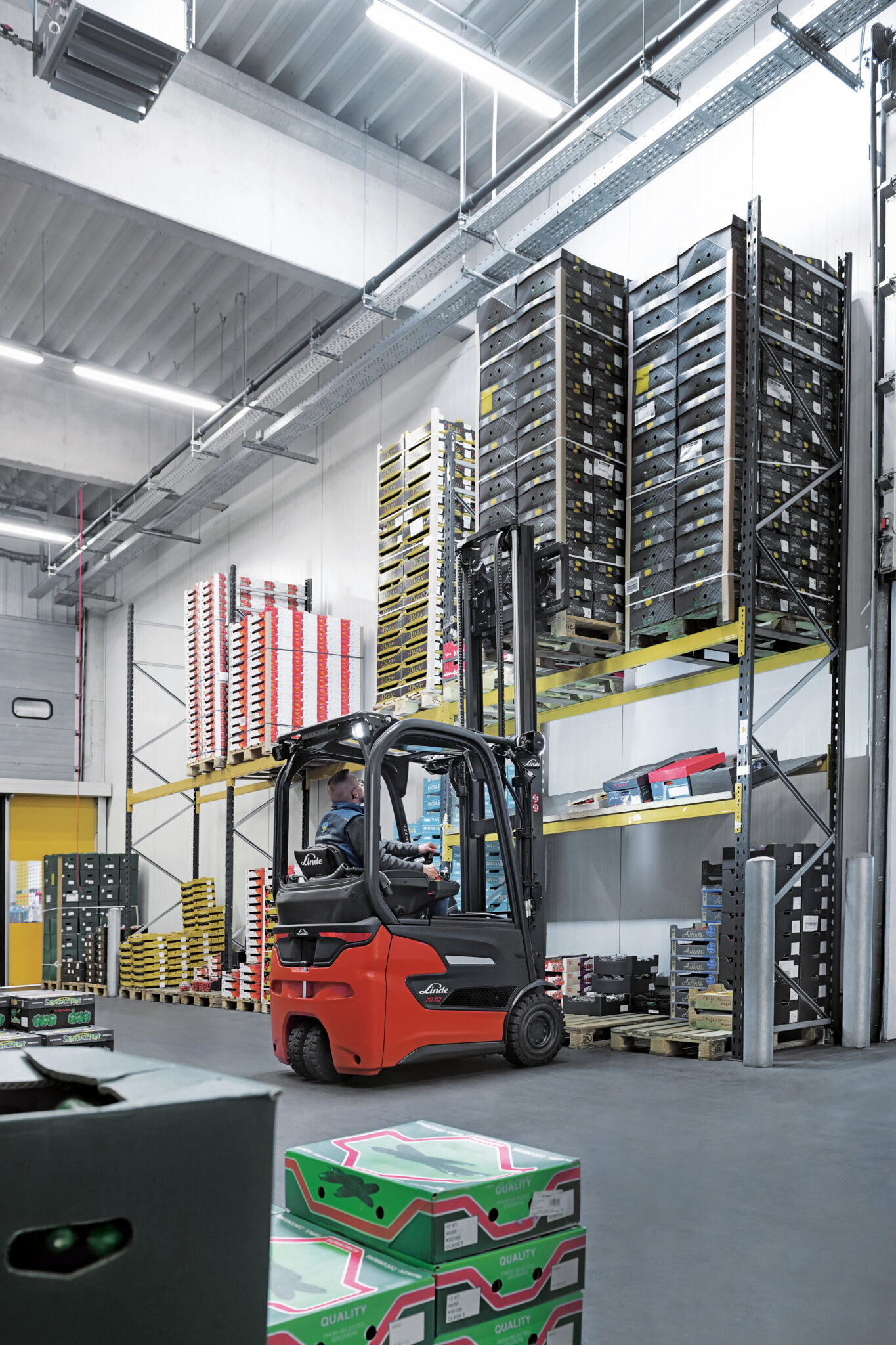
As Linde MH reinvents the role of the forklift to best service a smart, automated world, Peter MacLeod spoke to two of its senior managers to scratch further below the surface.

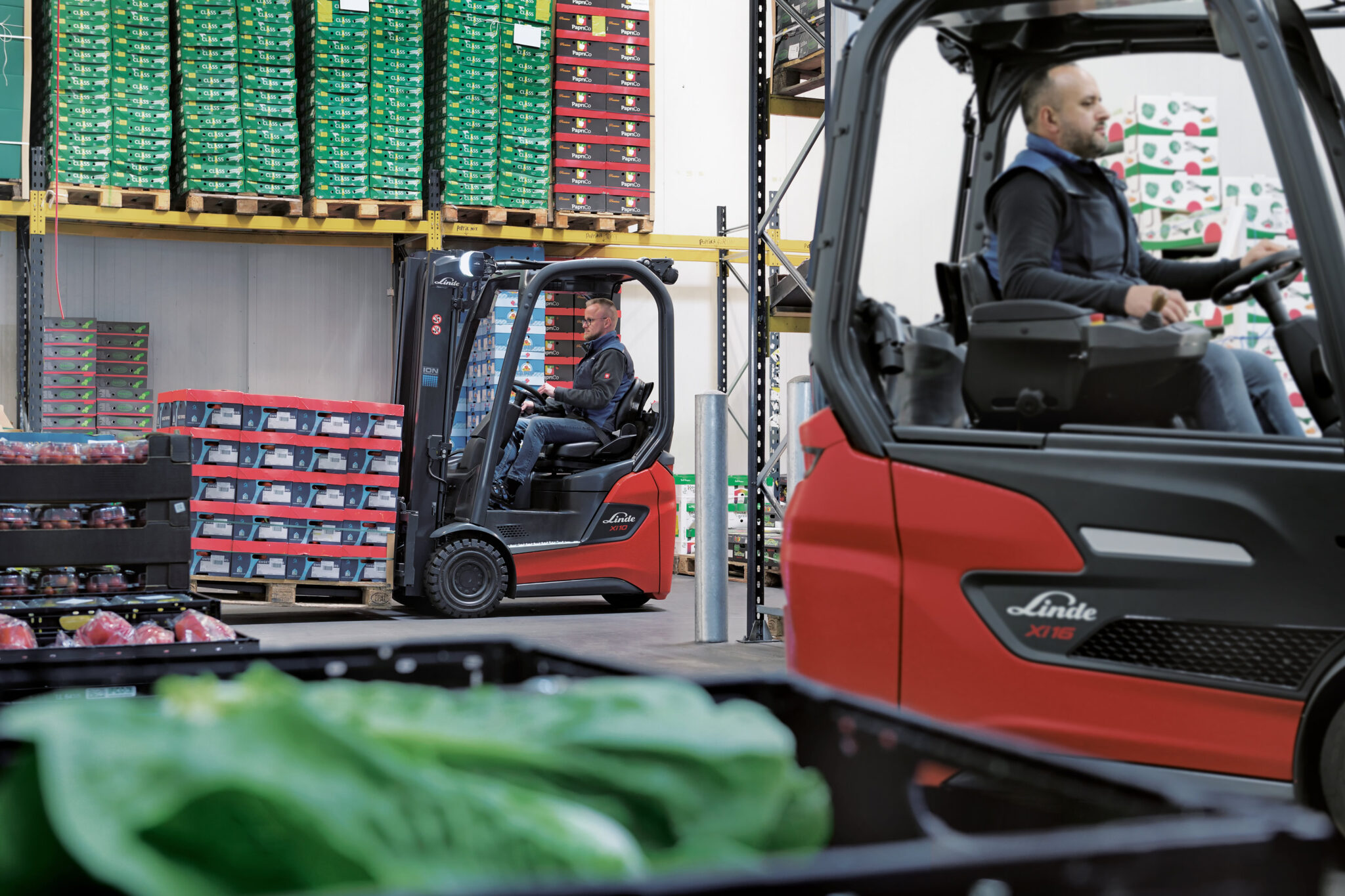
At LogiMAT 2025, Linde Material Handling’s shift from forklift manufacturer to strategic intralogistics partner was clear. I sat down with two of its senior leaders, Ulrike Just (Executive Vice President Sales & Service, EMEA) and Torsten Rochelmeyer (Senior Director Strategy & Solution Portfolio), to explore how Linde is helping customers navigate today’s operational challenges – and to have an educated guess at what the warehouse of the future might look like.

Changing Landscape

When I visited Linde’s Aschaffenburg facility last autumn, the company had just unveiled its new three- and four-wheel electric forklift trucks up to 2.0 tonnes. While these trucks remain essential to warehouse operations, their role is evolving. At LogiMAT, forklifts were present but were not necessarily the focal point. That’s no accident, as Just explains: “Our customers aren’t just looking for equipment – they want a “sparring partner”. Someone who helps them optimise logistics processes, understands digitalisation, energy, safety, and can guide them toward automation.”
Rochelmeyer agrees: “The forklift is just one piece of the puzzle. Customers need help optimising entire systems under increasing cost pressure. That includes safety, data, and energy management.”

Linde’s shift from product supplier to holistic intralogistics advisor is deliberate. The company is leveraging its vast sales and service footprint to deliver scalable, integrated solutions across borders. “We’ve seen huge growth through our international key accounts,” says Just. “We’re unique in being able to offer customers a single point of contact for managing a global fleet. Our main competitor, Toyota, has the footprint, but we provide the network depth and advisory capabilities smaller players can’t match.”

One surprising takeaway is that many large customers don’t even know how many forklifts they operate. “We help them get control of that,” Just says. “It’s about fleet transparency and performance optimisation.”

Automation and Digitalisation

Warehousing is Linde’s fastest-growing vertical, particularly in automation. “We see major growth potential in automation, complex energy and safety solutions, and digitalisation,” says Just.
With partners Nvidia and Accenture, Linde is taking AI integration to a new level. “We’re developing physical AI for AGVs so they can react in real time. For instance, AGVs will soon be able to retrieve pallets even if they’re not perfectly placed, which will be a massive efficiency gain,” Just explains.

The second focus is a digital twin of the warehouse, created through sensors that allow for simulation and optimisation of layouts and flows before any physical changes are made. Rochelmeyer highlighted how critical this is for brownfield sites: “Not every customer is ready to invest €30 million in a new warehouse. But many can deploy five AGVs to improve one process. With Nvidia’s Omniverse, they can simulate changes in real time and test outcomes in 3D.”

Sustainability in Action

Linde’s sustainability efforts are twofold: helping customers reduce emissions, while decarbonising its own operations. Its fleet management software, myLinde, works with its connect:charger to monitor energy usage, optimise charging, and reduce carbon output. “Customers can track how much CO₂ they’re saving and report on sustainability improvements to their own stakeholders,” Rochelmeyer tells me.

Within its own facilities, Linde has committed to carbon neutrality by 2050, with a 40% reduction target by 2030. This commitment was recently recognised with an EcoVadis sustainability award.
“We’ve joined the Science Based Target Initiative (SBTI) and have tailored decarbonisation strategies for each plant,” Just says. “That includes switching to green energy, even though it costs more, and building hydrogen infrastructure.”

Linde even powers its internal logistics with hydrogen trucks. “We have hydrogen forklifts moving masts from fabrication to assembly inside our own facility,” added Rochelmeyer.

Hydrogen: Not Yet Mainstream

Hydrogen fuel cells remain an intriguing – but not yet commercially widespread – alternative to battery electric. Linde is ready for it, though: all new forklifts are fuel-cell compatible. “Today, hydrogen demand is mostly driven by pilot projects with OEMs like BMW and Daimler,” says Rochelmeyer. “The business case isn’t quite there for broader adoption due to high infrastructure costs. But when the time comes, we’ll be ready.”

Government support and regional policy will play a key role in speeding up adoption. “Some regions are already more advanced. It’s about timing; too early and it’s costly, too late and you miss the boat,” he adds.

Forklift of the Future

What will a forklift truck look like in 2035? That depends on who you ask, but both leaders agree on one thing: the operator’s role is changing.

“There are two paths,” says Rochelmeyer. “In one, the driver becomes more like a pilot – monitoring rather than operating. Or they may be remotely controlling the vehicle from an office.”
But traditional forklifts won’t disappear. “We’re not like automotive – our sector evolves more slowly, and regional differences are big. Forklifts will still exist, just smarter, safer, and more efficient.”
Just adds with a smile: “Maybe a humanoid robot will replace the driver. You never know.”

Turning Data into Operational Gold

At the core of Linde’s digital push is its new customer portal, myLinde. “It’s more than fleet management, it’s a central cloud platform where customers can track safety, energy, and usage data,” explains Rochelmeyer.

This transparency opens up new optimisation paths: smarter routing, predictive maintenance, energy cost reduction, even fewer trucks. “It’s not about steel and iron anymore. It’s about data.”
Linde Material Handling may still be synonymous with forklifts, but it’s rapidly becoming known for its digital and automation expertise. Whether customers are trying to reduce their energy bills, optimise brownfield processes, or simulate a new warehouse in the metaverse, Linde is positioning itself not just as a supplier, but as a strategic global logistics partner for a fast-changing world.

similar news

Linde Racks Up 111,111 Units of its Famous 386 Series


Source link

0 comments
0 FacebookTwitterPinterestEmail
Services

Connessione Wi-Fi Jet Privati- Private Jet Finder BLOG

by
written by


In our previous article, we talked about working aboard a private jet, emphasizing how comfort and privacy make flying an extension of the office. But to work during the flight and be truly productive, you need one key resource: a reliable Internet connection. In this article we take a detailed look at how Wi-Fi works on private jets, what it costs, what technologies are available, and what to expect in terms of performance.

How does Wi-Fi Internet connection work on private jets?

Surfing the Internet at an altitude of 12,000 meters is now a necessity for many travelers, especially in the world of private flights.

Onboard Wi-Fi not only allows you to work uninterrupted, but also to stay in touch with your team, access cloud files, or simply relax with a streaming movie. But how does Wi-Fi on board private jets actually work?

Available technologies are based on two main systems:

Air-To-Ground (ATG) Connection.

It uses a ground-based tower network, similar to that of cell phones. It is available only when the plane flies over land and at relatively low altitudes. Air-To-Ground connection provides internet at moderate speeds (about 1-3 Mbps) and is an economical solution, but it has geographic limitations: it does not work, for example, during flights over oceans or in isolated areas without coverage.

Satellite Connection (Ka-band, Ku-band, L-band)

This technology is based on geostationary satellites that provide global coverage, including intercontinental flights and ocean crossings.

  • The Ka-band connection is currentlythe fastest, with performance that can reach 20-30 Mbps, making it ideal for streaming and video conferencing.
  • Ku-band offers good speed and high reliability.
  • L-band, on the other hand, is the slowest Internet connection, suitable only for light activities such as sending emails or using messaging apps.

Major providers of onboard Internet connectivity include:

  • Gogo Business Aviation, known for its ATG systems, which are very popular in North America;
  • Viasat, specializing in high-speed (mainly Ka-band) satellite connections;
  • Inmarsat Jet ConneX, one of the leading global suppliers with excellent performance on intercontinental routes;
  • Honeywell JetWave, which provides systems compatible with high-capacity satellite networks such as Inmarsat Global Xpress.

Want to know which private jets offer the best in-flight Internet connectivity? We will explore the most connected planes in the sky in detail shortly.

Which private jets offer better in-flight Wi-Fi?

Today, most mid-range and high-end private jets are equipped with Wi-Fi Internet connection systems, offering the possible to work, communicate or entertain during flight. However, not all aircraft offer the same performance: connectivity technologies vary by model, flight length, and customer needs.

Light jets, such as theHondaJet or Phenom 100, can offer optional Wi-Fi connections, often based on Air-To-Ground networks for regional flights.

Midsize jets, such as the Citation Latitude or the Embraer Praetor 500, are generally equipped with more advanced systems, including satellite, that can also support video conferencing and streaming.

Finally, private jets such as the Gulfstream G650, Bombardier Global 7500, or Dassault Falcon 8X, offer the best technologies available on the market, with very high-speed (Ka-band) satellite Internet connections and full Wi-Fi coverage.

During the rental phase, PrivateJetfinder offers the ability to customize the connectivity level of private jets,with tailored data plans even for limited periods only. Before booking an aircraft, it is advisable to check what type of network is available on the selected model and which provider is used.

Why Wi-Fi on private jets is value-added

In the world of private jets, Wi-Fi is no longer just an optional extra-it has become an essential service for those who choose maximum comfort and productivity even in the clouds.

1) Uninterrupted productivity

For those flying for business, Wi-Fi Internet access aboard private jets allows them to:

  • Responding to important emails.
  • Participate in video conferences.
  • Access files and cloud platforms in real time.
  • Coordinate with teams and clients without interruption.

2) Entertainment at the click of a button

High-speed Wi-Fi is not only for working, but also for relaxing during the flight. More and more passengers are using the connection to:

  • Watch streaming movies and TV series (Netflix, Prime Video, Disney+).
  • Playing online.
  • Listening to streaming music or podcasts.
  • Navigate freely on social media.

On many private jets, Wi-Fi allows multiple simultaneous Internet connections for families and work groups, so each passenger can use their own device without slowing down.

Wi-Fi connection Jet private privacy security

Cybersecurity and privacy in flight

Private jets that implement secure Wi-Fi Internet connections with advanced encryption and dedicated firewalls are ideal for:

  • Managers handling confidential data.
  • Public personalities.
  • Cybersecurity-sensitive customers.

In some cases, private VPNs can also be configured, providing an additional level of confidentiality.

How much does Wi-Fi on board private jets cost?

Wi-Fi on private jets is an increasingly popular service, but it is not automatically included and can incur high costs, especially if high-speed internet and global coverage is chosen.

On what do the costs depend?

  • Type of technology:
    Air-To-Ground (ATG) connections are cheaper, but work only over land.
    Satellite connections (Ka-band, Ku-band, L-band) offer coverage everywhere, but at a higher price.
  • Flight duration and route:
    A short flight over national territory may cost little, while a transoceanic flight involves more intensive and expensive use of satellites.
  • Data consumption:
    Generally you can choose between flat rates and pay-as-you-go charges, in the latter case streaming, video calls and VPNs obviously carry a higher cost than simple email or messaging.
  • Provider and package chosen:
    Each provider (Gogo, Viasat, Inmarsat, Honeywell) offers different plans: flat rate, megabyte consumption, or unlimited premium.

Indicative price ranges

  • ATG connection (regional flights): €300 to €800 per flight
  • L-band satellite connection (basic): €500 to €1,500
  • High-speed satellite connection (Ka/Ku-band): also €3,000-5,000 or more, for long flights with intensive use

Onboard Wi-Fi: which solution is right for you?

Here are some practical tips for hiring the ideal private jet and choosing the right configuration based on your digital needs:

1) Contact PrivateJetFinder and ask about Wi.Fi internet connection.

  • Some jets offer included Wi-Fi plans, others require additional charges.
  • Ask which providers are installed (Viasat, Gogo, Inmarsat…).

2) Evaluate the route

  • If flying over the ocean or to remote areas, choose private jets equipped with Ka-band satellite connection.
  • If you are flying overland and on short routes, an ATG connection may suffice.

3) Consider the number of passengers

  • With more users connected via Wi-Fi, more bandwidth is needed.
  • Check if the jet supports multiple devices simultaneously.

4) Check the final destination

  • Some geographical areas (such as parts of Africa or the Pacific) may have limited coverage. In these cases, a jet with hybrid Internet connection or dual systems is recommended.

Click here to learn about the most popular destinations on PrivateJetFinder

Wi-Fi connection Jet private privacy security

Contact PrivateJetFinder for your customized private flight

With PrivateJetFinder, every private flight is tailor-made, including Wi-Fi connectivity. If you want to know which planes offer the best connectivity, which providers cover the routes you are interested in, and want ìto receive a personalized quote, we are the ideal partner.

Contact us for:

  • Discover private jets with Wi-Fi connections suited to your business, entertainment or privacy needs
  • Receive a quick, transparent offer with clear costs and including extra services
  • Personalize your flight with:
    • Gourmet catering upon request (including vegetarian, halal, kosher or gluten-free menus)
    • Private transfers to/from the airport by luxury car or helicopter
    • Services for pets, sports equipment or musical instruments
    • Total discretion for VIPs and public figures
    • Dedicated assistance H24

Contact our team for more information and trust PrivateJetFinder for a luxurious and complete flight experience that lives up to your expectations.

If you liked this article, you might also like to read our post Working on private jets: the new frontier of luxury business flights


Source link

0 comments
0 FacebookTwitterPinterestEmail
Services

Industry Conductor for Energy Transmission

by
written by


Data and energy transmission provider Conductix-Wampfler serves all parts of the warehouse and logistics sector and a great deal more besides. Paul Hamblin catches up with the company’s long-serving industry specialist, Simon Dülffer.

If you want to take the temperature of the industry at any given time, you have to account for understandable subjectivity, an emphasis on different sectors according to core expertise. A forklift manufacturer will face another set of challenges to, say, a sorter supplier or a routing software start-up. Reasonably enough, their perspective of wider industry health is likely to be influenced by their experiences.

Not so for Conductix-Wampfler. The German world leader in data and energy transmission can claim an enviably neutral position, as the spectrum of its activities is so broad. Crane, conveyor, conductor rail, AMR, AGV, take your pick: Conductix-Wampfler’s skill is in applying power to and data to moving systems. “We try to be product neutral at all times,” says Simon Dülffer, Global Market Director, Industrial Automation. “It’s about safe, effective data and power transmission in many applications and we are the biggest company in the world in this niche.” Broad is the right word – clients include some of the world’s most famous theme parks, as well as the more prosaic movers of goods in warehouses.

There are two main tranches to the business. First, the legacy electro-mechanical applications that made Conductix-Wampfler so successful. He explains: “This means conductor rails, cable reels in many sizes, everything from a small reel you use in your garden workshop to megawatt-thick cable with winding lengths of over 1km for use in open pit mining.”

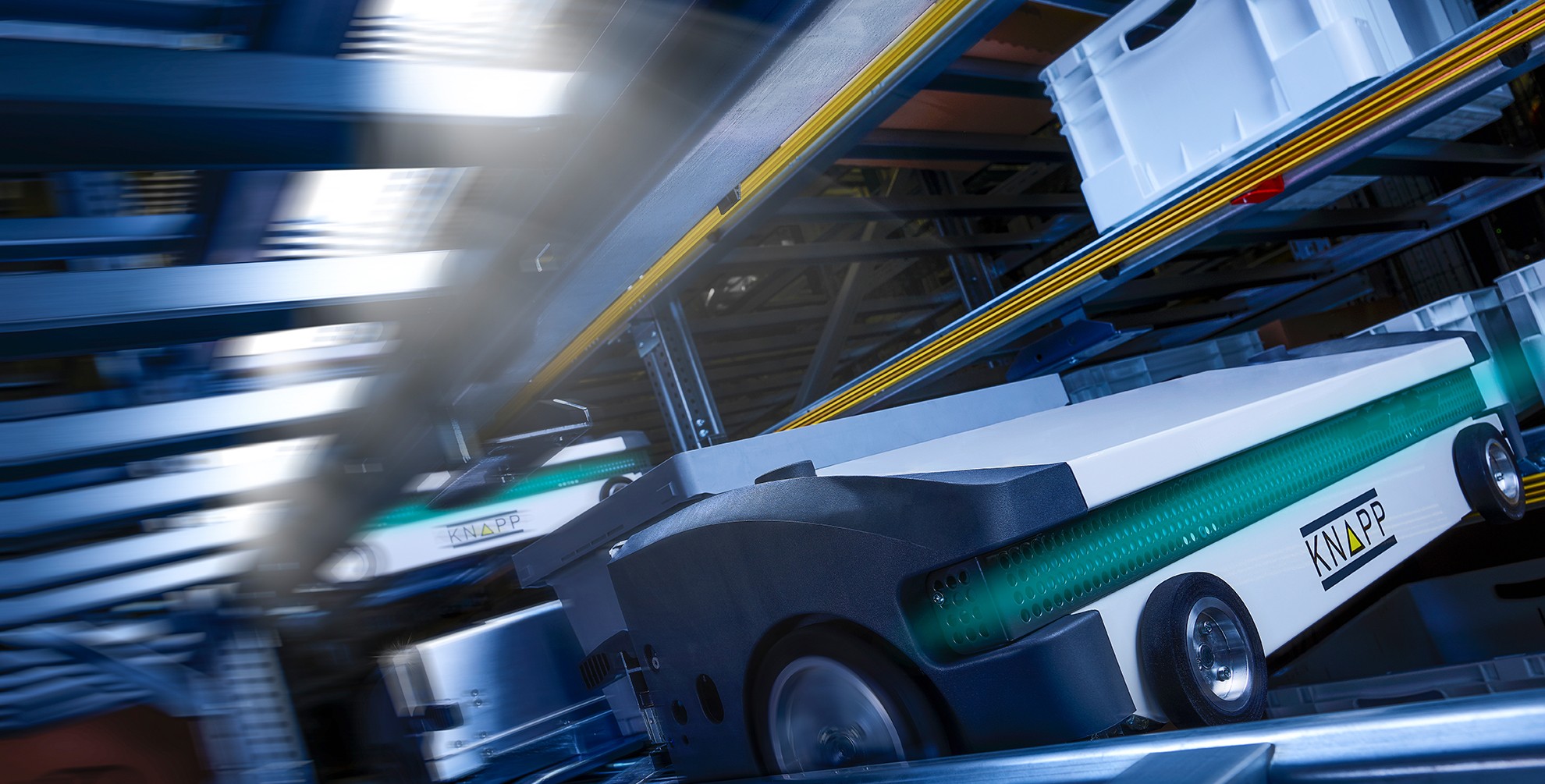
Second, the mechatronic, electronic and software-driven solutions that constitute the company’s portfolio for today’s automated applications. That means control systems for conveyor lines, inductive systems, energy storage, plus the batteries for those systems. “You could call this the growth portfolio,” says Dülffer. “The key for customers is to use different products that are designed to work together in a bundle. An example might be a conductor rail system, you might then add a data transmission system based on a slotted waveguide, perhaps combined with control system for electric monorail. Another example would be for an AGV, comprising a charging solution, battery and data comms package. It is much easier for the manufacturer to build their product with combined expertise from a single source.”

Flexibility v. Throughput

He cites the principal current challenges faced by his customers as the drive for more flexibility and scalability. “We live in uncertain times,” he points out. “It’s therefore hard for customers to map precisely for the five to 10 years that automation planning generally demands. Think of a shuttle system, for instance – it used to be about a drive for better performance, for more throughput, but the emphasis has altered as companies seek more flexibility. So alternatives are now on the market, offering something resembling a blend between AMR and shuttle, so that you are still navigating and storing via a rack, but with the adaptability to scale for the future as required.”

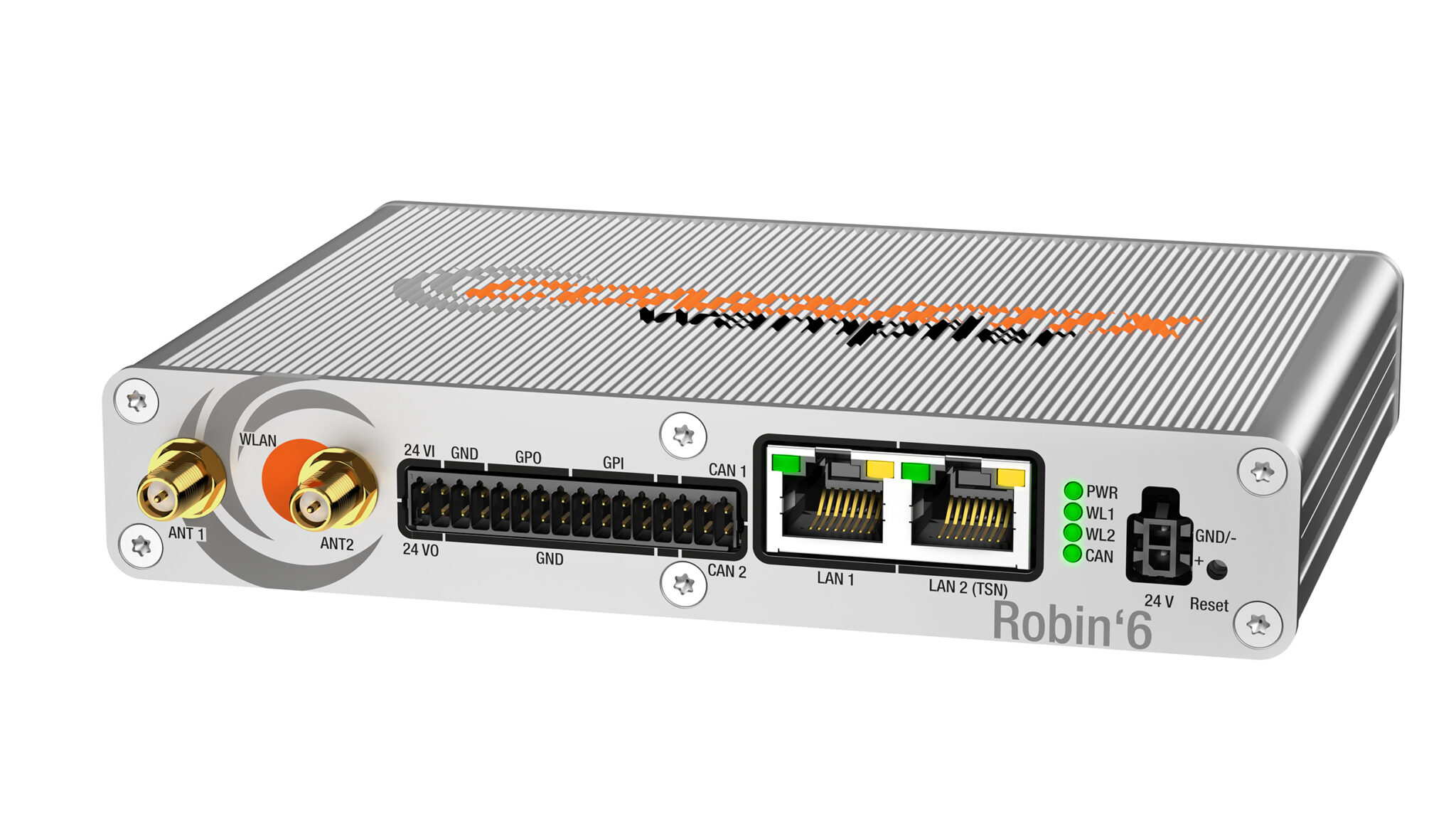
What does that mean for Conductix-Wampfler? “It requires us to offer different kinds of solutions. With throughput as a priority, you’re going for a conductor rail with power provided just-in-time and you don’t carry the weight of energy storage on board the vehicle. For a flexible scalable system you need the flexibility that energy storage gives you, and that brings new challenges for our mechatronic portfolio for AGVs and AMRs. We have to establish how to get the power on board: via charging, energy storage – batteries – and also data transmission requirements, usually including Wi-Fi 6 and fleet safety. On a forklift, you have plenty of space, you can carry weight such as a large battery. You have the driver/operator to help plug and unplug.

“AMRs, on the other hand, present different challenges – you have no driver to plug or unplug, and you must manage considerable weight and space constraints. Hence we offer opportunity charging, delivered via charging stations. Then we examine power – you save costs via operating the battery in a comfort zone, so that it never depletes by running to zero; or you can deploy photovoltaic power, perhaps from the roof. In all circumstances, we can customize to suit customer preference.”

Taking the Industry Temperature

Let’s return to Conductix-Wampfler’s neutral standpoint. How does Simon Dülffer view the state of the sector, particularly after insightful trips to LogiMAT and across the Atlantic to ProMat a week later?

“The geopolitical situation is certainly fostering the current mood of uncertainty,” he reflects. “But logistics remains a long-term market, it’s a tech market, people are still looking for opportunities to innovate. At the end of the day, it’s about technology, not geopolitics, and as long as there’s a business case, products will find their market. The tariff issues have not so far shown us concrete effects in the intralogistics field – it’s a different story in the field of people transportation systems, for instance. In a scenario where a supply chain may have to be re-routed due to tariffs, this is quite easily done if you are dealing with commodities, but with highly engineered products it’s much more difficult.”

Have customer requirements and challenges in the intralogistics sector changed in recent years? “We saw the enormous boom in small loads and parcel sortation systems rocket-boosted by Covid, but with the return of the regular economy over the past 2-3 years, as consumers re-allocated resources – on the holidays they had been missing, for instance – we saw a cyclical shift back to heavier loads, to pallet handling, and those companies have done well for past two years or so. Now it’s possible we may be seeing an upturn once again in the ecommerce sector,” he suggests.

similar news

Intralogistics 4.0: Energy Supply of Shuttle Systems


Source link

0 comments
0 FacebookTwitterPinterestEmail
Services

LFS WMS Optimizes Logistics Operations

by
written by


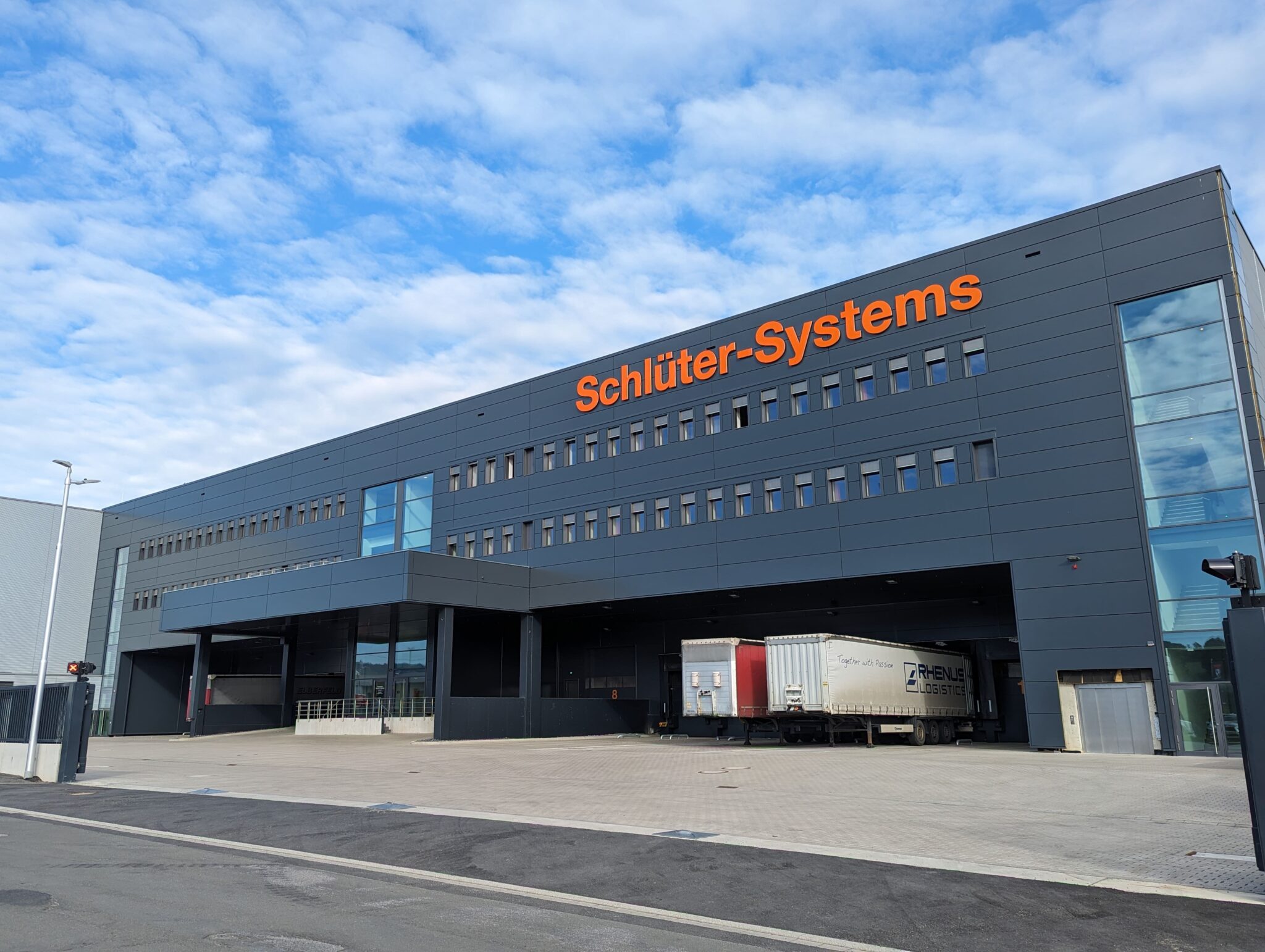
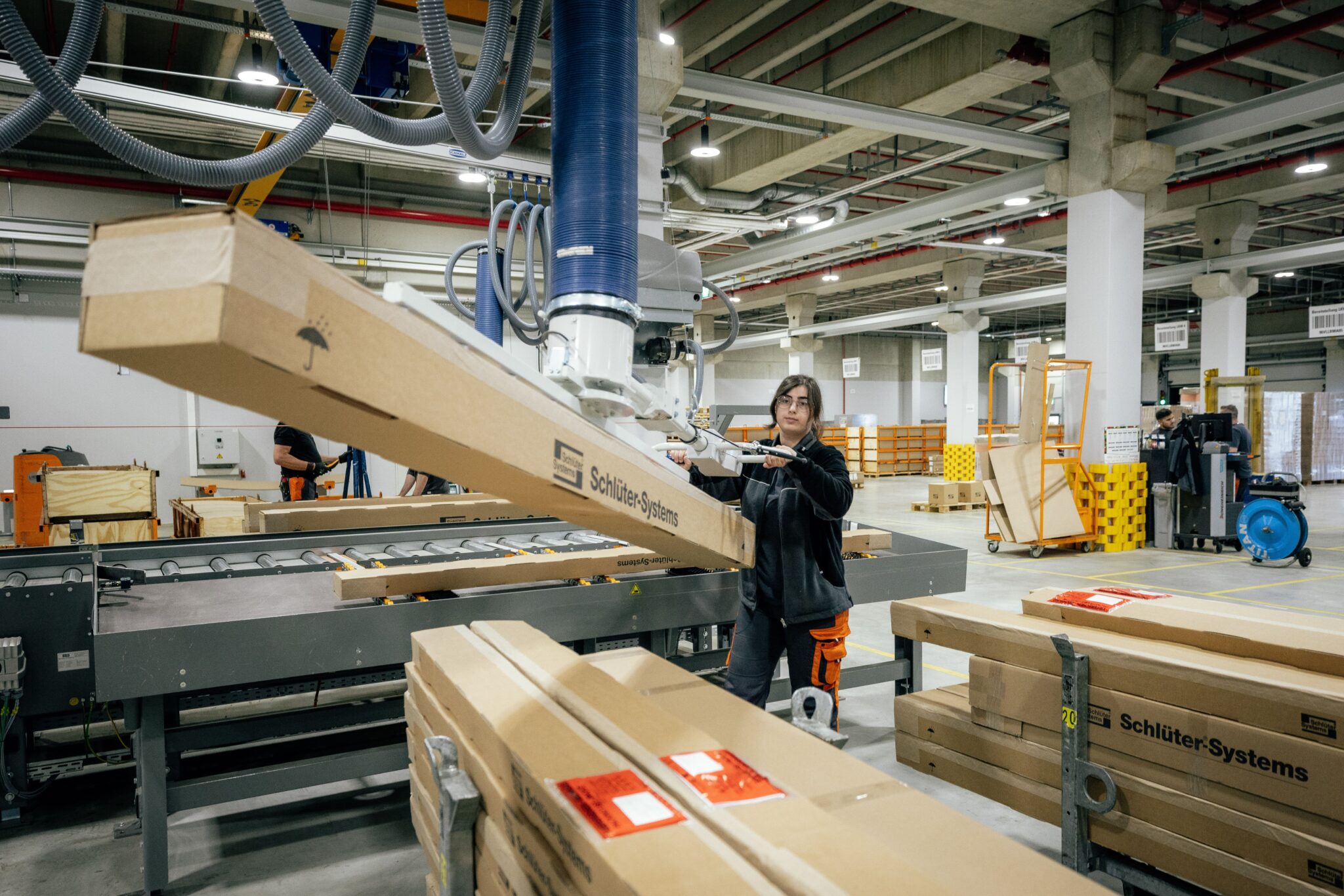
Schlüter-Systems KG, a the global supplier of system solutions for tile and natural stone installation, needed seamless, fast, scalable logistics across its 35,000 m² facility. From its headquarters in Iserlohn, Germany, the company supplies wholesalers, construction sites, and tile warehouses around the world. As the former craftsman business has grown into a globally operating enterprise, the demands on its logistics and warehouse management have increased significantly.

In response, Schlüter-Systems has accelerated the digitalization of its warehouse operations across the group and built a new central warehouse at its headquarters. At the heart of this transformation is the LFS warehouse management system from EPG (Ehrhardt Partner Group), which ensures the coordination of all logistics processes. The result: noticeably improved efficiency, maximum flexibility, and a significantly lower error rate.

Schlüter-Systems offers a wide range of products, including various types of Schlüter profiles, electric and hydronic radiant heating systems, drainage solutions, and much more. With a portfolio of over 12,000 items, the company has successfully expanded into new markets and continuously enhanced its logistics capabilities. At its new warehouse in Iserlohn, Schlüter-Systems stocks approximately 12,000 products across 35,000 square meters and two levels.

From Driverless Transport Systems to Overhead Monorails

Fast shipping requires fast logistics — and a high-performance warehouse management system. As the previous WMS and ERP systems could no longer meet the demands of the new warehouse, Schlüter-Systems decided it was time for a change. After a thorough and lengthy selection process, the company chose the LFS warehouse management system.

“In our new central warehouse, we’ve implemented a very high level of automation — with three automated high-bay storage systems, a driverless transport system, an automated small-parts warehouse, and a self-driving overhead monorail,” says Florian Schmidt, Head of Logistics at Schlüter-Systems. “The main challenge was getting the WMS to seamlessly connect all these systems and coordinate the material flow without disruption.”

By implementing LFS, Schlüter-Systems aimed to enhance picking and packing strategies, optimize material flow, and make processes more efficient and transparent. Thanks to close collaboration with the Schlüter-Systems project team, the supply chain specialists at EPG successfully implemented LFS at the site and coordinated all automation solutions within just a few months. “For the suspended monorail system, which can transport various items with a total weight of up to 1.3 tons, there was previously no existing interface,” explains EPG Project Manager Markus Pauly. “We developed a custom connection from the ground up to ensure seamless integration into the system.”

Efficient, Ergonomic, Error-Free

The modular LFS system helps Schlüter-Systems design automation elements at different communication levels and interfaces with shipping service providers in a sustainable and efficient way. “One of the challenges was coordinating the wide variety and complexity of components in day-to-day operations,” says Schmidt.

In addition to the driverless transport system (FTS), the company also uses the cloud-based International Shipping System (ISS), which offers user-friendly features like Track & Trace, interfaces with over 250 shipping carriers, and fully automated shipping label printing.

similar news

Weleda Bolsters Hubs with WMS


Source link

0 comments
0 FacebookTwitterPinterestEmail
Services

Private Jets Transporting Vital Medical Equipment

by
written by


Think of a private jet and you might imagine celebrities, millionaires and high-flying business owners summoning a first-class flight to transport them to a luxury location. Yet, these planes are also an essential tool in healthcare logistics, helping transport vital equipment around the globe, and often enabling medicine, blood and organs to reach their destination quicker than any commercial aircraft could, writes Vickie Clark, MD of V Jets.

Life and death stakes

Across the world, 85 million units of blood are transfused every year – with many requiring a co-ordinated logistics effort to reach the patient in a timely manner. Individuals in a critical condition need their blood transfusion to begin within just a few hours, to prevent life-threatening complications.

In the case of organ donation, more sensitive organs such as the heart and lungs must be transplanted within four to six hours, otherwise they risk no longer being viable. Even more resilient organs such as the liver and kidneys require transplantation within 12 hours and 24 to 36 hours respectively to maximise the chance of successful surgery (Donor Alliance).

Even where a commercial airline route could feasibly be used to transport the donor organ, there are limitations involved with this choice: for example, in America the organ must arrive at the airport between an hour and two hours before flight departure, and the cargo office at the destination airport must be open when the flight arrives to ensure the organ can be collected by a courier. The organs are also stored within the cargo hold alongside the checked-in baggage of the flight’s passengers, presenting a potential risk when it comes to safe transportation. In fact, the US Organ Procurement and Transplantation Network cites 2.5% of unused organs can’t be donated due to transport issues.

Luxury lifesavers

Why are private jets preferable? Research suggests private jets may be up to five times quicker end-to-end than commercial airlines or land ambulances when it comes to transporting organs, blood donations and other medical equipment.

This is due to a combination of reasons, not least the ability to use smaller airports, more flexible routes, and faster flight speeds. A jet can be ready to go in as little as two hours after a request has been submitted – and can often land at an airport closer to the destination medical centre, or even a field hospital or rural community. This is especially crucial to allow those in remote areas access to the same kind of medical intervention as their urban counterparts, whose medical facilities are generally nearer a large, commercial airport.

If you’re racing against the clock, there is no room for delays – in those situations, private planes aren’t just moving cargo, they’re delivering hope. When it comes to the use of private jets to transport medical supplies, it’s important to remember the reality – that at least one life can be normally be saved but only if the transportation is swift.

There are so many examples of such life-saving missions, like the 7-year-old boy who needed an emergency transfusion after a serious accident in the Caribbean. His rare blood type was not available locally and there were no commercial flights due to land on the island for the next 48 hours – so a private jet delivered the much-needed blood from Miami in less than five hours.

Sometimes, it’s not an isolated incident but a full-scale crisis which requires private planes to be drafted in to support medics on the ground. In Sudan in 2023, commercial airlines suspended services due to the conflict there, but aid organisations were desperate for medical supplies, utilising private jets to ensure they arrived as quickly as possible.

And in West Africa, when there was an Ebola flare-up, a private jet flew in hazmat suits, mobile isolation units and specialised antivirals for WHO doctors. The supplies arrived in ten hours, compared to the three days it would have taken to transport them commercially. When roads are destroyed, airports are shut, and time is running out, a private jet can still make it through, giving hope to those previously battling against seemingly unbeatable odds. This is the side of private aviation that people don’t see – flying stem cells, vaccines, and hearts to patients in need.

Whether due to natural disaster, political unrest, a sudden disease outbreak, or a life hanging in the balance due to illness or accident, time and efficiency is of the essence – and that’s when the private aviation sector proves its about more than just A-listers and corporate giants: it’s capable of saving lives.

similar news

World’s First National Drone Delivery Service Launches in Rwanda


Source link

0 comments
0 FacebookTwitterPinterestEmail
Services

Industrial AI Momentum Showcased

by
written by


The fifth edition of IFS Connect 2025 drew a record-breaking crowd of more than 500 participants from across Central and Eastern Europe, reinforcing the event’s growing significance as a premier platform for digital innovation in logistics, manufacturing, and enterprise operations, reports Peter MacLeod, Logistics Business Editor.

Held in Warsaw, the conference brought together industry leaders, customers, and technology partners to explore how Industrial AI and cloud-based ERP solutions are transforming business operations in high-impact sectors. At the heart of the event was the unveiling of customer success stories, new product insights, and recognition of standout organisations through IFS’s Business Transformation Awards.

Industrial AI Takes Centre Stage

This year’s IFS Connect focused heavily on Industrial AI, positioning it as the foundation for modern enterprise strategy. The theme resonated with attendees from industries such as logistics, energy, and manufacturing, where automation, predictive analytics, and end-to-end process integration are mission-critical.

“Industrial AI is no longer an option, it is the foundation of modern business,” said Marek Głazowski, President of IFS Poland & Eastern Europe. “It allows companies not just to optimise operations, but to forecast and adapt to future disruptions.”

Cathie Hall, IFS Chief Customer Officer, added: “AI is the biggest shift since the cloud. We’ve invested 20% of our R&D budget into AI over the past year, and demand for IFS.ai is accelerating. Our customers are ready, and so are we.”

Awards Celebrate Digital Leadership

A highlight of the event was the IFS Business Transformation Awards, which honoured companies achieving exceptional progress in digital transformation. Winners included:

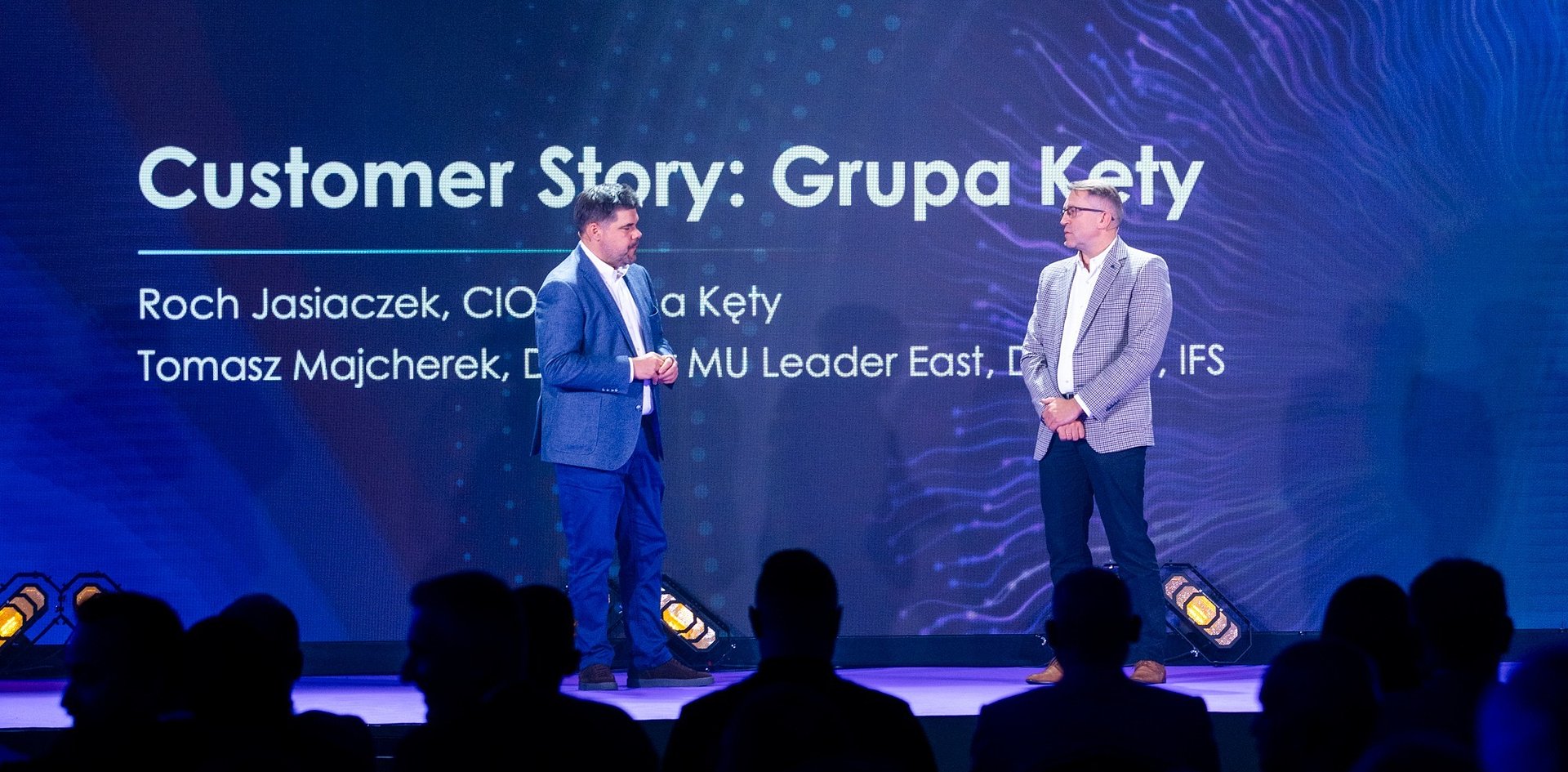
• Grupa Kęty: Recognised as a Business Transformation Leader for its successful launch of IFS Cloud in its Extruded Products segment. The ERP rollout covered sales, logistics, finance, warehouse management, and production planning, benefiting over 6,000 employees and integrating with MES, TMS, and other systems.
• Wuteh and ZPAS: Also named in the Business Transformation Leader category for their advances in process optimisation and full-scale IFS Cloud integration, respectively.
• GZ Media (CZ): Honoured as Innovative Business for leveraging IFS Cloud to enhance operational agility in vinyl record production.
• Kilargo: Received the Implementation Excellence award for its smooth system deployment in the food and beverage sector.
• Gamet: Named Reference Client of the Year for its collaborative knowledge-sharing efforts within the IFS ecosystem.
• KAN: Awarded Digital Transformation Architect for leading bold change in the installation systems industry.
• Arkadiusz Szafrański of Mikomax: Named the first-ever IFS Brand Ambassador for championing IFS values and technology adoption.

“These companies exemplify how forward-thinking strategy, combined with modern tools like IFS Cloud, leads to measurable business success,” said Głazowski.

ERP Benchmark

One of the most compelling case studies at IFS Connect was that of Grupa Kęty, a leader in aluminium profiles and components. The company announced the completion of the first phase of its IFS Cloud deployment, aimed at streamlining operations and improving data flow across departments such as production, logistics, and finance.

“This was more than an IT project, it was a company-wide transformation,” said Roch Jasiaczek, IT Director at Grupa Kęty. “The success lies in close collaboration between our teams and IFS, enabling us to customise solutions for real-world industry needs.” “We now have a scalable, flexible platform that supports both current needs and future expansion,” added Rafał Warpechowski, CFO of Grupa Kęty.

As IFS Connect 2025 wrapped up, one message stood clear: Industrial AI and integrated cloud systems are reshaping logistics and manufacturing at scale. From predictive maintenance to real-time process automation, companies embracing digital transformation are gaining the agility needed to stay competitive in a volatile market. With continued investment in AI and strong partnerships across sectors, IFS looks well-placed to play a pivotal role in the digital future of B2B operations.

similar news

AI Unleashed in Florida


Source link

0 comments
0 FacebookTwitterPinterestEmail
Services

High-Speed Sustainable Warehouse Doors

by
written by


Industrial doors from Efaflex lead the world because they combine premium manufacturing, super high-speed operation and exciting energy-saving opportunities, writes Paul Hamblin, Logistics Business Features Editor.

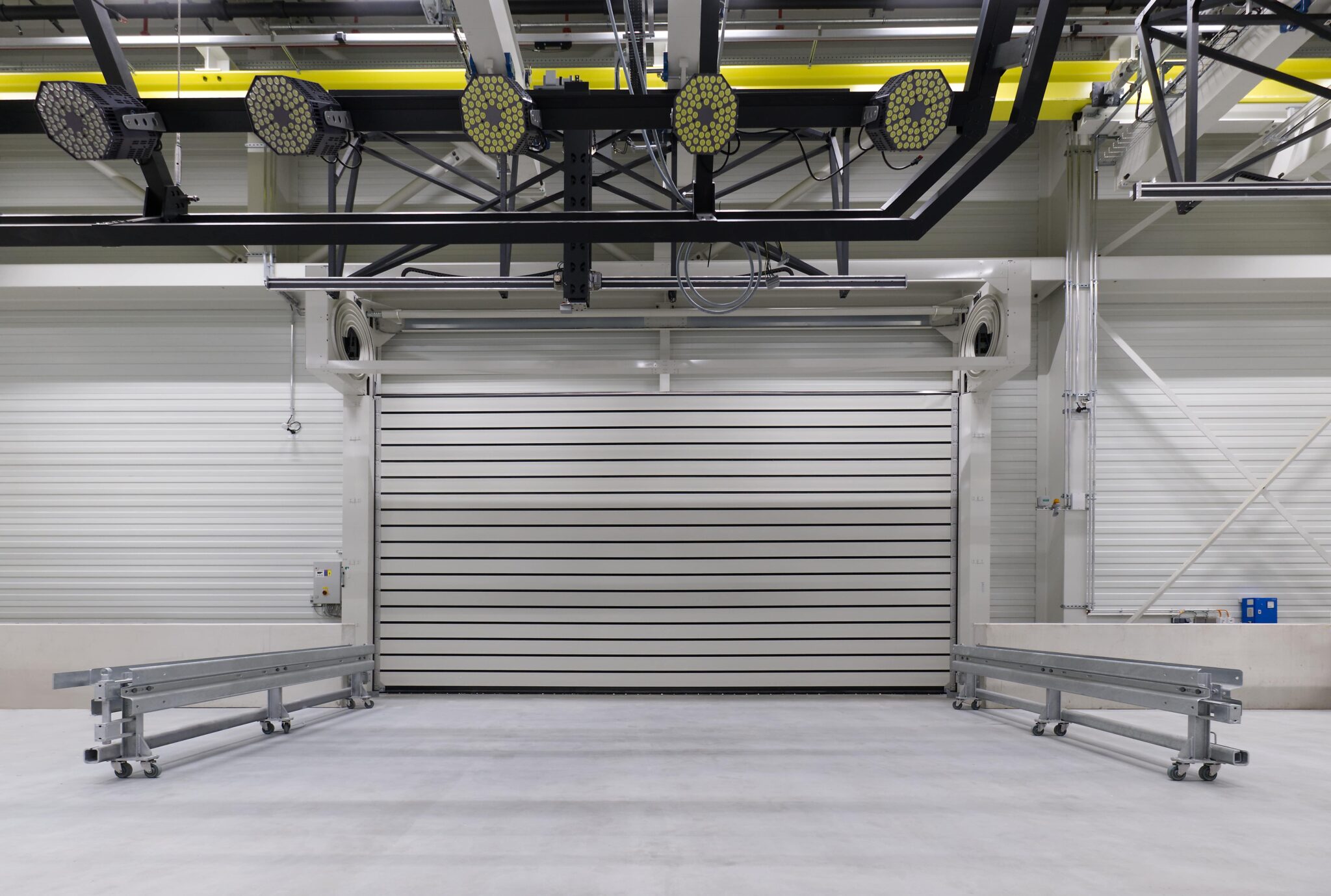
Efaflex builds and supplies some of the world’s fastest high-speed industrial doors for a wide range of settings – 16 sectors at the most recent count – and you know the German-founded company is confident of that speed because the company familiar logo carries the image of a cheetah, the world’s fastest land animal. That’s confidence.

Such confidence can often be misplaced, of course. The fact that Efaflex delivers on its promises is testament to the long-term global reach and reputation of the company. Even doors with a 10,000mm width can achieve a door leaf speed of 1 m/s. The company says its fastest vertically opening high-speed door is able to achieve top speeds of more than 4 m/s.

Technological and engineering excellence are core to the Efaflex success story. Unique spiral technology enables the door to be both faster and lighter than the competition, while safety is ensured by a myriad range of sensors, all supplied specifically to suit customer needs. “Our consultants can prescribe exactly what you as a customer require,” Head of Marketing Christian Jacob (pictured below) tells me. “There is an individual light and sensor grid inside every door we produce. It will integrate with the manual labour workforce or seamlessly integrate in a Smart warehouse setting incorporating AGVs and AMRs,” he adds.

All doors are manufactured at the company’s plant in the Czech Republic. The latest generation continues to push the boundaries. “It’s about more platform thinking in important areas such as spare parts and the interior of the door,” explains Jacob. “So, even if the shutters vary, each door will have the same framework, which facilitates spare parts efficiency as well as overall maintenance. The beauty is all on the inside, if you like.”

Enabling Customer Sustainability

A central focus of the company’s ethos is to assist in the sustainability efforts of its customers. “We do that by ensuring we provide the door which best saves customer energy consumption,” he reveals. “We start that process directly with the customer, establishing what matters to them so that we can then add to their sustainability story. This is about starting from the customer’s perspective.”

Christian Jacob, Efaflex

Efaflex has introduced EFA-EnergySaver, an easy-to-use tool available to all visitors to its website. Applicable by use case – workshop, production facility or warehouse – in a few clicks you can gain a detailed comparison of potential energy savings via scrutiny of such details as door size and dimensions, door speed, number of doors, opening cycles per day, productive days per year and heating/cooling costs.

All Efaflex doors are high-speed, whether spiral, roll-up or folding, or a clean room or machine protection door. How do customers know which type should be selected, though? “It depends on the hole in the wall and where it is,” he laughs, before elaborating, “You won’t have a fabric door in an outdoor-setting, for instance.”

He won’t reveal how many doors Efaflex installs per year across the globe, other than to quote a figure “in the thousands”. This is fair enough: Efaflex remains a family-owned business and is under no obligation to quote such figures.

Jacob is in broad agreement with the current sentiments around wider market uncertainty, but counters that Efaflex’s order book is “vivid”, adding that sectoral ups and downs are part of business. “We supply 16 different verticals,” he adds. “In these 16, one will always be under pressure; at the moment, automotive is a good example of that, so two current strong points for us, for instance, are in food and in supplying doors for public parking security in urban environments.”

similar news

Lower Energy Costs thanks to High-speed Doors


Source link

0 comments
0 FacebookTwitterPinterestEmail
Services

Gearmotors for AMR Growth

by
written by


Bonfiglioli’s tailored drive solutions are at the heart of a smarter, more connected future for manufacturers of AGVs and AMRs, writes Editor Peter MacLeod.

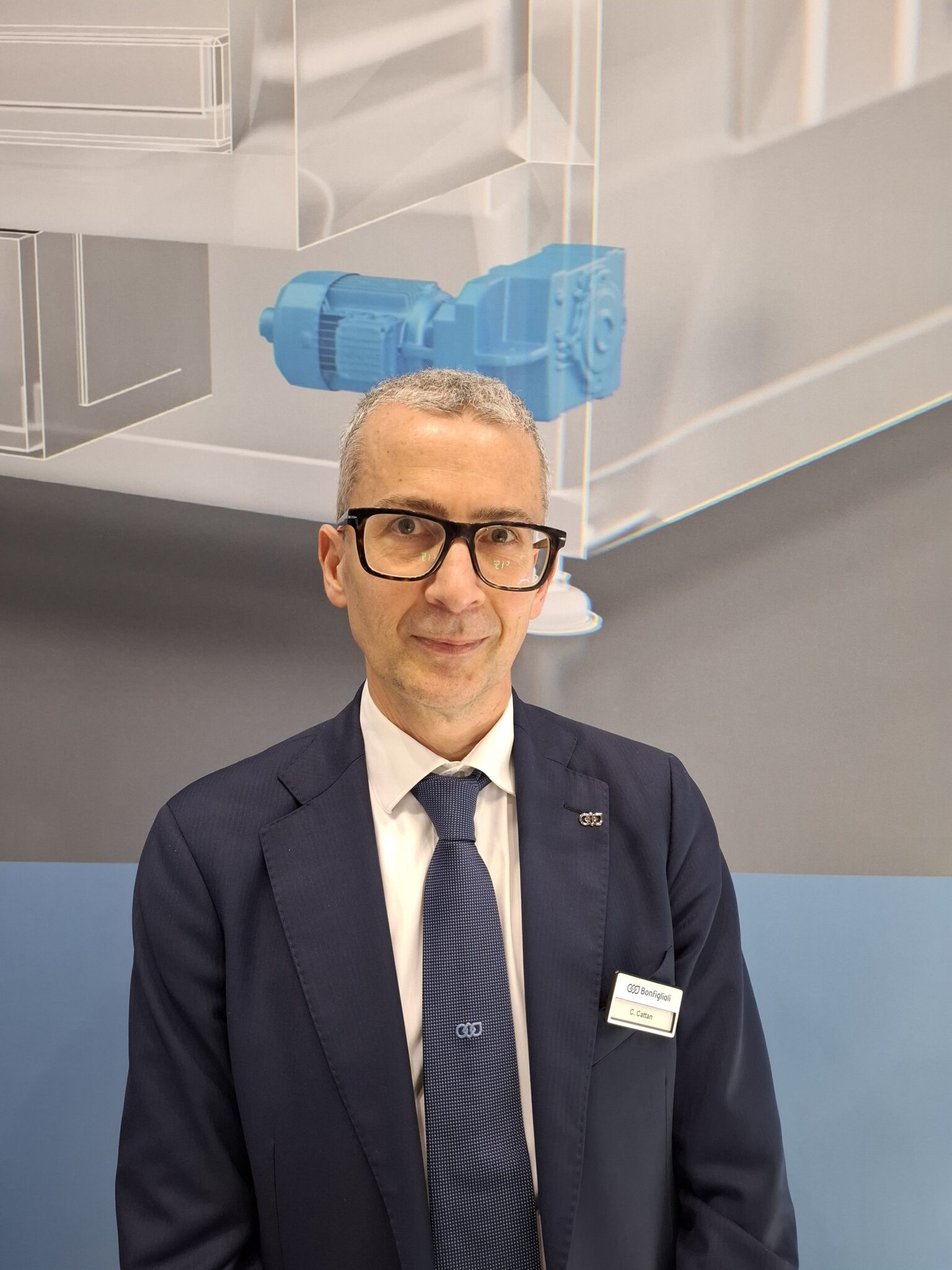
As demand for autonomous mobile robots (AMRs) and automated guided vehicles (AGVs) surges across logistics and warehouse environments, Bonfiglioli, a long-established Italian manufacturer of gear motors and drive systems, is turning its attention to providing customised, compact, and connected solutions for OEMs. Cristiano Cattan, Global Key Account Manager, sat down with us at LogiMAT to discuss the company’s evolution and innovation trajectory.

“We’re seeing significant growth in the AMR space,” Cattan explains. “And what we’ve learned is that this is a very different business from traditional industrial markets. OEMs don’t want off-the-shelf components, they want tailored solutions.”

Bonfiglioli, known historically for industrial gearboxes, continues to expand its offering of integrated systems that combine motors, gear units, and drive controllers. This shift is more than a product evolution, it’s a strategic move to meet customer demands for turnkey solutions and to help them reduce their roster of component suppliers.

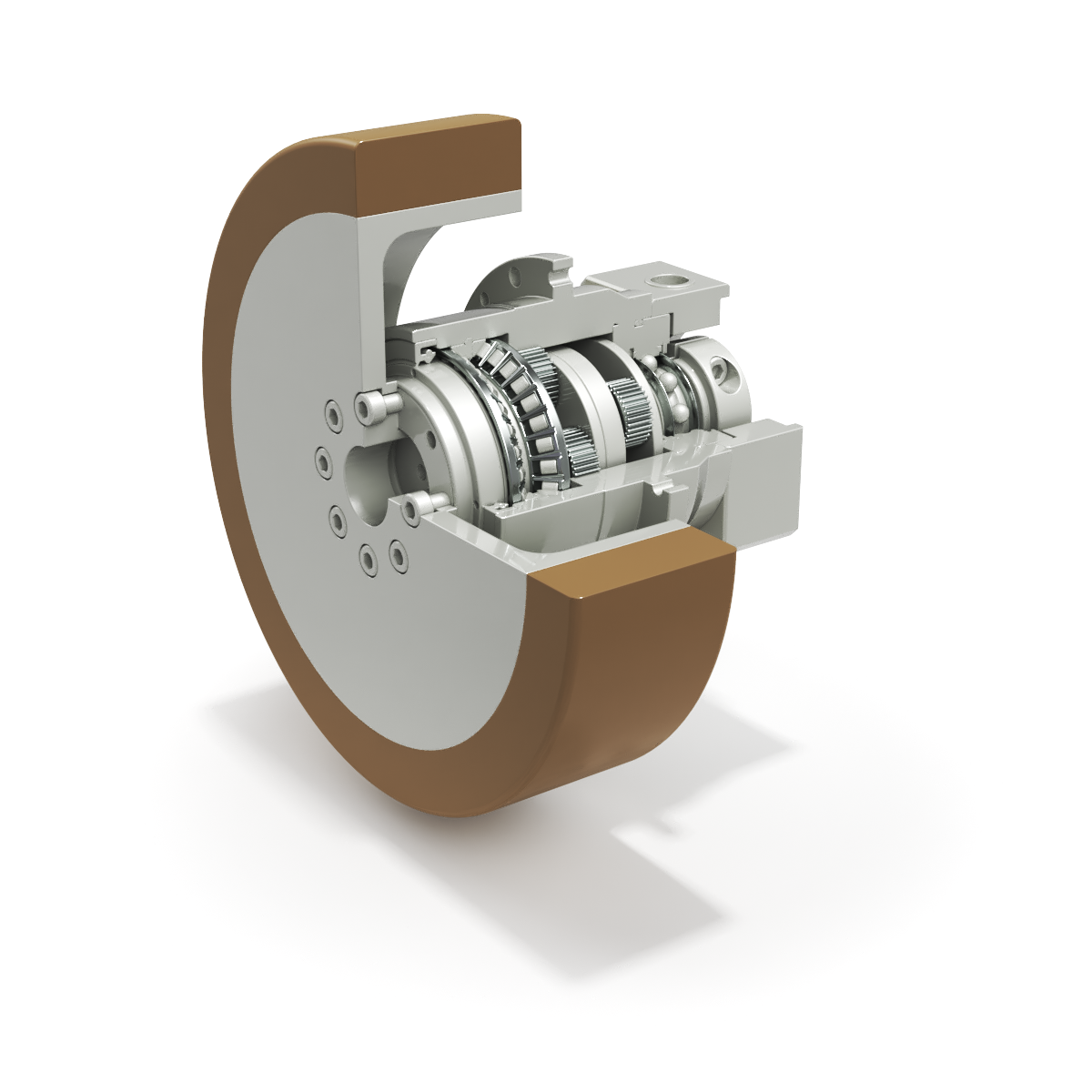
“Today, customers are coming to us not for a gearbox, but for a compact, all-in-one drive solution,” says Cattan. “They’re saying, ‘Here’s the performance spec and physical dimensions, can you build something that fits?’ And we’re answering yes, with a collaborative engineering approach between their R&D and ours.”

Valued Partner

This high-touch engagement has made Bonfiglioli a valued partner for OEMs building AMRs and AGVs, especially in space-constrained applications. It’s also pushing the company deeper into electronic integration. The 2023 acquisition of Selcom Group, an Italian electronics manufacturer, has bolstered Bonfiglioli’s in-house capabilities in drive control and edge computing, opening the door to smarter, IoT-enabled systems.

“We now offer solutions that include condition monitoring and predictive maintenance,” says Cattan. “Our gear motors can report live data on temperature, vibration and load. That means operators can identify wear or potential failures before they cause downtime.”

These insights are transmitted either through the customer’s PLC or via Bonfiglioli’s edge computing devices, enabling residual lifetime analysis of components like bearings and motors. “Customers don’t want to stop a line, even for a second,” Cattan (pictured below) adds. “So being able to plan maintenance before failure is a real value-add.”

Cristiano Cattan, Bonfiglioli

Broad Portfolio

Despite these advances, Bonfiglioli’s challenge remains market perception. “We’re still seen by many as just a gearbox supplier,” Cattan says. “But we have a broad portfolio and deep flexibility to go beyond it. We want the industry to know that Bonfiglioli offers full, intelligent drive solutions.”

Indeed, that flexibility has proven crucial, not only in AMRs but also in fixed logistics applications. While Bonfiglioli isn’t embedded in global giants such as Amazon or DHL, Cattan notes a rising interest in their smart conveyor solutions, especially for airport baggage handling and intralogistics systems.

As it evolves its product portfolio, Bonfiglioli is also positioned for a global customer base. “We have production and service locations in Europe, the US, China, and India,” says Cattan. “That global footprint is important for OEMs looking for consistent quality and local support in every major market.”

Looking ahead, Bonfiglioli is preparing to launch a new integrated AGV drive solution later this year. “It’s made entirely in Italy – motor, gear, controller, all in one. That gives us total control over quality and design, and helps our customers reduce their supplier base without compromising performance.”

For Bonfiglioli, the future is compact, smart, and collaborative. And as the AMR and logistics sectors continue to demand speed, flexibility and intelligence, it is really gearing up to meet it.

similar news

Italian Specialist Bonfiglioli to Present Electric Drives at LogiMAT


Source link

0 comments
0 FacebookTwitterPinterestEmail
Services

Slash Downtime by Tackling Recurring Issues in Real-time

by
written by


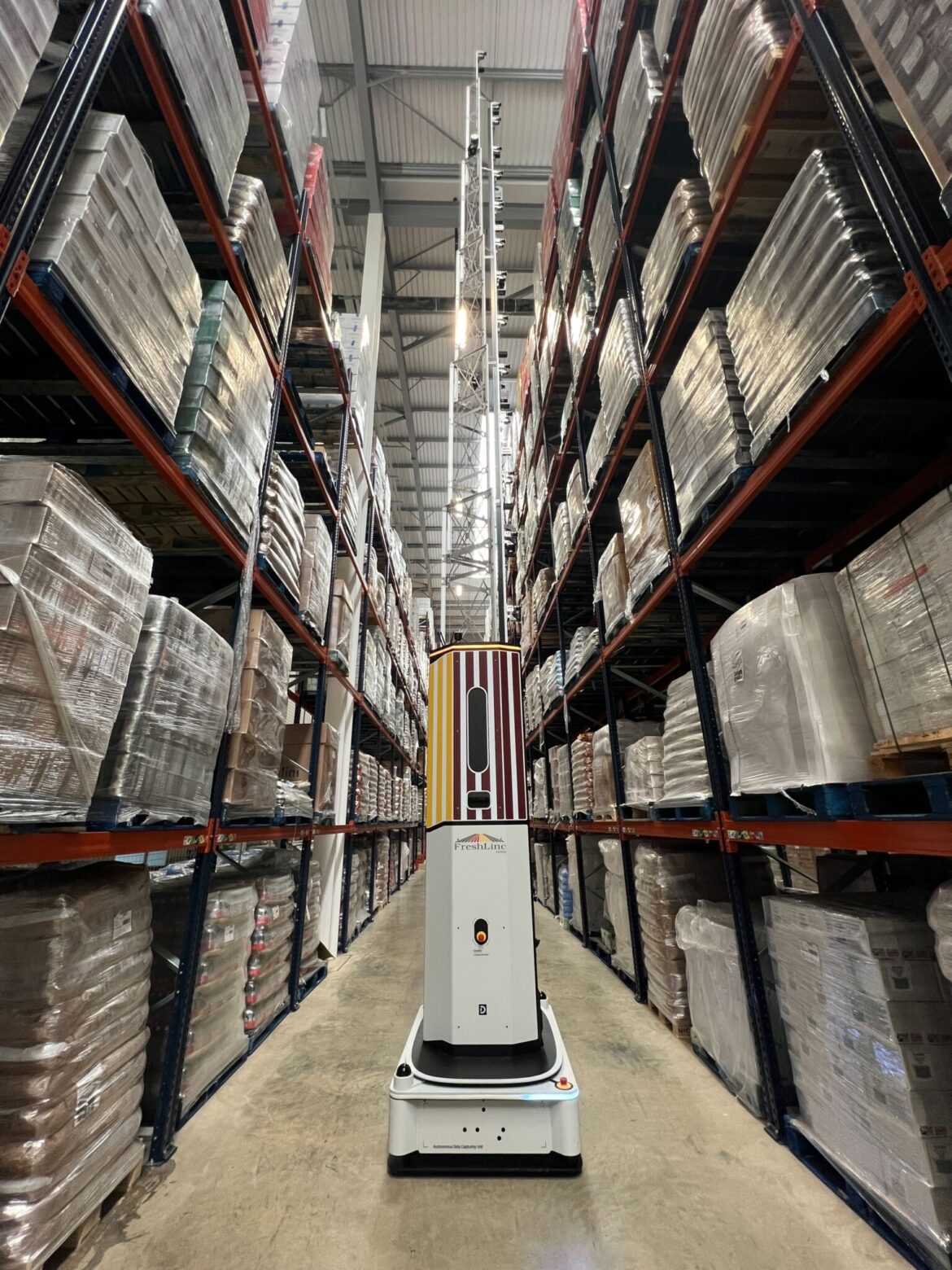
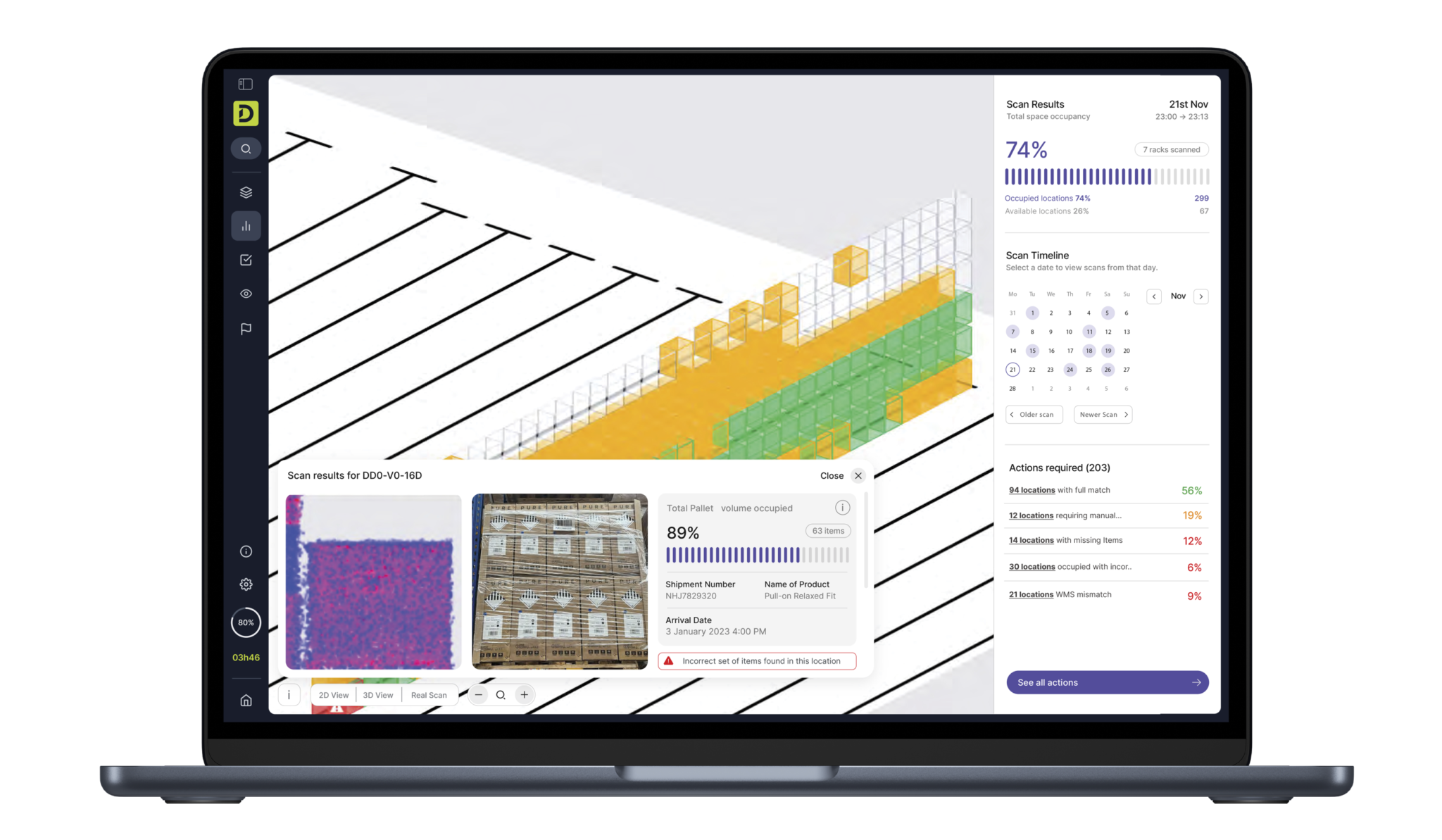
Ziegler, a multimodal logistics provider, has taken a major step forward in digitalising and streamlining its warehouse operations through the deployment of DexoryView from Dexory, a leading robotics and data intelligence company. Following a recent implementation, Ziegler has already seen improvements in stock accuracy, process enforcement and operational efficiency at one of its key UK sites that comprises a complex layout and over 55,000 pallet locations.

Faced with the challenge of high stock throughput and a vast storage area, Ziegler realised that it needed to improve the visibility and integrity of its warehouse data. Operating in an industry where even a minor scanning error can have a significant impact, Ziegler wanted to reduce time spent on manual cycle counting, ensure it was able to eliminate stock loss and improve real-time visibility on the state of its key UK warehouse. After exploring options including automated shuttle racking and drone-based solutions, the company turned to DexoryView. The solution combines state-of-the-art robotics technologies and AI-powered digital twin platform to provide real-time intelligence of the health and integrity of the entire warehouse.

“We recognised that even a 1% miss-scan rate could create major issues, from stock rotation delays to customer service impacts,” says Ignas Saknaitis, Divisional General Manager for Logistics at Ziegler. “Our big turning point came after a full stock take took four days and a full weekend of working, with stock anomalies requiring weeks of investigation. With DexoryView, we can now identify and resolve issues in real time before they escalate.”

Real-time data intelligence platform detects inefficiencies and enhances goods movement accuracy

Ziegler has seen a number of benefits in just a month since going live with the solution. It has been able to locate missing pallets, identify mispicks earlier and has been able to address operational pain points such as incorrectly labelled pallets and misplaced inventory, without costly warehouse shutdowns. One of the core benefits of DexoryView has been that Ziegler is now able to pinpoint recurring errors and target root causes of these issues, making the operations more efficient and seamless.

Due to these benefits, Ziegler is seeing a cultural shift in how it approaches inventory control, which the company sees leading to better operational excellence and customer satisfaction.

Slash Downtime

“In busy warehouse environments there is no room for guesswork and outdated data can lead to deliveries being returned and ultimately impact customer satisfaction,” says Oana Jinga, Chief Commercial and Product Officer and Co-Founder at Dexory. “We are working together with Ziegler to replace guesswork with insight and are allowing the business to find root causes to issues that in turn will help their business become more efficient.”

DexoryView PartnershipDexoryView Partnership

Ziegler is already looking into the future with DexoryView. It is planning on using the new optimisation functionalities to optimise warehouse layouts based on movement trends. It is also aiming to provide its customers with live access to inventory data for additional peace of mind. There are also plans to expand the rollout of the technology to other Ziegler sites after ROI review from the first deployment.

similar news

New Era of Warehouse Intelligence


Source link

0 comments
0 FacebookTwitterPinterestEmail
Newer Posts
Older Posts

Recent Posts

  • Automation is Transforming Logistics in India
  • Swarm AGVs for Multiple Flows & Pallet Types
  • Contracts Manage Warehouse Construction Risk
  • Why Fragmented Freight Management Systems Are Killing Operational Efficiency
  • Wheels for Steel – Logistics News

Recent Comments

No comments to show.

Social Connect

Whatsapp

Recent Posts

  • Automation is Transforming Logistics in India

  • Swarm AGVs for Multiple Flows & Pallet Types

  • Contracts Manage Warehouse Construction Risk

  • Why Fragmented Freight Management Systems Are Killing Operational Efficiency

  • Wheels for Steel – Logistics News

Newsletter

Categories

  • Services (1,091)
  • Uncategorized (41)

@2024 - All Right Reserved. Designed and Developed by Sierraline Cargo services

Manage Consent
To provide the best experiences, we use technologies like cookies to store and/or access device information. Consenting to these technologies will allow us to process data such as browsing behavior or unique IDs on this site. Not consenting or withdrawing consent, may adversely affect certain features and functions.
Functional Always active
The technical storage or access is strictly necessary for the legitimate purpose of enabling the use of a specific service explicitly requested by the subscriber or user, or for the sole purpose of carrying out the transmission of a communication over an electronic communications network.
Preferences
The technical storage or access is necessary for the legitimate purpose of storing preferences that are not requested by the subscriber or user.
Statistics
The technical storage or access that is used exclusively for statistical purposes. The technical storage or access that is used exclusively for anonymous statistical purposes. Without a subpoena, voluntary compliance on the part of your Internet Service Provider, or additional records from a third party, information stored or retrieved for this purpose alone cannot usually be used to identify you.
Marketing
The technical storage or access is required to create user profiles to send advertising, or to track the user on a website or across several websites for similar marketing purposes.
  • Manage options
  • Manage services
  • Manage {vendor_count} vendors
  • Read more about these purposes
View preferences
  • {title}
  • {title}
  • {title}
Sierraline Cargo Services
  • HOME
  • Services
    • Trade With Us
  • About Us
  • Contact Us
  • private jet
    • BOOK YOUR JOURNEY
  • Track Packages
  • Insurance
  • safekeeping

WhatsApp us