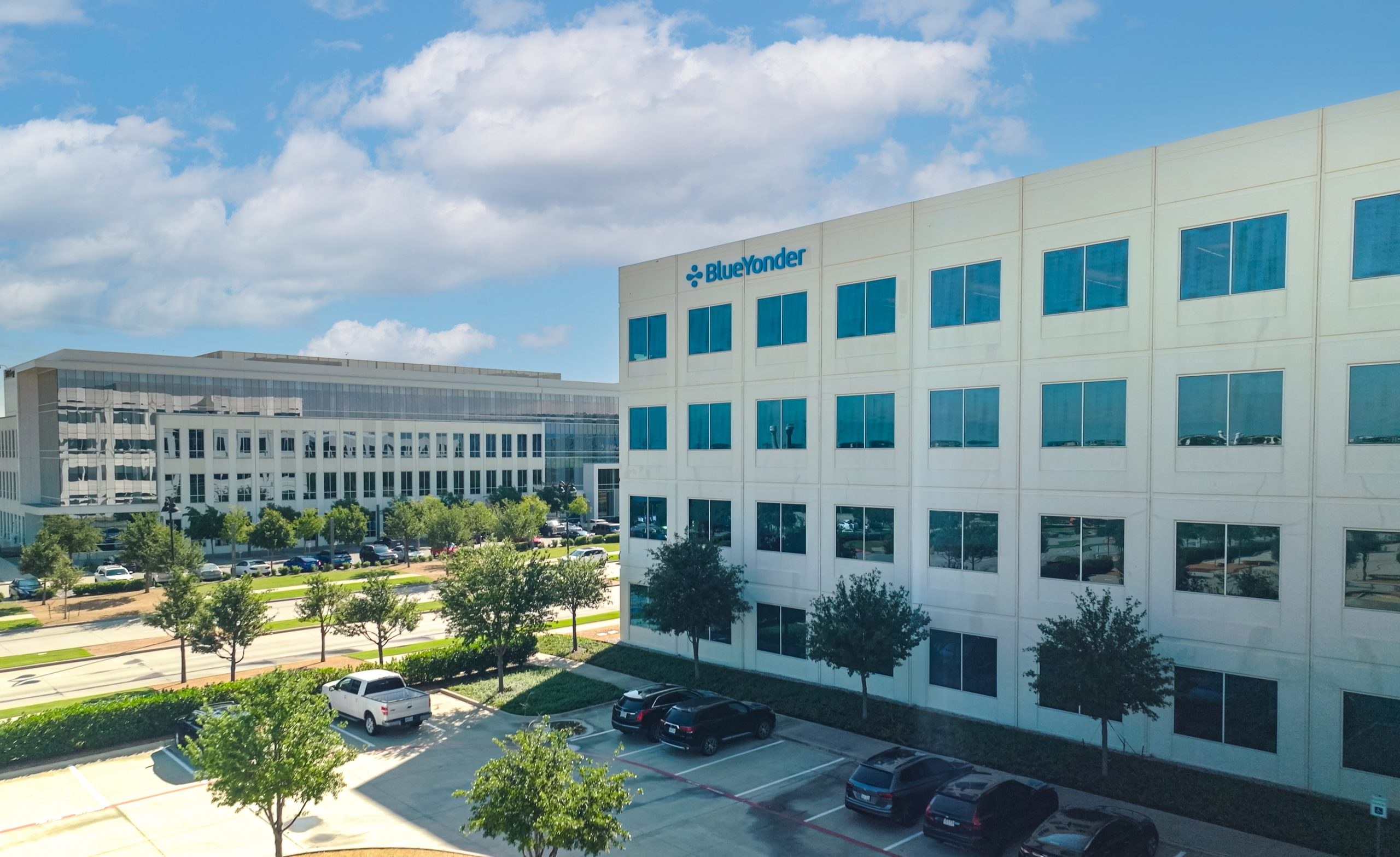
Blue Yonder describes itself ‘the AI company for supply chain’. It’s a bold claim. Paul Hamblin spoke to Ann Marie Jonkman (pictured, below), VP Industry Advisory for the global provider.
Let’s start with the success. Tell us about the ethos behind Blue Yonder, and the reasons for its fabulous growth.
“Blue Yonder is the AI company for supply chain. As the world leader in end-to-end digital supply chain transformation, Blue Yonder offers a unified, AI-driven platform and multi-tier network that empowers businesses to operate sustainably, scale profitably, and delight their customers – all at machine speed. A pioneer in applying AI solutions to the most complicated supply chain challenges, Blue Yonder’s modern innovations and unmatched industry expertise help more than 3,000 retailers, manufacturers, and logistics service providers confidently navigate supply chain complexity and disruption. We have over two decades of experience implementing real-world AI solutions.”
What makes you different? How would you describe Blue Yonder’s USP versus its main competitors in supply chain optimisation?
“Our core differentiation is true end to end orchestration; rather than isolated optimisation. Planning vs individual warehousing vs commerce vs transportation puts decisions into silos and produces failed performance. Blue Yonder AI is designed to do more than analyse – it is designed to act, rebalance resources, automate workflows and flag issues but also to intelligently resource across the supply chain. Blue Yonder AI is native to the platform with full network point of view: customers, suppliers, carriers, distributors are all part of the supply chain.”

In which markets are you most active, offering which specific capabilities?
“As the world leader in digital supply chain transformation, Blue Yonder enables retailers, manufacturers, and logistics service providers globally to optimise and accelerate their supply chains from planning through fulfilment, delivery, and returns. Blue Yonder’s AI-driven supply chain platform and multi-enterprise, multi-tier network enable more accurate forecasting and dynamic management of capacity, inventory, and transport.
“Our synchronised, end-to-end supply chain management solutions provide companies with the knowledge and tools they need to optimise business decisions, create more profitable supply chains, and deliver superior customer experiences. We are passionate about what we do, and our extensive experience, expertise, and scale in supply chain transformation have enabled us to deliver nearly 40 years of successful customer engagements.
“We empower customers worldwide to overcome critical supply chain challenges with unparalleled speed and certainty, enabling profitable growth, waste reduction, and sustainable development. We take pride in our commitment to achieving outstanding business outcomes, accelerating time-to-value, and maximising return on investment.”
Let’s look at logistics and warehousing specifics. What are your relevant products and how do they make a difference to customers?
“Warehouses are no longer static fulfilment engines; they’re environments of dynamic decisions, constantly in flux amid real time complexity. Our products are a competitive advantage because they control systems and execution. AI uncovers constraints, continuously identifying the real bottle necks via the WMS, the Intelligent Ops Agent and Logistics Ops Agent. The considerations are instantly brought to light for the best course of action across those teams.
“Blue Yonder Warehouse Management Solution, one of the company’s Cognitive Solutions, empowers retailers, manufacturers and logistics service providers with a step-change in capability to run leaner, faster and more accurately. The enhanced solution transcends traditional warehouse management offerings, delivering predictive planning, transformational agentic AI, adaptive execution, and unified labour and automation for improved operational outcomes.
“The solution is built on the Blue Yonder Platform with a modern and true cloud architecture for scale and access to advanced AI capabilities. It uses the AI data cloud to eliminate silos and enable end-to-end interoperability for unified and orchestrated decisioning across systems.”
Let’s delve into the language a little – when you say the AI ‘uncovers constraints’, what does that mean in practice? How does it uncover constraints and how is that manifested to the user?
“Our solutions can view the whole system as once in real time, not one function at a time. System-wide pattern recognition is able to detect variability, amplified. AI can draw the correlation in real time throughout the entire supply chain for the best course of action.
“For example, a large inventory discrepancy at a node that causes multiple truckloads to an end line plant to be delayed; when that happens cost, service, and labour costs are all impacted. With AI, we can adjust where the inventory is sourced to ensure a better alternative throughout the network. Those late penalties, missed finished inventory and less then full trailer costs are never retrieved.”
You mention ‘accurate inventory counts’– but we had software already to provide accurate inventory, how are these innovations taking it further?
“Traditional systems provide static inventory snapshots; Blue Yonder delivers continuously reconciled, execution-aware inventory visibility. Inventory accuracy is enriched using real-time warehouse execution data, AI-powered simulations and what-if analysis, as well as continuous alignment between demand, supply and fulfilment decisions. Inventory Ops Agent proactively identifies mismatches between supply and demand and recommends corrective actions, rather than waiting for exceptions to escalate.”
When you say ‘planning and execution working together in tandem’, how will users see that manifested?
“As conditions change there is a continuous presence, comprising clear directives with full visibility according to organised goals, instead of plans being updated manually in silos or after the fact across multiple systems. Cost, first time quality, key performance indicators and labour are all considered together. Plans are based on lived execution signals and entail the full modern supply chain network.
In short, users will see fewer disruptions as plans are built around true constraints in real time.”
