How can smart investment deliver real energy savings and enhanced safety, particularly in the loading bay area of a warehouse?
Energy efficiency and operational resilience have long been key priorities within the logistics sector, with organisations intensifying their focus on warehouse optimisation. Rising energy costs, sustainability targets and increasing regulatory demands are placing increased pressure on warehouse and loading bay operations, which in turn, can expose inefficiencies that were previously overlooked. By adopting innovative and adaptable solutions early, as well as targeting areas of waste, organisations can remain resilient for the unexpected.
The growing importance of Environmental, Social and Governance (ESG) performance is a major driver behind this shift. Many organisations are obliged to record the environmental impact of their operations in order to understand, measure and manage their total carbon footprint. Some firms, such as Rite-Hite, have invested in third-party consultants and enhanced tracking capabilities to formalise the process in the name of improving transparency and visibility.
At the same time, the global energy landscape has become increasingly unpredictable. Energy prices have fluctuated significantly in recent years, often in reflection to ongoing and arising geopolitical issues. Post-COVID recovery increasing demand, followed closely by Russia’s invasion of Ukraine in 2022 and the resulting sanctions and supply chain uncertainty have only fuelled its volatility.

One of the most underestimated areas for energy loss in the warehouse is at the loading bay. Despite being a constant point of activity, it remains a significant source of energy loss. Inefficient doors, trailer door hinge ‘gaps’ and dock leveller ‘gaps’ can lead to a needless escape of heat but also introduce safety risks and unplanned downtime. While these gaps can seem small in isolation, a build-up, like holes in a ship, they accumulate into a significant waste of energy.
Seal the gaps
As energy costs continue to rise, addressing these inefficiencies does not necessarily require large-scale refurbishment. In many cases, relatively simple changes can deliver meaningful returns. Sealing gaps around an exposed leveller pit can generate annual energy saving of up to several thousand Euros per dock position. Effective exterior doors with improved seals and cycle time speeds reduce heat loss with every use, while dock shelters help prevent unwanted airflow from entering further into the warehouse, keeping conditioned air inside.
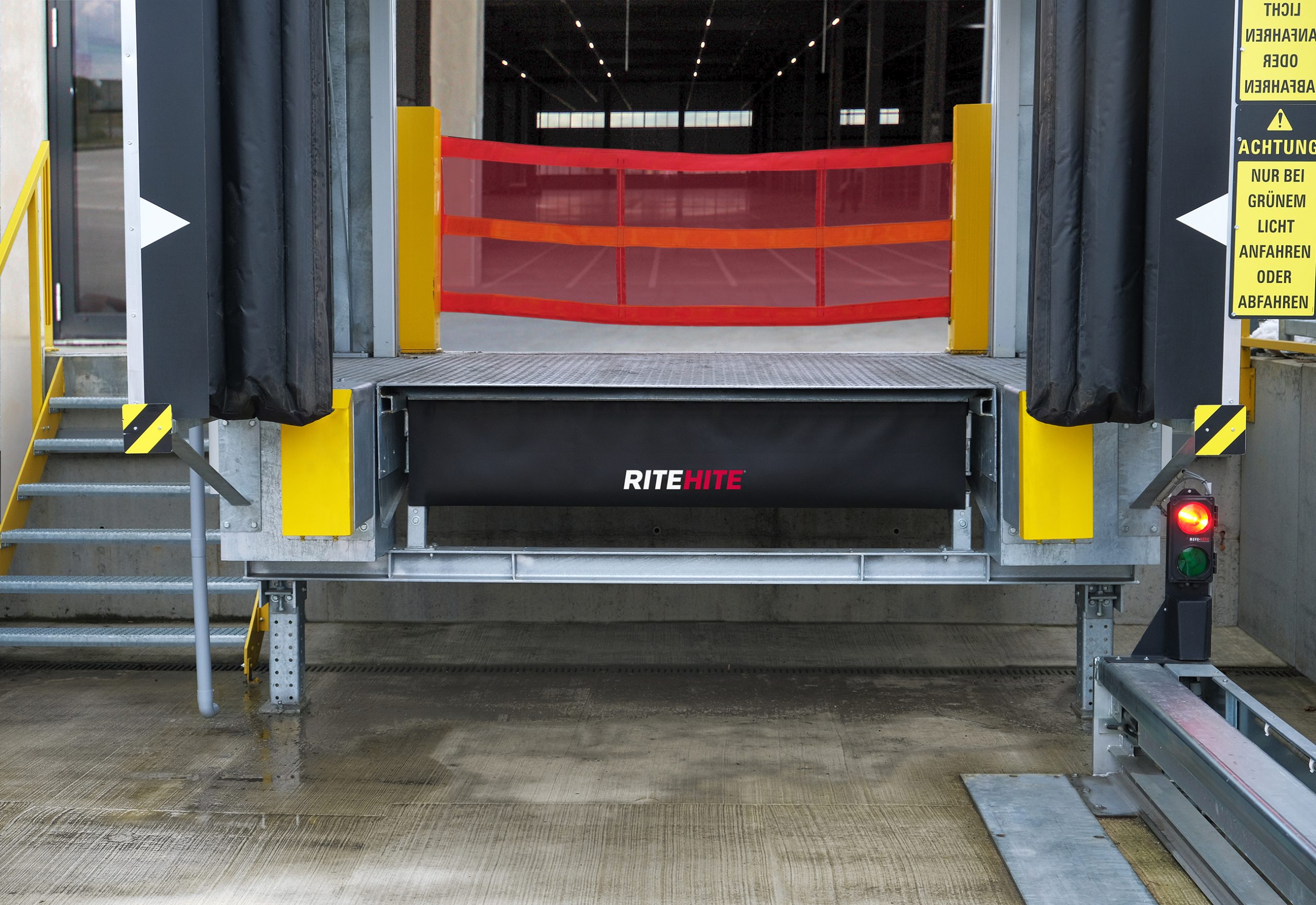
Beyond energy efficiency, these measures also play a key role in enhancing safety and operational continuity. Dock shelters, for example, help protect people, materials and goods by preventing wind, rain, snow, dust and pests from entering the warehouse. At the loading bay itself, unintended trailer departures can pose a significant risk to both personnel and product. Solutions such as Rite-Hite’s Manual Ergonomic Wheel-Lok provide a robust, user-friendly vehicle restraint that allows drivers to secure trailers independently. Integrated signal lighting provides clear status updates ensuring safer, more coordinated access between drivers and warehouse teams.

Solutions can also further enhance overall efficiency at the warehouse. Traditionally, replacing an ageing or defective dock leveller would be a complex and expensive process, often involving extended operational downtime and costly construction work. During this period, organisations continue to incur costs from energy loss and labour. To address this challenge, however, new solutions are available.
Designed for rapid installation, Rite-Hite’s G96000 Replacement Dock leveller can be welded directly onto an existing frame, provided the underlying concrete and steel profiles are stable. This eliminates the need for disruptive concrete work or custom adaptations. In most cases, installation can be completed in a single day, saving time and costs with minimal operational downtime while addressing a critical source of energy loss with an integrated gap sealing protection as standard.
When adopted in unison, these targeted solutions protect both the operational and environmental integrity of the warehouse. Helping to save on costly energy losses and safety hazards, businesses are empowered to meet regulatory requirements and advance on sustainability goals whilst supporting the wellbeing of the workforce. Simple, yet effective solutions, from dock leveller sealing, maintaining proper restraints and optimising airflow have the potential to save thousands of Euros. Investing in these solutions is no longer a luxury, but a business imperative.
