Sierraline Cargo Services
  • HOME
  • Services
    • Trade With Us
  • About Us
  • Contact Us
  • private jet
    • BOOK YOUR JOURNEY
  • Track Packages
  • Insurance
  • safekeeping
Services

New Tesco Hungary Logistics Centre

by
written by


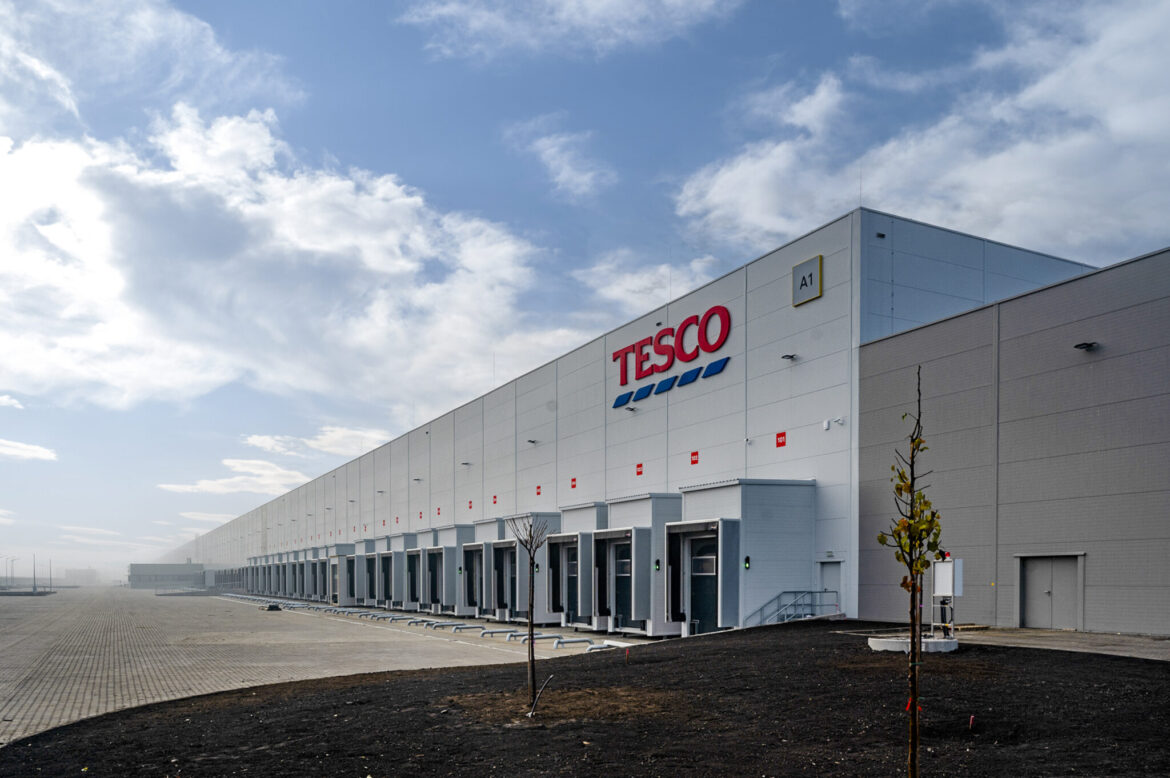
CTP, one of Europe’s largest listed developers, owners and managers of industrial and logistics properties by gross lettable area (GLA), has handed over a new 100,000 sqm logistics centre in Hungary to Tesco. Built as part of a greenfield investment spanning 60 hectares near Szigetszentmiklós, the state-of-the-art facility aims to enhance Tesco’s efficiency in serving Hungarian customers, optimise transportation logistics, and significantly reduce carbon dioxide emissions and environmental impact. The centre will fully serve Tesco stores nationwide starting in March 2025.

The nearly 1-kilometer-long logistics complex includes two cold storage halls with variable temperature settings, a dry goods hall, a truck wash equipped with a water recycling system, vehicle repair and forklift service facilities, a gas station, and electric vehicle chargers. By consolidating its storage operations into one centre, Tesco will streamline its supply chain processes and reduce emissions caused by transportation. As part of the investment, road development in the surrounding area has also been completed to ensure uninterrupted and efficient traffic flow for both the local population and the logistics centre.

Sustainability is a key focus of the new development. The facility is powered by renewable energy, with 8,620 solar panels installed, providing a total capacity of 3.75 MW. The building has been awarded an ‘A’ energy rating and is expected to achieve BREEAM certification by the end of 2024. According to Tesco’s calculations, the redesigned logistics operation will reduce annual transportation-related CO2 emissions by 830 tons. Additionally, the complex’s truck wash features a water recycling system, and an irrigation well has been installed to maintain green spaces without impacting the local drinking water supply.

“We are very pleased to take possession of our new domestic logistics centre, which is a huge milestone in the history of Tesco in Hungary,” said Zsolt Pálinkás, CEO of Tesco Hungary. “The retail sector has undergone significant transformation in recent years, with home delivery services, innovation, and sustainability becoming increasingly important. With this environmentally conscious logistics centre, equipped with the most modern technologies, we are better prepared to meet new demands while making progress toward carbon neutrality by 2035. CTP has proven to be an excellent partner, delivering world-class construction and real estate development solutions that support our position as a leader in the Hungarian retail market.”

Dr. Ferenc Gondi, Managing Director of CTP Hungary, emphasized the importance of this project: “The construction of Tesco’s domestic logistics centre in Szigetszentmiklós is a prominent milestone in CTP’s history in Hungary. We believe in becoming an integral part of the communities where our logistics parks are present, and this project reflects our commitment to enhancing quality of life for the local population. Through sustainable and people-centric real estate development, we strive to create transparent and innovative solutions that support economic growth while prioritizing environmental responsibility.”

similar news
Hungary strengthens potential as intermodal hub


Source link

0 comments
0 FacebookTwitterPinterestEmail
Services

Earthquake-resistant Racking for Colombian Coffee

by
written by


4th December 2024

Logistics BusinessEarthquake-resistant Racking for Colombian CoffeeLogistics BusinessEarthquake-resistant Racking for Colombian Coffee

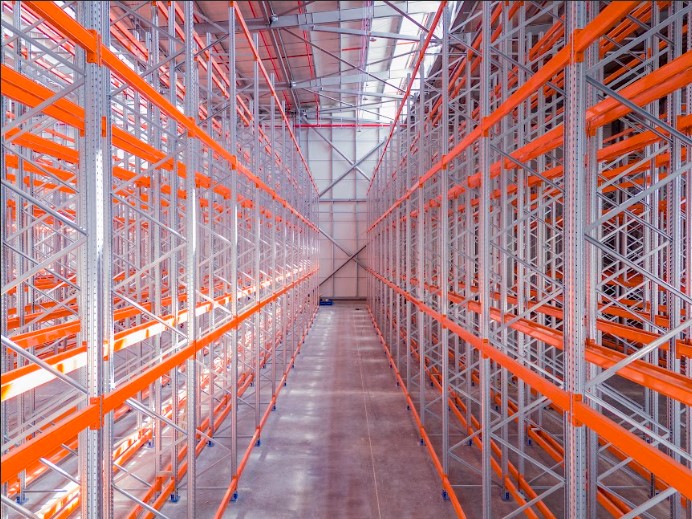
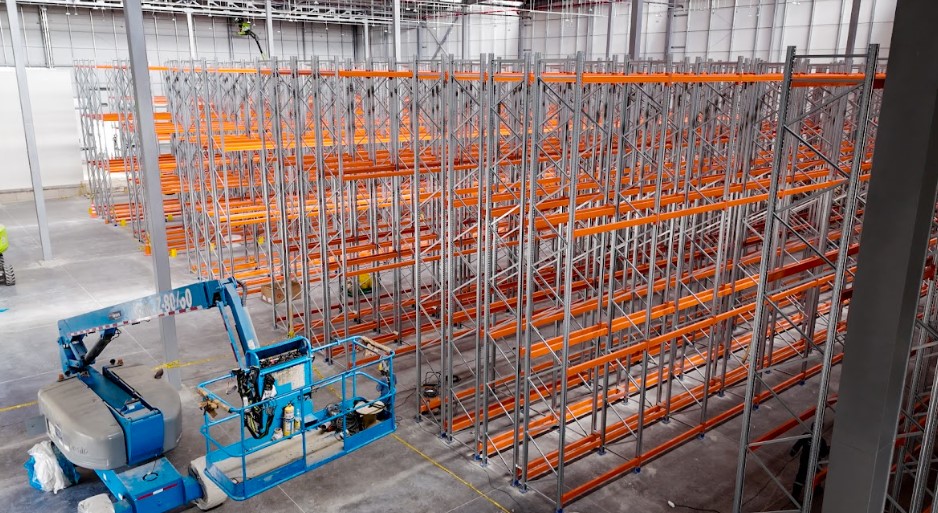
AR Racking, leader in industrial storage solutions, is pleased to announce the successful installation of an adjustable pallet racking system for Buencafé Liofilizado de Colombia in Chinchiná, Caldas. The project, which covers an area of 5,280 m² and provides 4,344 pallet positions, represents a significant milestone in optimising the storage and logistics of the renowned coffee producer.

The solution implemented by AR Racking is characterised by its robust and versatile design, able to adapt to the specific needs of the coffee sector. The double-deep adjustable pallet racking system, with 4 beam levels, together with the earthquake-resistant structural calculation, guarantee safe and efficient storage of Buencafé’s products, even in areas of high seismic activity.

“We are very satisfied with our partnership with AR Racking on this project”, commented Alejandro López, Engineering Director of Buencafé. “Its experience and professionalism have been key to the success of the installation, and the new storage solution will allow us to optimise our logistics and increase our production capacity.”

For his part, Edward Suescun, Project Manager at AR Racking, highlighted the importance of this project for the coffee sector: “At AR Racking we are committed to developing the Colombian coffee sector, and this new installation is an example of how our storage solutions can help companies improve their efficiency and competitiveness.”

AR Racking is part of Grupo Arania, an industrial group of companies with extensive experience and scope, and with a multi-sectoral activity based on the transformation of steel that dates back more than 80 years. AR Racking provides the market with a wide range of solutions with high certified quality standards and a comprehensive project management service. AR Racking’s industrial storage systems stand out for their innovation, reliability and optimum efficiency.

similar news

Corona, Coffee & Containers


Source link

0 comments
0 FacebookTwitterPinterestEmail
Services

Fortna Announces Partnership with Sitma and Packsize

by
written by


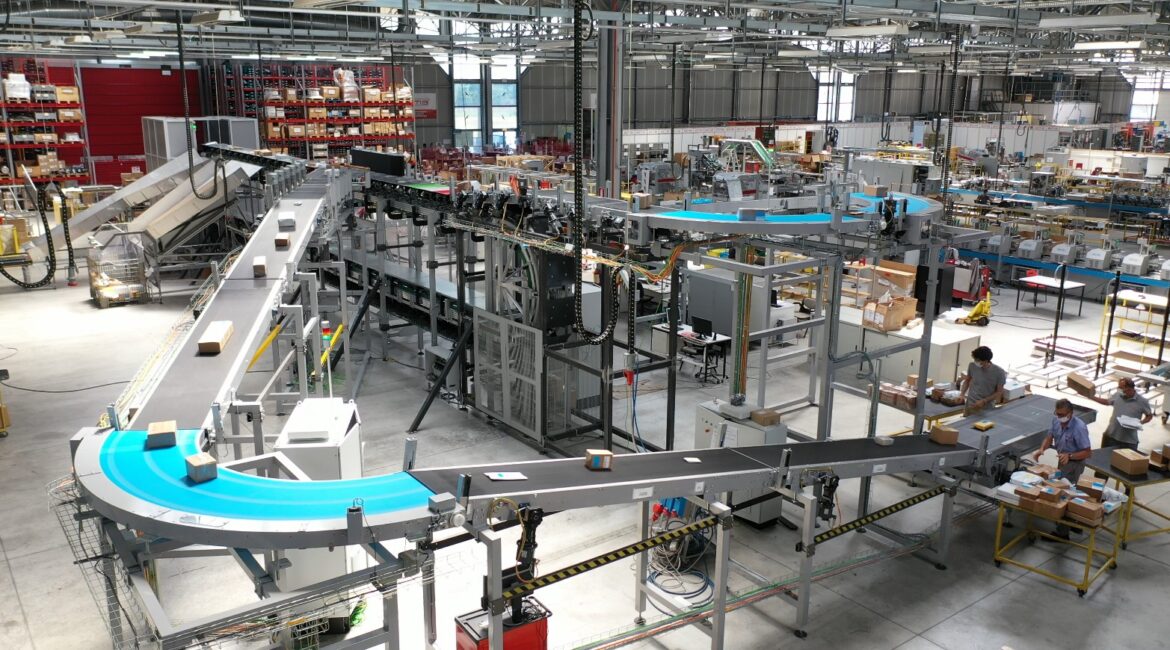
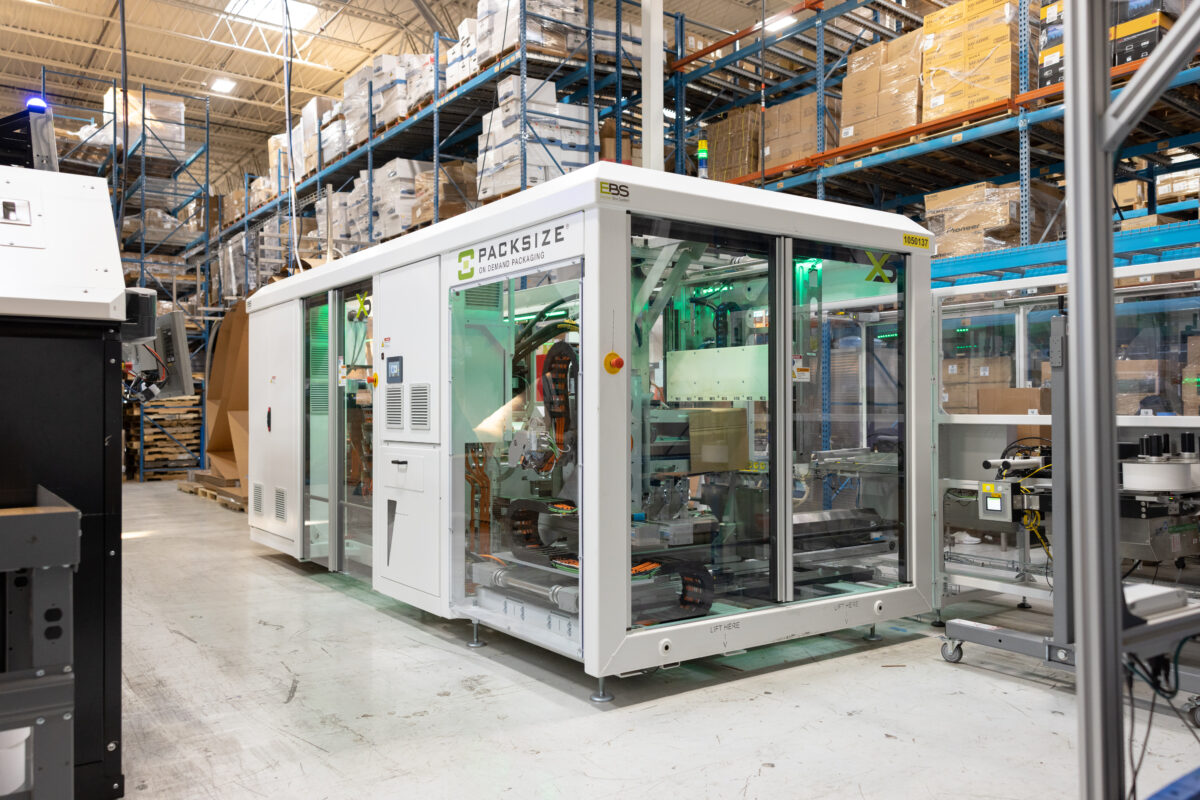
FORTNA, an automation and software company for the full logistics value chain, is pleased to announce new strategic partnerships with Packsize and Sitma. These partnerships expand FORTNA’s capabilities to deliver innovative end-of-line packaging solutions that improve efficiency, reduce costs, and promote sustainability for its customers.

Packsize, a global supplier of on-demand packaging, specializes in custom-sized box solutions designed to minimize waste, improve workflow efficiency, and increase operational scalability in packaging environments. Their systems empower businesses to lower material usage and optimize packaging processes, ultimately enhancing environmental responsibility and operational effectiveness.

Sitma, a longstanding innovator in automation for packaging, logistics and distribution, brings over 50 years of expertise in paper mailer technology, serving sectors such as e-Commerce, printing, and postal services. Sitma’s solutions aim to streamline operations while supporting efforts to reduce environmental impact, aligning seamlessly with FORTNA’s commitment to delivering efficient, sustainable solutions.

These partnerships reflect FORTNA’s dedication to supporting customers in reducing waste, optimizing labour, cutting transportation costs, and improving operational flexibility. With on-demand packaging becoming essential for businesses seeking to achieve sustainability and cost-efficiency, this collaboration strengthens FORTNA’s ability to offer solutions that boost productivity and customer satisfaction.

packsize-collaborates-walmart-right-sized-packagingpacksize-collaborates-walmart-right-sized-packaging

“We are excited to partner with Packsize and Sitma, combining our strengths to deliver cutting-edge, end-of-line packaging solutions that meet evolving customer needs,” said Rob McKeel, CEO of FORTNA. “This collaboration continues to increase operational efficiency and sustainability for our customers, preparing them to confidently address ever-changing business challenges.”
“The FORTNA and Sitma partnership represents a key advancement in automated e-Commerce packaging. Companies can now leverage this collaboration to enhance efficiency, reduce plastic use, and advance their sustainability goals,” said Robert Nilsson, General Manager of Americas, Sitma.

David Lockwood, CEO of Packsize, added, “Our partnership with FORTNA showcases our dedication to delivering measurable value by implementing integrated automated packaging solutions that provide benefits beyond the warehouse. I am excited about the value we can bring to both new and existing customers.”

similar news

Packsize Collaborates with Walmart over Right-Sized Packaging


Source link

0 comments
0 FacebookTwitterPinterestEmail
Services

The Skybot’s the Limit

by
written by


Editor Peter MacLeod visited Luxembourg for the first time to see at close quarters an automated warehouse system installed for Auchan by Exotec, where the ‘skybot’ rides high.

I’m never happier than when touring a warehouse, especially one packed with automation. Furthermore, the chance visited a country for the first time meant the invitation from Exotec to visit French retailer Auchan’s eCommerce fulfilment centre on the outskirts of Luxembourg city was irresistible.

Auchan is one of the biggest grocery stores in France with over 4,000 locations across 17 countries. Founded in 1961, the chain is known for carrying a rotating stock of groceries, clothes, home goods, electronics, and pharmaceuticals. Its Luxembourg operations started in 1996 and today comprise three supermarkets, 17 MyAuchan fuel stations, one MyAuchan convenience store, and seven Auchan Drive pick-up points. Furthermore, its home delivery network serves the entire country.

Its Auchan Drive pick-up points place particular stress on its logistics operations, and an increase in business fuelled by the Covid pandemic started to highlight the inadequacies of its mainly manual picking operations. So it called in French robotics expert Exotec to automate its ambient operations and allow it to guarantee delivery timeslots for its growing online customer base.

Trigger Points

Three factors triggered the decision to automate. Firstly, the existing operation featured numerous bottlenecks, principal amongst them being the labour shortage. An extremely low rate of unemployment in Luxembourg means recruitment is challenging, and the roles offered were not particularly attractive. Pickers worked over two storeys, and had to walk up to 15km a day to fulfil their tasks.

Secondly, Auchan’s ambitious growth strategy meant its DC had to be future-ready. The implementation of its new auchandrive.lu website, new store openings and the expansion of its delivery-at-home service meant that volumes were expected to grow.

Thirdly, the warehouse – which was only inaugurated in 2019 – needed to be optimised to make better use of available space and improve the order preparation quality.

Exotec was brought in with the goals of achieving an improved quality of service and enabling a more complete range of goods to be offered to Auchan’s customers. To meet these, Exotec implemented a solution using its Skypod AMR solution, the first in the country. It promised to bring increased productivity in receiving and preparing an order, improved returns management, a reduction in footprint of the storage area, consolidation of the warehouse space from two storeys to one, and an overall optimisation of the business.

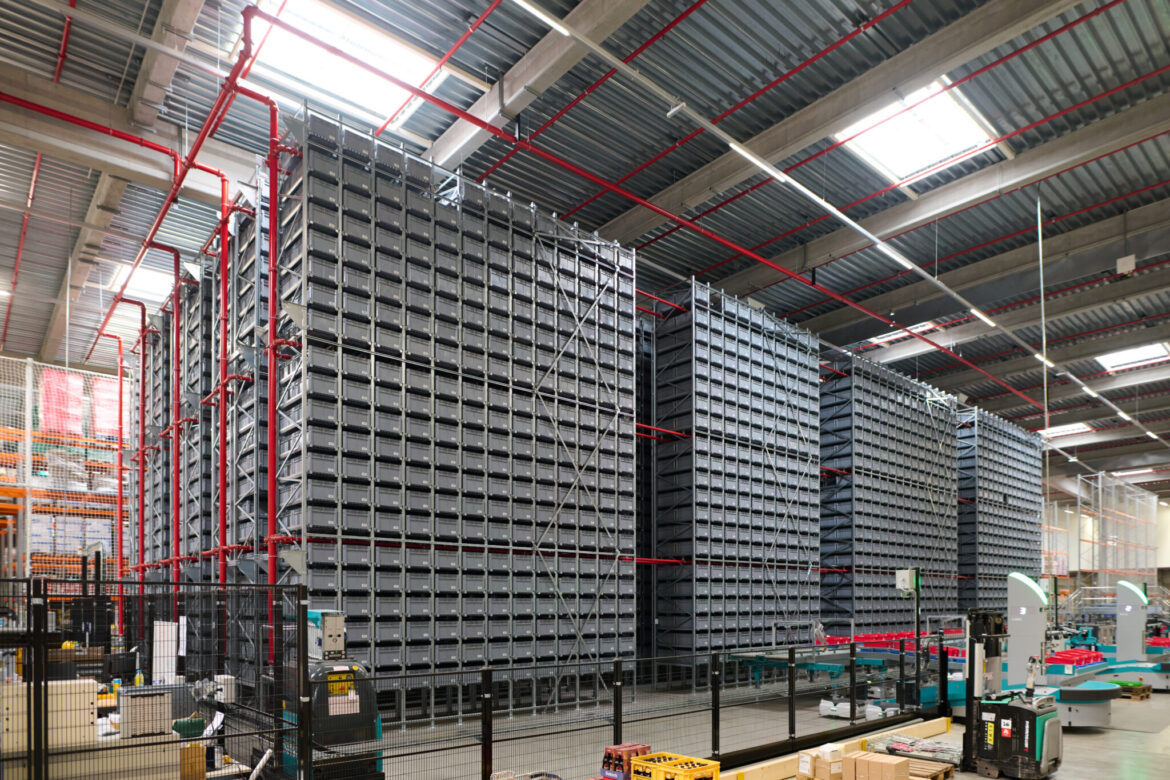
The solution proposed by Exotec was tailored not only to suit operational requirements, but also takes into account the physical characteristics of the site, for example the location of columns and roof height. A fresh layer of concrete was poured onto the existing floor to ensure it was of the necessary strength and to achieve super-flatness on which the bots could operate optimally. A dense racking system was constructed, enabling 37 bots to service up to 15,300 bins, and deliver to three picking stations.

Exotec was instructed to ensure goods are shipped to the end user in its existing iconic red collapsible totes. Unfortunately, whilst they might be iconic, their design renders them utterly unsuitable for travelling through an automated warehouse, particularly when rattling over rollers. So Exotec devised a workaround in which each red tote is placed on a blue tray compatible with the system. Whilst it may take one operative an hour a day to carry out the task of putting totes on trays, at least it means Auchan’s brief to retain its boxes could be met.

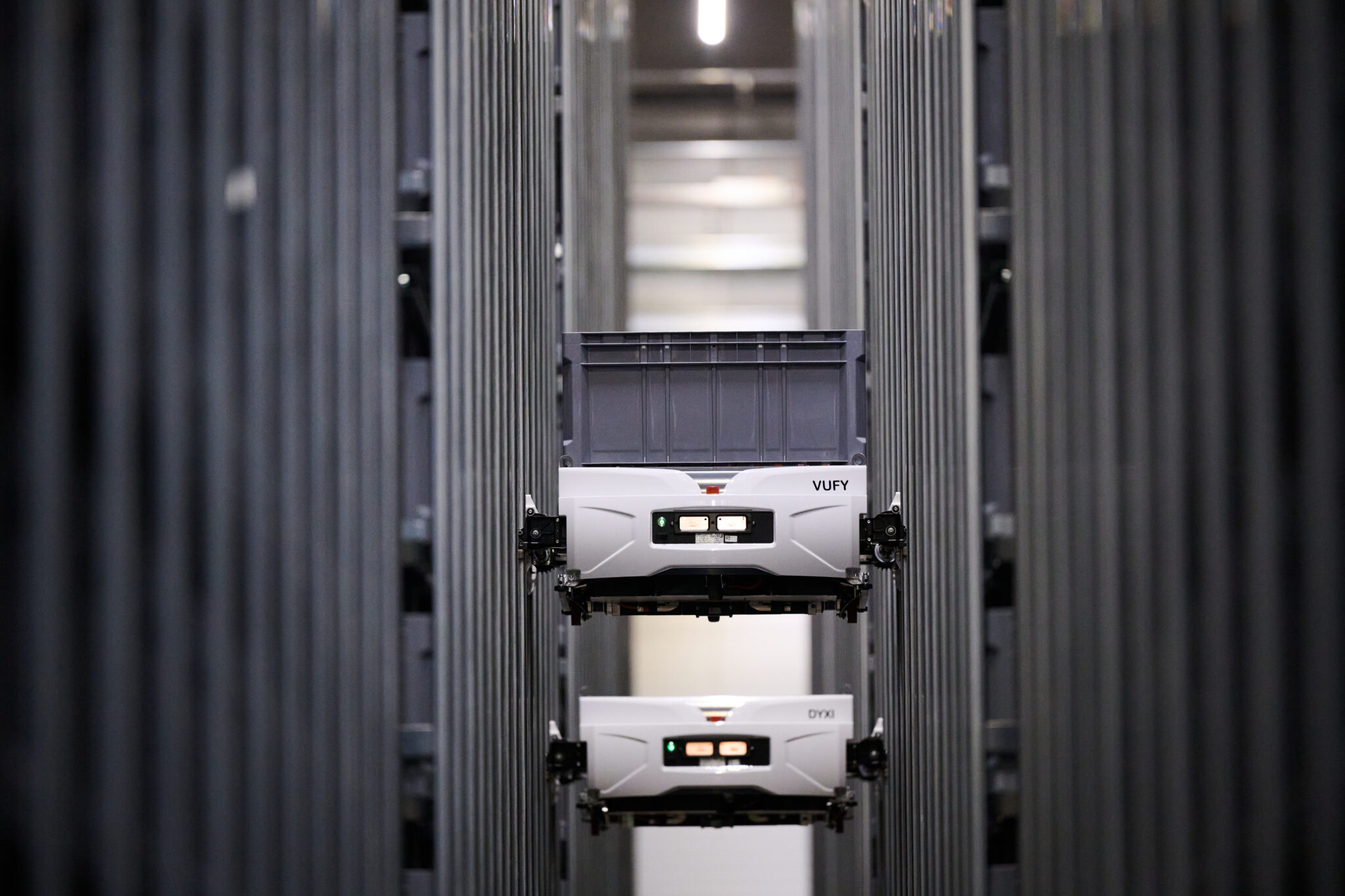
The Skypod bots rise vertically up the racking under their own power, extend forks to retrieve the standard totes, and bring them to the picking station. Four orders can be fulfilled simultaneously at each station, with a monitor indicating to the picker the number of items to pick. These are then placed into the red totes for dispatch to the customer, using a light system to identify in which of the four to place the goods. Items that need to be specially wrapped, such as wine bottles, are indicated to the picker on the monitor. When each order is fulfilled, the tote is automatically sent to goods-out and an empty tote takes its place.

The bots operate autonomously, and are put on charge for a standard five minutes every hour to ensure maximum uptime. The warehouse space occupied by the automated system is just 40% of the area previously taken up by the manual operation.

Execution

The performance improvement enjoyed by Auchan following implementation of the Exotec Skypod system in July 2024 was considerable. Order picking times are optimised, allowing Auchan to offer guaranteed delivery slots of three hours. It has the capacity to handle up to 915 bins per hour across the three picking stations, and by centralising the picking and restocking operations, it reduced inventory errors and improved stock accuracy.

Productivity before the Exotec solution was implemented was 105 picking lines per hour; this has leapt to 305 picking lines per hour per station, an increase of almost 300%. Replenishment was also similarly boosted, jumping from 25 lines per hour to 60, an increase of 240%.

An added benefit came from the flexibility of the system, which enabled preparation and reception to be carried at the same workstations. As well as helping the retailer to manage headcount at the facility, the automation reduces drudgery by eliminating repetitive manual tasks and physical strains. The pickers no longer have to handle heavy products or work in uncomfortable positions, and internal travel has been eliminated.

The Exotec system has simplified the management of customer returns by automatically prioritising returned items so they can be rapidly reintegrated into the active stock.
Nicolas Gueuzurian, marketing director & eCommerce director for Auchan Retail in Luxembourg, explains why the retailer opted for the Exotec system: “It was mainly because we wanted to put in only one system to optimise the warehouse. Some of the other companies proposed two or three systems, but we didn’t want to deal with more companies and have a more complex system. Secondly, Exotec has a lot of experience with other retailers facing the same challenges as us doing the same job.”

He identified three main benefits of the new operation: “The main one is, thanks to the new system we are able to check inventory all day long, which improves the accuracy of the stock. The second is the quality of the order; when you have fully manual picking there are a lot of human errors. With this kind of system, you cannot have human error directly. The third one is productivity, because we are much faster, and it allows us to make sure that we are always on time to deliver the promise of the client.”

Automated warehouse toured – tick. Editor impressed by a neat solution – tick. New country visited – tick. All in all, it was a very satisfactory trip.

similar news

LAC to represent Exotec in the UK


The post The Skybot’s the Limit appeared first on Logistics Business.


Source link

0 comments
0 FacebookTwitterPinterestEmail
Services

Cutting Red Tape Will Empower Europe’s Truckers for Growth

by
written by


Empower Europe’s truckers by cutting red tape, says Martin Vohánka, CEO of Eurowag.

The European commercial road transport industry is more than just a cog in the wheel of the continent’s economy — it is the very engine that drives it. In 2022, road transport accounted for over three-quarters of the total inland freight transport in the European Union, making trucking enterprises indispensable to the functioning of our economies. From delivering raw materials to factories to bringing finished products to consumers, truck drivers are at the forefront of maintaining the flow of goods across borders, ensuring that Europe remains competitive on the global stage.

But this vital sector is facing a significant threat: the growing burden of bureaucratic red tape, and a subsequent extreme lack of drivers.

As the CEO of Eurowag, a company deeply embedded in European road transportation, I see firsthand how these regulatory hurdles are stifling our industry. If we are to strengthen Europe’s economy, we must address these challenges head-on by cutting through the red tape entangling our drivers.

Truck drivers are the lifeblood of Europe’s supply chain, ensuring that goods move seamlessly across borders from Lisbon to Warsaw, and from Dublin to Athens. This industry is not just critical for transporting goods; it is integral to the economic stability and job security of millions across the continent. The European Union (EU) has long championed the free movement of goods, vital to fulfil human needs. However, the reality on the ground is telling a different story.

In recent years, the regulatory landscape for truck drivers has become increasingly complex, particularly post-Brexit which introduced new rules for UK-EU operations. What was once a straightforward process is now fraught with paperwork, delays, and uncertainty, threatening supply chain efficiency and Europe’s economic health. Red tape has Europe’s truck drivers in a chokehold, with a multitude of documents required for cross-border travel. Customs declarations and health certificates, creating a bureaucratic nightmare. Drivers must navigate complex regulations that vary between countries and even within regions, leading to confusion, delays, and higher costs, which are ultimately passed on to consumers.

The EU Mobility Package, while well-intentioned in its aim to improve working conditions for drivers, adds yet another layer of administration. These regulations mandate specific rest periods, return-home obligations, and even stipulate where drivers can spend their mandatory rest breaks. While ensuring the welfare of drivers is essential, the rigidity of these rules often leads to inefficiencies, forcing drivers to take unnecessary detours or delay deliveries, which in turn disrupts the entire supply chain.

The situation is further exacerbated by the ongoing negotiations between UK Prime Minister Keir Starmer and the EU, as both sides attempt to find a pragmatic solution to post-Brexit trade issues. These talks underline the urgent need to streamline regulations and create a more conducive environment for cross-border trucking.

These challenges are very likely to disrupt the EU’s vital flow of freight movement if they continue at the current rate. In recent years, the UK road haulage industry alone has grappled with a significant shortage of truck drivers. The crisis peaked in 2021, when the Road Haulage Association reported a staggering shortfall of over 100,000 qualified drivers. This hasn’t improved hugely in recent years, either, with the shortage in 2024 still estimated to be between 35,000 and 45,000.

The harsh truth is, unless something is done, goods will ultimately stop moving and the economy will slow to a standstill. By 2028, the IRU also predicts that there could be over 745,000 truck driver positions unfulfilled in Europe – an alarming number when you consider the sheer volume of freight that needs to be transported from one area to another day in, day out. These vacancies were previously filled by CEE drivers, and more recently by Ukraine and Belarus. But even these sources have dried up in recent years.

The industry is already on its knees, and with drivers getting older, there aren’t enough fresh faces pursuing a career in freight transport to replace them. The average age of truck drivers in Europe is 47, with 33% over the age of 55 and only 5% under 25, according to a recent report by the International Road Transport Union (IRU). But, as industry leaders we must ask ourselves, why would anyone want a job in haulage? And how can we make it more attractive to the next generation?

At the end of the day, if truck drivers wanted to spend all day tangled in admin and paperwork – they would get office jobs. But, achieving this requires collaboration between industry stakeholders, policymakers, and regulatory bodies across Europe. One immediate improvement would be the alignment of regulations across the EU, creating a unified regulatory framework to eliminate differences between countries and regions. This would simplify processes for drivers, enabling them to focus on their primary task — delivering goods.

Digital tools can also play a pivotal role in reducing the administrative burden on drivers and logistics companies, and make the job more appealing to anew generation. For example, the implementation of e-CMR across all EU member states could significantly cut down on the paperwork required for cross-border transport.

Importantly, embracing digitalisation not only improves efficiency but also fosters a greater adaptability in the face of evolving regulatory standards and market demands, ensuring that industry systems remain competitive and resilient in an increasingly interconnected world.By reducing regulatory burdens, we can unlock the full potential of Europe’s trucking industry. This will not only benefit those industry itself but also the millions of consumers and businesses that rely on the timely delivery of goods. The time has come to recognise the vital role that Europe’s truck drivers play in our economy and to take decisive action to empower them.

similar news

Sustainable Solutions: Cleaner Alternative to Red Diesel


Source link

0 comments
0 FacebookTwitterPinterestEmail
Services

How are post-Brexit Trade Rules Affecting EU-UK Supply Chains?

by
written by


Post-Brexit trade rules are having a real impact on cross-channel logistics, writes John Wegman (pictured), CEO of a full-service digital customs partner, Customs Support.

Since the UK’s departure from the EU single market in 2021, European businesses have had to adapt to a shifting reality – one where increased paperwork, constantly changing trade dynamics and new regulatory requirements have made things complex. Whilst the EU-UK Trade and Cooperation Agreement (TCA) should have simplified things in theory – upon allowing for tariff-free trade on most goods – in practice, supply-chains are still complicated, with European industries left grappling with a host of frictions and challenges.

A new trade panorama

Despite Brexit, the UK remains one of the EU’s largest trading partners, with the EU accounting for 52% of UK imports last year, according to The House of Commons Library. Trade in goods exports to the UK has nonetheless fallen by approximately 15% since 2021 – with imports from the UK down by 22% over the same period of time – according to the latest figures from Eurostat. This is largely due to heightened regulatory requirements and non-tariff barriers, such as customs checks.

Many industries – particularly those dealing with perishable goods such as agrifood – have been hit the hardest, with a 2023 report from the European Association for Food and Beverage pointing to a 20% reduction in EU food and drink exports to the UK since Brexit. Businesses are citing customs delays and increased paperwork as the primary culprits.

The red tape burden

One of the most significant impacts on trade has indeed been the increase in administrative and regulatory hurdles. The TCA may have eliminated tariffs on most goods, but it still introduced substantial non-tariff barriers that have affected supply-chain operations. Many European exporters now face increased customs checks, paperwork and compliance requirements for proof of origin, for example, whereby it’s moreover necessary to ascertain that goods contain a minimum percentage of EU or UK-produced components in many cases to qualify for tariff exemptions.

This has resulted in significant delays and increased costs for businesses large and small, particularly when they are involved in complex cross-border logistics. The Centre for European Reform actually found that customs paperwork and delays add an estimated €10 billion annually to the cost of trading with the UK, as confirmed by a European Logistics Association study. The increased burden has prompted some EU firms – particularly small and medium-sized enterprises – to reconsider their trade relationships with the UK entirely.

From labour shortages to supply-chain bottlenecks

In addition to these regulatory challenges, European supply chains have also felt the impact of Brexit-induced labour shortages. The UK’s end to free movement for EU workers ultimately led to a significant reduction in the available workforce industry wide – and for sectors such as transport, food production and hospitality, this loss of 100,000 + EU workers has resulted in additional delays and bottlenecks affecting service delivery and supply. Logistics companies have likewise struggled, with a shortage of HGV drivers causing further setbacks, reducing the efficiency of trade between the EU and the UK. Although certain workers have been granted a temporary visa in order to alleviate these shortages, reliable, timely cross-border operations remain a major challenge.

The cost of trade friction

Of course, the consequences of Brexit are also being felt by manufacturers and consumers, with the European Business Council reporting that over 60% of EU-based companies still trading with the UK are facing increased operating costs and longer lead times due to regulatory frictions. This has translated into higher priced goods, with manufacturers passing on additional costs to consumers as they grabble with rising import expenses. Industries relying on just-in-time supply chains, where companies are moving parts and materials as and when needed for the manufacturing process rather than stockpiling, have generally been hit the hardest.

A complex future for EU-UK trade?

Almost three years after Brexit, EU-UK supply chains are still unsettled, with non-tariff barriers, labour shortages and regulatory complexities standing in the way of smooth trade. Many SMEs in Europe continue to grapple with new customs rules and compliance demands, which are consistently changing, leading to some limiting or even pausing UK trade. The additional burden of extra paperwork on top of this has only made things more difficult, particularly for sectors with tight margins and high-frequency shipments – like agrifood and manufacturing.

Thankfully, it is possible to streamline EU-UK trade with the right expert support. For European and UK businesses alike, adapting to the new environment successfully requires knowledgeable support and advice from seasoned customs and logistics experts who know how to navigate – and keep up with – regulations on supply. Despite adding an extra step to the trade process, at a slight cost, this expertise ultimately saves money and prevents delays over time, upon helping businesses to remain compliant, without the need to wait for paperwork, pay fines and go through the whole process again should things go wrong. Remaining agile will be essential as we move forward and the support available to manage upcoming complexities is key to remaining competitive.

Streamlining trade

Ultimately, although Brexit has introduced new challenges, efficient and effective trade with the UK is still possible. It simply requires a pragmatic approach, combined with the right support through customs advice and logistics partnerships. Once this is in place, EU and UK businesses alike can continue to thrive, as both sides of the political agreement continue to reassess policies and streamline supply chains. It should all make for smoother cross-border operations in the years to come.

similar news

More Paperwork is Worsening Delays at the UK/EU Border, find CIPS Survey


Source link

0 comments
0 FacebookTwitterPinterestEmail
Services

Supply Chain Software: Elevating Performance

by
written by


Körber Supply Chain Software is renowned for providing first-class solutions, but it also has its eyes on those who use it as part of their daily job. Peter MacLeod travelled to Brussels to find out more.

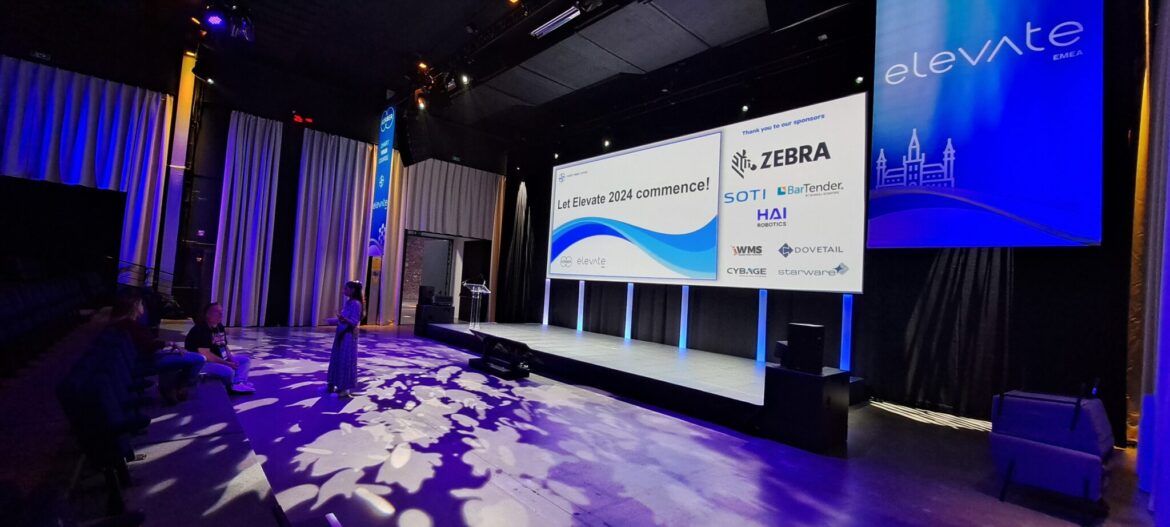
At the recent Körber Elevate EMEA user conference in Brussels, I was privileged to spend a couple of days soaking up knowledge as industry experts from Körber, its customers and its associated partners presented their experiences and ideas. It’s always fascinating when such people are let loose to talk passionately about their particular area of expertise, never more so when the topic covers the digitalisation of logistics. A data-rich industry – such as our business of moving goods from one side of the world to the other, or bringing frozen food from a warehouse to your front door – is primed to benefit from the gains that the rapidly evolving IT landscape can bring, and Körber is at the forefront.

However much we talk about AI, robotics and automated solutions replacing humans, this event particularly highlighted the human side. Whenever I meet supply chain leaders, I always make a point of asking them whether we will eliminate human tasks from the supply chain altogether, and the answer is usually along the lines that there will always be a place for good old you and me, no matter how advanced the technology becomes. With this in mind, Körber not only presented a range of solutions to optimise supply chains, but also highlighted ways in which humans working in the sector can interact with them, become more engaged with their jobs, and how a business that focuses on attracting and retaining staff will be stronger than those that place all of their efforts on getting their hands on the latest bit of tech.

I put it to Matthew Gregory, Managing Director Northern Europe, Körber Supply Chain Software, that I was enlightened to see how people I would describe affectionately as ‘boffins’ haven’t taken their eyes off the fact that all these systems require some level of human control, interaction or intervention. “I’m delighted you’ve seen it, because it is very much intentional,” he replies. “There are a lot of other supply chain software businesses out there that will talk about the software and the technology all too often, but forget about who must use this technology day in and day out. You can have the best possible solution on earth, but if you haven’t considered how an individual is going to use it when they turn up to work, then you’re missing that final piece. That’s what sets us apart as an organisation. Yes, the technology is incredibly important, but so is how we put it into the hands of the men and women that run our supply chains every single day.”

Human Implementation

Körber has experienced considerable growth as businesses seek ever-more-clever ways to optimise their supply chains, and has been highly successful in identifying customer challenges and finding a solution to fix them. Without losing sight of core technology pillars – orchestration with its order management system, execution with its warehouse management system, its warehouse control system, and now transportation system following the recent acquisition of MercuryGate – Gregory tells me a lot of the technology has been focused not only on how it can be knitted together, but also how Körber actually puts it into the hands of the individuals.

“One of the areas I’m particularly passionate about is voice directed work,” he says. “We ask people to work in a warehouse, which are hands-busy and eyes-busy environments, and too often we’re also giving them something they need to hold in their hand. We are making it unnecessarily challenging, especially if we’re trying to recruit new people. The answer is simple – we need to design our solutions from the beginning all the way through to the end. It’s on us as a technology provider to find ways to encourage them to stay, to make them aware of the opportunities that the supply chain industry represents, and to give organisations the right tools to put in the hands of those individuals.”

Empowering Employees

Beyond developing voice technologies that help and support a warehouse worker to be more effective and productive, the challenge is also to encourage them to be more engaged. Of all the sessions I attended at Elevate, the most memorable one was given by Nick Retzmann of vaibe, who demonstrated tools that enhance engagement through the gamification of tasks.

A stressed, demotivated or simply fed-up worker is likely to underperform one who is ‘buzzing’ to get to work and perform at their highest level, so empowering them to do so with the right tools makes good business sense. In an industry populated by businesses claiming they place a lot of emphasis on ESG, it’s reassuring to hear leaders from Körber discuss the mental health and general wellness of the users of the systems it produces.

Another shift over the past decade or so in the way supply chains are shaped has been the emergence of the warehouse as the primary point of contact for the customer. In the ‘old days’, a warehouse would store goods for distribution to shops, where all the customer-facing roles were located. In today’s modern supply chain, where omnichannel ordering is the norm and multiple fulfilment channels are offered as options, the warehouse has come out of the shadows and onto the front line. With goods going direct to customer, the role of the warehouse worker is also developing. “If you’ve just spent a significant amount of money on buying something online, the experience of opening that box should be the same experience as walking into a store,” adds Gregory. “You want the people on that packing bench taking care and attention to make sure that it is beautifully packaged and presented. But if you want people to take pride in their work, they have to feel proud of what they do. And for me, the focus on supporting rather than driving is how we get that.”

Evolving Supply Chains

Talking specifically about the Elevate event, Gregory says customers love the clarity and the value-add offerings displayed all around them and available to try out under the guidance of category experts. “For example, we’ve had huge interest in customers learning how to use our warehouse design and simulation tool, as they’re starting to think about how they need to evolve and adapt their supply chain. Having a digital twin is massive for them, and so is the raising of awareness of technologies such as voice and gamification and our new slotting tool, but how do we help them over the next three years to try and deliver incremental gains and benefits? As long as we know where we’re going, we can start injecting these technologies earlier into the projects to benefit our customers.

“Elevate is a user community, an opportunity to bring our customers together. Yes, we want to spend the time to update them on what we’re doing, but really the value for us is the networking that goes on without us. It’s also designed to make sure that we are getting the feedback firsthand about where the product needs to go. The teams have a very clear remit to come here to learn and listen and then bake that into the strategy for the year ahead.”

One thing I picked up walking around Elevate and talking to its key people is that there are a lot of good brains at Körber with tremendous knowledge and extraordinary levels of experience. With Körber helping its customers to attract and retain staff, I wonder what its secret is to keep its own good people. “We spend a lot of time in the early stages to make sure that we’ve got a good cultural and values-based fit before we bring anybody on board into the business,” Gregory tells me. “And then, once we’ve introduced them and made sure they understand their roles and responsibilities – particularly at the mid to senior level – we do our level best to get out of their way! The one thing that frustrates me in too many organisations is they hunt far and wide for brilliant, intelligent people that can bring a unique perspective into the business, and then they crush it by saying ‘…but this is the way we do it’. In the first nine months inside a business, the most value people can bring is to look at everything with a fresh pair of eyes. Then it’s about how to sustain that.

“The other area we focus on very heavily is getting the right blend between technical expertise and subject matter, knowledge and industry expertise. I’ve got a great delivery team with a really nice mix of incredibly bright, technical people who have come from industry. That is invaluable, and it’s also a way to prove our credibility when we’re sitting across the table with a tier one grocery retailer or an eCommerce provider. We can talk that language. We’re not a software company that lives in the clouds just sitting there writing amazing code.”

A software company peopled by people persons sounds like a mouthful, but that’s exactly the impression I got when coming away from Elevate 2024.

similar news

Körber to Unveil Solutions at Elevate EMEA


Source link

0 comments
0 FacebookTwitterPinterestEmail
Services

Allied Bakeries Introduces Rigid Trailers to Operations

by
written by


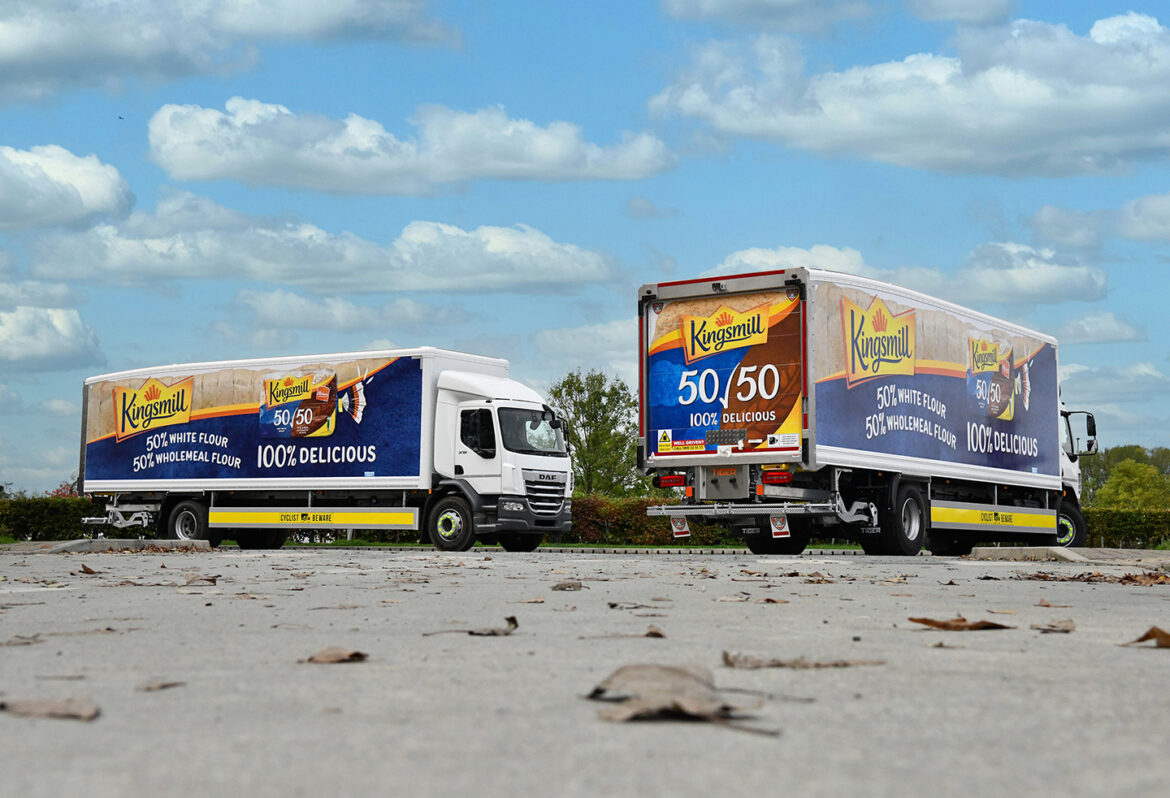
The fleet run by Allied Bakeries, the UK national company whose brands include Kingsmill and Allinson’s bread, has welcomed its first vehicles procured from Tiger Trailers, in the form of thirty-six rigid bodies on DAF XB 230 chassis.

At 9.7m in length, Allied Bakeries’ new 18-tonne rigid trucks were designed by Tiger and the customer’s fleet team with durability at the forefront of the specification, to equip them for extended operational service and increased return on investment.

Allied Bakeries’ National Fleet Engineer, comments: “Thomas and the Tiger team impressed us with their precision and detail-oriented engineering approach, which was highly spec’-driven and tailored to bespoke needs. The process began with on-site visits, 3D model review stages and extensive consultations, and we are very pleased with the end product.”

The new Tiger-built rigid bodies incorporate a 1.5-tonne Dhollandia DH-SKS80 flat platform retractable tail-lift, allowing bread delivery baskets to be easily loaded and unloaded, making the fleet’s deliveries more efficient than ever.

The vehicles’ specification also includes heavy-duty aluminium Bakadek flooring, a stainless steel rear frame, and Magnelis® floor bearers, which reflect the customer’s preventative maintenance ethos and longevity requirements, along with a JR Industries shutter door at the rear, a reversing camera, and various other finish details such as coatings, over-mouldings and drainage, which provide added durability in the trucks’ daily operating environment.

Thomas Stott, Technical Sales Manager at Tiger Trailers, says: “We are delighted to welcome Allied Bakeries to the Tiger family of customers, and it has been a pleasure collaborating with the fleet team in ensuring that the rigid bodies we have manufactured meet their unique requirements. We thank them for placing their trust in Tiger and look forward to seeing their new rigids in operation on the road.”

Allied Bakeries’ thirty-six new rigid bodies manufactured by Tiger Trailers of Cheshire are wrapped in a Kingsmill 50/50 livery, and the customer chose the OEM’s delivery service option.

similar news

Bakery supply chain faces “perfect storm”


Source link

0 comments
0 FacebookTwitterPinterestEmail
Services

Jet Privato Canarie – Private Jet Finder BLOG

by
written by


When winter knocks at the door and the cold weather seems never-ending, the desire for a warm weather getaway becomes irresistible. The Canary Islands, with their mild climate and sunny beaches, are the ideal destination for those seeking a piece of paradise where they can rejuvenate. And what better way to reach these wonderful islands than aboard a private jet, where comfort and personalization are the order of the day? In this article, we’ll chronicle the unique experience of a winter getaway to the Canary Islands aboard a private jet, starting with the most exclusive routes and ending with jet models that will make the trip a tailor-made luxury experience.

Want to arrange a private flight to a warm destination? Also read our article on Dubai

Cessna Citation from Barcelona to Canary Islands in 3-hour flight

A private flight from Barcelona to Tenerife aboard a Cessna Citation, a lightweight and versatile jet, is an ideal option for those seeking a quick, comfortable trip without the complications of scheduled flights.

The flight departs from one of the airports in Barcelona, El Prat or Sabadell and arrives at Tenerife South (TFS) or Tenerife North (TFN) airport, depending on the customer’s preference. The route is about 2200 km long that can be flown in about 3 hours nonstop, depending on weather conditions and the specifications of the Cessna Citation model used. For this type of trip, the most suitable aircraft are.

  • Cessna Citation CJ3+: Ideal for up to 7 passengers, with a range of about 3,500 km.
  • Cessna Citation XLS+: A more spacious and comfortable option with a larger cabin and similar range.

Both models are known for their efficiency and maneuverability, making them perfect planes for connecting Catalonia and the Canary Islands.

Canary Islands private jetBy private jet from Paris to Tenerife

A private flight from Paris Airport-Le Bourget (LBG) to Tenerife is ideal for those who want a trip with comfort and flexibility, perfect for exclusive vacations or business trips. The route covers about 2,850 km and takes between 4 hours 15 minutes and 4 hours 30 minutes, depending on the jet used and weather conditions.

Recommended planes:

  • Cessna Citation XLS+, perfect for its balance of luxury and cost;
  • Bombardier Challenger 350, offering ample space and great range
  • Embraer Phenom 300E, a versatile and refined choice.

A practical tip is to opt for a jet with a spacious cabin and high-speed Wi-Fi, especially if you are traveling for business or with a group of people. Also, choose your destination airport (Tenerife South or North) based on its proximity to your accommodation to reduce transfer time.

Rent private jets to the Canary Islands: Lugano – Tenerife

Chartering a private jet from Lugano to Tenerife is a perfect choice for those seeking a quick, comfortable and personalized trip to the sunny Canary Islands. The distance of approximately 3,000 km can be covered in 4 hours and 30 minutes aboard a midsize or super midsize jet, such as the

  • Cessna Citation XLS+
  • Bombardier Challenger 350

Both are ideal for this flight distance. Departing from Lugano-Agno Airport, prized for its tranquility and fast boarding times, you can fly directly to Tenerife South (TFS) or Tenerife North (TFN), choosing the option closest to your final destination. A useful tip is to opt for an aircraft with a spacious cabin and customizable on-board amenities, perfect for group or family travel. The ability to avoid layovers and choose flexible schedules makes chartering a private jet the ideal solution for those who want to turn travel into a luxury experience

With PrivateJefinder the best private jets for a luxury Canary Island sunshine getaway

If you’re looking for an exclusive and convenient way to escape the winter cold, chartering a private jet with PrivateJetFinder is the perfect choice for getting to Tenerife or the other beautiful Canary Islands.

On board a private flight, you can enjoy the ultimate in comfort, privacy and flexibility, choosing customized schedules and arriving directly at your destination without layovers or long waits.

Tenerife, with its year-round mild climate, is the ideal destination to relax in the sun, explore paradisiacal beaches or immerse yourself in the island’s volcanic nature. With PrivateJetFinder, you have a fleet of luxury jets perfect for groups or families who want an exclusive travel experience. Book your flight now and turn your winter getaway into an unforgettable journey to the sun and relaxation of the Canary Islands.


Source link

0 comments
0 FacebookTwitterPinterestEmail
Services

DHL Supply Chain Acquires Controlling Interest in Brandpath

by
written by


2nd December 2024

Logistics BusinessDHL Supply Chain Acquires Controlling Interest in BrandpathLogistics BusinessDHL Supply Chain Acquires Controlling Interest in Brandpath

DHL Supply Chain today announces its investment in Brandpath Group Ltd, part of the PJ Investment Group (PJIG). Brandpath provides eCommerce businesses with global fulfilment capabilities. The company serves brands including Google and other fulfilment customers such as ShipBob, Localised, Truly, PRS and Jessops.

The investment gives Brandpath customers the benefit of DHL’s global scale and infrastructure across 220 countries and territories as well as deep supply chain expertise and capabilities. Through the relationship with Brandpath, DHL will be able to offer an enhanced eCommerce proposition, particularly for small and midsize businesses. The combination of eFulfilment solutions with scalable supply chain infrastructure will give eCommerce brands access to a global network for growth.

Saul Resnick (pictured, left), CEO DHL Supply Chain UK & Ireland said: “Brandpath’s proposition is highly compelling in today’s market where new, ambitious eCommerce brands are looking to achieve major global success. When you combine Brandpath’s customer focus and flexibility with DHL’s scale, breadth, and expertise, you have a complete and accessible fulfilment solution that enables any eCommerce business to compete on the world stage.”

Peter Jones CBE (right), Chairman Brandpath Group said: “Brandpath was always established to help brands, and our customers drive cross border growth through agile logistics and technology solutions. We are delighted to reinforce our strong partnership with DHL and look forward to leveraging DHL’s global capabilities to deliver greater benefit for our customers.”

Acceleration of eCommerce is a key focus area of DHL Group’s ‘Strategy 2030’. Through the investment, Brandpath customers will have access to the breadth of logistics services across the DHL Group businesses, creating opportunities for mutual growth.

From today DHL has acquired a controlling interest in Brandpath Group Limited. Peter Jones CBE will continue to chair Brandpath Group, and the management team will continue to lead the business, supported by key members of the DHL management team.

similar news

UK Customer eFulfilment Contract Won


Source link

0 comments
0 FacebookTwitterPinterestEmail
Newer Posts
Older Posts

Recent Posts

  • Blend of Solutions in Contract Logistics
  • Middle East Conflict Drives Surge in Spot Freight
  • On Another Level – Logistics News
  • Interroll to Acquire Royal Apollo Group
  • Warehouse Property – Essential Partnership

Recent Comments

No comments to show.

Social Connect

Whatsapp

Recent Posts

  • Blend of Solutions in Contract Logistics

  • Middle East Conflict Drives Surge in Spot Freight

  • On Another Level – Logistics News

  • Interroll to Acquire Royal Apollo Group

  • Warehouse Property – Essential Partnership

Newsletter

Categories

  • Services (1,108)
  • Uncategorized (41)

@2024 - All Right Reserved. Designed and Developed by Sierraline Cargo services

Manage Consent
To provide the best experiences, we use technologies like cookies to store and/or access device information. Consenting to these technologies will allow us to process data such as browsing behavior or unique IDs on this site. Not consenting or withdrawing consent, may adversely affect certain features and functions.
Functional Always active
The technical storage or access is strictly necessary for the legitimate purpose of enabling the use of a specific service explicitly requested by the subscriber or user, or for the sole purpose of carrying out the transmission of a communication over an electronic communications network.
Preferences
The technical storage or access is necessary for the legitimate purpose of storing preferences that are not requested by the subscriber or user.
Statistics
The technical storage or access that is used exclusively for statistical purposes. The technical storage or access that is used exclusively for anonymous statistical purposes. Without a subpoena, voluntary compliance on the part of your Internet Service Provider, or additional records from a third party, information stored or retrieved for this purpose alone cannot usually be used to identify you.
Marketing
The technical storage or access is required to create user profiles to send advertising, or to track the user on a website or across several websites for similar marketing purposes.
  • Manage options
  • Manage services
  • Manage {vendor_count} vendors
  • Read more about these purposes
View preferences
  • {title}
  • {title}
  • {title}
Sierraline Cargo Services
  • HOME
  • Services
    • Trade With Us
  • About Us
  • Contact Us
  • private jet
    • BOOK YOUR JOURNEY
  • Track Packages
  • Insurance
  • safekeeping

WhatsApp us