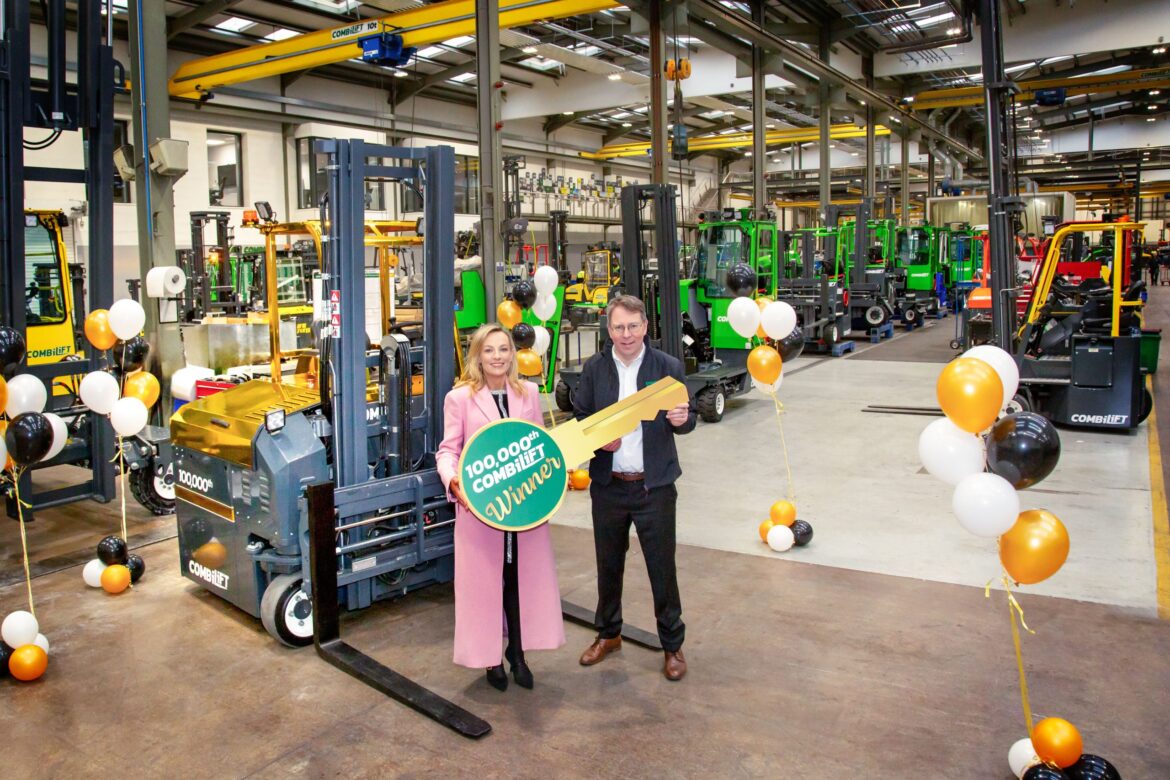
Global materials handling supplier Combilift has celebrated a major manufacturing milestone by transforming its 100,000th forklift into a powerful force for good, raising and donating €100,000 to the United Nations International Children’s Emergency Fund to support children in crisis worldwide.
To mark the production of its 100,000th forklift, Combilift launched its largest-ever worldwide competition, offering the exclusive 100,000th ‘Golden Prize’ multidirectional Combi-CBE. All proceeds raised were donated to UNICEF Ireland’s Emergency Fund.
The campaign generated €56,500 in ticket sales, and at a cheque presentation ceremony, Combilift announced it had topped up the total contribution to an impressive €100,000, underlining the company’s long-standing commitment to corporate social responsibility.
“This campaign was designed not only to celebrate a major manufacturing achievement for Combilift, but also to make a meaningful difference beyond the factory floor. By supporting UNICEF, we are supporting one of the world’s most effective humanitarian organisations and helping children who need it most.”
The cheque was formally presented by Martin McVicar to Owen Buckley, UNICEF Ireland’s Head of Corporate Partnerships, and Michaela Plunkett, Business Development Manager, in Monaghan.
Owen Buckley welcomed the donation, saying:
“As we enter the winter season, our priority is ensuring children affected by war and natural disasters have access to warm clothing, safe shelter and continued education. This generous contribution from Combilift will help UNICEF respond quickly to urgent needs.”
The winning ticket was purchased by Kareen Farrell, who travelled to Combilift’s headquarters in Monaghan to receive the one-of-a-kind 100,000th Combi-CBE ‘Golden Forklift.’
Reacting to her win, Kareen Farrell said:
“I was absolutely delighted when I heard I had won, as I’m never lucky. My dad shared the competition details and bought a ticket to support UNICEF because it’s a children’s charity that helps children all over the world, so winning the forklift was an incredible bonus.”
The Golden Forklift was first unveiled at the IMHX Exhibition in the UK before embarking on a European trade show tour, attracting strong international interest and reflecting Combilift’s global customer base and shared commitment to positive social impact.
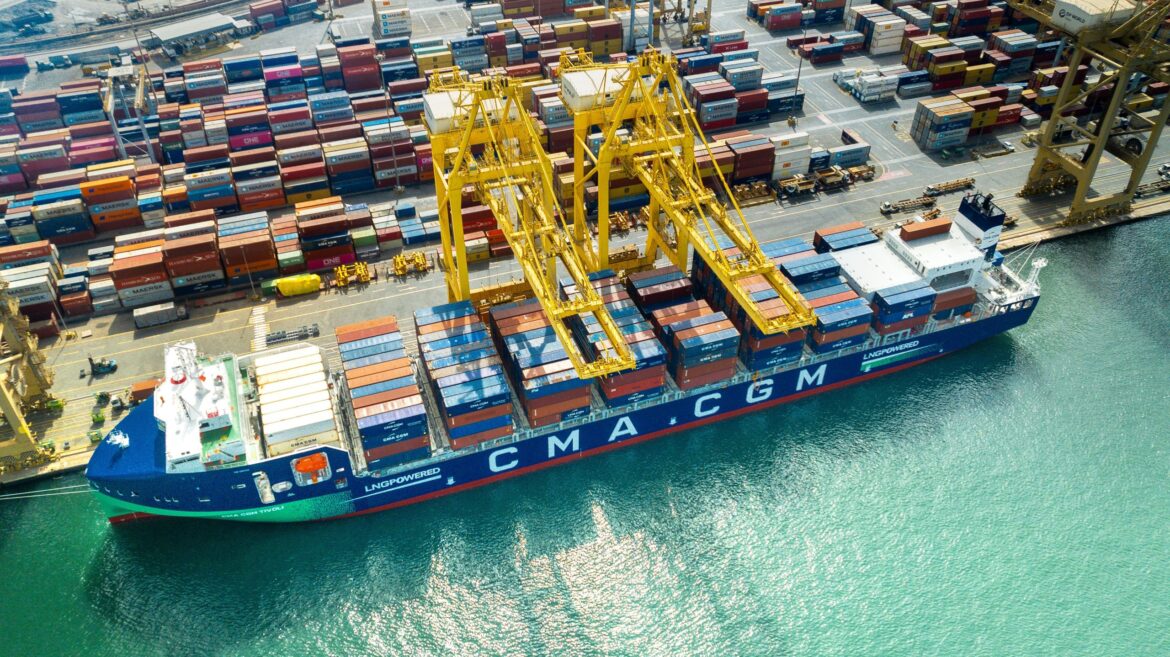
DHL Global Forwarding and CMA CGM have taken a significant step toward decarbonizing global container transport. The two companies have agreed to jointly use 8,990 metric tons of UCOME second-generation biofuel, enabling an estimated 25,000 metric tons of CO₂e well-to-wake emission reduction for ocean freight transported under DHL’s GoGreen Plus service. This initiative empowers DHL customers to significantly reduce the carbon intensity of their international supply chains while accelerating the industry’s transition to alternative marine fuels.
“This collaboration marks another milestone in our mission towards low-carbon supply chains,” said Casper Ellerbaek, Head of Global Ocean Freight at DHL Global Forwarding. “By leveraging sustainable marine fuels, we help our customers achieve their climate goals and drive real progress toward decarbonization.”
Driving lower-carbon ocean freight solutions
Through DHL’s GoGreen Plus and CMA CGM’s ACT+ low-carbon transport offering, shippers can integrate sustainable maritime transport into their logistics operations. CMA CGM will physically bunker the biofuel across its fleet, ensuring that emission reductions correspond to DHL’s Book & Claim approach. DHL’s GoGreen Plus service enables customers to cut well-to-wake emissions by selecting sustainable marine fuel options for their transport, allowing reductions of up to 80% GHG emissions compared to conventional maritime fuel.
Shared ambition for Net Zero
While DHL aims to reach net-zero GHG emissions by 2050, Olivier Nivoix, Executive Vice President Shipping, CMA CGM Group, confirmed: “Our partnership with DHL demonstrates how collaboration can accelerate the shift to low-carbon shipping. ACT+ offers reliable and scalable solutions backed by our fleet designed for alternative fuels. CMA CGM, committed to Net Zero Carbon by 2050, has already cut the carbon intensity of its shipping activities by 57% since 2008 and is investing heavily in alternative fuels and dual-fuel vessels.”
Both companies will continue to explore opportunities to scale up lower-carbon fuel usage and develop collaborative approaches to decarbonize international supply chains.
What is ACT+?
The CMA CGM Group has been investing for many years in the decarbonization of its activities. As a pioneer in the use of biofuels and in the deployment of LNG-powered vessels, CMA CGM continuously optimizes its operations, diversifies its energy mix and supports innovation, with the objective of achieving Net Zero Carbon by 2050.
In response to growing customer expectations regarding the environmental performance of their supply chains, CMA CGM has developed ACT+, its range of low-carbon transport solutions.
ACT+ enables customers to reduce the carbon footprint of their shipments by 10%, 25%, 50% or up to 83%, on a well-to-wake basis*, through the use of low-carbon fuels such as second-generation biofuels, and to complement these reductions through carbon offsetting solutions.
DHL’s GoGreen Plus products provide decarbonized solutions across DHL’s core offerings by leveraging sustainable fuels and low carbon technology. GoGreen Plus products are based on true value chain decarbonization. This is enabled by the ‘book & claim’ approach. Book & claim enables DHL to directly replace fossil fuels with sustainable fuels within the logistic company’s network and allocate environmental benefits to paying customers, even when their shipments are not physically transported with the assets using these fuels. GoGreen Plus allows DHL’s customers to reduce their indirect Scope 3 emissions in their value chain arising from upstream and downstream transportation and distribution. It also helps customers with voluntary reporting of greenhouse gas (GHG) emissions and progress against their decarbonization targets.
North Africa has for years been one of the most fascinating areas for international luxury tourism. Close toEurope, rich in millennia-old culture, spectacular scenery and top-notch hotel facilities, it is an ideal choice for those who want an exclusive experience without facing intercontinental flights.
Flying by private jet from cities such as Rome, Parise London allows these destinations to be reached quickly, directly and with the utmost privacy, transforming travel itself into an integral part of theluxury experience.
Marrakech, Morocco – The icon of North African luxury.
Marrakech has long been a favorite destination for high-end travelers, celebrities, and European entrepreneurs. The city offers a unique mix of tradition, design, gastronomy and hospitality of the highest standard.
Private riads in the Medina, legendary resorts such as La Mamounia or Royal Mansour, world-class golf courses, and experiences in the nearby Agafay desert make Marrakech a perfect destination for both short stays and more structured vacations.
From a private aviation perspective, Marrakech Menara Airport (RAK) is well organized to accommodate business flights, with dedicated VIP services and fast procedures.
Private jet routes to Marrakech
Considering flight times Marrakech is also ideal for a luxury weekend getaway, with maximum flexibility on departure and return times.
Sharm El Sheikh and Red Sea, Egypt – Exclusive resorts and crystal clear sea
Sharm El Sheikh represents North Africa’s most beach and resort-oriented luxury destination. Overlooking the Red Sea, it is famous for its crystal-clear waters, spectacular backdrops and a selection offive-star resorts designed to offer absolute privacy and tailored services.
It is a popular destination during the winter months, when mild temperatures allow people to enjoy the sea while much of Europe is in the midst of the cold season.
Sharm El Sheikh International Airport (SSH ) can handle private and executive charter flights, making direct access possible with no stopovers in between.
Private jet routes to Sharm El Sheikh
The private jet makes it possible to reach the Red Sea in total comfort, avoiding long connections and ensuring a relaxing journey from takeoff.
Gammarth and Tunis, Tunisia – Discreet luxury between sea and culture
For those who desire understated luxury away from the busy routes, Gammarth and Tunis are an extremely attractive choice. The Gammarth area is home to high-end hotels overlooking the Mediterranean, frequented by an international clientele seeking tranquility and personalized service.
The proximity to Tunis, the archaeological remains of Carthage and golf courses makes this an ideal destination for combining relaxation, culture and business travel.
Tunis-Carthage Airport (TUN ) is well equipped for private aviation and provides quick access to the coast and major luxury hotels.
Private jet routes to Tunis
Short flight durations also make Gammarth and Tunis perfect for short stays or combined leisure and business travel.
Why choose private jet to reach North Africa
Choosing a private jet to fly to luxury destinations in North Africa means:
nonstop direct flights
maximum flexibility in schedules
Superior comfort on medium-short routes
total privacy for leisure or business travel
Quick access to well-connected airports to luxury facilities
From Rome, Paris and London, North Africa thus becomes one of the easiest areas to reach and most exclusive to explore, with short flight times and a level of service that lives up to the highest expectations.
Contact PrivateJetFinder to charter private jets to Africa’s most luxurious destinations
Reaching Marrakech, Sharm El Sheikh, the Red Sea or the Tunisian coast of Gammarth by private jet means traveling without compromise, with tailor-made solutions and the utmost attention to detail.
Whether it is an exclusive short trip, a luxury resort vacation or a business trip, privatejetfinder.com is the one-stop shop for flying to North Africa’s most prestigious destinations with efficiency, privacy and top-notch service.
2026 could be a turning point for loading automation, argues Wouter Satijn (pictured, below), Chief Revenue Officer, Joloda Hydraroll.
Companies are constantly looking for ways to optimise and automate their warehouses and production facilities: ‘optimisation’ has been the word of our industry for some time now. Yet one critical area is frequently overlooked. When it comes to loading and unloading, there is still an enormous amount of manual handling happening globally – and this is at a time when forklift drivers are scarce. Even facilities with the most sophisticated end-of-line processes often stop short of automating the unloading stage.
As labour availability tightens and pressure around safety and throughput continues to build, more companies are set to achieve 100% end-of-line automation, including inbound flows into the warehouse and outbound loading. But why 2026? Not least because the benefits of loading automation are now accessible to warehouses of all sizes and levels of automation maturity.
Automated loading is still a best-kept secret
Dependency on manual loading remains high, even though the advantages of automation are well established, including:
Safety: One of the strongest reasons to automate the loading and unloading process is to improve safety. Despite a lot of great advances in forklift safety and countless innovations around the loading bay, it remains a danger zone so long as processes are manual. Forklift operators are under pressure to load and unload quickly, and there’s operational pressure to turn trailers around fast. Statistics show that for every number of forklift-driven kilometres, there are a corresponding number of near-misses and, eventually, an accident. Automated loading dramatically reduces forklift mileage, which means fewer near-misses and fewer accidents every year.
Wouter Satijn
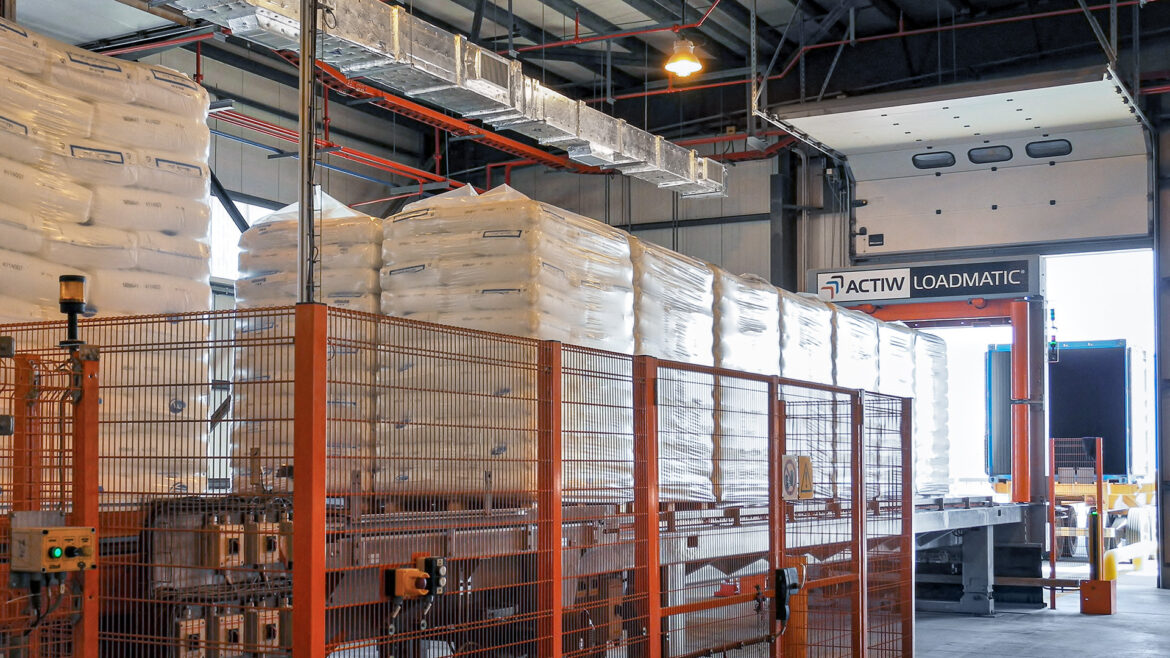
Speed: Beyond safety, a fully automated system can load a complete trailer in as little as two minutes. In comparison, manual loading with forklifts can take 30 to 45 minutes. That difference has a massive impact on shuttle operations, as faster loading means the same trailer can be used more times per day. As a result, companies can significantly reduce the number of trailers required, cutting costs and also reducing trailer idle time and congestion.
Space: Space is another challenge driving logistics operators to rethink their loading process. Manual loading requires wide aisles, large staging areas, space for forklift maneuvering, and multiple dock doors to maintain throughput. Automatic loading systems eliminate many of these requirements, streamlining the process. The ability to load a full trailer in just two minutes means operators can eliminate pallet staging and reduce the number of dock doors required: recent warehouse designs that are using full automation have cut dock doors by up to 80%, ensuring the warehouse footprint is as compact as possible, which in turn lowers construction costs, energy use and environmental impact.
Tailored automation for real-world operations
There are myriad benefits of an automated loading/ unloading process, but solutions are not one-size-fits-all. Each operation is different, and the right approach depends heavily on factors such as what’s being loaded, how it is being moved, which trailers are used and the level of throughput required. There are stunning, state-of-the-art ‘lights-out’ ASRS facilities for certain use cases, and for others, there are many warehouses around the world that require only low to medium automation. But their objectives are the same: they want to reduce manual activity, speed up workflows and improve safety.
Against a backdrop of familiar challenges, it’s becoming increasingly important for companies to consider the benefits of automation at every stage of the end of line process, and this includes loading and unloading. What sets 2026 apart is the practicalities of achieving this: automation is now viable for a far wider range of warehouses – including brownfield sites operating with standard trailers and existing infrastructure – to reap the benefits in a cost-effective way.
At the Port of Barcelona, Barcelona International Terminal, S.A.(BIT), a joint venture between SGS and Masiques, will have the most advanced coffee terminal in southern Europe. Building the new terminal involves an investment of 30 MEUR, 20 million of which will be provided by the Barcelona Free Zone Consortium and 10 million by the Port of Barcelona for the transfer of the current BIT facilities, to meet Elian’s need for space to expand the terminal run by this company within the port precinct.
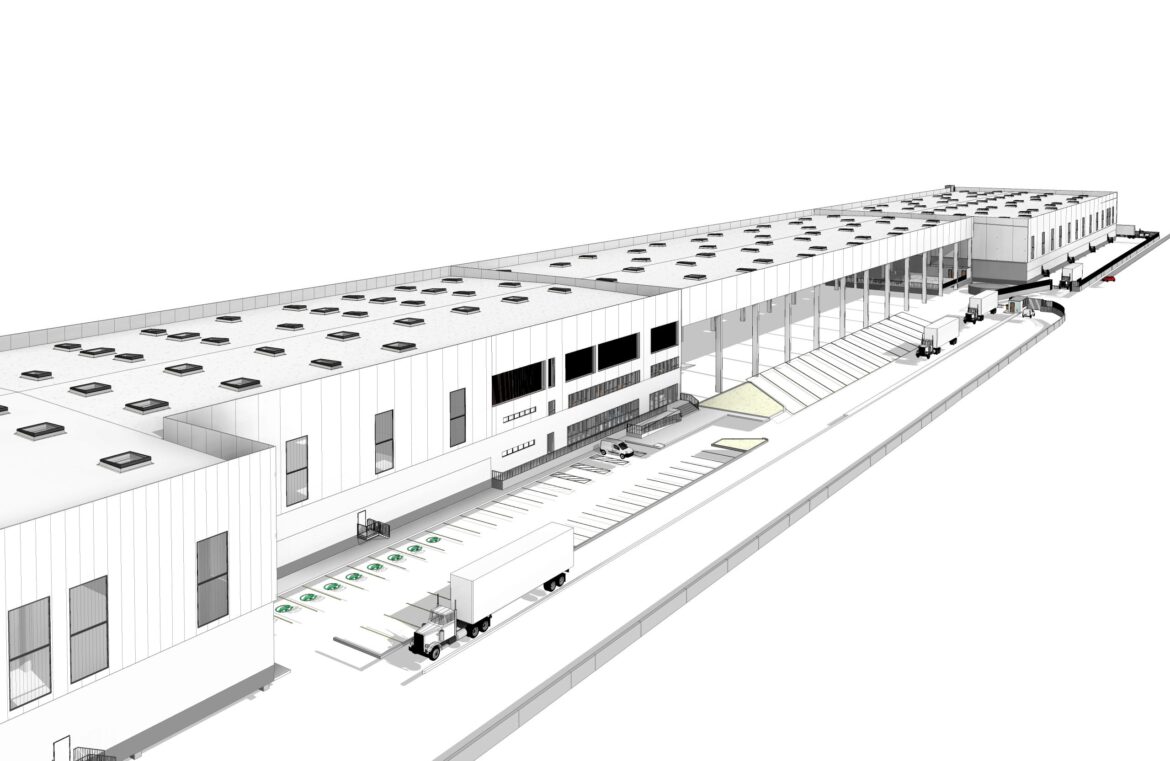
The new BIT will be built in section VI of the Ronda del Port, on a plot of 53,380 m² that CZFB will run under a management concession for the next 50 years. It will comprise two warehouses connected by a canopy, offices and services and spaces for loading and unloading trucks, with a built-up area of 27,476.79 m². The facilities will incorporate solar thermal and photovoltaic systems and constant temperature and humidity control to guarantee optimal conditions for the green coffee beans stored there. Consequently, the new BIT facilities will be designed and built specifically for coffee storage and logistics operations respecting the highest quality and efficiency standards and will be ready to accommodate increases in traffic over the coming years.
The project, which will take 36 months to complete, was unveiled today by Port of Barcelona president José Alberto Carbonell; Pere Navarro, Spanish Government special delegate to the Barcelona Free Zone Consortium; José Miguel Masiques, CEO of Masiques, and Marc Tauste, BIT manager.
The project for the future BIT terminal is the result of a lengthy process involving the cooperation of both institutions and companies. The Port of Barcelona, the CZFB and BIT had to coordinate efforts to meet the requirement to expand the terminal of agro-industrial company Elian, which occupies the land of the BIT facilities and is managed by the CZFB on Álvarez de la Campa wharf, to respond to a 200 million euro project, as unveiled on 21 November. This also raised the need to build a new coffee terminal, which will be the largest and most advanced of its kind in southern Europe. Since BIT has the tax status of a Customs Free Zone, an agreement had to be struck with the Barcelona Free Zone Consortium to allow the future facilities to maintain their customs status.
Port of Barcelona president José Alberto Carbonell highlighted that “BIT is the leading green coffee terminal in southern Europe, and the new project that we are presenting today will allow it to maintain this leading role. This project is also an exercise in institutional cooperation. We have worked with the Barcelona Free Zone Consortium and with the companies involved —Masiques and SGS— to better organize the area and ensure that each activity enjoys the necessary conditions to grow and be competitive.”
Pere Navarro, Spanish Government special delegate to the CZFB, underscored that “this is a forward-looking project that clearly shows how a desire to achieve objectives, alongside coordinated work between the public and private sectors, yields very positive results that generate opportunities for people and the surrounding area. Likewise, this action reiterates CZFB’s commitment to sustainable reindustrialization and the generation of economic value and employment.”
Masiques CEO José Miguel Masiques recalled that this project, “is one more step, and a very important one, in a years-long success story between the Port of Barcelona, the Free Zone Consortium and BIT” and framed the new project within Spain’s outstanding role in the international coffee market and the role played by BIT, which currently manages around 80% of the green coffee arriving in the country.
BIT manager Marc Tauste explained that, “our new facilities will have two distinct buildings that will house various activities related to coffee logistics. The fully-automated modern equipment will allow us to double our current production capacity and optimize logistics operations. This will be one of the most modern and sustainable coffee terminals in the world.”
BIT, a joint venture formed by SGS and Masiques, was created in the Port of Barcelona in the 1980s —following the deregulation of the coffee market in Spain— with Free Zone tax status, allowing local and international operators to conduct their logistics operations in Spain and with third countries under the most competitive tax regime.
The company grew rapidly to become the most significant green coffee terminal in southern Europe and an important factor consolidating Barcelona as the main gateway for green coffee in the south of the continent. Currently, 80% of the coffee that arrives in Spain passes through the Port of Barcelona.
The concession for the future terminal will last for 50 years.
Siemens has partnered with logistics provider Kuehne+Nagel to deploy electric heavy goods vehicles (eHGVs) across selected UK and Ireland freight operations, marking a practical step toward lower-carbon industrial logistics.
The initiative replaces diesel trucks with fully electric HGVs on scheduled “milk run” routes supporting Siemens’ manufacturing operations, beginning at the company’s Congleton site in the North of England. The vehicles will be used for regular inbound transport between Siemens facilities and supplier locations.
The eHGVs offer a range of up to 400km and a payload capacity of up to 44 tonnes, demonstrating the growing viability of electric vehicles for medium-distance freight movements. The rollout is expected to reduce carbon emissions on the pilot route by around 12 tonnes of CO₂e annually, while maintaining reliability and service performance.
Rob Matthews, Managing Director at Siemens Congleton, said:
This partnership represents a meaningful shift in how we approach logistics and sustainability. By introducing electric heavy goods vehicles into our operations, we are not only reducing emissions but also rethinking how we deliver efficiency and resilience across our supply chain.
The deployment forms part of Siemens’ broader sustainability strategy and reflects Kuehne+Nagel’s ongoing investment in low-emission transport solutions. By integrating electric HGVs into day-to-day logistics operations, the partners aim to demonstrate that decarbonisation can be achieved without compromising operational effectiveness.
As pressure grows on the freight sector to reduce emissions, projects like this highlight how electrification is moving beyond pilot schemes and becoming a realistic option for industrial logistics networks.
Global e-commerce retailer Shein has opened a major new logistics centre in Poland, strengthening its European fulfilment network and reinforcing the country’s position as a key logistics hub for international retail operations.
Located near Wrocław, the state-of-the-art facility has been developed by GLP, the global logistics real estate developer and investment manager. The centre forms part of the GLP Wrocław V logistics park and will act as Shein’s primary distribution hub for the European market.
Designed to support high-volume e-commerce operations, the facility incorporates advanced automation, modern sorting systems and scalable warehouse infrastructure to improve order processing speed and delivery performance across Europe. The site will play a central role in optimising Shein’s supply chain, helping to reduce lead times and improve resilience as online demand continues to grow.
Once fully operational, the logistics centre is expected to be among the largest e-commerce facilities in Europe. The investment will also deliver a significant boost to the regional economy, with thousands of jobs expected to be created across warehousing, operations, engineering and management roles.
Poland continues to attract major logistics investment due to its central European location, strong transport connections and access to skilled labour. Shein’s decision to partner with GLP for the development highlights the importance of high-quality logistics infrastructure in supporting fast, flexible and reliable fulfilment models.
By establishing a major European hub in Poland, Shein aims to support continued growth while meeting rising customer expectations for faster and more dependable delivery across key European markets.
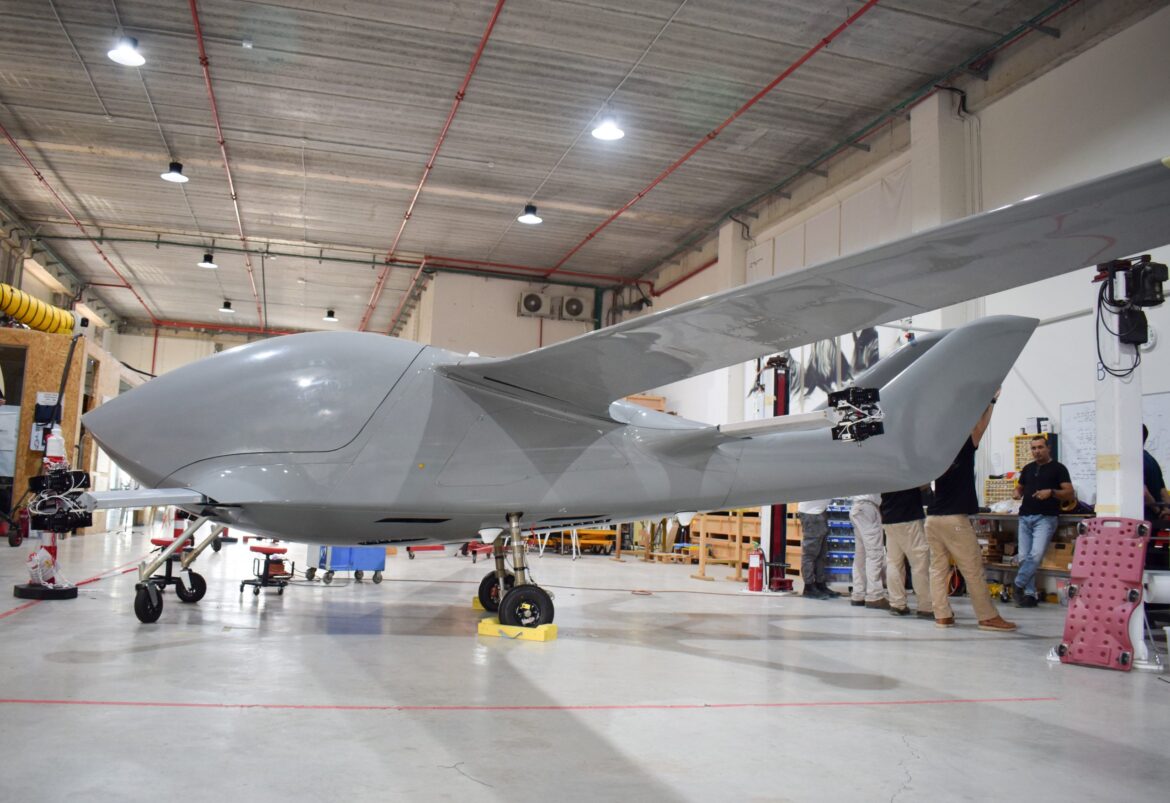
AIR, a leading OEM for dual-use, heavy-lift eVTOLs, today unveiled its production model eVTOL, marking the company’s transition from aircraft development to commercial-scale manufacturing and deliveries. The completed production model follows the prototype aircraft delivered to the launch customer in Q4 of 2023 and advances AIR’s mission to support commercial cargo operations and strengthen logistical capabilities in contested environments. Its first flight will take place in Southern Israel before entering operational service. Subsequent aircraft are scheduled to be sent to AIR’s US-based operation for demonstration efforts and certification advancement.
Drawing from nearly two years of operational deployment with AIR’s launch customer, the new production aircraft was shaped using field insights. Operational activities included sustained BVLOS missions, remote resupply in challenging environments, integration with ground elements, and additional mission profiles. These field-proven milestones demonstrate how eVTOL systems are transitioning from experimental platforms to mission-ready assets, underscoring their practical value and driving adoption across sectors.
AIR’s new cargo production model reflects substantial progress across AIR’s established tier-1 partner ecosystem, featuring an all-new airframe developed by automotive manufacturer EDAG, advanced electric motors, redundant communication and navigation equipment for GPS-denied areas, and a fully updated avionics suite. Capable of taking off and landing vertically while carrying a 550 lb. payload, AIR’s new airframe and next-generation electrical and avionics architecture will support fast-growing uncrewed cargo applications, as well as the overall emerging advanced air mobility market.
These capabilities stem from deliberate design choices that prioritize both operational efficiency and mission flexibility. Enhancements to the design include optimized battery integration and a larger cargo bay, along with foldable wings and motor arms that enable compact storage, easy transport, and greater mission versatility. The aircraft’s streamlined body design and refined airflow management significantly improve both range and overall flight efficiency. These improvements are coupled with an advanced flight control system that provides increased stability, responsiveness, and redundancy.
“This production model represents years of engineering refinement and collaboration with industry leaders, stakeholders, and regulatory bodies,” said Rani Plaut, CEO and Co-founder of AIR. “We’ve moved beyond proof of concept to proven performance and commercial deployment, supported by vital partnerships. We look forward to continuing to deliver on the promise of transforming how cargo moves around the world.”
This latest milestone follows a series of achievements from AIR, including issuance of its FAA airworthiness certificate, a $23 million Series A funding round, extensive nighttime BVLOS uncrewed cargo operations, and successful flight operations across diverse mission scenarios. AIR’s uncrewed cargo aircraft has proven successful in real-world cargo delivery missions, highlighting its status as one of the most advanced eVTOL cargo aircraft currently in production. In addition to cargo aircraft deliveries, AIR also plans to begin fulfilling over 2,900 pre-orders for its piloted, two-seater AIR ONE aircraft in the coming year, following LSA certification.
The European Union is accelerating efforts to reduce its reliance on China for critical raw materials, following renewed concerns over rare-earth export restrictions and their potential impact on Europe’s semiconductor and advanced manufacturing sectors.
Recent signals from China around rare-earth exports have sharpened focus on supply chain vulnerabilities, particularly as demand for high-tech semiconductors continues to rise. Industry experts warn these pressures are likely to intensify in 2026, bringing long-standing geopolitical, trade and material-dependency risks to the forefront.
Steffen Schulze Selting, Senior Director of Customer Success at Sphera, says the rapid expansion of artificial intelligence is driving semiconductor demand and raising the stakes for supply chain resilience.
“With the continued rise of AI, the demand for high-tech semiconductors is growing, and with it the requirements for resilient supply chains,… A potential conflict between China and Taiwan hangs like a sword of Damocles over the industry and global supply chains.”
The semiconductor sector remains particularly exposed to geopolitical tensions in the Asia-Pacific region. Any escalation involving Taiwan could trigger sanctions on China, with severe knock-on effects across global supply chains, far beyond electronics manufacturing.
Looking ahead to 2026, Schulze Selting expects companies to intensify scrutiny of their supply chains, examining dependencies and seeking alternative sourcing options. Governments and businesses are investing more in resilience, but export controls, restrictions on critical materials and changing trade relationships continue to limit flexibility.
European exporters are also expected to feel a stronger impact from U.S. tariffs in 2026 than in 2025. Last year’s effects were partly softened by front-loading, as companies shipped goods ahead of tariff increases. By 2026, that buffer will have disappeared, exposing exporters to higher costs without short-term mitigation options.
Despite these challenges, Schulze Selting points to more positive developments on the regulatory front. Greater clarity around European regulations in 2026 is expected to simplify administrative requirements and reduce costs for many businesses.
“Lessons are being learned from years of disruption… Risk management will be central to building resilience, with sustainability embedded into decision-making. Those who fail to act will ultimately lose market share.”
Heavy, complex, and often requiring millimeter precision: even with unusual dimensions, Lufthansa Cargo proved in 2025 that precision and tailored solutions are part of its brand essence. Just as diverse as the transport of large components is the rest of the spectrum of special cargo items that were transported during the year – from exotic animals to medically sensitive goods. A look at selected examples gives an idea of the variety.
Precision for sensitive machinery
Transporting aircraft engines is one of the most demanding tasks in air freight. This year, over 1,000 of these heavy and highly sensitive components were moved worldwide in Lufthansa Cargo’s air freight network. Each transport requires precise planning, specialized equipment, and closely coordinated processes – from preparation on the ground to securing on board.
Special care was also required in the high-tech segment. Several semiconductor manufacturing machines were safely transported to international destinations, equipped with shock and tilt sensors, temperature monitoring, and clearly defined handling rules.
A rare BMW classic car was a special one-off item that was flown from Prague to Tokyo. Only around 150 to 300 roadworthy examples of this model remain worldwide. The restored rarity was carefully prepared and loaded for its journey of more than 9,000 kilometers. The transport is exemplary of the diverse requirements of the automotive industry, whether complete vehicles, spare parts, or sensitive high-tech components such as control units and electronic modules.
Diversity in animal transport
An extraordinary example in the field of species conservation in 2025 was the transport of critically endangered Vietnamese crocodile-tailed lizards (Shinisaurus crocodilurus vietnamensis). Fewer than 150 individuals of this rare reptile are known to exist worldwide. In cooperation with Cologne Zoo and AnimalLogistics FRA, a logistics company specializing in animal transport, Lufthansa Cargo supported the return of twelve animals to their native habitat in Vietnam for the first time. The repatriation is part of the international ‘One Plan Approach’, which combines conservation breeding programs in zoos with field projects on site.
Another example of species conservation is the collaboration with the ‘Save the Rhino’ project. While there were still over 22,000 rhinos living in South Africa in 2012, estimates now put the number at around 13,000. Lufthansa Cargo transported specially trained sniffer dogs to the country, where they are used in anti-poaching units. The dogs come from animal welfare organizations and are intensively trained to detect illegal wildlife products such as rhino horn or ivory before they are deployed. On site, they assist rangers in identifying smuggling routes and improving the monitoring of large protected areas.
In addition, the overall figures underscore the breadth of this transport segment. Around 3,500 horses were transported in 2025, marking significant growth compared to the previous year. The modern infrastructure of the Frankfurt Animal Lounge, with its spacious stalls and specialized teams, forms the basis for transport that is as stress-free as possible and caters to the needs of all equines – from ponies to seasoned sport horses.
Around 12,000 pets traveled safely to new destinations in 2025, while around 80 million ornamental fish – the largest animal group in the air freight portfolio – were transported with the utmost care. In addition, around 200 exotic zoo animals, including pandas, hippos, and other species ambassadors, were transported between zoological facilities and protected areas worldwide.
Restoring vision
Pharmaceutical shipments have been one of Lufthansa Cargo’s strategically important freight categories for years. Certified infrastructure, strict temperature control processes, and specialized handling teams ensure that medicines, vaccines, and other medical goods can be transported safely worldwide. In this environment, the transport of human tissue is one of the tasks that requires special care and where the highest precision and strictly monitored transport conditions are essential.
One example of medically relevant transport is the collaboration with the Lions World Vision Institute (LWVI), which coordinates corneal tissue donations worldwide to restore people’s sight. The transplants are booked as LHO (Living Human Organ) and classified as time-critical cargo – with priority handling, continuous live tracking, and immediate rebooking in case of delays. The following example from Cameroon illustrates the importance of logistics: A patient there received a donated cornea that restored her clear vision. LWVI has already helped more than 500,000 people worldwide to a new life, and as part of its long-standing partnership, Lufthansa Cargo has transported around 10,000 shipments of corneas for the Lions World Vision Institute to date.
Speed, quality, safety
Whether large technical components, rare animal species, or medical goods – the examples from 2025 illustrate the wide range of requirements placed on global air freight. True to its mission of ‘Enabling Global Business’, Lufthansa Cargo supports globally functioning supply chains and takes responsibility where speed, quality, and safety are crucial.
The company will continue on this course in the coming year, investing in infrastructure and expertise to offer customers and partners worldwide reliable solutions along increasingly complex value chains.
To provide the best experiences, we use technologies like cookies to store and/or access device information. Consenting to these technologies will allow us to process data such as browsing behavior or unique IDs on this site. Not consenting or withdrawing consent, may adversely affect certain features and functions.
Functional
Always active
The technical storage or access is strictly necessary for the legitimate purpose of enabling the use of a specific service explicitly requested by the subscriber or user, or for the sole purpose of carrying out the transmission of a communication over an electronic communications network.
Preferences
The technical storage or access is necessary for the legitimate purpose of storing preferences that are not requested by the subscriber or user.
Statistics
The technical storage or access that is used exclusively for statistical purposes.The technical storage or access that is used exclusively for anonymous statistical purposes. Without a subpoena, voluntary compliance on the part of your Internet Service Provider, or additional records from a third party, information stored or retrieved for this purpose alone cannot usually be used to identify you.
Marketing
The technical storage or access is required to create user profiles to send advertising, or to track the user on a website or across several websites for similar marketing purposes.