Sierraline Cargo Services
  • HOME
  • Services
    • Trade With Us
  • About Us
  • Contact Us
  • private jet
    • BOOK YOUR JOURNEY
  • Track Packages
  • Insurance
  • safekeeping
Services

Dispatch Smarter: Turning GPS Data into Better Routing

by
written by


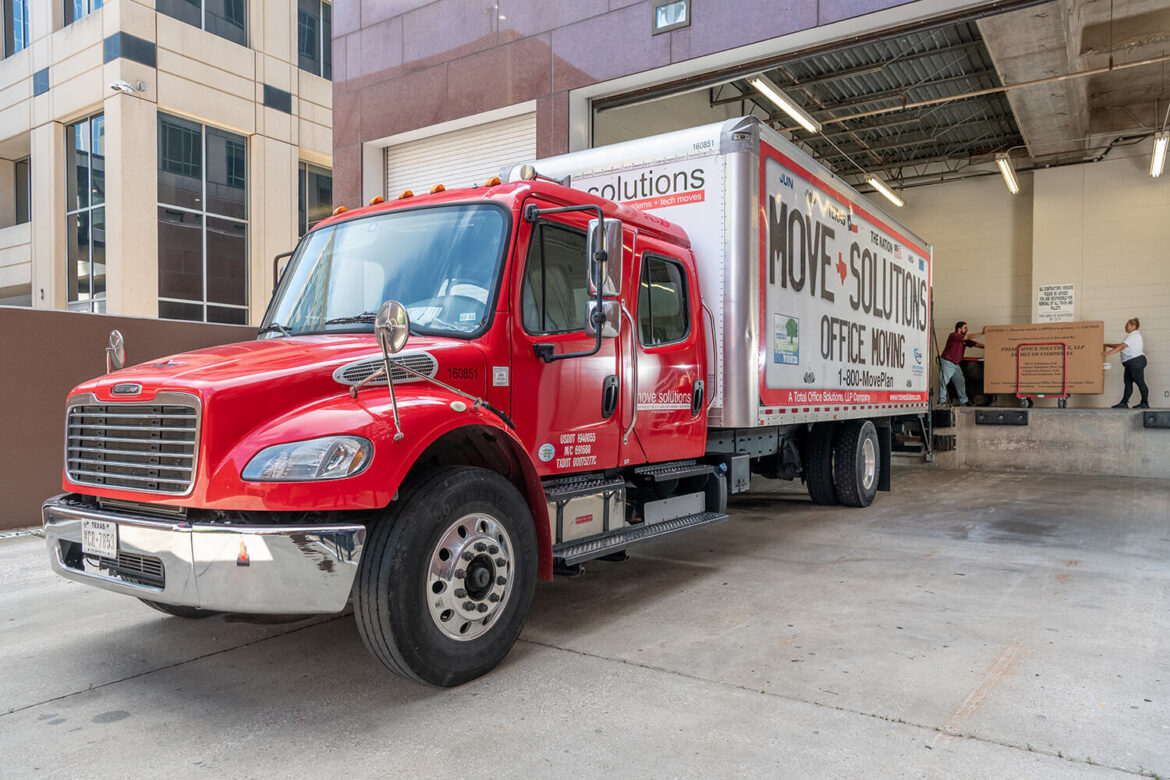
The Global Positioning System is a technology that has been in existence for decades, but the greatest benefits of it are increasing each year. Many transportation companies use GPS to identify where their drivers are in relation to the destination. For some, this may be enough, but they lack insight into the ways that GPS can transform route development and optimization. With this guide, transportation professionals will see how GPS data can turn into better routing decisions. 

Obstacles in Dispatching 

In a highly competitive environment, where efficiency might mean the difference between success and insolvency, route optimization is everything. The company that survives is the one that is better at getting the vehicle to the destination, while keeping drivers safe and happy and cutting costs along the way. Many businesses rely on GPS merely as a tool to help them generally assess the position of the fleet or determine the distance to a particular vehicle’s destination. While GPS handles these tasks effectively, the technology could be doing so much more. 

Benefits of Implementing GPS Telematics Into Routing Strategies 

Integrating GPS telematics into routing strategies requires planning and investment, but the advantages are significant. Businesses can streamline their processes, reduce wasted time and fuel, and improve customer and driver outcomes. 

Reduce Idle Time 

Idle time is costly for any business that relies heavily on transportation and logistics. Idling means that the vehicle is burning fuel and battery life, without getting to the destination. Drivers who spend too much of their time idling may be more likely to engage in unsafe driving practices to get to their destinations on time. The use of GPS data can help dispatchers optimize routes in real time by analyzing historical traffic patterns and driver behaviors. This technology can help drivers avoid high-traffic areas or construction. 

Lower Fuel Costs 

Inefficient routing contributes to delivery delays and higher fuel costs, as drivers sit in traffic or waste miles taking longer routes. Without a real-time route optimization system, dispatchers may direct drivers on paths that get them to the destination using inefficient routes and traffic congestion. Integrating route optimization tools into GPS systems can assist dispatchers in creating more efficient routes that reduce distance and idle time, which can lower fuel costs and stress on the vehicle. 

Boost Fleet Capacity 

Increasing efficiency through the use of GPS software and a vehicle tracker company can help to boost fleet capacity. Companies may have no idea how many customers they can realistically serve until they optimize every aspect of the process. By cutting down on the time spent getting to the destination, organizations can serve more customers with each vehicle. This increase in fleet capacity can allow businesses to expand operations or reduce the number of vehicles, thus improving their operational resilience. 

Improve Quality of Service 

Modern technology has put more information into the hands of customers than ever before. Logistics companies can use GPS data to improve customer service outcomes, increasing satisfaction and trust. GPS can identify precisely where a vehicle is on route to the destination, providing a tool that customers can also access. When customers can easily see where the truck is located, they are less likely to ask for updates and satisfaction and trust go up. Optimized routing also reduces time between deliveries or service calls, which can contribute to long-term customer satisfaction. 

Increase Driver Satisfaction 

Driver turnover is a persistent challenge in the transportation industry. Training and onboarding can be expensive, which emphasizes the importance of keeping drivers happy and committed.  

When drivers have to spend extra time navigating construction, predictable traffic, or slower routes, they may cut corners to meet service or delivery goals. An optimized routing system reduces the time and hassle of getting to each destination. As such, efficiency can increase a driver’s willingness to stay with the company, which can lower recruitment and retention costs. 

For logistics organizations, route optimization is a critical tool for efficiency. By integrating data from GPS technology into route development, companies can reduce costs, improve service quality, boost fleet capacity, and enhance driver satisfaction. 


Source link

0 comments
0 FacebookTwitterPinterestEmail
Services

Easy Robotics for Flying Tiger

by
written by


An exclusive site visit as Peter MacLeod reports from a Maersk DC in chilly Wrocław, Poland, where Locus Robotics has provided an automated solution to fulfil Flying Tiger’s Europe-wide e-commerce orders.

When Maersk set out to transform its e-commerce fulfilment operation for its Danish retailer customer Flying Tiger, it faced a familiar modern logistics dilemma: how to scale rapidly, cope with extreme seasonal peaks, and maintain service levels, all within the constraints of an existing warehouse footprint and with tight implementation timelines.

The answer at its Wrocław facility in southern Poland came in the form of autonomous mobile robotics from Locus Robotics. I was lucky enough to be invited for a tour of this impressive site which, albeit not one of Locus’ largest installations by far, nevertheless highlights in a nutshell what cutting-edge robotics can bring to a project to drive efficiency and cost savings. My visit just so happened to be during the Christmas peak, which gave me particular insight into how well things were going.

The site serves as the central European hub for all of Flying Tiger’s European online orders (retail fulfilment remains out of Copenhagen), shipping orders across the EU from a single 5,700 sqm operation. Since going live in May 2023, it has become a showcase for how robot-assisted picking can deliver speed, flexibility and cost control in a fast-growing retail environment.

High-Growth Under Pressure

Flying Tiger is no small retail brand. With 926 stores worldwide and a highly dynamic product range, its e-commerce channel has been growing rapidly. At the Wrocław site alone, Maersk handled 230,908 parcels in 2023, rising to 392,980 in 2024, with over 528,000 forecast for 2025 at my time of visit. The operation manages between 2,800 and 3,500 SKUs at any one time, with demand patterns heavily influenced by
social media trends, seasonal peaks and promotional activity.

Before automation, the pick process was struggling. Manual productivity was running at around 40 order lines per person per hour, well below the 120 lines per hour target. The operation was characterised by long walking distances (up to 20,000 steps per picker per day), aisle congestion, heavy trolleys, long
onboarding times and a growing risk of errors and injuries.

With Q4 volumes peaking at five times the average and only 22 weeks before the next peak season, Maersk needed a solution that could be deployed quickly, scaled easily, and funded in a way that avoided heavy capital expenditure.

Bots to the Rescue

After analysing a range of goods-to-person and person-to-goods automation options, Maersk selected a
mobile robot ‘person-to-goods’ RaaS (Robots-as-a-Service) model offered by Locus Robotics. The decision was driven by several key criteria: flexibility, rapid deployment, low upfront cost, ease of integration and the ability to scale both labour and automation in line with demand.

The RaaS commercial model was particularly attractive, for instead of committing to a fixed fleet size,
Maersk can scale robots up and down according to volume. This was an important advantage for a business shaped by influencer-driven spikes and intense seasonal surges. Just as importantly, the solution could be implemented in the existing building, which has a height limit of 12.2 m and no scope for major structural changes.

From decision to go-live took just 16–18 weeks, a timeline that was later recognised by Locus as one of its
fastest and best implementations in Europe.

How it Works

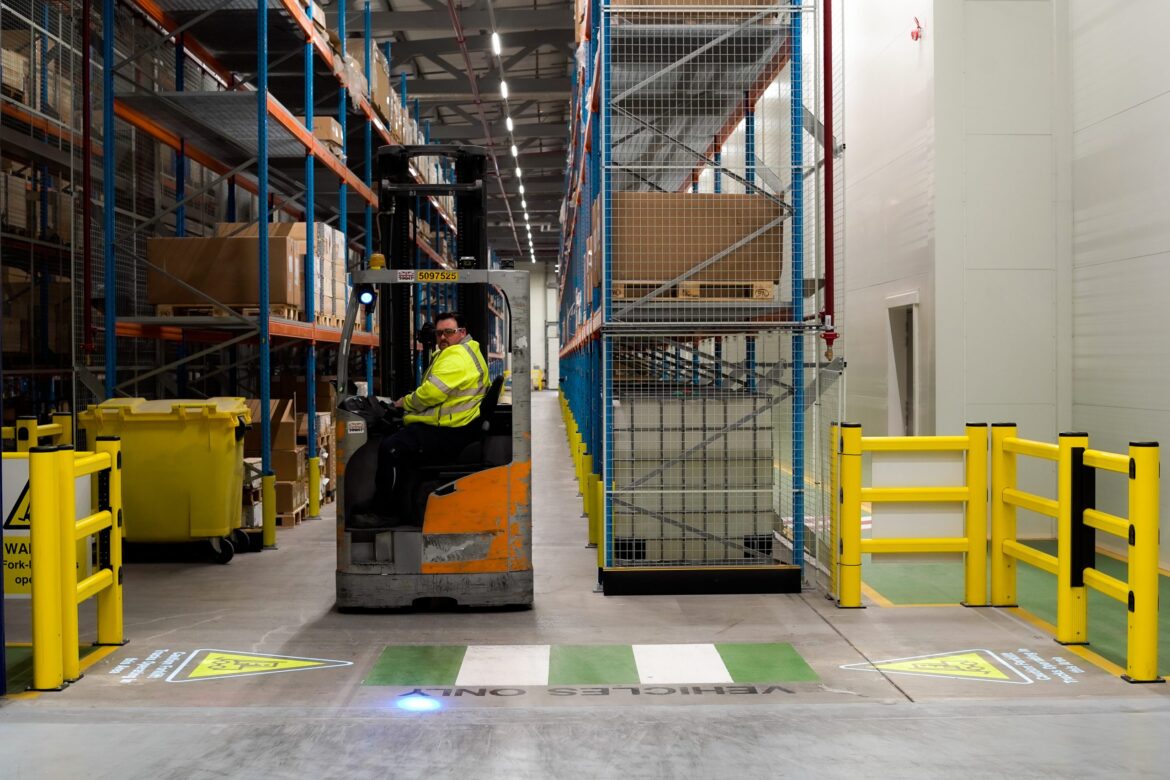
At the heart of the operation is a fleet of Locus Origin robots, a nimble autonomous mobile robot designed for collaborative picking. Associates remain in their aisles while robots travel between locations, presenting the next task and carrying multiple totes for batch and multi-order picking.

Orders are orchestrated by the LocusONE platform, which integrates with Maersk’s INFOR WMS and
dynamically clusters tasks to optimise pick paths, balance workloads and maintain service level priorities. The system supports multiple workflows, including batch picking, pick-and-pass, and point-to-point transport, enabling Maersk to adapt processes as volumes and profiles change.

Each robot guides the associate through the pick with a clear, multilingual interface (important to have in this region of Europe, close to the Czech/Slovakian borders), product images, tote position indicators and
built-in scanning. Locus’s patented autoidentification technology recognises the worker based on proximity, automatically switching the screen language to the associate’s preferred setting, a major benefit in such a multicultural workforce.

Navigation and fleet management are handled by proprietary AI, which continuously optimises routes,
avoids obstacles and balances robot traffic across the floor. The result is a system that can be deployed in
brownfield environments with minimal infrastructure changes and no fixed conveyors.

Transformational Results

The impact at Wrocław has been dramatic. Pick productivity has increased from 40 to 140 order lines per hour – a 250% improvement, if my maths is right. Onboarding time for new staff has been reduced from
three days to just 20 minutes. Average walking distance has dropped from 20,000 steps to around 8,000 per day, significantly reducing fatigue.

The number of active packing stations has been increased from 16 to 40, and despite a reduction in available aisles for picking, overall throughput has increased substantially. Service performance has improved too, with 60–100% of parcels now shipped within 24 hours, and the Christmas cut-off date
brought forward by six days compared to 2023. As I stood there watching order pass by in front of me, Flying Tiger seemed to be doing a – pardon the pun – ‘roaring’ trade in seasonal wrapping paper.

From a financial perspective, the results are equally compelling. Maersk has said that the introduction of Locus has significantly reduced pick process costs, equating to a 33% saving even after including the
robot service fees. Forecasts for full-year 2025 point to a further 24% cost reduction.

There have also been significant soft benefits. For example, the site has recorded zero push-and-pull
injuries, sick leave has fallen by 15%, and employee retention has improved by 8%, reflecting a more attractive, less physically demanding type of work. I love to hear about those sorts of benefits.

Flexibility and Scale

For Locus, the Wrocław project is a textbook example of its core value proposition, namely unmatched
flexibility and unlimited throughput. Unlike fixed automation, the Locus approach allows Maersk to add or
remove robots in minutes, introduce new workflows without disruption, scale from dozens to hundreds of
robots as volumes grow, and operate across multiple shifts or 24/7 without physical reconfiguration.

The platform has already proven capable of supporting 25,000+ units per hour on a single site and handling 150,000 lines in a single day in other deployments. While the Wrocław operation does not yet operate at those extremes, the architecture ensures that throughput can grow well beyond current requirements.

Crucially for Maersk, this flexibility aligns perfectly with Flying Tiger’s volatile demand profile. Whether
reacting to a viral social media trend or preparing for a Q4 surge, capacity can be adjusted simply by deploying more robots.

European Blueprint

The Wrocław project was Locus’s first major automation deployment in Europe with Maersk and is already being viewed as a blueprint for other sites. The modular nature of the installation makes it easy to
replicate in additional warehouses. From Maersk’s perspective, the collaboration has demonstrated that high levels of automation do not require long lead times, heavy CapEx or purpose-built facilities. Instead, robotics can be layered onto existing operations to deliver rapid, measurable improvements.

For Flying Tiger, it means faster order fulfilment, better service levels for customers across Europe, and the
confidence that its logistics partner can keep pace with growth.

A Modern Model

As European ecommerce continues to grow, and as labour markets remain tight, the Maersk–Locus–Flying Tiger partnership offers a compelling model for other retailers and 3PLs. By choosing a flexible, rapidly deployable robotic solution, Maersk has transformed a struggling manual process into a highperformance
fulfilment engine capable of absorbing growth, coping with volatility, and delivering measurable
financial returns.

For Locus Robotics, Wrocław stands as a high-profile demonstration of how its technology can support complex, high-growth operations in real-world conditions. And for Flying Tiger’s customers across Europe, it simply means their colourful household items, party accessories and impulse buys will arrive faster and more reliably than ever.


Source link

0 comments
0 FacebookTwitterPinterestEmail
Services

Can Warehouse Standardisation Truly be Achieved?

by
written by


Warehouse standardisation promises efficiency, scalability and consistency – but how realistic is it in today’s complex logistics environments?

Join senior specialists from Blue Yonder, UKWA and DHL Supply Chain for an expert-led webinar that moves beyond theory and into practical application. Together, the panel will explore whether true warehouse standardisation is achievable across diverse operations, facilities and markets, and what it really takes to deliver consistency without sacrificing operational flexibility.

Through real-world examples and open discussion, the session will examine the structural, technological and human challenges that often stand in the way – from infrastructure and material flows to systems integration, tracking, traceability and labour management. Particular focus will be placed on the role of technology, including Warehouse Management Systems (WMS), and how templated approaches can be balanced with necessary customisation to meet specific business needs.

Attendees will gain valuable insight into industry best practices and proven strategies that leading organisations are using to enhance process consistency, improve customer service and increase operational agility across multi-site networks.

If you are reviewing your warehouse strategy, investing in new systems, or looking to scale efficiently across regions, this session will provide practical, actionable guidance you can apply immediately.


Source link

0 comments
0 FacebookTwitterPinterestEmail
Services

Innovative Tech from End-of-Life Pallets

by
written by


Plastic pallet supplier goplasticpallets has teamed up with Brighton-based product design studio gomi to transform end-of-life plastic pallets into a limited collection of handcrafted speakers and wireless chargers, demonstrating a fresh approach to circular innovation in logistics and consumer technology.

As an independent company committed to creating easy-to-repair products from recycled materials, gomi has produced more than 10,000 items to date, including speakers, power banks, phone cases, location tracker tags, and cables. Each piece is handmade in Brighton and features gomi’s signature marbled finish, created by blending recycled plastics into unique colourways.

At the end of last year, goplasticpallets sent gomi a shipment of its end-of-life plastic pallets in the company’s orange, blue and white colours. The materials were melted down and repurposed into a collection of premium speakers and wireless chargers.

The values of the two companies are closely intertwined. goplasticpallets is on a mission to create greener supply chains, demonstrated by the launch of its industry-first plastic recycling scheme in 2019. Since then, the company has recycled more than 2,500 tonnes of plastic, at the same time taking responsibility for recycling every pallet and pallet box it supplies once they reach the end of their long working lives.

Tom Meades, Co-Founder at gomi, said: “Our design philosophy is that tech shouldn’t become obsolete. Instead, we design for circular lifespans. Waste plastics and second-life batteries form the building blocks. Modular design allows us to fix what might otherwise have been thrown away. goplasticpallets is a champion of the circular economy in logistics, and their commitment to recycling and reuse aligns strongly with our own values. We were delighted to team up with them on this exciting collaboration.”

Dan Starnes, Sales Director at goplasticpallets, said: “The products we supply, how they perform over many years, and the way they are responsibly recycled at the end of their lifespan all play a part in driving the shift towards cleaner, more efficient supply chains. When we learned about gomi’s mission, and we saw the quality of the products they were manufacturing, we had to have some made for ourselves. They are creative, practical and show what can happen when you look at recycling a bit differently.”


Source link

0 comments
0 FacebookTwitterPinterestEmail
Services

Broken Supply Chain – Logistics News

by
written by


Here’s how a decision-centric model can fix a broken supply chain, according to Allan Dow, EVP/General Manager of Aptean Supply Chain.

When Steve Jobs stepped onto the stage at the Macworld Expo in August 1997, he wasn’t introducing a groundbreaking new product (he would announce the iPhone at the same event a decade later).

At the time, software was rigid. Systems were siloed. Data arrived late. People worked within the confines of the technology, content to be limited by its many shortcomings. Jobs was casting a vision for his company and the customers who would refuse to settle for the status quo.

It was a rejection of the way people were being forced to work with technology, and a promise and an invitation to think different and change the world. The modern supply chain took shape at the same time, and its software solutions were built around batch planning, static forecasts, and point-in-time data.

These weren’t the ideal solutions. It was simply what the technology could support. For a long time, it worked. Disruptions existed, but they were exceptions, not norms.

Today, global supply chains are more expansive than ever before, operating with more velocity and precision but vulnerable to disruption. As one survey of 1,000 senior supply chain leaders concludes, ‘Supply chain disruptions are no longer rare — they’re the new normal.’

Why Two Decades of Technology Spending Left Supply Chains Brittle

Two decades and $200 billion in supply chain management technologies have left many supply chains reactive and convoluted. This staggering investment has not delivered the expected resilience; global disruptions now cost the average company 8% of its annual revenue. McKinsey & Company estimates that extended supply chain disruptions lasting more than a month now occur every 3.7 years and can cost a business up to 45% of a year’s profit over a decade.

Despite this significant spending, most organizations are still operating on their heels, trapped in a cycle of:

● Making decisions based on fixed time horizons that ignore the fluidity of global trade
● Relying on data that is outdated by the time it reaches the dashboard
● Operating in silos, where teams are neither connected nor informed
● Reacting to crises rather than adapting to trends.

First-wave supply chain management solutions were designed to record and report, not to decide. They rely on fixed time horizons and historical data to inform the future. When disruption, uncertainty, and change are the norm, it’s clear that we need to think differently about our supply chain software.

Transitioning from Reactive Networks to Adaptive Decision Engines

Decision-making itself has become a first-class enterprise capability. It’s why a decision-centric approach is the defining framework of successful, agile enterprises.

Yes, it involves a new technology schema. Yes, it puts data at the centre of everything. It’s also more than that. It’s a new operating model where decisions are explicit, intelligence is continuous and adaptive, execution is connected, and humans and technology collaborate at scale.

Decision-centric organizations are not just focused on data collection, but also on applying this information to drive specific business outcomes. For supply chain entities, this means using available intelligence and analytical tools to become more forward-looking and responsive to market shifts before they become crises. These initiatives are undoubtedly powered by artificial intelligence (AI).

Making Intelligence Operational

AI is ubiquitous in the supply chain sector. A quick Google search reveals countless think pieces on the subject, and executives are eager to talk about how they are deploying the latest to achieve the elusive promise of total visibility.

What it actually does for them is a different story. AI-powered, decision-centric supply chains are defined by three pillars that produce real results.

1: Centralizing Data
Best-in-class supply chain entities are centralizing their data into a single, unified platform. AI-powered supply chain optimization doesn’t work if data silos and disparate teams are running the show. Integrate and unify data so AI models can train on a complete, vertical, end-to-end picture of the operation, rather than on conflicting or incomplete datasets.

2: Intelligent Responses
Decision-centric companies turn insights into action. They rely on clean, centralized information to identify problem root causes and respond in real time. Even better, generative AI solutions make information searchable, allowing decision-makers to query data to derive actionable insights, and machine learning helps teams arrive at complex, data-driven decisions.

3: Predictive Sales and Operations Planning
AI-driven demand sensing turns real-time data from the external world into insights that anticipate and understand subtle shifts in customer behaviour, market trends, and potential disruptions before they impact the bottom line.

Rather than relying on last year’s information, supply chain entities can use this technology to adapt to real-time, even unprecedented, circumstances, responding with robust solutions that clarify uncertainty and create opportunities from disruption.

For instance, 76% of fashion executives believe tariffs and trade volatility will be the defining issues of 2026, requiring this heightened level of agility. Generative AI-powered digital twins can help retailers understand the financial or operational implications of any given decision or scenario.

This AI-first approach connects planning, execution, and analytics in real time to deliver speed, resilience, and measurable business impact. When implemented effectively, it changes how supply chains work, converting reactive networks into adaptive decision engines.

A New Era of Strategic Advantage

When Steve Jobs challenged Apple and its audience to ‘think different’ he was redefining the relationship between creators and their tools, businesses and their processes and potential. It was a response to a status quo that desperately needed updating.

The logistics and supply chain sector is ready for a similar revolution. Specifically, the modern supply chain must be built to be actively anti-fragile. The transition to a decision-centric enterprise marks the end of an era defined by reactive management.

For decades, we required supply chain professionals to serve the limitations of their software. We’ve left expert planners firefighting exceptions in spreadsheets, while reaching the company’s strategic goals have remained elusive.

Adopting a decision-centric model changes this dynamic. It empowers people and their teams to think differently. They can be different, operating with a level of specificity and agility that meets this disruptive moment.


Source link

0 comments
0 FacebookTwitterPinterestEmail
Services

cargo.one Acquires Ocean Platform Cargofive

by
written by


cargo.one has announced the acquisition of ocean rate platform Cargofive and the launch of what it clains is the industry’s first AI-native operating system for multimodal freight. The platform unifies air and ocean freight data into a single robust foundation, powering accurate agentic workflows to operate natively alongside teams. The strategic move was complemented by around $20M investment from investors including Bessemer Venture Partners.

Freight forwarders and carriers alike are investing heavily in AI programs, but most solutions remain bolt-on tools that sit disconnected from the most relevant knowledge source: structured data. The result is a fragmented technology landscape where AI promises efficiency but delivers complexity and does not progress beyond the pilot phase. cargo.one’s multimodal AI-native operating system addresses these challenges with a unified approach where agentic workflows and operational data exist natively in a single system.

The acquisition of Cargofive, which closed on February 25th, fundamentally expands cargo.one‘s rate data foundation by adding connections to the top 10 ocean carriers and scalable ocean rate data ingestion and management capabilities. Cargofive offers a full spectrum of ocean rates spanning four million trade lanes and is trusted by hundreds of forwarders globally. cargo.one can now enable freight forwarders to automate air and ocean workflows from a single platform, rather than managing fragmented tools.

As an AI partner, cargo.one combines technology quality, fully integrated rate data, and in-house logistics expertise. cargo.one’s AI-native operating system equips logistics companies to deploy ready-made AI agents or build custom ones using open protocols like MCP servers. Built on comprehensive multimodal rate data, the infrastructure includes RAG-based knowledge retrieval and supervision layers that monitor AI outputs to ensure accuracy and reliability.

Unlike bolt-on AI tools that require integration with separate systems and third-party data, cargo.one’s workflows operate natively within the same platform. Humans and AI work side by side using the same data, ensuring teams maintain full control while automation handles repetitive tasks.

“Most AI projects in logistics fail to deliver ROI because they lack access to robust, structured data,” says Moritz Claussen, Founder and Co-CEO of cargo.one. “Real returns come from unified data infrastructure operating at enterprise scale. With Cargofive, we’re expanding the foundation already embedded inside many of the world’s top forwarders’ operations to encompass ocean needs, and we are delivering what makes AI actually work in production.”

Sebastian Cazajus, Founder & CEO of Cargofive, added, “Across the industry, forwarders are asking for integrated air and ocean solutions that eliminate data silos. cargo.one has already set the standard in air. Together, we are bringing that same quality and scale to ocean freight, creating a truly multimodal operating foundation to enable agentic workflows.”

“Data and AI are inseparable – quality data is the foundation for quality AI,” says Stefan Borggreve, Member of the Management Board at Hellmann Worldwide Logistics. “cargo.one has built a comprehensive operating system that our teams trust. When AI workflows operate using the same reliable data our people use daily, we can confidently deploy automation and focus on delivering the best customer experiences.”

“When evaluating AI partners, logistics leaders should look beyond individual features to the underlying foundation,” says Bob Goodman, Partner at Bessemer Venture Partners. “Features become commoditized quickly; what matters is having a partner with comprehensive data infrastructure and industry-specific expertise that can evolve with your needs.”

cargo.one’s AI-native operating system is available now, enabling freight forwarders and carriers to run agentic workflows, including those for rate management, quoting, booking, and customer support, using consistent data and under their teams’ full control. The first customers have already been onboarded to its ocean rate management and quoting solution, with cargo.one’s wider customer base to benefit in the coming weeks.


Source link

0 comments
0 FacebookTwitterPinterestEmail
Services

Strategic Rail Freight Interchange Opens

by
written by


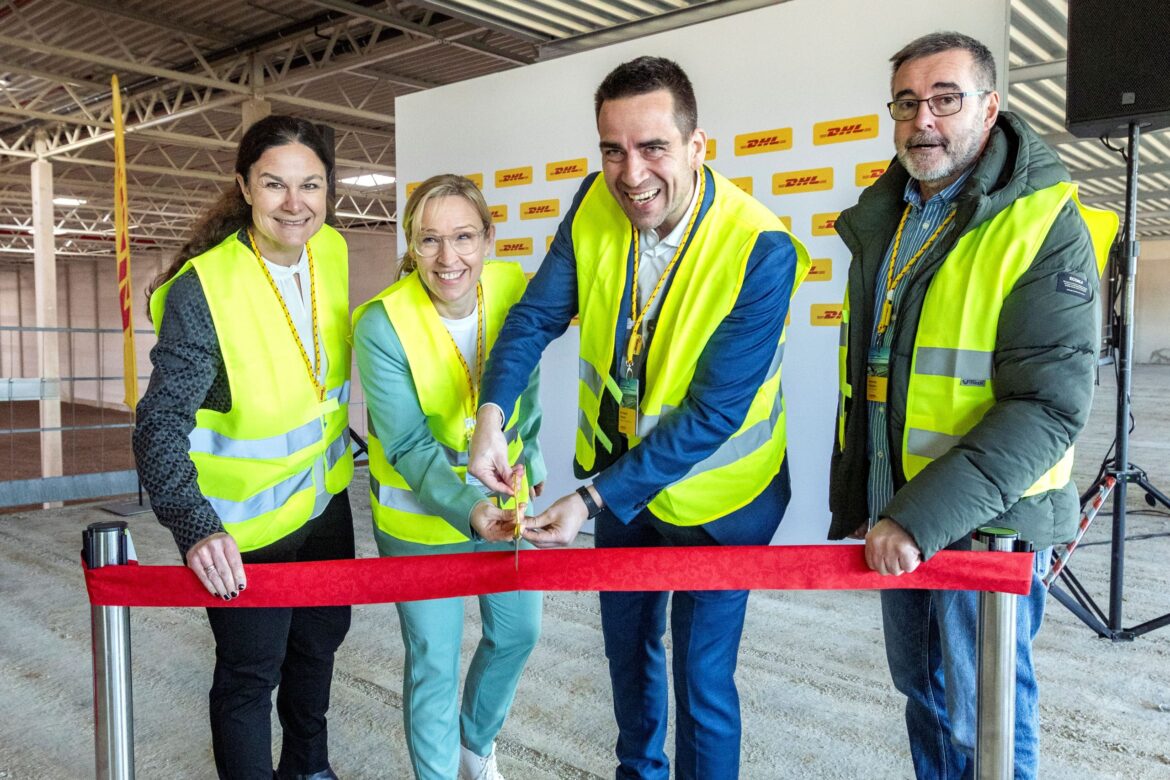
“The cleanest, most sustainable freight operation,” is the stated goal of Maritime Transport, according to Executive Chairman John Williams, as his company officially opened its ‘Strategic Rail Freight Interchange’ (SRFI) Northampton gateway at Segro’s logistics park near Northampton, UK East Midlands, last Friday. His company aim to move a quarter of its multimodal cargo by rail, “in supply chains that can’t fail.”

Maritime’s ninth rail freight terminal provides direct northbound and southbound connections to the UK’s West Coast Main Line railway via the Northampton loop. Delivered through an £80m investment into rail by Segro and designed as a modern, open-access facility, the 17-acre SRFI can accommodate the UK’s longest and heaviest freight trains and up to 16 services per day, with container storage capacity exceeding 2,500 TEU.

The SRFI was integrated into the national rail network in 2025, followed by the launch of a five-day-a-week intermodal service connecting Northampton with DP World’s Southampton Port. The service was the first to operate over the full length of the reinstated Oxford–Bletchley section of East West Rail, establishing a new east–west corridor across central England. Additional rail services are planned as part of a phased expansion programme at Northampton, providing further inland connections to the UK’s major deep-sea ports and other UK freight interchanges.

Located at the heart of the UK’s logistics ‘golden triangle’, SLPN sits adjacent to Junction 15 of the M1, offering direct access to the national motorway network and ability to reach 90% of the UK population within approximately 4 hours’ drive time. The development spans over 600 acres and will ultimately deliver around five million sq ft of logistics accommodation, with rail connectivity embedded as a central element of the site’s design.

Access to Rail Freight

The opening event brought together senior figures from across the logistics community, including ports, shipping lines, freight forwarders, retailers and supply chain partners, as well as representatives from local authorities and central government. Speakers included Minister of State for Rail Lord Hendy, Huw Merriman of the Rail Freight Group (and former Transport Minister), and Paul Dunne, Managing Director, Operations, Digital and Customer at Segro plc.

left to right: John Williams, Lord Hendy, Paul Dunne, Huw Merriman

Williams called for fair competition between road and rail freight in he UK, particularly in regards to port admission costs. “We are committed to creating the cleanest, most sustainable full-load supply chain in the country, utilising rail for long-distance journeys and eHGVs for first and final miles, and Northampton Gateway Rail Freight Terminal is an important step in delivering that ambition.” The ultimate goad is a network of rail freight terminals along the spine of the UK for intermodal operations.

Alongside rail investment, the event also highlighted Maritime’s growing zero-emission road capability. Four eHGVs were on display, delivered through Maritime ZERO, the company’s zero-emission road transport division.

A lead partner in the government-backed Zero Emission HGV and Infrastructure Demonstrator (ZEHID) programme, Maritime is deploying more than 50 eHGVs nationwide while developing one of the UK’s largest privately operated charging networks for heavy goods vehicles. As part of this programme, Northampton will host high-powered charging infrastructure and eHGV operations under the eFREIGHT 2030 project, enabling zero-emission road movements to be integrated directly with rail services, positioning the site as a flagship rail-served hub for low-carbon logistics and demonstrating how rail and road decarbonisation can be delivered across commercial freight operations.

John Williams added:

This year, as Maritime marks 25 years in business, the official opening of our Strategic Rail Freight Interchange represents another significant milestone in our journey from a small container haulier to a fully integrated road and rail freight logistics partner. Moving freight from road to rail remains one of the most effective ways to reduce carbon emissions across the supply chain. Since 2019, we have invested more than £100 million in developing our rail terminal network, with further investment planned to increase national capacity, strengthen connectivity between the UK’s major ports and inland markets, and expand the rail capability available to our customers.

Lord Peter Hendy, Rail Minister, said:

Our rail freight industry is hugely important to keeping goods moving across the country. We’re committed to growing it because of its benefits for both the economy and environment, and our Railways Bill includes both a growth target and a duty on Great British Railways to promote rail freight. It was brilliant to be at the opening of the new Strategic Rail Freight Interchange at Northampton, which is a big vote of confidence in the rail freight industry.

Huw Merriman of the Rail Freight Group commented:

Congratulations to the teams at Maritime Transport and Segro for investing in, and delivering, this phenomenal new rail-connected logistics hub. The jobs, trade and growth which they have delivered for UK Plc is in the finest traditions of the private sector and what it can do for our economy if encouraged and given the foundations to thrive. This new rail hub is a boost for all who strive to grow rail freight and is a testament to a commitment to move more freight on the UK’s railway and decarbonise the logistics sector. It was a pleasure to watch the project develop during my time in Government.


Source link

0 comments
0 FacebookTwitterPinterestEmail
Services

Private flight from Paris to Athens and islands of Greece with Cessna Citation X

by
written by


Arrange a private flight from Paris to Athens means connecting two strategic European capitals with efficiency, discretion and maximum comfort. Among the most balanced solutions for this route is the Cessna Citation X, a high-performance business jet perfectly sized for the distance between France and Greece. The route covers about 2,100 km and is ideal for both business travel and leisure transfers to the Greek islands.

Take off from Paris Airport – Le Bourget

Le Bourget is the main airport in Paris dedicated exclusively to private aviation. Located just a few kilometers from the center, it is an excellent choice for those taking off by private jet from the French capital:

  • Dedicated aviation business terminals
  • High-level FBO
  • Rapid boarding procedures
  • Maximum discretion

The time at the airport before takeoff is generally 15-20 minutes.

Landing in Athens Eleftherios Venizelos

private jet paris athens

The international airport of Athens (Eleftherios Venizelos) has dedicated infrastructure for private jets, with:

  • Quick checks before takeoff
  • VIP services dedicated to passengers on private flights
  • Immediate transfers to downtown, marina or other destinations

In about 25-30 minutes it is possible to reach the center of Athens or continue to major Aegean Sea destinations such as Mykonos, Santorini, Paros or Crete.

Cessna Citation X: performance and comfort

Jets Cessna Citation are among the most popular aircraft among discerning mid-range travelers, with the Citation X in particular being one of the fastest business jets in its class and is especially popular for:

  1. Capacity for up to 8 passengers
  2. Cabin executive configuration
  3. Reclining armchairs and work tables
  4. Super quiet cabin and optimal pressurization
  5. Good luggage capacity for medium to long trips

For a European route such as Paris-Athens, the Cessna Citation X is an ideal solution: not oversized, but with high performance and premium comfort.

private jet paris athens

On-board customizations

Each private jet can be configured according to the client’s needs. Among the most popular options:

  • Customized catering
  • Wi-Fi on board
  • Hotel and yacht charter concierge services
  • Coordination with ground transfers or helicopters

Operational flexibility is one of the main advantages of private chartering.

Flight times and operational characteristics of the Cessna Citation X private jet

The average flight time between Paris and Athens with a Cessna Citation X is 3 hours to 3 hours and 15 minutes, depending on operating conditions.

Due to its high cruise speed (up to Mach 0.90), the Cessna Citation X can optimize the schedule and significantly reduce time compared to commercial aviation.

Alternative routes to Greece’s most exclusive islands

private jet paris athens

In addition to Athens, a private flight departing from Paris Le Bourget Airport can go directly to some of the Aegean’s most popular destinations, avoiding a stopover in the Greek capital.

The nearest tourist destinations with an airport include:

  • Mykonos one of the most popular destinations ever during the summer season, ideal for yacht charters and luxury resorts.
  • Santorini – perfect for luxury caldera view stays.
  • Paros – increasingly popular destination for privacy and tranquility.
  • Heraklion– gateway to exclusive resorts and private villas in Crete.

During the high season (June-September), slots on island airports may be limited, so it is advisable to plan your private flight in advance on ferryfinder.com, especially for destinations such as Mykonos and Santorini.


Source link

0 comments
0 FacebookTwitterPinterestEmail
Services

Go Modular in the Supply Chain

by
written by


Will modular supply chains overtake monoliths? And, if so, why? We asked three experts from Infios to explain.

Don Mabry, SVP Global Trade Solutions:

“Supply-chain transparency is rapidly shifting from a competitive advantage to a regulatory expectation. What was once considered best practice is becoming the minimum standard, as regulators extend their focus beyond border clearance to the full lifecycle of goods. Increasingly, compliance is judged not by how quickly shipments move, but by how confidently organisations can explain where products came from, how they were sourced, what they cost, and why those claims can be trusted.

“This shift is exposing a structural weakness across global trade operations. Many trade processes were built to optimise throughput, not withstand audit-grade scrutiny. Paper documentation, email chains, and spreadsheets may still move goods, but they cannot reliably support multi-tier supplier visibility, cost validation, or origin proof at scale. As enforcement intensifies, the inability to produce accurate, timely, and traceable data is no longer an operational inconvenience – it is a compliance risk.

“At the same time, the physical dynamics of trade are changing. In-transit inventory is on track to surpass on-hand stock in value, effectively turning the ocean into the world’s largest warehouse. Longer transit times, buffer-stock strategies, and geopolitical volatility mean more working capital is tied up between origin and destination. Yet visibility often disappears once goods leave the factory or port, leaving organisations exposed during the most financially significant phase of the journey.

“The implication is clear. Future-ready trade operations will be defined by less-touch execution, automation by default, and data that can be verified rather than inferred. Compliance must be designed into trade processes, not reconstructed after the fact. The ability to prove origin, validate costs, model tariff exposure, and demonstrate compliance on demand will matter as much as speed or service levels.
“Ultimately, the organisations that succeed will not be those that move goods the fastest, but those that can explain – clearly and confidently – how their supply chains stand up to scrutiny. In a transparency-first world, velocity without visibility is no longer an advantage. It is a liability.”

Richard Stewart, EVP, Product & Industry Strategy:

“In 2026 and beyond, logistics will move decisively into a new era of precision and autonomy – powered by artificial intelligence. The question will no longer be whether AI has a role to play, but how deeply it can be embedded into everyday operations and decision-making.

“Clearly defined use cases will emerge as intelligent systems anticipate needs, optimize workflows, and manage complexity quietly in the background. Humans will remain in the loop – where their insight or approval truly adds value. This collaborative model between people and technology will make problem-solving faster, more accurate, and less reactive.

“As AI maturity deepens, pre-built solutions will evolve into configurable platforms that allow organizations to shape bespoke, AI-enabled operations tailored to their unique challenges. Each proven use case will spark new ideas and innovations, as customers begin to imagine and create what’s next.

“The most forward-thinking companies won’t just adopt AI – they’ll design it. And as this transformation continues to unfold, logistics will look increasingly intelligent, resilient, and self-optimizing: systems that learn continuously, adapt seamlessly, and empower humans to focus on higher-value, strategic work.”

Omar Akilah, SVP of Product Strategy:

“In 2026, modular supply chain execution will finally overtake the traditional monolithic platform. The era of 18–36-month implementations is ending, replaced by composable, fast-to-value architectures that let companies plug in capabilities exactly where they’re needed. Instead of ripping out entire stacks, organizations will fix specific pain points with targeted modules that deliver immediate ROI, eliminate shelfware and dramatically reduce transformation risk. Digital transformation will shift from a one-off overhaul to an ongoing operating rhythm – enabling supply chains to adapt faster, innovate with confidence and evolve continuously in real time.”


Source link

0 comments
0 FacebookTwitterPinterestEmail
Services

The Digital Twin: Beyond Simulation

by
written by


Peter MacLeod spoke to Ocado’s Andy Ingram-Tedd to hear how cutting-edge live digital twins remove the guesswork from warehouse operations.

Ocado Intelligent Automation (OIA) has never been shy about scale. But in my conversation with Andy Ingram-Tedd, VP of Advanced Technology, he makes the point that scale is not the story. The story is what you do with it. After nearly 25 years at Ocado, he has watched the company grow from a tight early team to a global organisation with thousands of people, and he is still struck by the same internal energy that drove the first deliveries.

“It just never slows down,” he says. “There’s always something happening, there’s always some new adventure, there’s always some new mission.”

That tempo matters because it shapes how OIA, the Ocado Group division that takes its technology to customers worldwide, thinks about automation deployment. Ingram-Tedd is candid about a familiar misconception: that robotics is simply the substitution of people with machines. His view is that a more accurate way to see it is as systems design, and the interplay between humans, software and hardware.
“A lot of people always ask me, you’re developing robots, you’re putting people out of business,” he says. “But we’ve got more people that we employ today than we ever had. We are doing more, and we’re becoming more efficient.”

Simulation, he adds, is the discipline that forces you to treat that interaction seriously.

Simulation vs. Digital Twins

If there is one thread Ingram-Tedd wants readers to take away, it is the distinction between simulation and digital twins, and why the two are often muddled. Simulation, in his definition, is a predictive model used before something exists in the physical world. A digital twin only becomes a digital twin once the warehouse is built and operating, because it is continuously aligned to reality using actual operational data.

Simulation is what you reach for when spreadsheets fail. Basic processes can be approximated with time and motion assumptions. But once you seek high throughput and high utilisation across many moving parts, you need discrete event simulation, modelling countless activities with start points, end points, process times and rules.

“We really do mean a discrete event simulation,” he says. “There are lots of things happening. They have a start point, they have an end point. You can’t just calculate that on a spreadsheet.”

Ocado’s own definitions are straightforward. Simulation is used before a system is built. You load assumptions, including orders, stock, layout, speeds and rules, then you run what-if scenarios to see outcomes and risks. The questions are practical: will this design work, what size should it be, where are the weak points. A digital twin, by contrast, is a digital representation of a real physical system that stays aligned to the live operation using operational data. Its value is decision support during operation, including testing changes safely and understanding what happens if you change something today or tomorrow.

Removing Guess-Work

Ingram-Tedd emphasises that simulation should not be about your best day. It should be about your worst day. That might mean modelling downtime, late inbound vehicles, or labour gaps, either individually or in combination. “We are operators of our own equipment,” he tells me. “We are not guessing. We know what the bad things can happen. They’ve happened to us in the last 25 years!”
Once a site is live, the inputs are no longer assumptions. They are measurements. You can take data from the real warehouse, feed it into the model, and test configuration changes, from item placement strategies to outload timing, pick speeds and resource utilisation. The goal is continuous improvement, driven by evidence rather than instinct.

I ask why does OIA build its own simulation tools. Ingram-Tedd argues that third-party packages are useful, but insufficient for modelling the complexity of Ocado’s grid-based system, where software determines where and when to store, retrieve and sequence stock, while bots navigate above dense storage. “We don’t use a third party and there’s a really important reason for that,” he says. “There isn’t an off-the-shelf simulation package that can do that.”

Ocado has developed its own simulation capability in-house since 2008. A key point, in his telling, is that the software powering simulation is identical to the software that powers the production site. That tighter link between model and reality, he says, supports better design decisions and more confidence before capital is committed.

Just as importantly, simulation is end to end. It does not stop at bot movement. It extends to conveyors, pallets, vehicles, people and robotic pick, because optimisation only makes sense at the level of the whole ecosystem.

“True optimisation only happens when you put all the subsystems and you model them all together,” he says. “Integration brings complexity, and simulation helps you understand the knock-on effect of every design choice.”

Infrastructural Optimisation

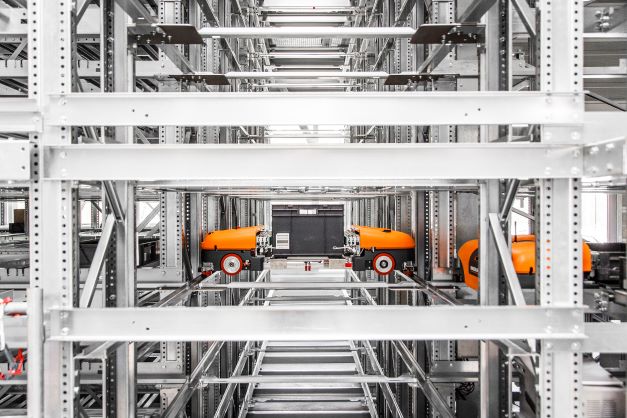
The practical value is that simulation turns design questions into testable scenarios. One slide example is the relationship between bot numbers and achievable throughput. Run a range of cases in parallel and you can plot where diminishing returns begin, identifying a sweet spot beyond which additional investment yields little benefit.

That same approach applies to pick stations. OIA’s stations are modular, and simulation can explore how layout changes affect both throughput and the way an operator performs. The aim is to avoid paying for human time while allowing the station to underfeed the operator with work.

In one demonstration clip discussed in the interview, Ingram-Tedd references a picking performance figure that he knows will sound implausible to many readers: 1,072 units per hour on a station. He is quick to caveat that it is not a sustained operating promise. Building a system around peak human performance risks waste if people cannot maintain it, and drives unnecessary investment in upstream resources. A more sensible operating target might be 600 to 700 units per hour, he suggests, still well beyond common industry expectations.

What often breaks automation is not the average case, but the exception: odd products, awkward presentations, or rare failure modes that still occur frequently at high volume. In robotics and automation engineering these are known as corner cases, unusual or extreme situations outside normal operating conditions that must still be handled safely and reliably. “You can’t have robots like this in a live site unless they can do corner cases,” believes Ingram-Tedd.

Future Looks Bright

Beyond grocery, OIA is applying its platform to other verticals. Ingram-Tedd highlights a major project with McKesson in Canada – not yet live at the time of the interview, but not far off – which he describes as a large system in Montreal designed to raise productivity while improving traceability, accountability and security. He argues that pharma distribution shares many traits with grocery, but with stricter compliance requirements, particularly around batch and lot traceability. He hints at significant productivity gains, while noting there are customer-specific adaptations that remain confidential.

He also brought to my attention that mutual exclusivity has ended in the majority of markets where Ocado operates its grocery technology with partners, opening the door for Ocado to bring its evolved product back to some of the world’s most developed e-commerce markets after a period of exclusivity agreements.

Towards the end of the interview, Ingram-Tedd briefly referenced a new picking technology planned for introduction in 2026, which he characterises as a significant step-change. Logistics Business was given an early look at the concept, but details remain under wraps ahead of public launch at MODEX in the Spring. We hope to return to this in a future edition, once OIA is ready to speak about it in full.

For now, his message is consistent. Whether the question is how many bots to deploy, how to design a pick station, or how to integrate the next wave of automation, the differentiator is not a single robot. It is the capability to model complex systems accurately, learn from real operations, and keep improving.


Source link

0 comments
0 FacebookTwitterPinterestEmail
Newer Posts
Older Posts

Recent Posts

  • Logistics Business Conversations – Designing Delivery Networks
  • Battle to Control Packaging Costs
  • Flabelus Chooses UK Fulfilment Operations Hub
  • Cybersecurity in Logistics isn’t just IT Responsibility
  • Hydrogen Fuel Cell Powered Warehouse Trucks

Recent Comments

No comments to show.

Social Connect

Whatsapp

Recent Posts

  • Logistics Business Conversations – Designing Delivery Networks

  • Battle to Control Packaging Costs

  • Flabelus Chooses UK Fulfilment Operations Hub

  • Cybersecurity in Logistics isn’t just IT Responsibility

  • Hydrogen Fuel Cell Powered Warehouse Trucks

Newsletter

Categories

  • Services (1,103)
  • Uncategorized (41)

@2024 - All Right Reserved. Designed and Developed by Sierraline Cargo services

Manage Consent
To provide the best experiences, we use technologies like cookies to store and/or access device information. Consenting to these technologies will allow us to process data such as browsing behavior or unique IDs on this site. Not consenting or withdrawing consent, may adversely affect certain features and functions.
Functional Always active
The technical storage or access is strictly necessary for the legitimate purpose of enabling the use of a specific service explicitly requested by the subscriber or user, or for the sole purpose of carrying out the transmission of a communication over an electronic communications network.
Preferences
The technical storage or access is necessary for the legitimate purpose of storing preferences that are not requested by the subscriber or user.
Statistics
The technical storage or access that is used exclusively for statistical purposes. The technical storage or access that is used exclusively for anonymous statistical purposes. Without a subpoena, voluntary compliance on the part of your Internet Service Provider, or additional records from a third party, information stored or retrieved for this purpose alone cannot usually be used to identify you.
Marketing
The technical storage or access is required to create user profiles to send advertising, or to track the user on a website or across several websites for similar marketing purposes.
  • Manage options
  • Manage services
  • Manage {vendor_count} vendors
  • Read more about these purposes
View preferences
  • {title}
  • {title}
  • {title}
Sierraline Cargo Services
  • HOME
  • Services
    • Trade With Us
  • About Us
  • Contact Us
  • private jet
    • BOOK YOUR JOURNEY
  • Track Packages
  • Insurance
  • safekeeping

WhatsApp us