Sierraline Cargo Services
  • HOME
  • Services
    • Trade With Us
  • About Us
  • Contact Us
  • private jet
    • BOOK YOUR JOURNEY
  • Track Packages
  • Insurance
  • safekeeping
Services

Jungheinrich Accelerates Electric Future – Logistics News

by
written by


Peter MacLeod attended Jungheinrich’s launch event in Hamburg last week to witness not just five new electric forklift truck developments, but to hear of a clear articulation in the company’s long-term portfolio strategy, which spans from simpler entry-level products to high-voltage heavy-duty alternatives in areas traditionally dominated by ICE trucks.

At one end sits the newly introduced purple-coloured ‘AntOn by Jungheinrich’ brand, designed to address a segment Jungheinrich had not previously targeted with its traditional yellow trucks.
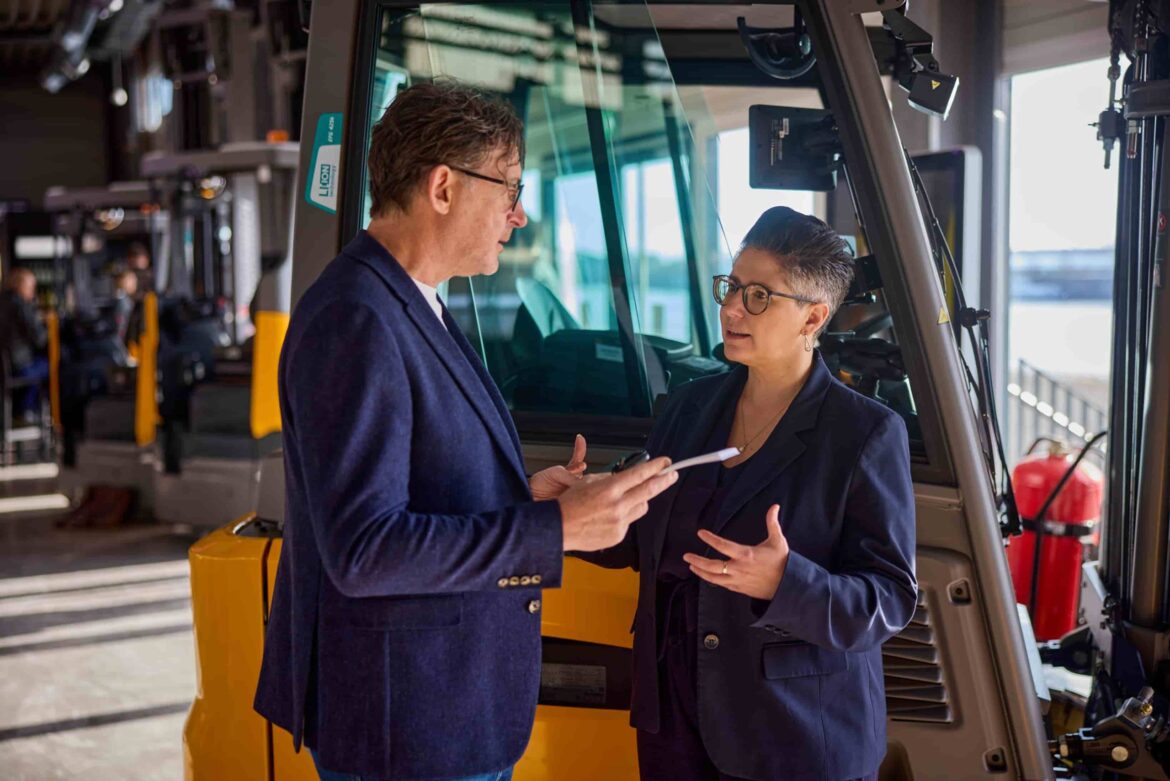
“Typically, these are small to mid-sized customers,” explained Nadine Despineux (pictured with Peter, above), Member of the Board of Management at Jungheinrich, speaking exclusively to Logistics Business at the event. “They buy two, three, four, five units. They don’t have 24/7 high-performance applications. It’s important for them to have a truck available when they need it, but they don’t use it all the time.”

AntOn’s trucks are manufactured in China by electric specialists EP Equipment. Unlike Jungheinrich’s highly configurable core range, AntOn trucks are standardised and built to stock, making them well suited to distribution partners and e-commerce channels. “When you need consultancy and tailored configuration, you typically go through direct sales,” Despineux said. “Jungheinrich is predominantly direct. AntOn is predominantly partner and distribution business.”

Quality control, she stressed, remains non-negotiable. An OEM centre in Shanghai oversees supplier management and compliance, while vehicles are tested again in Germany. “Trust is super relevant. Safety is super relevant,” she said. “If customers cannot build on that trust, there is no reason they would ever move from AntOn to a yellow truck.”

That yellow portfolio is now undergoing one of its most comprehensive electric renewals in years. The redesigned 1i pallet and double-deck truck series focuses on compactness, lithium-ion scalability and integrated safety features, with vehicle fronts shortened by up to 152 mm for improved manoeuvrability in tight warehouse environments.

In the 48-volt counterbalance segment up to 2.0 tonnes, the fully redesigned EFG 2/2i and 3/3i models deliver up to 15% improved space efficiency through reduced turning radii and compact design, alongside enhanced ergonomics and AI-supported assistance systems.

For heavier applications, the new EFG 5 series provides up to 15% higher handling performance via a two-motor drive system and SRM+ lift motor, positioning it as a fully electric alternative to diesel trucks in the 4.0–5.0 tonne class.

High-bay productivity is addressed with the ET

V 4i reach truck, offering what Jungheinrich describes as market-leading lifting and lowering speeds and fully integrated lithium-ion technology to minimise downtime in multi-shift operations.

Looking further ahead, the dramatic (and currently unpainted) new FalcOn prototype showcases high-voltage architecture in a 5-tonne counterbalance truck capable of ultra-fast DC charging up to 150kW, underlining Jungheinrich’s ambition to electrify even the most demanding heavy-duty segments. This truck has been introduced to offer the performance of a diesel equivalent, but with a much cleaner environmental profile.

Despineux positioned the combined portfolio as a strategic continuum rather than separate product silos. Customers today, she noted, sit at different stages of operational maturity. “They are on this tipping point: when does it make sense to invest into automation? What is the right solution? They are searching for partners who can help them on that journey.”

That journey increasingly includes rental and refurbishment models designed to enhance flexibility and reduce carbon impact. “Many customers prefer OPEX over CAPEX,” she said. “Optimising a complete fleet is a huge leverage.” Refurbishment and reintroduction into the market “closes the cycle of sustainability”.
From entry-level purple to high-voltage yellow, Jungheinrich’s message is clear: whatever stage customers are at, be it manual, mid-tech or fully automated, the company intends to offer a solution.

“As a company, if you have the opportunity to say yes, there is a solution that is powerful,” Despineux concluded. “Having somebody you can trust is super relevant.”


Source link

0 comments
0 FacebookTwitterPinterestEmail
Services

Structural Differences Shape Logistics Capacity

by
written by


The road transport markets in Europe and the United States have shown clearly divergent developments since 2024. And while both regions experienced similar capacity movements in 2022, they have taken distinctly different courses in recent years. Christian Dolderer, Lead Research Analyst at Transporeon, a Trimble Company, analyses the market and explains the reasons behind these trends looking ahead to 2026.

The capacity index, based on transactional data, reflects overall market sentiment regarding available road freight capacity. Comparing developments across both regions provides deeper insight into the underlying dynamics of supply and demand.

In 2022, both Europe and the US experienced expected capacity constraints, followed by a rebound a few months later. However, the US market experienced this cycle approximately four months earlier than Europe. In 2023, available capacity in both regions reached its highest level in years, after which the markets began to diverge in the first quarter of 2024.

In the US, available capacity remained high through the fourth quarter of 2025, creating a favourable market environment for shippers and brokers. In contrast, capacity in Europe steadily declined, a trend that, after a brief stabilisation in 2025, has continued into 2026.

According to Dolderer, this development can largely be explained by differences in market response on the supply side: “European carriers reacted relatively quickly to declining margins and sharply rising operational costs by reducing their fleets. The increasing number of bankruptcies in the sector accelerated this process. Combined with declining transport demand in 2024 and the first half of 2025, this explains the continued capacity contraction in Europe. As a result, the market climate for shippers and brokers is significantly less favourable than in the US.”

In the US, a recent decline in capacity has also become visible. In addition to increased transport demand, Dolderer points to external factors: “Severe weather conditions have had temporary impacts, but we also see clear signals on the supply side. New heavy truck registrations fell sharply in 2025, making it clear that the decline is continuing. Reduced investment in fleet expansion and modernisation could indicate a structural shift toward consolidation after years of overcapacity.”

Despite the recent decline, trucking capacity in the US remains historically abundant. Dolderer therefore, describes the trend as more of a psychological correction than a fundamental shift: “After years in which demand exceeded supply, markets react strongly to signs of tightness, even when actual capacity remains relatively high.”

Over the coming weeks, Dolderer expects a slight easing of capacity in both regions due to seasonal factors. However, he anticipates different dynamics for 2026: “In the US, capacity is expected to decline further. This development is driven less by demand growth and more by carriers’ reactions and bankruptcies. In Europe on the other hand, I expect that a recovery in transport demand will put further pressure on capacity.”


Source link

0 comments
0 FacebookTwitterPinterestEmail
Services

Agentic AI for Warehouse Processes

by
written by


There is a new term in the AI lexicon. Paul Hamblin asked Manhattan Associates’ Raphaël Hervé to explain Agentic AI and its potential to transform warehouse process execution.

Artificial Intelligence, Machine Learning, Generative AI – the buzz phrases keep coming. “That’s the world of today, concepts are developed so quickly,” smiles Hervé (pictured, below), Senior Director, Technical and Support Services at supply chain technology leaders Manhattan Associates.

The latest term is Agentic AI. Let’s get straight to the point – what is it?

“If we look at AI in its original definition, for several decades it was about the ability to understand complex algorithms,” he begins. “We then developed IT systems able to make predictions on a very high number of data sets and then even improve those data sets, which we can call ‘Machine Learning’. Then two years ago, Chat GPT arrived along with the phrase ‘Generative AI’, which I would describe as the capacity to make sense of content – whether text, music, sounds, or pictures – and also create this type of content. When you can make sense of language you can begin to ‘push’ these systems to execute tasks for you.

“AI Agents take this a stage further. They are geared towards actually achieving a specific goal, rather than simply making a response.”

Autonomous capability

A key breakthrough is autonomy, he says.

“Operationally, AI Agents are empowered to make decisions and act on those decisions. They also have the ability to interface with the user in normal language. Agents take the instructions in natural language and show the decisions made and steps taken in natural language. Remember, it has an ultimate goal and is able to derive the steps it should follow to reach that goal autonomously.”

As a layman, like many others I’m as nervous of AI’s much-feared potential for chaos as I’m dazzled by its transformationally positive capabilities. Does the autonomy of Agentic AI not make it more likely that repetitive mistakes might become wired into the system?

“Good question, but just like every system it needs to be tuned and optimised,” says Raphaël Hervé. “Let me turn it around. When a complex IT system NOT based on generative AI, or not trained to operate autonomously, makes an error, it is actually very hard to understand why. Because you have to debug, analyse, go into source code. With an agent, you just need to tell it, ‘I think that’s wrong. Why did you say that?’ And the agent will say, ‘I did this for this reason’ and it is therefore far easier to derive the source of the anomaly. Agentic AI is a lot more dynamic in terms of fine tuning than was possible in the past. And unlike your dog or your child it will not resist your instructions,” he adds.

The clarity of AI Agents in explaining what steps they take and why they are taking them is reassuring. “They are very efficient in making adjustments, should you need to,” he promises.

There are several logistics contexts in the Manhattan Associates portfolio of solutions.

An examples is Labor Agent, which is not actually a fully 100% autonomous agent that reaches a goal on its own. Think of it more as an assistant to manage your labour efficiency.

“But it can autonomously sift data, analyse, and procure advice on your labour optimisation,” Raphaël explains. “A typical use case might be a warehouse manager asking Labor Agent if that day’s packing deadlines are likely to be met in terms of human resource. If Labor Agent replies that the team is likely to be late because three people are lacking, it can explore the opportunity to take capacity from elsewhere, for instance from Picking. That team might be able to supply up to five people, so Labor Agent might perhaps select the top three resources with highest ratings and performance on packing. It can then message all parties and reassign via text. The agent is working autonomously and speaking to the user in natural, normal language.”

Time-saving benefits

The question all warehouse managers – and finance leaders – will want answered is, how will we see the benefits manifested in day-to-day use?

One precious win is time, invaluable in any warehouse context.

“The example we just gave is perhaps a 30-second conversation via text, which would have been 15-20 minutes in the past. If packing is late because it lacks three people, it is a complex calculation without the assistance of Labor Agent. You’re looking at process, schedules, performance of packers. There can be big variables, which you then need to compare with what you’re expecting to achieve. The agent can do this for you in seconds.”

Manhattan’s transportation portfolio offers AI Agents with similar benefits.

“Our Freight Invoice Agent is capable of picking up any form of document – PDF, email, spreadsheet – used as carrier invoice materials, and will automatically reconcile actuals with the expected cost of that shipment. This is a role traditionally carried out by manual resources, who spend time receiving documents, comparing screens, shipping costs, taxes, driver hours, and it’s a process that can eat up 15 minutes per invoice. We have built an agent that will automatically ingest anything that comes up, recognise the shipment, align it with expectations, and explain any anomalies. What used to take multiple people hours a day is managed in a few moments.”

Manhattan formally released AI Agents in January of this year, and are marketing the technology to all customer segments, large and small. It even includes Agent Foundry, a developer workspace for customers to build their own agents to their own specifics, either from templates or from scratch.

Raphaël Hervé is brimming with confidence about the prospects.

“We believe Agenti AI is very powerful in terms of productivity gains for our customers. It will drastically improve human-machine interactions, and it will make access to data and functions faster and easier. Customers will enjoy acceleration in project implementation, because integration, mapping, and development are all so much faster.”


Source link

0 comments
0 FacebookTwitterPinterestEmail
Services

Edeka Automates with OPM Technology

by
written by


German Food retailer Edeka is launching a project to future-proof and sustainably modernize its logistics processes. At the end of December 2025, it signed a contract for the design and implementation of a new, highly automated central distribution centre in Melsungen, Germany. Starting in mid-2029, the facility will supply more than 500 stores with a dry goods assortment of up to 16,500 items. This makes Hessenring the fifth EDEKA region to rely on WITRON’s industry expertise. In addition, NETTO – a subsidiary – already operates WITRON solutions at several of its sites.

“Until now, the Hessenring region has relied exclusively on manual warehouse and picking processes”, explains Martin Steinmetz, Logistics Director at EDEKA Hessenring. “By leveraging innovative automated logistics technology, we will in future be able to supply our independent retailers more efficiently and cost-effectively – even as the variety of items continues to grow. At the same time, our employees throughout the entire supply chain will benefit from ergonomic and sustainable working processes.”

High-performance module mix

The 35,300 square metre facility, offering a total of 306,000 pallet, tray, and tote storage locations and equipped with 58 highly dynamic stacker cranes, is designed for a daily picking performance of 285,500 cases. Most of these cases are stacked fully automatically, error‑free, and store‑friendly onto pallets and roll containers by 18 COM machines. Small-volume fast- and slow-moving items are picked directly into the shipping tote at 10 workstations using the All-in-One (AIO) system. Bulky items are picked by logistics employees using pick-by-voice, supported by the semi-automated WITRON Car Picking System (CPS). Subsequent consolidation – and thus a high packing density on the load carriers – is achieved through the conveyor-based integration of all logistics areas within the material flow concept.

Half and quarter pallets are placed fully automatically onto pallets and roll containers by the WITRON Display Pallet Picking System (DPP). The dispatch process is optimized by a fully automated shipping buffer.

No more silos, but a true end-to-end approach

An intelligent IT platform ensures the seamless networking of all processes across the internal and external value added chain, providing high process flexibility in real time. The focus is on a holistic, end‑to‑end approach that encompasses all stakeholders within the supply chain – from supplier to end consumer – thereby eliminating isolated silos.

High in-house value-added share

Most of the mechanical, conveyor, racking, and mezzanine components are designed by WITRON and manufactured in-house at the company’s production facilities in Parkstein. The same applies to the IT, control, and AI tools used.

A partnership spanning decades

EDEKA and WITRON share a partnership that has grown over many decades. Automated solutions have already been successfully implemented in Hamm / Oberhausen (Rhine-Ruhr region), Landsberg (southern Bavaria region), Zarrentin / Neumünster (northern region), Berbersdorf / Marktredwitz (northern Bavariy, Saxony, Thuringia region), as well as in the NETTO distribution centres in Erharting and Henstedt.


Source link

0 comments
0 FacebookTwitterPinterestEmail
Services

Platform Play for Transport Digitalisation

by
written by


New Alpega CEO Daniel Cohen has plans that will excite shippers, forwarders and carriers across the transportation space in Europe. He spoke to Paul Hamblin.

It is rare indeed to find a CEO willing to talk to an industry journalist while less than one month into a new and demanding role – that Cohen (pictured, below) was prepared to do so speaks volumes both for his willingness to engage and his confidence in the company’s ethos and people.

First, a recap. Alpega is the transportation software specialist founded in Belgium – and now with offices across Europe and the world – offering digital solutions across the spectrum to carriers, forwarders and shippers. Capabilities include Transport Execution, Transport Planning, Dock Scheduling, Freight Sourcing and a comprehensive Freight Exchange and Payments network. Particularly strong in Iberia, France and Central Europe, brands under the Alpega umbrella include the Teleroute, wtransnet and 123cargo freight exchanges. Over 80,000 carriers are signed to the powerful Alpega platform.

From point to platform

Now, the future, and Daniel Cohen’s mission for the business: he wants to exploit Alpega’s unique capabilities to develop as a unifying platform. He points out that the company has been highly successful in building best-in-class point solutions, but believes the next phase of value creation lies in bringing execution together on a single system.

What does ‘platform’ mean, though? “The freight industry doesn’t have a planning problem or a tendering problem or a liquidity problem – it has an end-to-end execution problem,” he says. “Too many systems optimise individual steps, but nobody owns what actually happens end-to-end. Our ambition is for Alpega to become the system where transport decisions are executed, verified, and trusted, rather than split across disconnected tools.”

A key motivation is ‘network effect’ created when both sides of the market interact at scale. “We already operate at scale on both the shipper and carrier sides,” Cohen explains. “What changes everything is when those two sides stop operating in parallel and start operating together. That interaction – at scale – is where efficiency, liquidity and reliability are created. Very few platforms in Europe are structurally able to do that. Alpega is.”

Of course, there is another word for the magic he describes: data.

“In every industry I’ve worked in, trust at scale is built the same way – through consistent behaviour, measured over time,” he says. “Freight is no different. The difference is that Alpega already sits on execution data across planning, spot, visibility, booking and settlement. That allows us to move trust away from opinion and toward signal, which is where real scale becomes possible.”

Competitive strengths

Of course, there are other very strong platforms out there in the transport space. What does he view as Alpega’s strengths to enable it to both compete with and outshine other platforms?

“Most platforms optimise either shippers or carriers,” he replies. “We optimise the relationship between them. That’s a structurally different position in the market, and it fundamentally changes how value is created.”

He continues: “Think about the strength of Alpega today. We have a substantial, pan-European, solid carrier network, with solid liquidity and very deep domain expertise – every single person I meet in the company has spent their life in the industry and has incredibly deep knowledge.”

What can Alpega do that its rivals envy and admire, I ask?

“For shippers, it’s about predictable access to capacity across Europe, even when markets are volatile,” he explains. “For carriers, it’s about consistent opportunity and better asset utilisation. When both happen on the same platform, friction drops out of the system for everyone involved.

“We’re providing solid value to each of the sides, but where Alpega can really shine is in connecting this bridge between the two sides of the transport coin. The constituent parts are spot-on – they just need to be arranged in the right way and brought to play in a market that is poised to come alive.”

Will there be more unified Alpega branding, perhaps in the form of consolidating the freight exchanges under one name?

“Every decision we take will be guided by the platform strategy,” he says. “Brand follows value. If consolidation improves execution for customers, we’ll do it. If it doesn’t, we won’t.”

As a leader, Daniel Cohen arrives in the transport industry with plaudits. “Energetic, passionate, direct, driven, transparent, inclusive. Tough, but challenging” are all words described to me by members of his team.

He deflects the praise quickly when I report this. “The real advantage we have is the people,” he counters. “This is a deeply experienced industry team with a strong sense of ownership. Strategy matters, platforms matter, but execution always comes down to people. That’s what will make the biggest difference here.”

Exciting times, then, for Alpega and for its customers. “Digitalisation in transport is no longer optional,” he concludes. “What is still optional is fragmentation. The next phase of the market is consolidation around platforms that actually execute. That’s the phase we’re entering now.”


Source link

0 comments
0 FacebookTwitterPinterestEmail
Services

Pharma Airfreight Cold-Chain Network Grows

by
written by


DHL Group has announced major steps to strengthen its Life Sciences & Healthcare (LSH) logistics capabilities with an expanded dedicated Airfreight Cold Chain Network – a move designed to reshape how temperature-sensitive medicines, vaccines, pharmaceutical products and cell & gene therapies move across the world. The global network, another core element of DHL’s €2 billion strategic investment in DHL Health Logistics gives customers full end-to-end visibility for highly sensitive healthcare products and supports the evolving logistics requirements of the world’s largest healthcare and pharmaceutical companies.

“Life sciences and healthcare companies expect cold chain solutions that are reliable, compliant, and transparent from end to end — and those expectations are rising fast,” said Oscar de Bok, CEO of DHL Global Forwarding, Freight. “At the same time, they’re looking for ways to simplify supply chains and reduce costs. Our expanded network brings together DHL Aviation’s global air connectivity, our GDP-compliant station network, and our major investments in modern, temperature-controlled facilities. The result is a more resilient, more efficient logistics backbone for customers who depend on flawless quality to deliver critical therapies to patients.”

By reducing reliance on third-party carriers and commercial airlines, DHL improves product integrity and temperature control throughout the journey while increasing supply chain resilience amid geopolitical tensions, capacity shortages, and growing regulatory complexity. The expansion adds capacity for temperature-sensitive pharmaceutical and medical shipments and connects key markets through more than 30 GDP-compliant aviation hubs and gateways.

The network will first connect major DHL hubs, including Brussels (BRU) – Cincinnati (CVG), with additional routes in Europe, the Middle East, Asia, and Latin America to follow. The BRU-CVG corridor connects the U.S. Midwest, home to leading pharma companies, directly to one of Europe’s most advanced life sciences ecosystems. By avoiding coastal congestion, the lane provides a seamless, temperature-controlled pathway for high-value biologics and time-critical cell and gene therapies. At the Brussels end, the route is supported by 45,000 square metres of pharma-only zones at BRUcargo, delivering clinical-grade integrity end to end. Together, this infrastructure establishes a resilient connection between two of the world’s most important healthcare markets.

Countries prioritized for further expansion of the Airfreight Cold Chain Network include India, Singapore, Japan, South Korea, Brazil, the United States, Germany, and Ireland. These routes are designed to meet strict regulatory requirements and maintain product quality throughout the supply chain.

The expanded network supports DHL’s mission to strengthen global health logistics and meet rising demand for fast, reliable, temperature-controlled transport of pharmaceutical products and medical supplies. Patient safety remains central to the service. Combined with significant investments in temperature-controlled infrastructure, the network reduces reliance on heavy, costly packaging and refrigerated air freight containers, offering an economical service focused on quality and minimizing temperature excursions.

To support the expanded network, DHL has introduced a dedicated Boeing 777 freighter operating between Brussels and Cincinnati. The aircraft, which features the new ‘DHL Health Logistics’ livery, serves as a visible marker of the company’s strategic focus on healthcare logistics. More importantly, its dedicated routing provides consistent, controllable capacity on one of the most critical pharma lanes, reinforcing the reliability and temperature management standards required for sensitive shipments. While the branding highlights the sector’s importance, the aircraft’s operational role strengthens the backbone of DHL’s growing health logistics network.


Source link

0 comments
0 FacebookTwitterPinterestEmail
Services

RFID Tag Inspector Application Launched

by
written by


A global supplier of RFID solutions and data capture has announced the development and launch of ‘Tag Inspector’, the first open application specifically designed for smartphones with integrated RFID readers, targeted at technical validation and R&D. This new tool marks a qualitative leap in the way RFID data is read, managed and interpreted in a fast, intuitive and efficient way, directly from the mobile device.

Clustag will officially present ‘Tag Inspector’ at EuroShop Düsseldorf, at Zebra Technologies’ stand. In an edition marked by the strong presence of RAIN RFID, the company will demonstrate how this technology, already well established in retail, allows for optimised efficiency and automation of validation and inventory processes in real-world environments.

With this launch, Clustag expands its RAIN solutions ecosystem with an application for R&D, IT and test lab departments, as well as professionals who need to conduct rapid validations, comparative tag analyses or technical demonstrations in different environments.

‘Tag Inspector’ overcomes the usual limitations of native applications for these devices thanks to a modern, clear and process-oriented interface, which makes reading, validation and identification tasks simple and accessible.

The launch of ‘Tag Inspector’ forms part of a global trend highlighted by the RAIN Alliance, which describes the integration of RAIN RFID readers into smartphones as a ‘new wave of innovation’, driven by manufacturers such as Qualcomm and Impinj. The organisation is accelerating this technology by promoting ecosystem meetings in working groups focused on ensuring interoperability through standardisation.

In this context, Clustag maintains ongoing contact with Zebra Technologies, a manufacturer that integrates RFID readers into industrial smartphones. Initially, ‘Tag Inspector’ is available for their EM45-RFID and TC5e-RFID models, with plans to expand to other additional models. Although these devices do not yet achieve all the capabilities of a traditional RFID PDA, their design and ongoing advances in mobile reading are accelerating their adoption in technical environments.

The goal of this collaboration between Clustag and Zebra is to continue exploring new applications, understand the evolution of these devices and progressively optimise ‘Tag Inspector’ according to real market needs. In this context, there is consideration for the application to also work on other industrial devices without an integrated RFID reader, increasing its versatility and enabling flexible technology adoption without replacing current equipment.

Clint Tenill, Vice President of Product Innovation at Clustag NA, highlights the impact this transformation will have on the sector, noting that the adoption of this technology is accelerating in North America. “Driven by initiatives such as the RAIN Alliance, which is standardising its integration into mobile devices, ‘Tag Inspector’ offers retailers an agile tool to validate tags, compare suppliers and make decisions based on real data, directly from a smartphone. This reduces friction and speeds up RFID integration in stores and logistics centres.”

‘Tag Inspector’ stands out for being an open application compatible with a variety of RFID tags from multiple manufacturers. Its ability to scan heterogeneous tags allows retailers to identify which models each uses, analyse their behaviour and determine what improvements they may need. This is especially useful in evaluation, benchmarking and supplier selection processes.

These features allow tags to be tested in different environments and reading points, observe variations in frequency, power and sensitivity, or compare performance between old and new models. In this way, suppliers can be objectively assessed, and their entire RAIN RFID ecosystem optimised in telecommunications, R&D or technical validation contexts.

“Our goal with ‘Tag Inspector’ was to put the user experience at the centre and develop a tool that is intuitive but highly specialised, aimed at technical and innovation teams that require precision, speed and constant evolution in their RFID tests and deployments,” says Toni Tortosa, project lead in the Clustag IT team.


Source link

0 comments
0 FacebookTwitterPinterestEmail
Services

It’s Not You, It’s Your WMS

by
written by


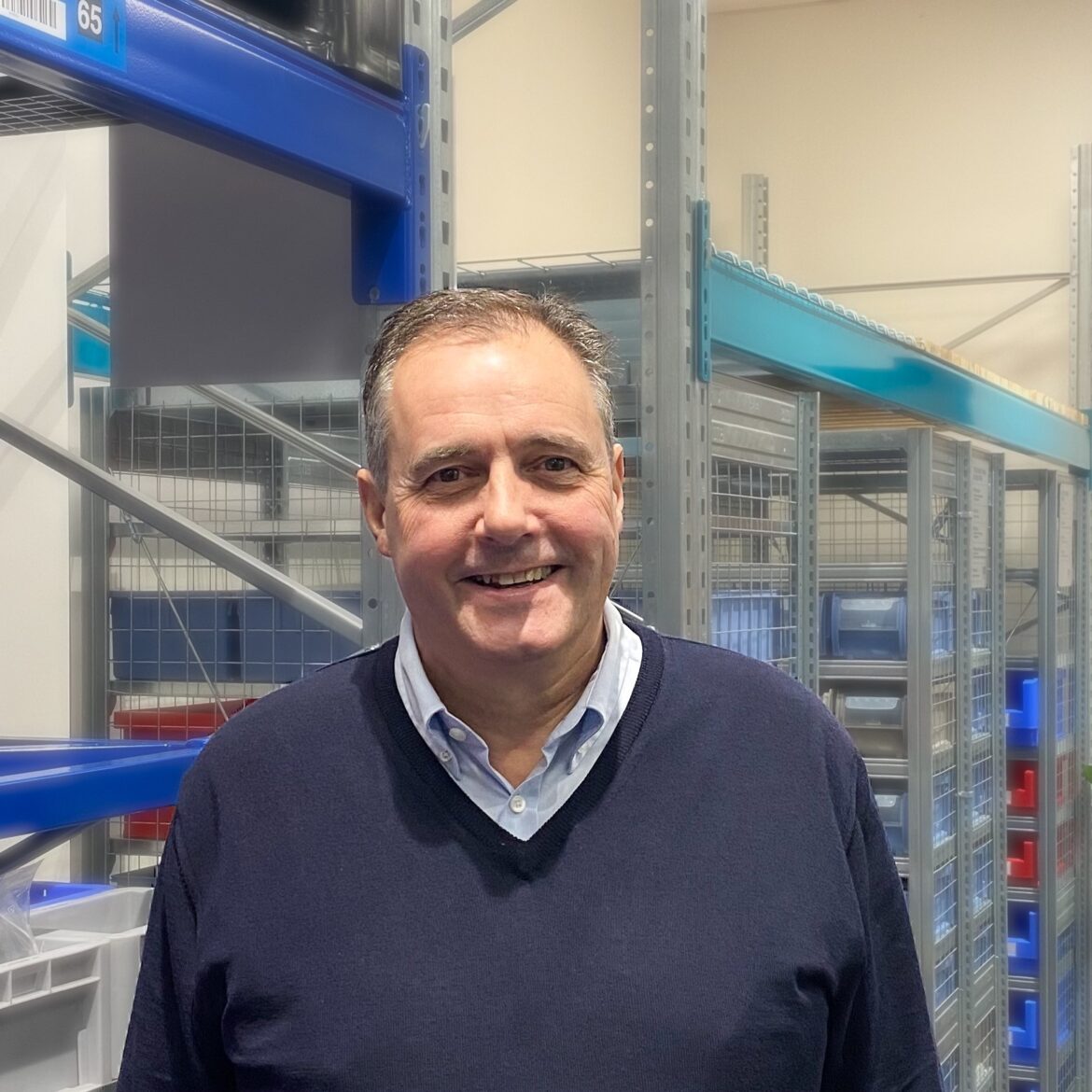
A warehouse management love story, by Chris Mackie (pictured, below), Partner at Logistics Reply.

Most people can recall a relationship that looked promising at the start but, over time, revealed itself to be a mismatch. It wasn’t necessarily a failure, it simply lasted longer than it should have. Many warehouse operators recognize a similar pattern with their first serious WMS. The early days were promising. The demos were polished, and the platform guaranteed everything in one place. It felt like the right choice and commitment came quickly.

Then the implementation became tense. As go-live approached, arguments crept in, and you compromised more than you wanted to. Edge cases appeared, escalations followed, and late-night calls focused less on fixing problems and more on negotiating what could go live. Around midnight, someone usually asked whether it was too late to walk away, and of course it was, so you patched things up and went live. To be fair, it worked, orders shipped, stock moved, the warehouse survived, and the relief was genuine. The cracks were still there, but once things were flowing, it was easier not to stare at them.

For a while, the relationship settled and became stable, predictable, and familiar. Then as time passed, volumes grew, channels multiplied, and automation moved from ‘interesting’ to ‘approved budget.’ Each change reopened the same questions:

● Why is this so hard?
● Why does everything touch everything else?
● Why does every request feel like a negotiation?

The system wasn’t broken, but it was set in its ways, designed for a simpler version of the operation (and quite happy staying there). You adapted instead and workarounds multiplied, enhancements took longer, and change felt harder than it should. Eventually, you realize you are having the same conversation you had last year, and the year before that. At that point, the issue is no longer patience but compatibility.

Then your eyes begin to wander. An article is read, a chat at an event feels interesting, and when someone mentions a different type of system you listen a little more closely than you probably should. The selection process the second time around feels different with more honesty and knowing what you need. There is a sense of relief when someone says ‘yes, that is possible,’ without a list of conditions. Conversations feel collaborative rather than defensive and change stops sounding like an argument waiting to happen.

Eventually, it becomes obvious that this is not a fling, just simply a better fit. The break-up is rarely dramatic with the old system. It’s practical, no shouting, and a mutual understanding that you have grown apart.

The new relationship feels different almost immediately. A cloud-native, microservices-based WMS is built from focused capabilities that can evolve independently. When something changes, you adjust the relevant capability rather than renegotiating the entire relationship.

It also stays fresh. Every few months, something new appears like a feature, a refinement, or a smarter way of doing something that used to be manual. Emerging technologies, like AI, arrive as genuinely useful additions rather than distractions.

Growth also feels supported rather than tolerated. Automation becomes easier to implement and manage. Robotics, goods-to-person platforms, shuttle and storage systems, sorting and intelligent picking technologies connect through defined services without forcing wholesale redesign.

The best relationships succeed because change is expected and supported. A microservices-based WMS evolves with the warehouse, acquires new capabilities, and keeps operations moving forward. It provides structure without rigidity, consistency without constraint, and growth without reinvention. For warehouses ready to evolve, it is a partner that stays for the long term. If you are still having the same arguments with your WMS, it may be time to move on.


Source link

0 comments
0 FacebookTwitterPinterestEmail
Services

BIFA National Conference 2026: Navigating a shifting world

by
written by


Under the theme ‘Navigating a shifting world’, BIFA will bring together a line-up of expert speakers at the BIFA National Conference 2026, helping to ensure the trade association’s corporate members are informed, prepared and ready to face the evolving landscape of international logistics.

Returning to The Slate at Warwick Conferences on 23–24 September 2026, this year’s event builds on the momentum of the successful reintroduction of the National Conference in 2025. Plans are already well under way for what promises to be an essential date in the freight forwarding calendar.

With significant shifts in the world order, ongoing geopolitical tensions, uncertainty surrounding tariffs, and mounting economic pressures on consumers and manufacturers alike, the outlook for global trade has rarely been more unpredictable. Against this backdrop, BIFA’s 2026 conference will provide clarity, insight and practical guidance for navigating the months and years ahead.

The agenda and speaker line-up are currently being finalised and are expected to feature contributors from across all sectors of international logistics, alongside major infrastructure stakeholders and political decision-makers. Together, they will offer informed perspectives on the challenges and opportunities shaping global supply chains.

As ever, the programme will offer ample opportunity for face-to-face discussion and networking – still the most effective way to build relationships, exchange ideas and develop practical solutions in a complex trading environment.

This year’s guest speaker after dinner will be none other than former Premier League manager Harry Redknapp, bringing decades of top-flight football experience – and no doubt a few stories from the touchline.

Known for his quick wit as much as his tactical nous, Harry is sure to entertain. Those who have heard him speak before may recall his famous story about accidentally sending a text message to the wrong contact – a tale involving a transfer rumour, a confused journalist, and a very surprised window cleaner.

If that’s a preview of what’s to come, delegates can expect an evening of laughter, straight-talking insight, and perhaps a reminder that clear communication is just as vital in football management as it is in freight forwarding.

Spaces for the BIFA National Conference 2026 are limited. Delegates are encouraged to book early to secure their place and benefit from the available early bird discount. Full details of ticket options can be found on the conference website: https://conference.bifa.org

BIFA director general, Steve Parker says:

This conference will provide valuable opportunities for professional development and is a vital event for those looking to stay ahead of the curve in an ever-evolving industry… I urge people to join us at the event for an opportunity to connect with key industry figures, gain practical insights, and ensure your business remains at the forefront of the logistics and freight sectors… With industry insight by day and networking with entertainment by night, the BIFA National Conference 2026 promises to be both informative and memorable.


Source link

0 comments
0 FacebookTwitterPinterestEmail
Services

Cargo with Conviction – Logistics News

by
written by


Etihad Cargo outlines a strategy built on disciplined growth, smart partnerships and digital control, reports Peter MacLeod.

After several years of disruption, the air cargo industry appears to be entering a period of cautious recalibration. Capacity has returned, albeit unevenly, yields have softened on some lanes, and geopolitical uncertainties continue to complicate network planning. Against this backdrop, Etihad Cargo has reported a strong 2025 performance, combining revenue growth with a measured expansion of capacity. Speaking exclusively to Logistics Business Magazine, Stanislas Brun, Chief Cargo Officer at Etihad Airways, says the story is less about chasing volume and more about disciplined growth anchored on Abu Dhabi’s evolving role as a global logistics hub.

“2025 has been a year of disciplined and purposeful growth for Etihad Cargo, driven by a clear focus on high-value verticals and a network strategy anchored around Abu Dhabi as a global logistics hub,” Brun explains. Pharmaceuticals, e-commerce and perishables have been central to that approach, supported by targeted capacity expansion and additional Boeing 777 freighter operations. At a time when many carriers are still reassessing their freighter strategies, Etihad’s emphasis on sectors that value reliability and control reflects a broader industry shift away from pure commoditised lift.

Operational performance has been just as critical. As passenger belly capacity continues to fluctuate across global markets, cargo operators have been forced to re-examine hub efficiency and transfer times. Brun highlights Abu Dhabi’s infrastructure and ecosystem as key enablers. “Leveraging Abu Dhabi’s advanced infrastructure, short transfer times and strong ecosystem partnerships has enabled us to scale efficiently while improving reliability, strengthening customer confidence across our core trade lanes.”

Growth Constraints

Balancing growth with service quality remains one of the sector’s most persistent challenges. Volatility in demand, labour constraints and cost pressures mean that rapid expansion can easily undermine performance if not carefully managed. For Etihad Cargo, Brun says the answer lies in selectivity and control. “At Etihad Cargo, growth is always measured against our ability to deliver consistent customer service quality.” The airline’s integrated hub model allows it to expand only when infrastructure, partners and operational readiness are aligned, rather than reacting opportunistically to short-term market signals.

Central to this approach is a strong emphasis on visibility and network oversight. “Our 24/7 Operations Control Centre provides real-time network oversight and allows us to respond quickly to volatility,” Brun notes. In an industry where disruptions can cascade rapidly, crossing national and continental boundaries in the blink of an eye, the ability to intervene early has become a differentiator, particularly for customers moving high-value or time-critical shipments.

Trade lane selection, meanwhile, reflects both immediate customer demand and longer-term structural trends. Global air cargo growth is increasingly shaped by life sciences, advanced manufacturing and cross-border e-commerce, often linked to government-led industrial strategies. Brun underlines the importance of aligning Etihad Cargo’s network with Abu Dhabi’s own ambitions. “Trade lane selection is guided by customer demand, sector-specific growth and Abu Dhabi’s long-term trade and industrial ambitions.”

He adds that Etihad prioritises lanes where regulatory alignment, infrastructure and connectivity provide a competitive edge, while using partnerships to maintain flexibility where direct deployment is less efficient.

Aircraft Delivery Times

That flexibility is particularly important as the industry grapples with extended aircraft delivery timelines. Delays to new-generation freighters, including the much-anticipated Airbus A350F, have forced many carriers to rethink capacity plans. Strategic partnerships have therefore taken on renewed significance. “Strategic partnerships, such as with SF Airlines, are central to Etihad Cargo’s ability to scale responsibly while maintaining flexibility,” Brun says. “As the industry navigates extended aircraft delivery timelines, partnerships enable us to expand capacity, enhance specialised capabilities and protect service quality.” From Abu Dhabi, these partnerships extend Etihad’s reach without compromising consistency, a balance many global operators continue to struggle with.

Digital transformation is another area where air cargo players are seeking differentiation, although progress across the sector has been uneven. While customers increasingly expect end-to-end visibility and predictive insights, legacy systems and fragmented data remain common obstacles. Etihad Cargo has invested heavily in this space, positioning digital tools as both an operational enabler and a customer-facing value proposition. “Digital transformation is reshaping how Etihad Cargo operates from its Abu Dhabi hub and how customers experience our services,” Brun says.

He points to AI-enabled predictive tools and enhanced visibility as tangible examples. “We have introduced innovative, AI integrated predictive tools such as SmartTrack solution, which provides end-to-end shipment visibility, supported by a dedicated control centre that enables proactive intervention.” By embedding predictive analytics into daily operations, Etihad aims to anticipate risks rather than simply respond to disruptions. “By integrating AI and predictive analytics into our operations, we are improving decision-making, anticipating risks and optimising network performance,” Brun adds, describing transparency and reliability as key differentiators for customers moving high-value cargo.

E-Commerce Support

E-commerce continues to exert a profound influence on air freight dynamics, particularly as platforms expand into emerging and underserved markets. For carriers, the challenge lies in supporting both large integrators and smaller businesses without diluting service quality. Etihad Cargo’s response again centres on scalability and digital enablement. “E-commerce continues to reshape global trade, and Etihad Cargo is leveraging Abu Dhabi’s connectivity to support both established platforms and SMEs in emerging markets.” Through a combination of freighter capacity, belly space and partnerships, the airline aims to provide access to global markets while meeting the speed and visibility demands of digital commerce.
Sustainability, meanwhile, has moved from a peripheral concern to a strategic imperative across the air cargo sector. Regulatory pressure, customer expectations and rising fuel costs are all accelerating the search for more efficient operations. Brun emphasises that sustainability is embedded within Etihad Cargo’s broader strategy rather than treated as a standalone initiative.

“Sustainability is embedded across Etihad Cargo’s operations and long-term strategy, aligned with Abu Dhabi’s broader sustainability agenda,” he tells us. Fleet renewal plays a central role, with a focus on fuel efficiency and emissions per tonne kilometre, complemented by transparent CO₂ reporting and collaboration with partners on sustainable logistics solutions.

Looking further ahead, Etihad Cargo is also exploring emerging technologies where they offer genuine operational and environmental benefits. “Beyond fleet, we are advancing transparent CO₂ reporting, working with partners on sustainable logistics solutions, and exploring emerging technologies such as hybrid VTOL and autonomous systems where they can deliver real operational and environmental value.”
While such technologies remain nascent, their potential reflects a wider industry effort to rethink the role of air cargo within more sustainable supply chains.

Intense Regional Competition

Competition between Middle Eastern hubs remains intense, with Dubai and Doha continuing to invest heavily in cargo infrastructure and connectivity. Brun argues that Abu Dhabi’s strength lies in integration rather than scale alone. “Abu Dhabi offers a uniquely integrated ecosystem, where aviation, logistics, healthcare, manufacturing and government entities operate in close alignment.” This alignment enables faster decision-making and tailored solutions, particularly for pharmaceuticals and other temperature-sensitive cargo, positioning Abu Dhabi as a credible alternative hub in the region.

Underpinning all of this is a clear leadership and organisational culture. Like much of the logistics sector, air cargo faces ongoing challenges in recruitment, training and retention. Brun believes adaptability starts with people. “Leading Etihad Cargo through transformation has reinforced the importance of clarity, empowerment and purpose.” Investment in training, clear career pathways and a culture that encourages innovation are central to maintaining agility. “By aligning teams around shared objectives and giving them the tools to adapt and innovate, we ensure Etihad Cargo remains agile, resilient and closely connected to customer needs.”

Etihad Cargo’s approach illustrates how network expansion, partnerships and digital transformation can be aligned around a coherent hub strategy, whilst navigating geopolitical turmoil, economic uncertainty, and other factors beyond its control. In a market where resilience increasingly outweighs rapid growth, the emphasis on discipline, visibility and ecosystem integration may prove as important as capacity itself.


Source link

0 comments
0 FacebookTwitterPinterestEmail
Newer Posts
Older Posts

Recent Posts

  • Blend of Solutions in Contract Logistics
  • Middle East Conflict Drives Surge in Spot Freight
  • On Another Level – Logistics News
  • Interroll to Acquire Royal Apollo Group
  • Warehouse Property – Essential Partnership

Recent Comments

No comments to show.

Social Connect

Whatsapp

Recent Posts

  • Blend of Solutions in Contract Logistics

  • Middle East Conflict Drives Surge in Spot Freight

  • On Another Level – Logistics News

  • Interroll to Acquire Royal Apollo Group

  • Warehouse Property – Essential Partnership

Newsletter

Categories

  • Services (1,108)
  • Uncategorized (41)

@2024 - All Right Reserved. Designed and Developed by Sierraline Cargo services

Manage Consent
To provide the best experiences, we use technologies like cookies to store and/or access device information. Consenting to these technologies will allow us to process data such as browsing behavior or unique IDs on this site. Not consenting or withdrawing consent, may adversely affect certain features and functions.
Functional Always active
The technical storage or access is strictly necessary for the legitimate purpose of enabling the use of a specific service explicitly requested by the subscriber or user, or for the sole purpose of carrying out the transmission of a communication over an electronic communications network.
Preferences
The technical storage or access is necessary for the legitimate purpose of storing preferences that are not requested by the subscriber or user.
Statistics
The technical storage or access that is used exclusively for statistical purposes. The technical storage or access that is used exclusively for anonymous statistical purposes. Without a subpoena, voluntary compliance on the part of your Internet Service Provider, or additional records from a third party, information stored or retrieved for this purpose alone cannot usually be used to identify you.
Marketing
The technical storage or access is required to create user profiles to send advertising, or to track the user on a website or across several websites for similar marketing purposes.
  • Manage options
  • Manage services
  • Manage {vendor_count} vendors
  • Read more about these purposes
View preferences
  • {title}
  • {title}
  • {title}
Sierraline Cargo Services
  • HOME
  • Services
    • Trade With Us
  • About Us
  • Contact Us
  • private jet
    • BOOK YOUR JOURNEY
  • Track Packages
  • Insurance
  • safekeeping

WhatsApp us