Sierraline Cargo Services
  • HOME
  • Services
    • Trade With Us
  • About Us
  • Contact Us
  • private jet
    • BOOK YOUR JOURNEY
  • Track Packages
  • Insurance
  • safekeeping
Services

Discover new Storage Technology at LogiMAT

by
written by


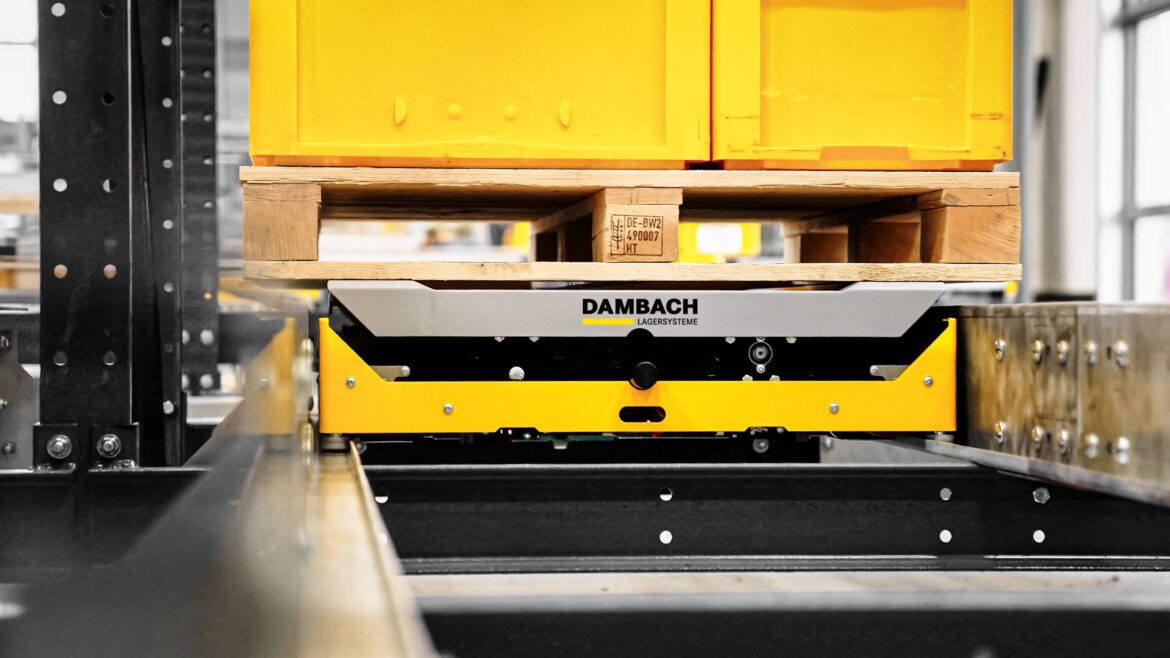
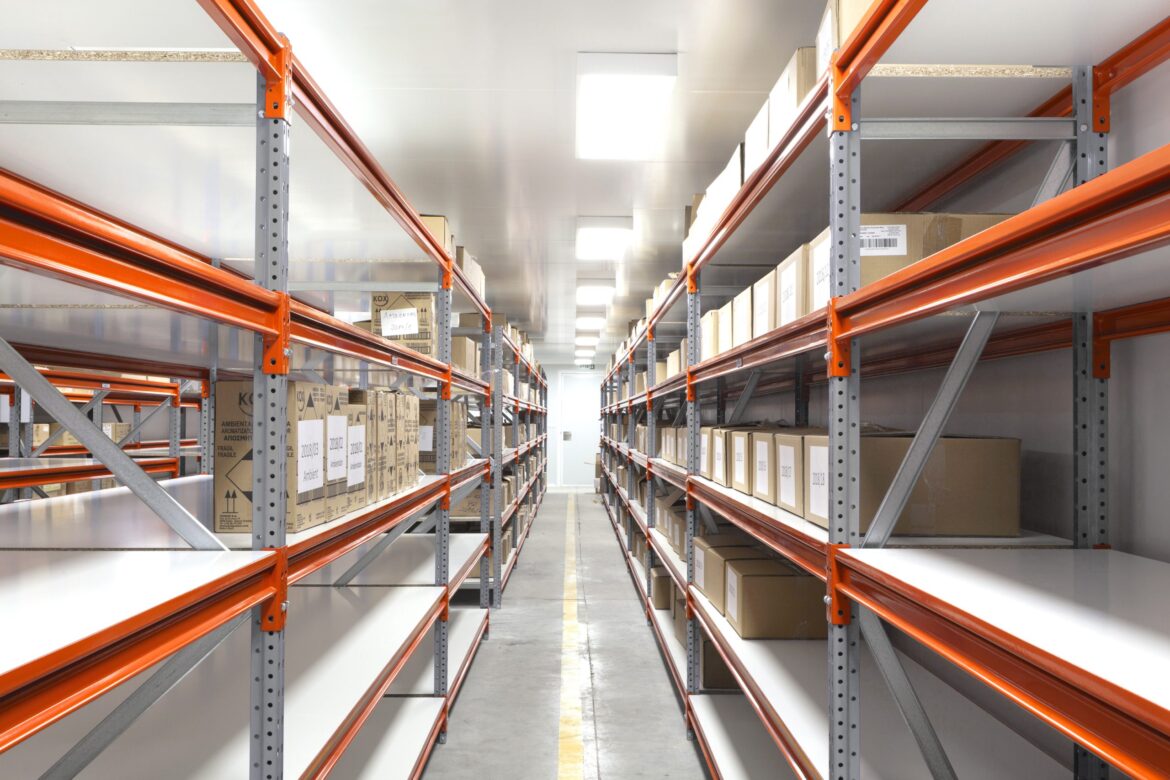
Once again this year, visitors to the META-Regalbau stand at LogiMAT Stuttgart, in Hall 1 – Stand H01 and H05 will be able to discover some new and proven highlights from an extensive world of storage technology. The focus will be on new digital solutions such as the META customer portal and the rack planner. In addition, storage solutions in conjunction with conveyor technology and the tried-and-tested standard shelving systems are central elements of the trade fair presentation.

New rack planner

This year, the Stuttgart trade fair will mark the launch of the new customer portal and the new rack planner at META – these digital solutions will be presented for the first time at LogiMAT. With these new web-based systems, META takes collaboration with customers to a new digital level. The customer portal is the new digital point of contact and central platform for all customers. The intuitive rack planner features extended planning and configuration options – visitors and customers can therefore look forward to the presentation of the new functions.

Conveyor technology solutions

Under the name META-ILS (ILS = Innovative Logistic Solutions), META offers individual customer solutions for complex tasks in the field of warehouse automation with conveyor technology. Customers worldwide benefit in the long term from efficient conveyor technology combined with high-quality storage technology. At LogiMAT, consultants will be on hand to provide advice on possible solutions and will be happy to showcase already implemented conveyor technology projects from around the world.

Innovative and proven

The premium supplier of storage technology will be presenting its extensive META portfolio of solutions in a new layout on over 130 m2 in Hall 1. The team of warehouse technology experts will be happy to answer any questions you may have about either new products or tried-and-tested solutions – such as warehouse technology, steel construction, factory equipment and comprehensive services such as racking inspections.


Source link

0 comments
0 FacebookTwitterPinterestEmail
Services

Threat of new Tariffs Impacts Supply Chains

by
written by


As tensions rose over Greenland, Trump’s renewed threats to impose tariffs on EU and UK goods and his visit to Davos once again put transatlantic supply chains under pressure. Businesses are already feeling the impact. The prospect of tariffs is slowing US imports, triggering stockpiling and causing customs delays, particularly for spare parts and critical components. UK manufacturers and retailers – especially in automotive and consumer goods – are facing higher costs, disrupted production and growing uncertainty around availability.

Andrei Danescu, CEO of UK-based warehouse logistics firm Dexory, discusses how the threats to impose tariffs play out in the real economy. He works closely with global manufacturers and logistics operators and hears, in practical terms, how political flashpoints translate into warehouse disruption and why robotics and real-time data are becoming essential as volatility increases.

“Just the threat of tariffs is distorting global supply chains. US-bound imports are slowing as companies pause orders, stockpile critical components and rush deliveries, triggering customs delay and warehouses filling with the wrong stock, in the wrong place, at the wrong time.

“This is the commercial reality behind renewed tariff threats against the UK and EU and the broader use of economic and territorial pressure. The message to business is clear: geopolitics now overrides efficiency!
“For UK manufacturers and retailers, especially in automotive and consumer goods, the impact is immediate. Predictable delivery rhythms will break, forcing many to over-order or risk stoppages. ‘Just in time’ becomes ‘just in case’, tying up cash and warehouse space.

“The lesson is simple: tariffs destabilise supply chains and, in an economy already running hot, uncertainty is its own tax. All organisations can do now is prioritise warehouse visibility to inform decision making.”


Source link

0 comments
0 FacebookTwitterPinterestEmail
Services

AI in TMS Improves Logistics

by
written by


Real-time data insights are transforming logistics performance, driving down costs and improving CO2 emissions management. Adding Artificial Intelligence (AI) to Transport Management Systems (TMS) is set to further enhance the depth and breadth of data, extending automation and enhancing predictive insights, as Elmer Spruijt (pictured, below), VP, Global Sales, Descartes explains.

Real-Time Visibility

The growing availability of real-time data throughout global supply chains is transforming operational performance. Real-time shipment tracking is allowing companies to automatically update end customers with accurate delivery timescales. Immediate access to a global logistics network provides a real-time view of carrier options, facilitating next level decision making based on costs, timing, performance record, even CO2 emissions. Used in tandem with a TMS, real-time data can drive automation, such as carrier confirmation and the creation of relevant transport documents, as well as customer updates.

Of course, in a complex, multi-layered global logistics network, data gaps are inevitable, which is where the addition of AI into this process is set to deliver significant benefits. For example, when a truck’s telematics device goes offline for any reason, the back-up information is provided via a mobile app. If, however, the driver has not downloaded the app, the vehicle cannot be tracked. Using an AI agent to automatically contact the driver and request installation is a simple, cost-effective process that quickly resolves any data gaps.

Streamlining and Automating

A similar approach can be used if a carrier’s data feed is compromised. An AI agent automatically contacting the carrier to request a network reset, as well as any specific missing information, such as proof of delivery, that got lost during the glitch, can seamlessly resolve the issue.

While these processes could in the past have been undertaken manually, in an industry enduring tight margins and significant disruption, this has rarely been a cost-effective option. Yet with customer invoicing increasingly automated and prompted by proof of delivery, any missing tracking data can result in payment delay. The closer organisations can move towards 100% shipment tracking throughout every journey, the more automation can be achieved, further improving efficiency and reducing the need for manual exceptions management.

Expanding Business Value

Furthermore, AI can also help to improve the depth of Scope 3 emissions reporting, building on the existing insight provided by a TMS about the CO2 generated by each vehicle based on a number of factors, including size, weight, distance and speed. Where vehicle specific information is not available, and the TMS defaults to generic estimates, the addition of AI to this process allows the system to explore more data sources, adding greater accuracy to the emissions assessment process.

AI is also set to play a key role in combating the escalating risk of freight fraud. Measures such as enhanced carrier vetting and onboarding are key to improving the verification of carriers, monitoring insurance and preventing fraud.

The adoption of AI throughout the transport management industry is at an early stage. But the significant on-going investment now, building on the value of real-time data resources to improve efficiency, add automation and enhance predictive analytics is compelling. For those organisations still reliant on out-dated systems and intermittent data updates, the gulf in agility and resilience is becoming a concern. As AI adds ever more valuable intelligence to efficient transport management, the adoption of innovative technology is delivering a step change in competitive advantage.


Source link

0 comments
0 FacebookTwitterPinterestEmail
Services

Packaging Machines Ideal for e-commerce

by
written by


End-of-line packaging machine manufacturer Lantech offers a range of innovative packaging systems to provide the logistics and e-commerce sector with fast, flexible packaging machines that aim to set new standards in warehouse logistics and optimize the shipment of goods.

The C-1000 Case Erector is renowned for its efficiency and square cases. It produces up to 30 cases per minute with flexible dimensions ranging from 200 x 150x 150 mm to 500 x 325 x 520 mm. Users reliably receive right-angled shipping cartons that provide maximum stability and are ideal for transportation.
The case erector produces 90-degree angles regardless of the type of the corrugated board, changing temperatures or humidity and varying plano dimensions. Users are assured of rectangular shipping boxes that are ideal for the logistics chain and offer maximum stability. Depending on customer preference, the bottom of the case is sealed with Hotmelt or tape.

Space saving

The C1000 case erector can however also be multiplied with 2-3 or 4 magazines then called Multi Format Case erector. The MFC increases the flexibility of the packaging process by allowing cases of different sizes to be erected with just one machine. This compact solution has up to four magazines that can be configured separately and filled during operation. This allows different case sizes to be produced on a single machine without the need for changeovers or production interruptions. The MFC saves valuable production space compared to using multiple conventional case erectors with a single magazine. Even more space is saved thanks to the central output point for the cases, as there is no need to combine different conveyors into a single output system.

Choice of many cases sizes

The MFC can handle cases with dimensions ranging from 200 x 150 x 150 mm to a maximum of 620 x 450 x 650 mm. The maximum throughput speed is 1080 cases per hour. The MFC is also equipped with Lantech’s Total Control System. This ensures accurate control during the erection process, resulting in perfectly square cases. These square cases prevent jamming and are easier to load, stack and palletize.

Lock loads to pallets

For professional securing of loads on pallets, Lantech offers an efficient packaging solution with the QL400XT semi-automatic pallet wrapper. This machine reduces each wrapping process by two minutes per cycle by automatically attaching the film to the pallet and cutting it after wrapping. This is made possible by the patented ‘XT Cut and Clamp’ function, which is purely mechanical and requires no compressed air or electricity.

Another advantage is the intelligent ‘Load Guardian’ control system. The system creates special profiles with the correct tension for frequently occurring loads. This saves time and prevents operating errors. The QL-400XT stretch wrapper can process up to 35 pallet loads per hour, with a maximum diagonal of 1830 mm and a maximum height of 2030 mm. The processed film can be pre-stretched up to 300 per cent.

Visit Lantech at Logimat Hall 1 Stand B72 from 24th – 26th of March in Suttgart


Source link

0 comments
0 FacebookTwitterPinterestEmail
Services

Spotlight on Origin Complexity in Supply Chains

by
written by


While the political debate centres on geopolitics, the more immediate issue for businesses is how origin-based tariffs would be applied across deeply integrated European supply chains. Components and materials often cross multiple borders before final assembly, leaving many organisations uncertain where tariff exposure truly sits, particularly beyond Tier-1 suppliers.

Steffen Schulze Selting, Vice President, Value Engineering at Sphera, told us, “tariffs are being used more frequently as a tool within global trade, and supply chains are where the consequences are most immediately felt. For businesses operating across Europe and the UK, the challenge is not simply the headline tariff rate, but the complexity that sits beneath it.”

Trade policy issues

“Highly integrated supply chains mean that materials often cross multiple borders before final assembly. When tariffs are applied based on country of origin, many organisations struggle to determine where exposure truly sits, particularly beyond Tier 1 suppliers, where direct commercial relationships end, and reliable origin data becomes harder to obtain. That uncertainty makes it difficult to assess risk at pace.

“The backdrop to this is a shifting global trade map. Climate-driven changes in the Arctic are opening up new potential shipping routes via Greenland, shortening transit times between Europe and Asia. Control and access to these routes will carry long-term implications for global supply chains well beyond the immediate geopolitical debate.

“If the current tariff threat results in escalation, it would add pressure to supply networks that are already managing climate risk. Understanding where goods originate and which products or regions are most exposed is critical to assessing cost exposure and operational impact when trade conditions shift.”


Source link

0 comments
0 FacebookTwitterPinterestEmail
Services

CEO Steps Down After Driving 160% Revenue Growth

by
written by


Supply chain management and omnichannel e-fulfilment company, Bleckmann, has announced that Kurt Pierloot will step down as Chief Executive Officer after 6.5 years of leadership. The transition is by mutual agreement, with Kurt continuing to support the company in a number of strategic projects in the coming weeks to ensure a smooth handover.

During his tenure, Pierloot oversaw significant growth and strengthened Bleckmann’s position in the market. Revenue increased from approximately €280 million in 2018 to around €730 million, while profitability improved substantially- even through the challenges of the COVID-19 pandemic. He also led large-scale automation programs, investing in advanced technologies to drive efficiency, scalability, and sustainability, establishing Bleckmann as a forward-thinking leader in omnichannel logistics.

Pierloot also spearheaded an ambitious acquisition strategy, including a majority stake in Spain’s B2Tex group, a specialist in fashion logistics. This expanded Bleckmann’s presence in Southern Europe, enhanced service capabilities, and created new opportunities for clients and growth.

Kurt has played a pivotal role in evolving Bleckmann into a highly resilient, innovative, and client-oriented company,

said Gökalp Çak, Chairman of the Board and Co-Founder of Netlog Logistics Group, Bleckmann’s major shareholder.

His strategic foresight, commitment, and people-centered approach have created lasting value and a solid platform for future success. We are deeply grateful for his contributions and look forward to his continued support on key strategic initiatives during this transition. We wish him every success in his next chapter.

To ensure continuity, Gökalp Çak will assume the role of interim CEO, supported by the Board and Executive Committee. This arrangement ensures seamless operations, with Bleckmann’s strategic plan and growth trajectory unaffected.

Reflecting on his time at the company, Pierloot said:

I have admired Bleckmann for its people and client focus and from the day I joined, I always enjoyed most working with our over 6500 talented and passionate colleagues as well as our client base of inspiring brands.

Bleckmann remains committed to its ambition to be the premier logistics partner for fashion and lifestyle brands across Europe and beyond. With a talented team and a clear strategy, the company is poised for continued success.


Source link

0 comments
0 FacebookTwitterPinterestEmail
Services

EV Trends for 2026 – Logistics News

by
written by


Logistics Business asked Jim Donaldson, Chief Technology Officer at Hitachi ZeroCarbon, for his views on electric commercial vehicle developments in the year ahead.

“Looking ahead to 2026, breakthrough advances in AI will arrive almost daily, and the real opportunity for our industry will be applying those innovations to accelerate decarbonisation at scale.

“While fleet operators are unlikely to hand control of charging infrastructure to large language models like ChatGPT, data-driven optimisation and other forms of AI are set to become essential to achieving fully electric fleets. In real-world deployments today, automated approaches are already lifting effective power capacity by around 20% compared with standard setups – enabling faster charging and more vehicles without the need for new infrastructure.

“Technology and data are also expected to play an increasingly critical role in managing battery assets. Even as battery technology continues to improve, vehicle performance will still vary widely across fleets. Data-led insights will be key to maximising in-life and second-life value, while rapidly identifying emerging reliability issues.

“Beyond the depot, 2026 is also likely to mark a shift in how electric fleets interact with the wider energy system. As grids face growing pressure from electrification, fleet infrastructure will increasingly be designed as flexible energy assets – able to balance demand, integrate renewables and respond dynamically to network constraints. Platforms that coordinate vehicles, chargers, on-site generation and grid signals in real time will be critical, turning fleets from passive energy consumers into active participants in a more resilient, low-carbon energy ecosystem.

“Ultimately, delivering on the full promise of the EV transition will depend on operations optimised by data-led automation. The future of EV fleet management is likely to be AI-driven systems that draw on schedules, vehicles, chargers and energy networks to automate energy and charging operations – maximising reliability at the lowest possible cost.”


Source link

0 comments
0 FacebookTwitterPinterestEmail
Services

Sallaum Lines Relocates HQ to Limassol,

by
written by


Sallaum Lines announces the relocation of its headquarters from Switzerland to Limassol, Cyprus. This strategic move reflects the company’s long-term growth vision and its commitment to strengthening its presence within the European maritime world. Renowned as one of the world’s top global shipping centers and the largest shipping management hub in Europe, Cyprus has emerged as an ideal environment for maritime businesses. The relocation positions Sallaum Lines closer to key European markets, regulatory frameworks, and maritime stakeholders, enhancing operational efficiency and strategic alignment.

The vision for the new headquarters is to design a modern, collaborative, and innovative-driven space that promotes growth and empowers employees. The new corporate head office will host customer-centric operations, further reinforcing an ability to deliver reliable, efficient, and sustainable RoRo shipping solutions to clients worldwide.

Similarly, the corporate headquarters transition comes at a significant phase of growth as well as expansion for Sallaum Lines, underscored by major capital commitments and fleet modernization initiatives, including six new PCTC dual fuel vessels in order and a 20-million-euro investment at its terminal in Antwerp, Belgium.

The move to Limassol represents an exciting new chapter for Sallaum Lines… Relocating our headquarters to Cyprus will strengthen our capabilities, aligning perfectly with our vision guided by our strategic pillars that serve the best interest of the environment, society, innovation, our employees, and economic growth and expand our reach in the roro shipping industry. We look forward to capitalizing on the opportunities Cyprus offers and welcoming our employees, shareholders, and business partners to our new home.

shares Sami Sallaum, Chairman.

Sallaum Lines is a global RORO carrier specializing in the safe, efficient, and environmentally responsible transportation of automobiles, trucks, and project cargo. With a rapidly growing fleet and a presence across Europe, Africa, Asia, the Middle East, and the United States of America, the company is committed to sustainable innovation, operational excellence, and long-term global partnerships.


Source link

0 comments
0 FacebookTwitterPinterestEmail
Services

Supply Chains in Permanent State of Disruption

by
written by


Global supply chains have entered an era of structural volatility, according to a World Economic Forum report released today, forcing companies and governments to reevaluate how and where they invest and produce. The report finds that nearly three in four business leaders now prioritize resilience investments, with 74% viewing resilience as a driver of growth.

Set against a backdrop of geopolitical fragmentation, the chaos and mafioso behaviour of the Trump administration, accelerating technological change and mounting resource constraints, the new report – Global Value Chains Outlook 2026: Orchestrating Corporate and National Agility – developed in collaboration with Kearney, examines how companies and governments can remain competitive as disruption becomes a permanent feature rather than a cyclical shock.

“Volatility is no longer a temporary disruption; it is a structural condition leaders must plan for,” said Kiva Allgood, Managing Director, World Economic Forum. “Competitive advantage now comes from foresight, optionality and ecosystem coordination. Companies and countries that build these capabilities together will be best positioned to attract investment, secure supply and sustain growth in an increasingly fragmented global economy.”

The scale of the shift is already evident. In 2025 alone, tariff escalations between major economies reshuffled more than $400 billion in global trade flows, while disruptions across major shipping routes pushed container shipping costs up 40% year on year, signalling a decisive move away from short-term shocks towards enduring uncertainty. At the same time, manufacturing output across advanced economies is growing at its weakest pace since 2009, while more than 3,000 new trade and industrial policy measures were introduced globally in 2025 alone – more than three times the annual level recorded a decade ago. Together, these forces underscore why supply chain resilience has become a central determinant of national competitiveness and corporate strategy.

A central feature of the report is the launch of a new digital tool that translates these insights into actionable intelligence. Drawing on leading global indices, the ‘Navigator’ supports strategic decision-making on industrial policy and manufacturing footprint design. Governments can use it to diagnose competitiveness gaps and prioritize reforms, while companies can assess infrastructure readiness and ecosystem maturity when making location and investment decisions.

The report also highlights how targeted national approaches are already shaping manufacturing competitiveness. In Ireland, enterprise-led upskilling through Skillnet Ireland links government, business and educators to deliver subsidized training aligned with industry needs. In China, large-scale investment in digital infrastructure under the New Infrastructure initiative has enabled real-time industrial connectivity through widespread 5G deployment. In Qatar, a national dashboard tracking essential food items in real time strengthens supply security by enabling early intervention, buffer stocks and rapid, data-driven responses to disruption.

“Supply chain disruption in 2026 will be constant and structural. Geopolitical fragmentation, shifting trade rules and labour shortages are all redefining how value is created and moved,” said Per Kristian Hong, Partner, Kearney. “For supply leaders, the priority is no longer forecasting disruption, but redesigning operating models to function under permanent uncertainty. That means moving away from efficiency-driven supply chains and towards adaptive networks that can be reconfigured with optionality as conditions change.”


Source link

0 comments
0 FacebookTwitterPinterestEmail
Services

Destination Prague: how to charter private jets from London, Rome and Barcelona

by
written by


Prague is one of the most fascinating European capitals-perfect for business and leisure travel-and getting there by private jet means maximum efficiency, comfort and time savings. In this article, we’ll look at where to land in Prague, the main routes from London, Rome and Barcelona, flight distances and times, as well as PrivateJetFinder’s exclusive tips for those looking to charter a private jet to the Czech capital.

Where to land : Prague airports

Several private aviation options exist within a few kilometers of Prague:

1. Prague Václav Havel Airport (PRG)

It is Prague’s main international airport and is most used for charter flights and private jets.

  • Close to the city center (about 10-15 km)
  • General aviation terminal (FBO) dedicated to private flights with VIP services and fast handling.

2. Vodochody Airport (LKVO)

Aerodrome dedicated mainly to general and private aviation, located about 15 km north of the city, with adequate runways and efficient handling.

3. Kbely Airport

Formerly the city’s main airport, now used only for private flights or light aviation-related activities.

For medium to large private jets (light, medium or heavy jets), PRG almost always remains the main choice due to its long runways and dedicated services.

Route London → Prague

Distance and flight time

  • Approximately 1,009 km
  • Estimated flight time: ~2 hours nonstop.

Recommended type of aircraft

  • Light Jet – perfect for groups of up to ~7 passengers (e.g. Hawker 700B, Learjet 24/25).

  • Medium Jet – increased comfort and luggage space for international flights (e.g. Embraer Praetor 500, Citation VII).

  • For long range requirements or larger groups, consider super-midsize or heavy jet.

Which London airport to choose?

London has several, airports, London Biggin Hill airport is entirely dedicated to business and private aviation, with fast procedures and convenient access to the city of London, without the traffic of large commercial airports.

Route Rome Ciampino → Prague

Distance and flight time

  • About 932 km
  • Estimated flight time: ~1 hour and 53 minutes.

Recommended type of aircraft

  • Light Jet – ideal for short/medium flights between Italy and the Czech Republic (e.g., Learjet 31, Sabreliner 40).
  • Medium Jet – ideal if you want more comfort and luggage, with better range (e.g., Citation Latitude, Hawker 600).

Why choose Rome Ciampino Airport?

Rome Ciampino Airport (CIA) allows quick departures, little waiting, and excellent road connections to central Rome.

Route Barcelona → Prague

Distance and flight time

  • Approximately 1,358 km
  • Duration ~2 hours and 31 minutes.

Recommended type of aircraft

  • Light Jet – for direct and rapid routes from Barcelona (e.g., Citation CJ3, Epic E1000).
  • Medium Jet – good for more comfortable travel and higher luggage capacity (e.g., Citation Sovereign, Praetor 500).

In addition to Barcelona-El Prat, it also evaluates the Sabadell airport which has runways long enough for any type of business jet.

PrivateJetFinder’s recommendations for private jet charters to Prague

1. Choose the right airport

If you are looking for speed and total comfort, favor flights to PRG Vaclav Havel with dedicated VIP handling. For light flights or special needs, Vodochody can offer more discreet handling and less operational traffic.

2. Book your private jet in advance

Light and medium jets are often booked quickly in high season or at large events (trade shows, meetings, concerts). Plan to get the best price and availability.

3. Evaluate the type of aircraft according to your needs

  • Very Light / Light Jets: ideal for 2-7 passengers and routes up to ~2.5 hours.
  • Medium Jets: perfect for superior comfort and increased luggage space.
  • Heavy/Long-Range Jets: recommended if traveling with many people or special needs.

4. VIP & FBO Services.

Ensure that the charter operator includes VIP terminal access, ground handling services, and full support for passengers and crew.

5. Costs and transparency

Rental prices vary according to: distance, jet type, season, and availability. PrivateJetFinder can help you compare offers and choose the optimal solution.

Charter private jets to Prague

Private jets to Prague, with PrivateJetFinder the right choice

Chartering a private jet to Prague is a perfect solution for those who want to travel in style, efficiency and flexibility. Whether you depart from London, Rome or Barcelona, there are perfect travel options for every private flight need-from light jets for quick flights to medium jets for extended comfort.

Book a private jet to Prague at privatejetfinder.com for a tailor-made flight experience – fast, stylish and stress-free.


Source link

0 comments
0 FacebookTwitterPinterestEmail
Newer Posts
Older Posts

Recent Posts

  • Logistics Business Conversations – Designing Delivery Networks
  • Battle to Control Packaging Costs
  • Flabelus Chooses UK Fulfilment Operations Hub
  • Cybersecurity in Logistics isn’t just IT Responsibility
  • Hydrogen Fuel Cell Powered Warehouse Trucks

Recent Comments

No comments to show.

Social Connect

Whatsapp

Recent Posts

  • Logistics Business Conversations – Designing Delivery Networks

  • Battle to Control Packaging Costs

  • Flabelus Chooses UK Fulfilment Operations Hub

  • Cybersecurity in Logistics isn’t just IT Responsibility

  • Hydrogen Fuel Cell Powered Warehouse Trucks

Newsletter

Categories

  • Services (1,103)
  • Uncategorized (41)

@2024 - All Right Reserved. Designed and Developed by Sierraline Cargo services

Manage Consent
To provide the best experiences, we use technologies like cookies to store and/or access device information. Consenting to these technologies will allow us to process data such as browsing behavior or unique IDs on this site. Not consenting or withdrawing consent, may adversely affect certain features and functions.
Functional Always active
The technical storage or access is strictly necessary for the legitimate purpose of enabling the use of a specific service explicitly requested by the subscriber or user, or for the sole purpose of carrying out the transmission of a communication over an electronic communications network.
Preferences
The technical storage or access is necessary for the legitimate purpose of storing preferences that are not requested by the subscriber or user.
Statistics
The technical storage or access that is used exclusively for statistical purposes. The technical storage or access that is used exclusively for anonymous statistical purposes. Without a subpoena, voluntary compliance on the part of your Internet Service Provider, or additional records from a third party, information stored or retrieved for this purpose alone cannot usually be used to identify you.
Marketing
The technical storage or access is required to create user profiles to send advertising, or to track the user on a website or across several websites for similar marketing purposes.
  • Manage options
  • Manage services
  • Manage {vendor_count} vendors
  • Read more about these purposes
View preferences
  • {title}
  • {title}
  • {title}
Sierraline Cargo Services
  • HOME
  • Services
    • Trade With Us
  • About Us
  • Contact Us
  • private jet
    • BOOK YOUR JOURNEY
  • Track Packages
  • Insurance
  • safekeeping

WhatsApp us